Discover Ouarzazate: where South-Eastern Morocco begins
Many travellers see Ouarzazate as little more than a stopover between Marrakech, the valleys of South-Eastern Morocco and the desert. Yet the city, which developed from the late 1920s near the Kasbah of Taourirt, deserves to be seen as a base for exploring the many natural and historical sites that surround it. A single night will barely be enough: Ouarzazate is where South-Eastern Morocco begins.
Overview
Ouarzazate and its surroundings at a glance
Ouarzazate is the base for five excursions: Aït Ben Haddou and Telouet, Skoura and its palm grove, Fint Oasis, Lake Ouarzazate, and Taznakhte, gateway to the Siroua. The map shows the location of each.
What to see and do in Ouarzazate
Ouarzazate is not visited like an old city built around a medina and a handful of major monuments. Its places of interest reveal several successive faces of the town: the old settlement of Taourirte, the town that emerged in the 20th century and, of course, the film industry that has profoundly shaped its contemporary identity.
Overview
- The Kasbah of Taourirte, with the former residence of Glaoua power and the lanes of the village;
- The Cinema Museum;
- Atlas and CLA Studios;
- Traces of the town of the 1930s;
- The town centre and its market.
Visit the Kasbah of Taourirte and wander through the lanes of the village
The Kasbah of Taourirte predates the modern town of Ouarzazate by a considerable margin. Its oldest sections are thought to date from the 17th century, although it was extensively remodelled during the 19th century.
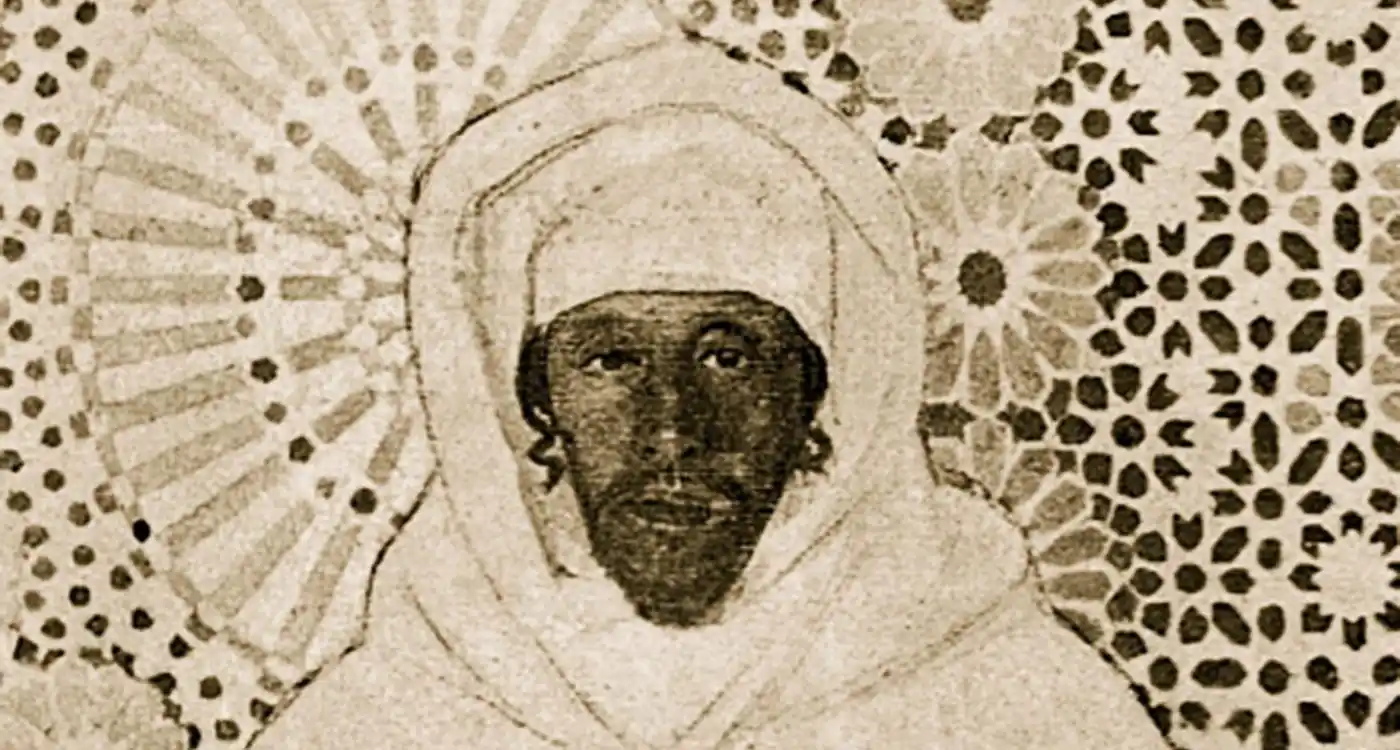
Around 1882, Si Hammadi el Glaoui, brother of Madani el Glaoui, settled there and made it one of the centres of Glaoua power in the region. Residence of the caïd, a local governor, place of command and extensive domestic complex, the kasbah brought together the spaces required both for the exercise of power and for the lives of those surrounding him.
In 1927, when Lieutenant Georges Spillmann made his first reconnaissance of Taourirte, shortly before the creation of the French post at Ouarzazate, it was Si Hammadi, by then an elderly man, who received him in the kasbah.
Beside it lies the old kasbah of Taourirte, with its narrow lanes, covered passages and earthen houses. Part of this settlement once formed the mellah, where Jewish families lived.
In the western part of the site, the Stara quarter has undergone a major programme to rehabilitate its earthen architecture. The restoration now makes it possible to walk through an area that had long been severely degraded and to better understand the former organisation of the kasbah. The quarter remains relatively quiet today, but it is an interesting stop for anyone wishing to go beyond Taourirte as a monument alone.
East of Stara stands the former caïd’s residence, separate from the rehabilitated quarter. More richly decorated, it formed the residential and ceremonial heart of Glaoua power at Taourirte. It opens beyond the kasbah towards Aït Ben Haddou. Its main courtyard still contains the famous Krupp cannon, which remains visible today.
This artillery piece recalls a decisive episode in the rise of the Glaoua. In 1891, on his return from the Tafilalet, Sultan Moulay Hassan I passed through Taourirte and, in thanks for the welcome and assistance he had received, left Si Hammadi several pieces of artillery, including this Krupp cannon; he subsequently left a second cannon at Telouet. The Glaoua later used the weapon during their campaigns.
The caïd’s residence is currently undergoing restoration and is temporarily closed to the public.
It is also worth extending the visit with a walk through the maze of lanes in the village of Taourirte. This remains a popular, inhabited neighbourhood, with covered passages, earthen houses and several old bazaars that retain an atmosphere very different from that of the restored areas. It is here, too, that the continuity between the old village and modern-day Ouarzazate can best be felt.
Read more: The Glaoua saga
Read more: The Kasbah of Taourirte
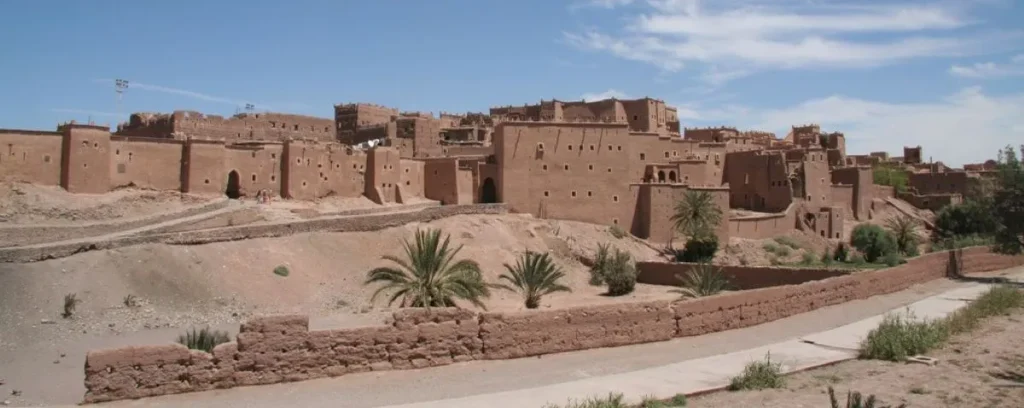
Discover the Cinema Museum
Housed opposite the Kasbah of Taourirte in a former filming location, the Cinema Museum contains sets, props, costumes and equipment associated with productions made in Ouarzazate. Above all, it offers a close look at the artifices of film sets before visiting the large studios outside the town.
The museum has aged in places and its appeal depends partly on the condition of its different spaces at the time of your visit; it nevertheless remains a useful introduction to the history of filmmaking in Ouarzazate.
Visit the film studios
Cinema takes on an entirely different scale a few kilometres from the town centre. Atlas Studios, opened in 1983, preserve around twenty hectares of palaces, temples, villages and other sets created for international productions. A visit reveals how wood, plaster, fibres and paint can become stone, metal or monumental architecture on screen.
CLA Studios, created later, form a second major production site and can also be visited when filming activity allows. At both studios, the areas open to visitors may vary depending on productions under way.
Read more: Ouarzazate, city of cinema
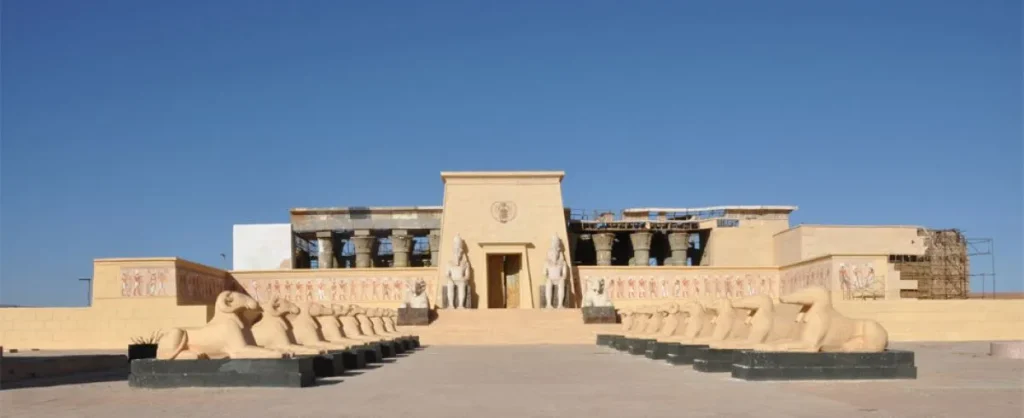
Trace the Ouarzazate of the 1930s
Ouarzazate is a recent town, developed from the late 1920s with the establishment of the French military and administrative presence. Within just a few years came roads, offices, an infirmary, housing, shops and hotels.
That first Ouarzazate has not entirely disappeared. Sainte-Thérèse Church, Bougafer Hospital, several former hotels and administrative buildings, and the layout of some streets still make it possible to find traces of the town of the 1930s behind the contemporary centre. You sometimes need to know what you are looking for: this heritage is less spectacular than a kasbah, but it tells the story of a decisive moment when, within only a few years, an urban centre emerged beside the old oasis.
Discover: The origins of the town of Ouarzazate
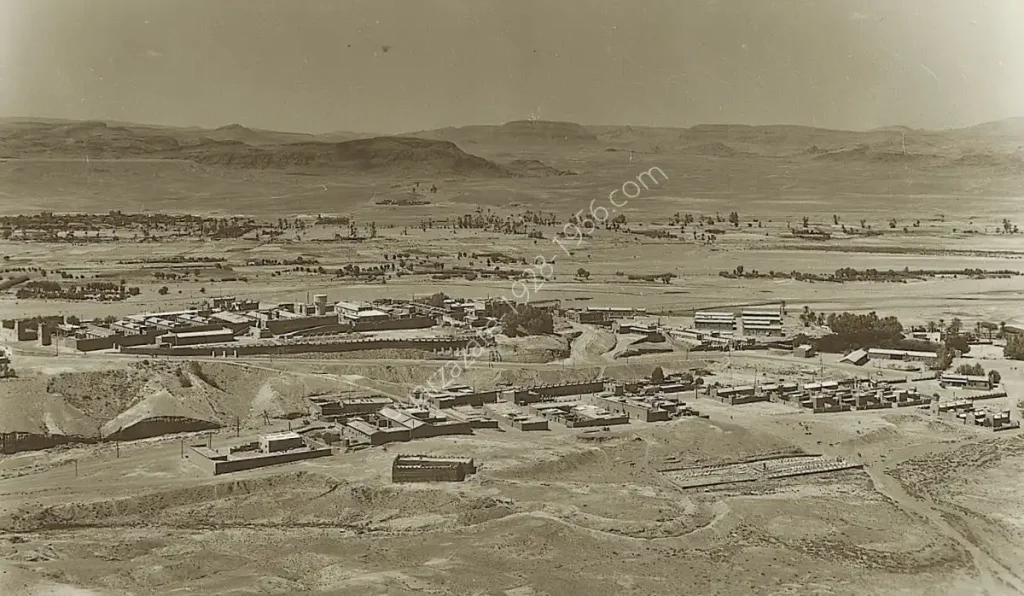
Coming soon on sudestmaroc.com
A geolocated walking route will make it possible to trace the principal buildings and locations of Ouarzazate between 1928 and 1956, drawing on the documentary collection assembled by Jacques Gandini.
Wander through the town centre and its market
Ouarzazate can also be enjoyed without a plan. The streets of the centre are easy to explore on foot, among small shops, cafés, restaurants and boutiques. The central market offers a glimpse of a much more everyday town, frequented first and foremost by local residents, with food stalls, clothing and ordinary shops.
A short walk away, Al-Mouahidine Square is one of the main meeting places in the centre. Lined with cafés and restaurants, it becomes particularly lively in the late afternoon and evening. Stop for tea, lunch or dinner before continuing through the surrounding streets.
The centre also has several bazaars selling souvenirs, carpets, older objects and crafts from southern Morocco. Some are worth stepping inside simply to look around and talk to the people who run them, rather than necessarily to buy.
Around Ouarzazate
Just a few kilometres outside the town, the landscapes change very quickly. An earthen ksar, a secluded oasis, palm groves, kasbahs, a lake and vast mineral expanses reveal several faces of South-East Morocco without requiring long journeys. This is where Ouarzazate’s position really begins to make sense: from the town, South-East Morocco is already unfolding.
Overview
- The ksar of Aït Ben Haddou;
- Fint Oasis;
- The Skoura palm grove;
- The Kasbah of Tifoultoute;
- Lake El Mansour Eddahbi;
- Noor Ouarzazate Solar Complex.
The ksar of Aït Ben Haddou
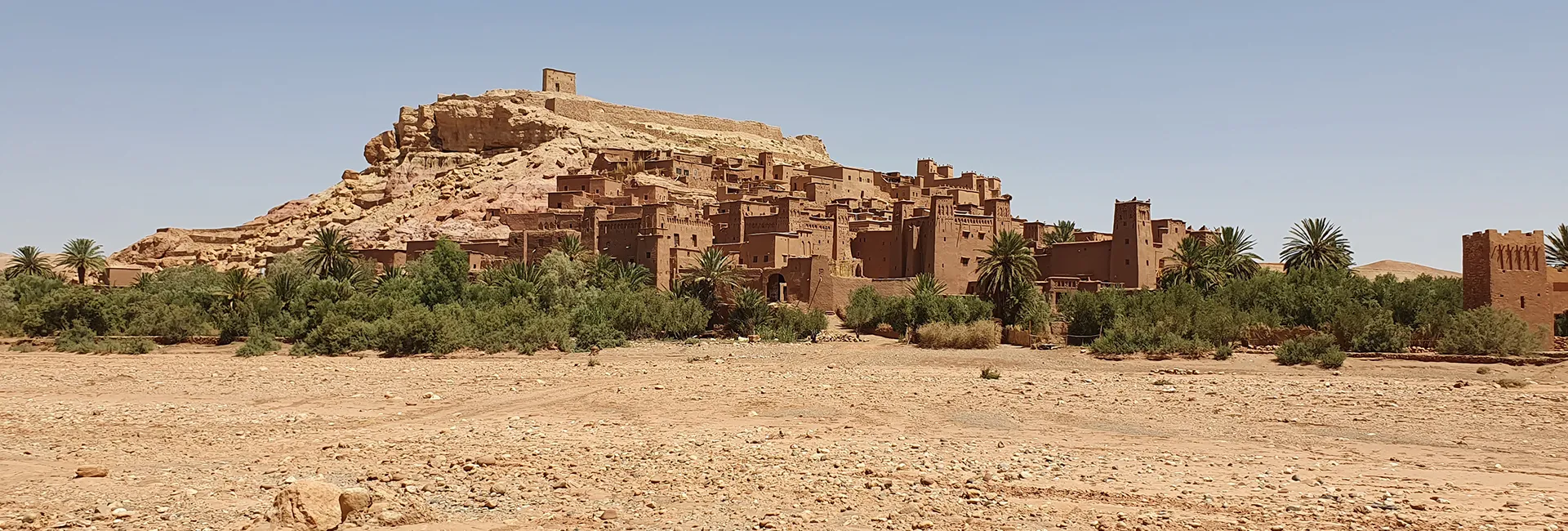
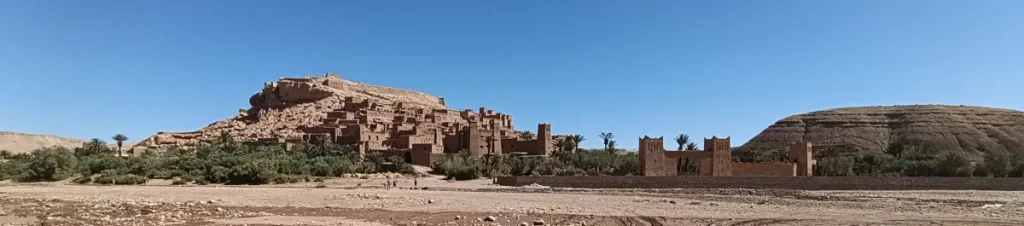
Around thirty kilometres from Ouarzazate, Aït Ben Haddou is one of Morocco’s best-known examples of earthen architecture. Inscribed on the UNESCO World Heritage List in 1987, the ksar contains houses, granaries and communal spaces within its fortified enclosure, characteristic of the pre-Saharan habitat of southern Morocco.
But Aït Ben Haddou deserves more than a photographic stop. Cross the oued, enter the lanes and gradually climb to the top to understand the organisation of the village and discover the Ounila Valley opening out beyond it.
Discover: Ksar of Aït Ben Haddou: the earthen village that became an icon
Read more: Once upon a time in South-East Morocco, four Christian princesses…
Staying near Aït Ben Haddou
Le Jardin de Yuda is my home in a small Amazigh village between Ouarzazate and Aït Ben Haddou. I welcome a small number of guests there, in an earth-built house surrounded by a garden – Eric Anglade
Fint Oasis
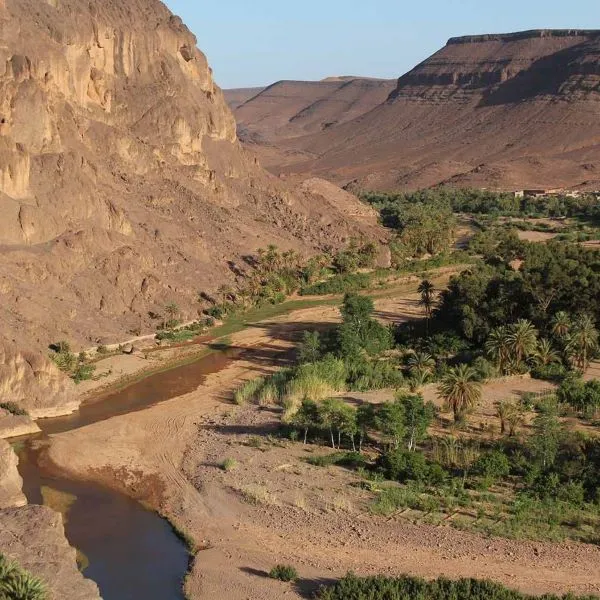
Around twelve kilometres from Ouarzazate, Fint Oasis appears at the bottom of an enclosed valley surrounded by dark hills. After crossing an almost entirely mineral plateau, the descent towards palm trees, gardens and earthen villages creates one of the most striking contrasts in the surroundings of Ouarzazate.
Fint is more than a viewpoint. The oasis remains inhabited and cultivated. The best way to discover it is to take the time to walk between the villages, agricultural plots and irrigation channels that distribute the water.
The condition of the track can vary after rain, so it is advisable to check locally before travelling there in a low-clearance vehicle.
Discover: Fint Oasis: a secluded valley on the doorstep of Ouarzazate
Read also: Fint Oasis, as told by its elders
Our advice for visiting Fint Oasis with a guide: Contact us
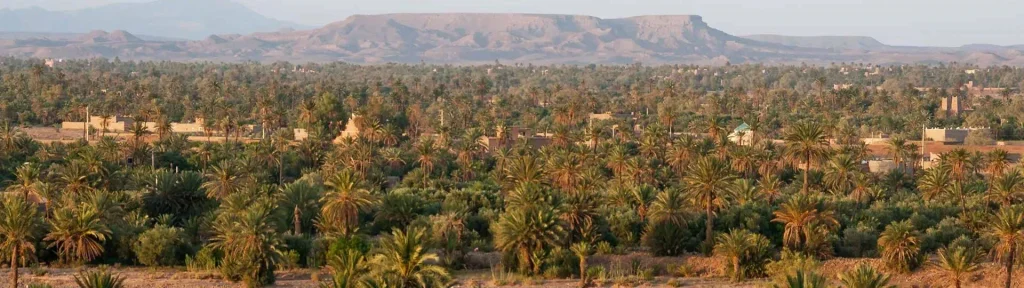
The Skoura palm grove
Around 40 km east of Ouarzazate, the Skoura palm grove forms an immense network of gardens, paths, villages and earthen kasbahs. It remains inhabited and cultivated: date palms, olive trees and agricultural plots create an oasis landscape that is far better understood once you leave the main road behind.
Amridil Kasbah is its best-known monument and well worth visiting, but Skoura should certainly not be reduced to this single stop. Its real attraction lies in entering the palm grove and exploring its maze of tracks and small paths, on foot, by bicycle or mountain bike, among irrigated gardens, villages and old kasbahs.
Our advice for exploring the Skoura palm grove with a guide: Contact us
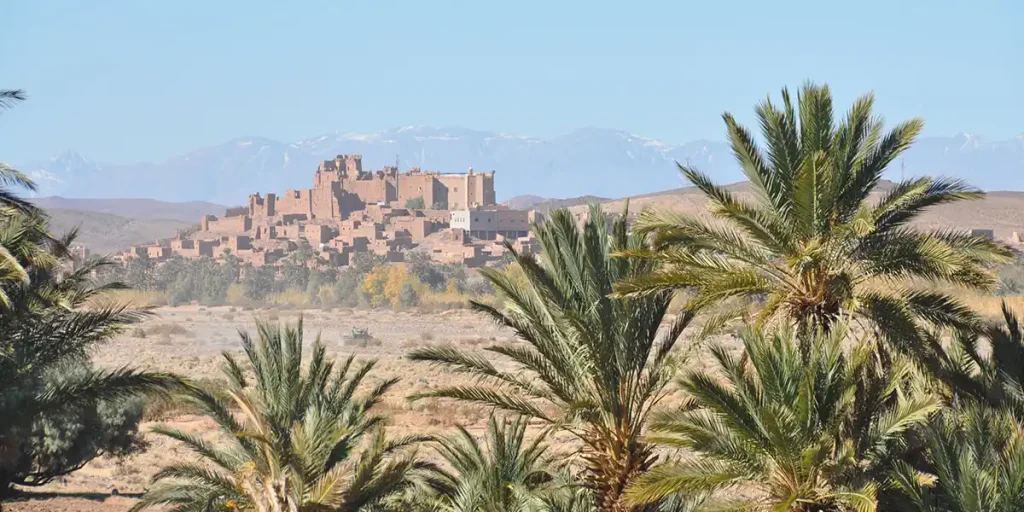
The Kasbah of Tifoultoute
Around 8 km from Ouarzazate, the Kasbah of Tifoultoute overlooks the oued valley from a rocky promontory. Like Taourirte, it belonged to the network of residences and centres of control developed by the Glaoua in the region.
Much of the site’s appeal lies in its setting, with broad views over cultivated land, villages and the surrounding plateaux. As the condition of the building and access arrangements have changed over the years, it is advisable to check locally whether the interior is open to visitors.
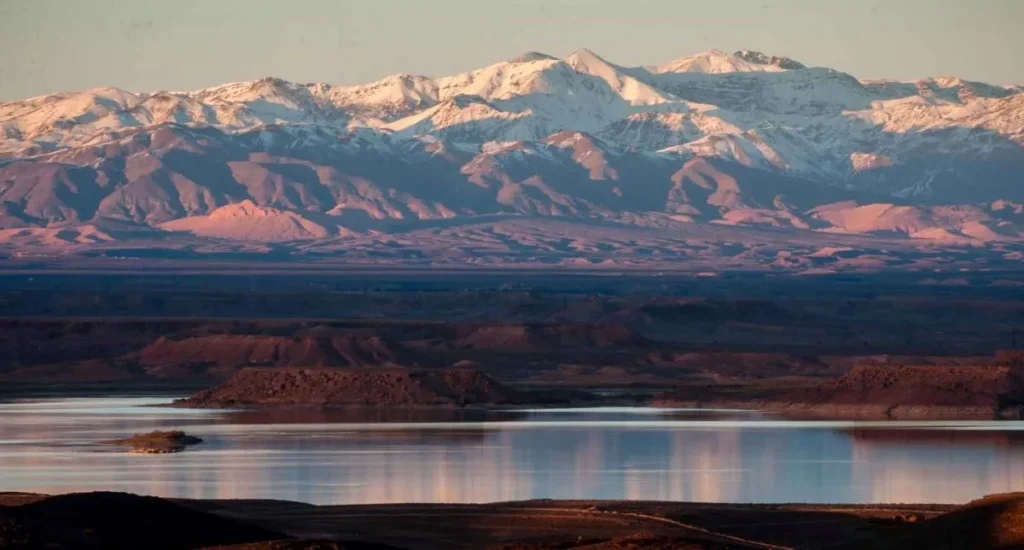
Lake El Mansour Eddahbi
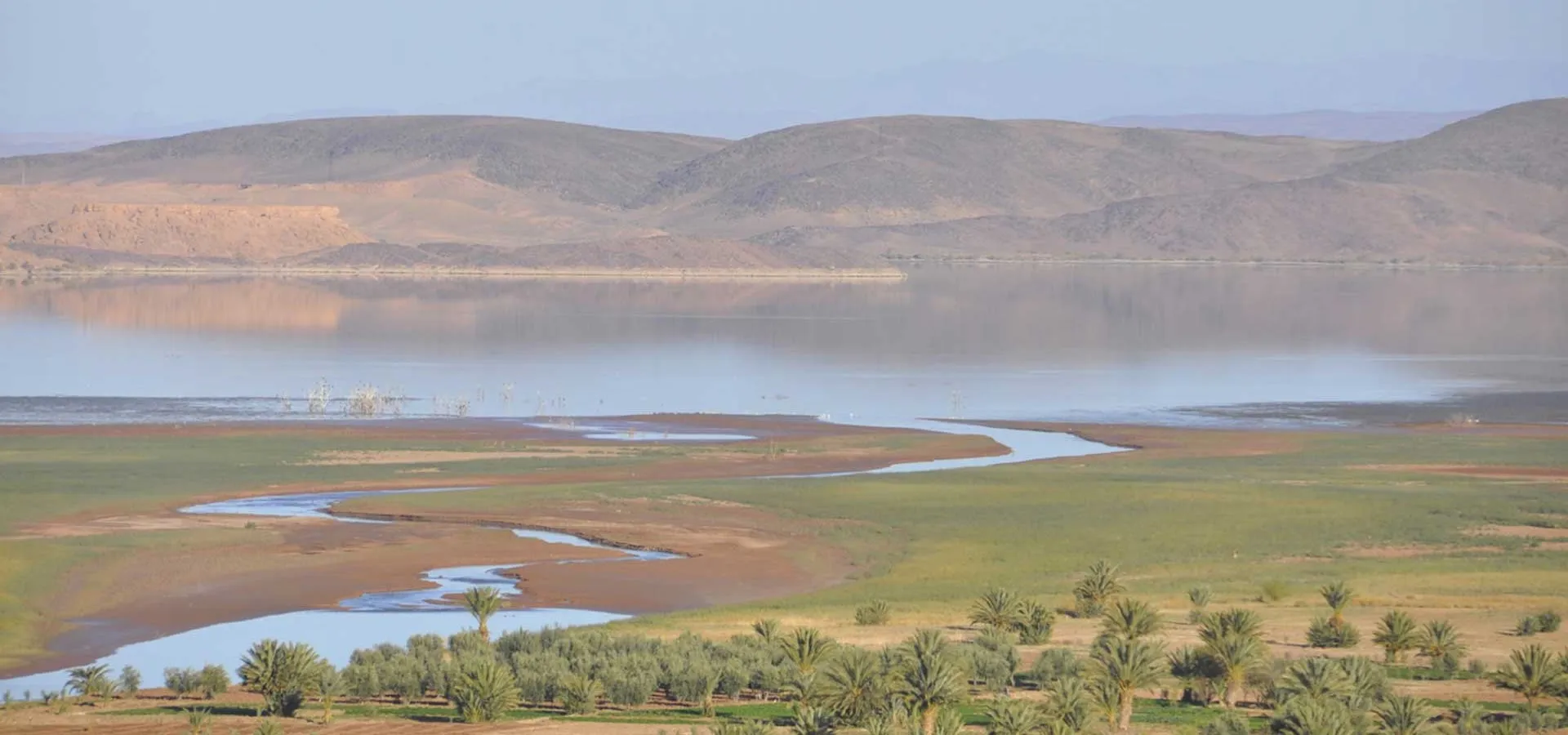
East of Ouarzazate, the El Mansour Eddahbi dam forms a vast reservoir surrounded by arid plateaux. Water levels vary considerably from year to year according to rainfall, giving the landscape very different appearances.
This is neither a developed beach nor a place where swimming can be recommended as such. Its appeal lies in the wide-open landscape, particularly pleasant for a stop or for birdwatching when conditions are suitable.
The reservoir forms one of the units of the Middle Drâa Ramsar Site, a vast complex of internationally important wetlands extending from the Ouarzazate basin towards the Drâa oases.
Read more: Elhara, a village submerged beneath the lake and carried in the hearts of its children
Canoeing is possible on the lake: Contact us
Noor Ouarzazate Solar Complex
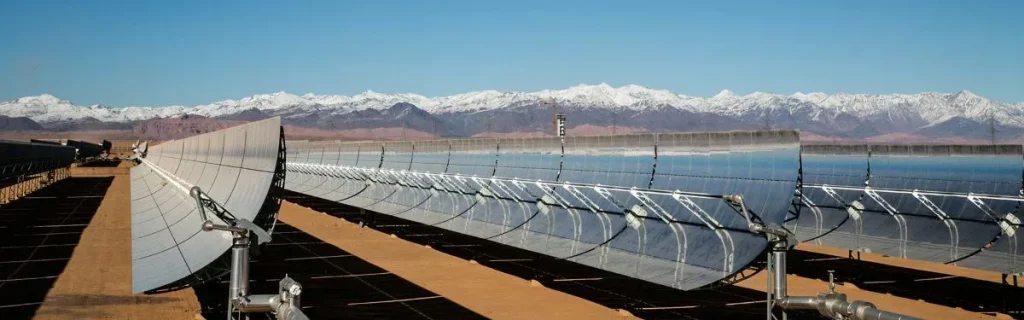
Around ten kilometres from Ouarzazate, in the municipality of Ghassate, the Noor solar complex has profoundly transformed the contemporary landscape. Its ranks of mirrors, and above all the high tower of Noor III, can be seen from far across the plateau.
Noor is not, however, a tourist attraction freely open to visitors. It is therefore better understood less as a “visit” than as a spectacular feature of the landscape and the recent history of Ouarzazate, and one of the symbols of Morocco’s solar energy policy.
Read more: Noor Ouarzazate Solar Power Complex
Ouarzazate, a crossroads city born at the gates of the desert
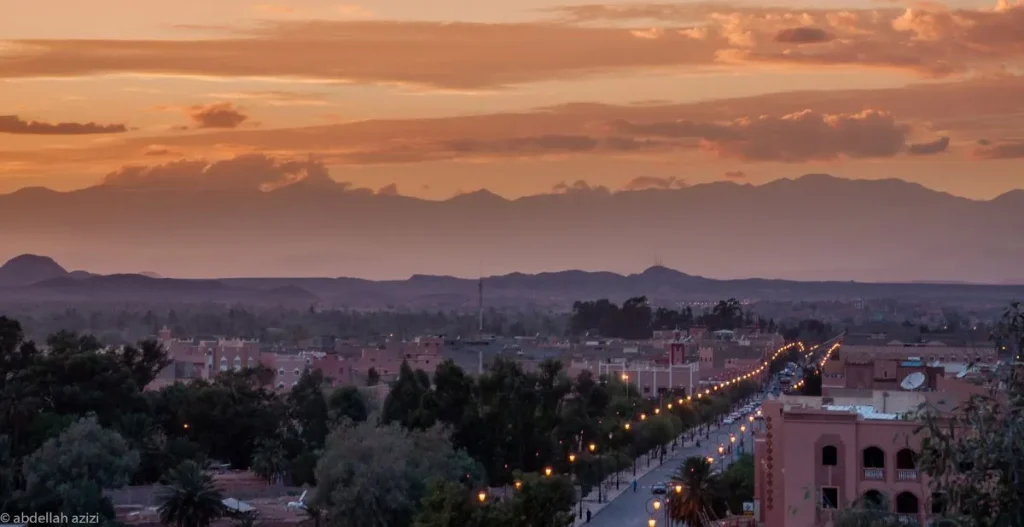
Ouarzazate occupies a distinctive position at the heart of South-East Morocco. To the north, roads cross the High Atlas towards Marrakech; to the east, they lead to Skoura, the Dadès and Tinghir; to the south, they descend towards Agdz and the Drâa Valley; and to the west, they open towards Aït Ben Haddou, the Siroua massif and the Souss.
This position has made Ouarzazate one of the region’s main administrative, economic and tourist centres, as well as a practical base from which to explore in several directions without changing accommodation every day.
The town itself has neither the old medina of a historic city nor the immediately spectacular character of a ksar. Its identity has been built in successive layers: the old oasis and its earthen villages, the Kasbah of Taourirte and the memory of the Glaoua, the administrative centre created under the Protectorate, then tourism, cinema and, more recently, the Noor solar complex.
This layering explains the sometimes difficult-to-read face of Ouarzazate: a modern town set within a far older territory.
Before the present urban centre existed, Ouarzazate referred to the oasis and its palm grove rather than to a town. Several ksour, kasbahs and cultivated areas were established around the oued, among them Taourirte, Tabounte and Tifoultoute. Agriculture, livestock farming and movement between the Atlas and the pre-Saharan valleys shaped this rural territory. Overlooking the oued, the Kasbah of Taourirte acquired particular importance in the late 19th century within the Glaoua network of power.
The transformation truly began in the 1920s. An airstrip was laid out in 1926 and the first aircraft landed there that same year. In 1928, a Native Affairs post and a garrison were established, while the road crossing the Tizi n’Tichka reached Ouarzazate in December.
Development of the new centre then accelerated: administrative offices, roads, an infirmary, shops and houses gradually appeared, while Lieutenant-Colonel Chardon drew up the plans for the future urban centre in the early 1930s. The vizierial order of 13 December 1933 and the dahir of 8 May 1934 gave it legal existence.
In less than a decade, a modern town thus took shape beside the old settlements of the oasis, within the context of French military and administrative expansion into southern Morocco.
After independence, Ouarzazate continued to expand. The development of services and roads, construction of the El Mansour Eddahbi dam, the growth of tourism and then the film industry transformed its economy and landscape. The Noor solar complex has now added a new dimension to this history.
Yet the geography remains: almost a century after the creation of the modern town, Ouarzazate is still above all a crossroads between the High Atlas and the great valleys of South-East Morocco.
Read more: The origins of the town of Ouarzazate
Read more: The Glaoua, the extraordinary story of an Amazigh tribe of the High Atlas
How to get Ouarzazate?
From Marrakech
The N9 crosses the High Atlas via the Tizi n’Tichka.
The journey covers around 195 km, but mountain roads, bends and village crossings increase travelling time.
In winter, snow can temporarily disrupt traffic over the pass. Heavy rain, roadworks or rockfalls may also cause delays. When the weather is poor, it is advisable to check road conditions before setting out.
From Tinghir and the eastern South-East
The N10 reaches Ouarzazate via Boumalne Dadès, Kelaat M’Gouna and Skoura, through the great valleys of the South-East.
The road is paved and relatively straightforward, although village crossings and traffic can increase journey times.
Discover: Discover Tinghir: the oasis town of the Todgha Valley
From Zagora and the Drâa Valley
The N9 follows the Drâa Valley northwards to Agdz before crossing the Tizi n’Tinififft towards Ouarzazate.
From Agadir and the Souss
The usual route passes through Taroudant, Taliouine and Tazenakht, across the lands of saffron and Aït Ouaouzguite carpets.
By public transport and air
Coaches and shared grand taxis connect Ouarzazate with the main towns and cities of the region. Ouarzazate also has an airport; timetables and routes should be checked before travelling.
Read more: Transport in Ouarzazate: getting here and travelling around the region
Where to stay in Ouarzazate?
In the town centre
The most practical choice without a car: restaurants, cafés, taxis, shops and services are all within walking distance. Ideal for a short stay.
Around Taourirte
A good choice for staying close to the kasbah, the Cinema Museum and old Ouarzazate. Some accommodation also overlooks the oued or the old quarters.
On the outskirts or in nearby oases
Choose these areas for peace, space and landscape. They are particularly pleasant for stays of several nights, although a vehicle is generally recommended.
Looking for advice? Contact us
Beyound Ouarzazate
Ouarzazate stands at the meeting point of several of southern Morocco’s great routes. Towards the High Atlas, the Dadès, the Drâa or the Siroua, each leads into very different landscapes, architectures and territories. South-East Morocco begins in Ouarzazate.
The Ounila Valley and Telouet
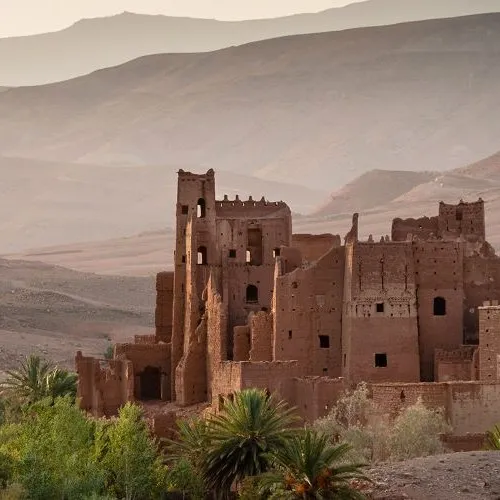
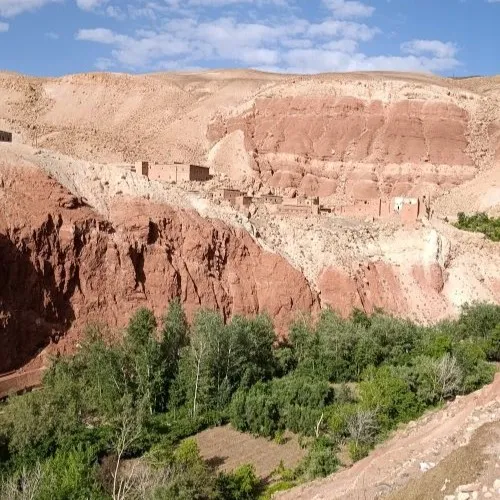
From Aït Ben Haddou, the road climbs through the Ounila Valley, between earthen villages, cultivated land and colourful cliffs, as far as the Kasbah of Telouet. It is one of the finest crossings of the southern slopes of the High Atlas, deeply connected with the history of the Glaoua.
Jacques Majorelle stayed and painted here, particularly around Anmiter, fascinated by the valley’s mineral light and earthen architecture.
Discover: Kasbah of Telouet: the Glaoua palace in the High Atlas
Read more: Jacques Majorelle in the Moroccan High Atlas: when mineral becomes light
Towards the Dadès and Tinghir
East of Ouarzazate, the N10 crosses Skoura, Kelaat M’Gouna and the Valley of Roses before reaching Boumalne Dadès and then Tinghir. This road links some of the great oasis and mountain landscapes of South-East Morocco.
Agdz, the Drâa Valley and Zagora
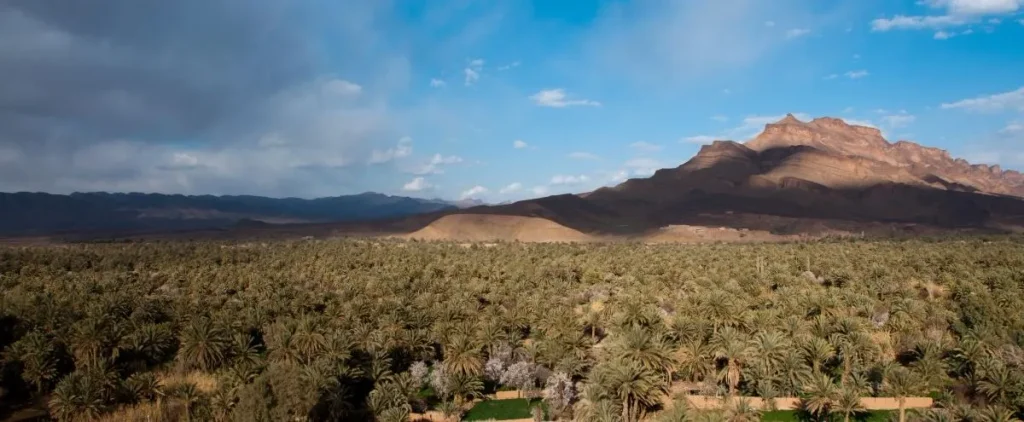
To the south, the road descends towards Agdz, then follows the long Drâa palm grove towards Zagora and M’Hamid El Ghizlane. Earthen villages, kasbahs and oases gradually give way to Saharan landscapes.
Discover: M’Hamid El Ghizlane: at the threshold of the Sahara
Tazenakht and the Siroua massif
To the west, Tazenakht opens onto the landscapes of the Siroua and the territory of the Aït Ouaouzguite carpets. Less travelled than the Drâa or Dadès routes, this itinerary continues towards Taliouine, Taroudant and Agadir.
Read more: The art of the Amazigh carpet
Further reading: Planning your trip to South-East Morocco
Use our contact form.
We will be happy to answer your questions.
More to Explore