


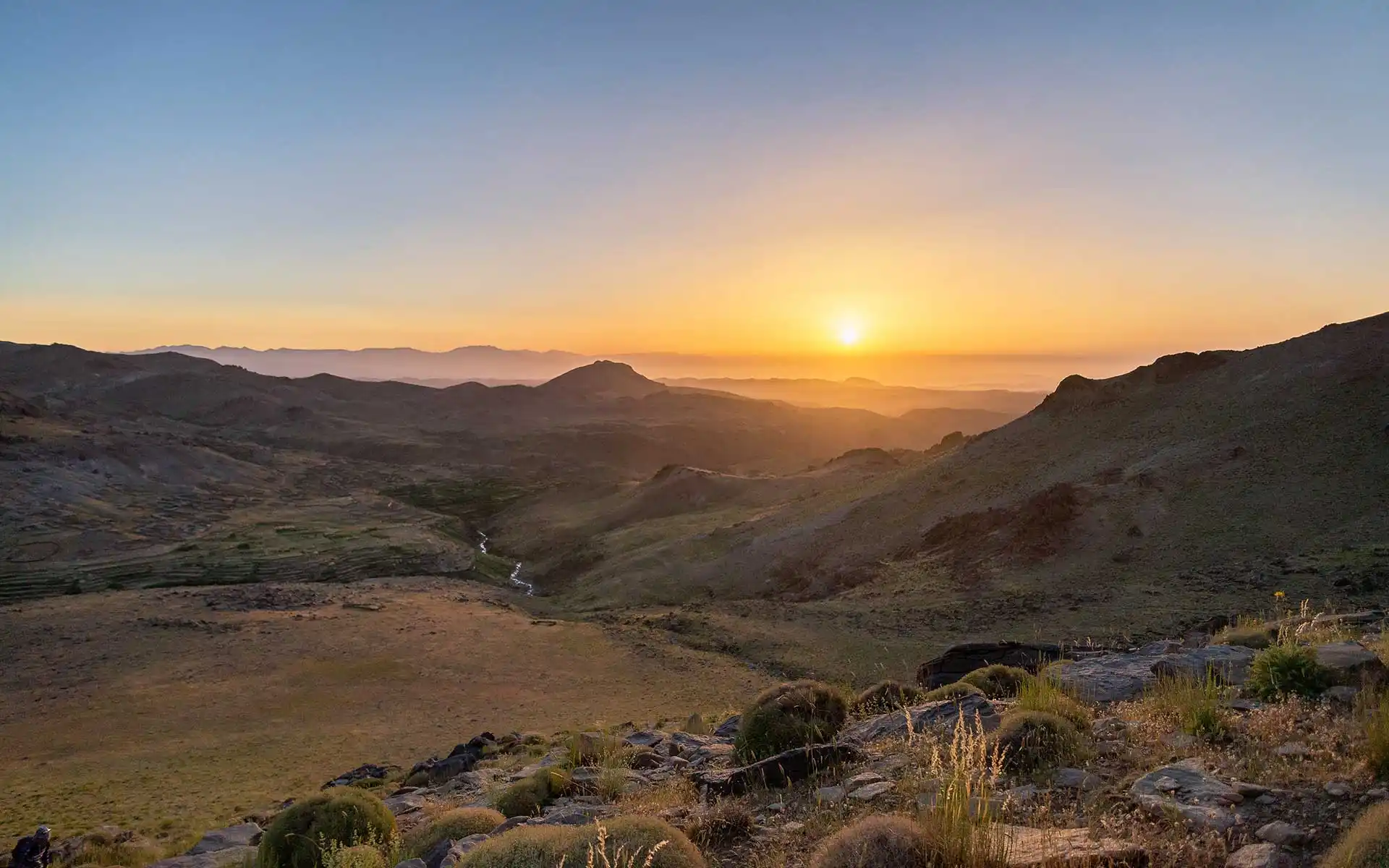
Once upon a time in South-East Morocco…
Between the Atlas Mountains and the pre-Saharan expanses, South-East Morocco carries a history shaped by encounters, movements, memories and cultures. Sudestmaroc.com was born of a simple desire: to make the voices of this territory heard, to recover its traces and to tell what, all too often, remains outside the narratives.
First published on 1 September 2019 to mark the launch of sudestmaroc.com. This founding text was revisited in September 2026, without altering its original intention.
It took human beings great courage, ingenuity and determination to set down in these lands roots of life and projects of existence. Many did so, here and there, beside an oasis, in the folds of a mountain or along the thread of a river. Generation after generation, they shaped landscapes, built villages, cultivated palm groves, traced paths and took part in the great movements which, along the trans-Saharan routes, linked sub-Saharan Africa for centuries with the Maghreb and the Mediterranean world.
A territory long viewed from its margins
There was a time when this part of Morocco was relegated, in the colonial representation of the country, to what was known as the “useless Morocco”, as opposed to the “useful Morocco” of the agricultural plains, ports and major economic centres.
Too distant to share in the centres of civilisation that radiated through the rest of the country, such as Fez, Marrakech or Tangier, this region gradually became the secluded realm of the unspeakable, a place from which wealth was drawn, labour gathered, what could not be seen veiled, what had to be forgotten forgotten.
The strong, hot wind silenced the clocks and, with them, all memory of the human stories lived in these territories.
There was a time when the region was at last observed with the attention it required and, in the eyes of passing visitors, who were becoming ever more numerous, the women and men of South-East Morocco understood that a treasure here lay within reach. Then formed around its three principal towns, Ouarzazate, Zagora and Errachidia, the region erased the infamy of its former nickname to engrave proudly upon its brow its new name, the “Golden Triangle”, echoing an emerging tourism economy that saw in the desert, the valleys, the oases and the earthen architecture the promise of a new future.
The pages of the past slowly began to shine again
This corner of Morocco became the gateway to an elsewhere towards which people flocked. The harshness of the landscapes revealed itself in all its diversity, silence turned into serenity, certain ways of life, until then regarded as signs of backwardness, were rediscovered through their sobriety and their ability to adapt to demanding environments. The sands of the great Sahara became an invitation to travel and the sun, once experienced only through its violence, also became a resource carrying new possibilities.
The pages of the past slowly began to shine again.
The engravings inscribed for thousands of years upon rocks and mountains bore witness to an ancient human presence and to worlds of which much still remains to be understood.
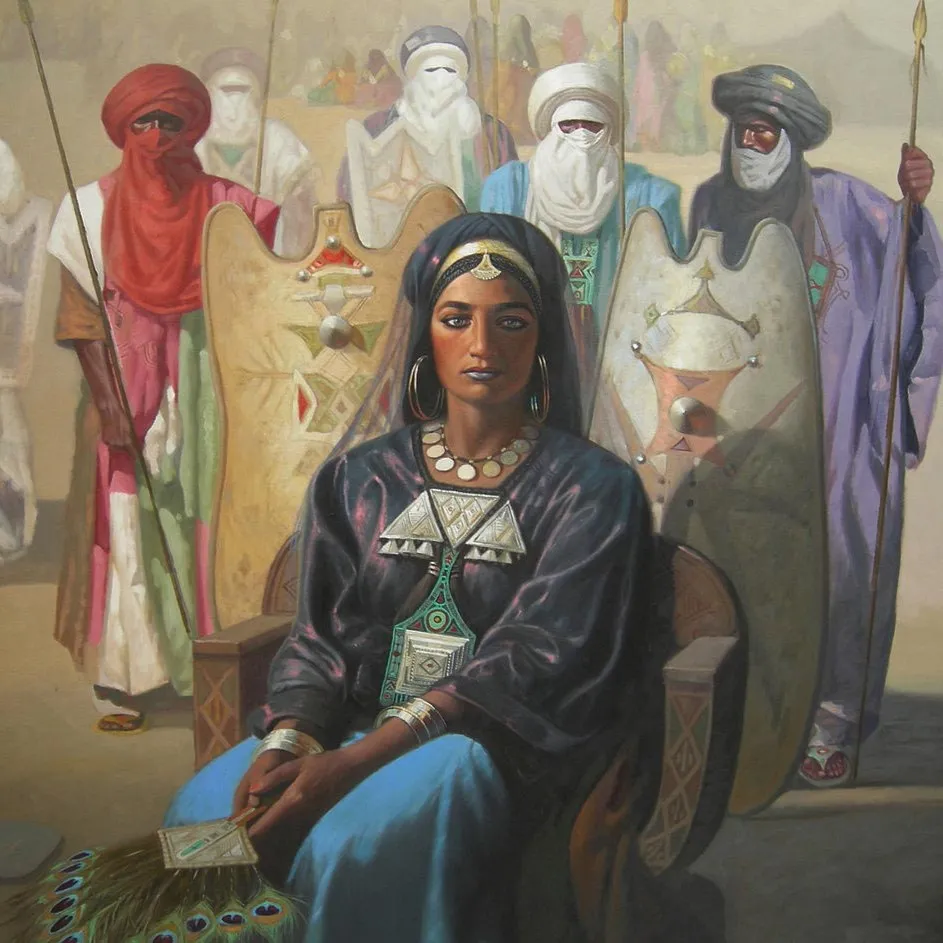
The cultures that had met here — Amazigh, Jewish, Arab and sub-Saharan — had left across these territories their architecture and their words, their songs, their gestures, their cuisines, their beliefs, their arts and their customs.
Faces began to emerge on the surface of time: women and men who, through their courage, their audacity, their faith or their ingenuity, had written fragments of the history of these territories. All these heroes, tragic or unknown, these confrontations and reconciliations, these initiatives and failures, these sufferings and joys, all of it woven one into another, formed the substance of a history that had become shared: that of South-East Morocco.
Midelt and Tinghir were administratively joined with Ouarzazate, Errachidia and Zagora when the Drâa-Tafilalet region was created in 2015.
But South-East Morocco cannot be reduced to an administrative boundary. The expression also describes a geographical, historical and human space whose contours have been shaped over time by movements, alliances, migrations, exchanges and landscapes. A territory of mountains and oases, valleys and plateaux, whose histories often spill beyond the boundaries drawn on maps.
The ecological part of Morocco’s soul
Morocco’s story is written in many voices, and that of the South-East has a singular tone.
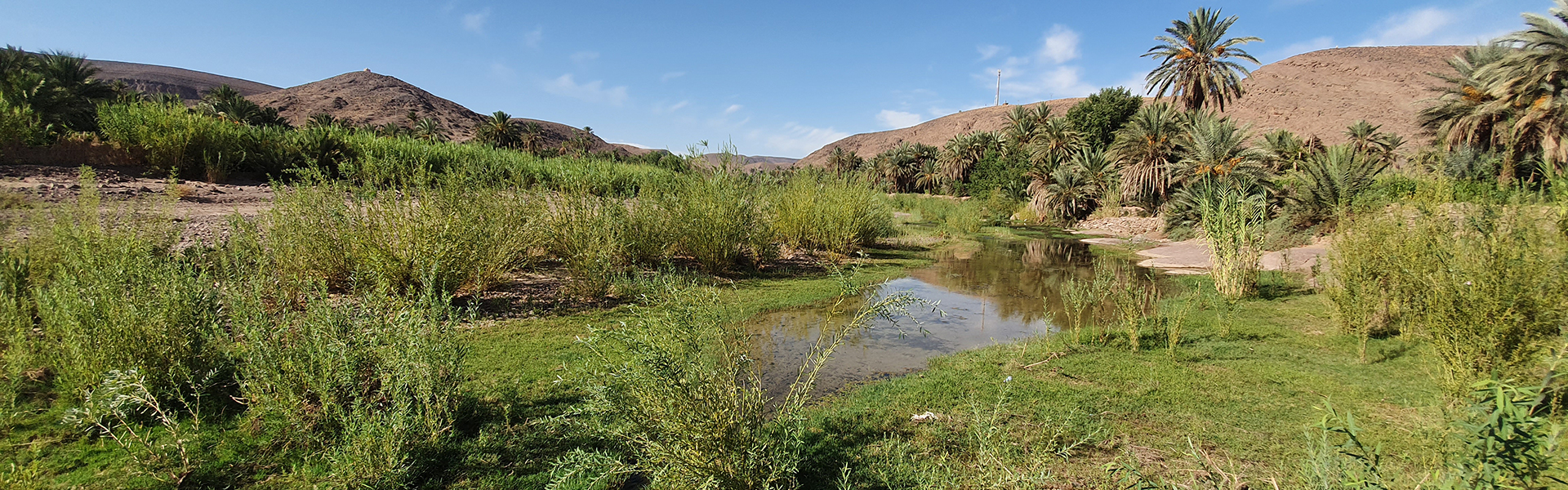
Because it bears the traces of a distant and abundant past. Because several cultures have lived there, moved through it, exchanged with one another and sometimes disappeared. Because its earthen architecture, its languages, its oral traditions, its gestures and its know-how form a fragile heritage. Because its oases and landscapes have for centuries told the story of human adaptation to the scarcity of water and the harshness of the climate.
But this territory is not merely a repository of the past.
It is alive.
Its societies are changing, its villages are being transformed, certain memories are fading while new stories are being written. Its oases face new vulnerabilities, its inhabitants invent new ways of living, creating and transmitting. Its heritage has meaning only if it continues to engage in dialogue with the present.
At a time when the question of our relationship with nature is becoming essential, South-East Morocco may have something particular to tell us: through its relationship with water, the earth, the climate and scarcity, it is also the ecological part of Morocco’s soul.
The time has come to make the voices of the South-East better heard, in Morocco and beyond.
To recover the traces before they disappear. To gather the memories of those who saw and lived. To document heritage, know-how and living traditions. To understand how places, cultures and people have met and continue to shape this territory.
And also to tell of its present, its transformations, its initiatives and those who, even today, continue to keep it alive.
Sudestmaroc.com will seek to give light, faces, voices and echoes to this ever-moving history of South-East Morocco.

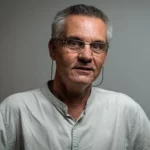
For more than twenty years, Éric Anglade has lived in a village of South-Eastern Morocco, where he explores and documents the region’s history, heritage, and living traditions. He founded sudestmaroc.com as a space for sharing fieldwork and cultural insight, bridging local knowledge with global perspectives. He also works alongside women carpet-weavers to help sustain their craft and welcomes travellers at Le Jardin de Yuda, his guesthouse envisioned as a meeting place for exchange and transmission.
More to Explore
Leave a Reply