


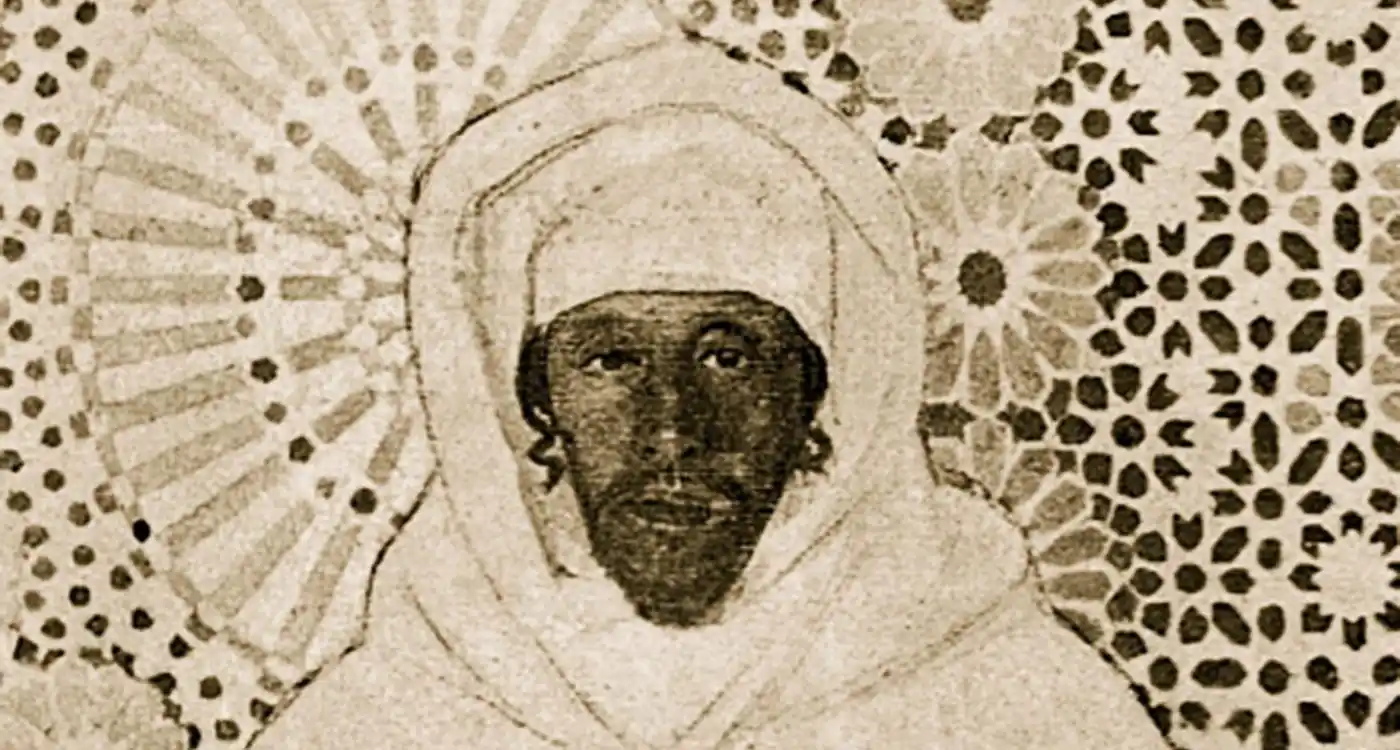
The Glaoua, the extraordinary story of an Amazigh tribe of the High Atlas
Before becoming the powerful “Lords of the Atlas”, the El Glaoui were still, in the mid-19th century, merely the ruling lineage of one Amazigh tribe among many, established around Telouet on one of the great caravan routes across the High Atlas. This first part of the Glaoua saga goes back to the origins of their rise and tells how, amid tribal rivalries, service to the Makhzen and control of trade, the nest of the “little sparrow” began to dream of becoming an eagle’s nest.
Overview
- The caïd, between agent of the Makhzen and tribal chief.
- Telouet, a place of encounters and a strategic trading point.
- The first steps of a small tribe among many.
- The conquering pride of the chief of Telouet.
- The final marches before victory.
- The little sparrow’s aborted flight.
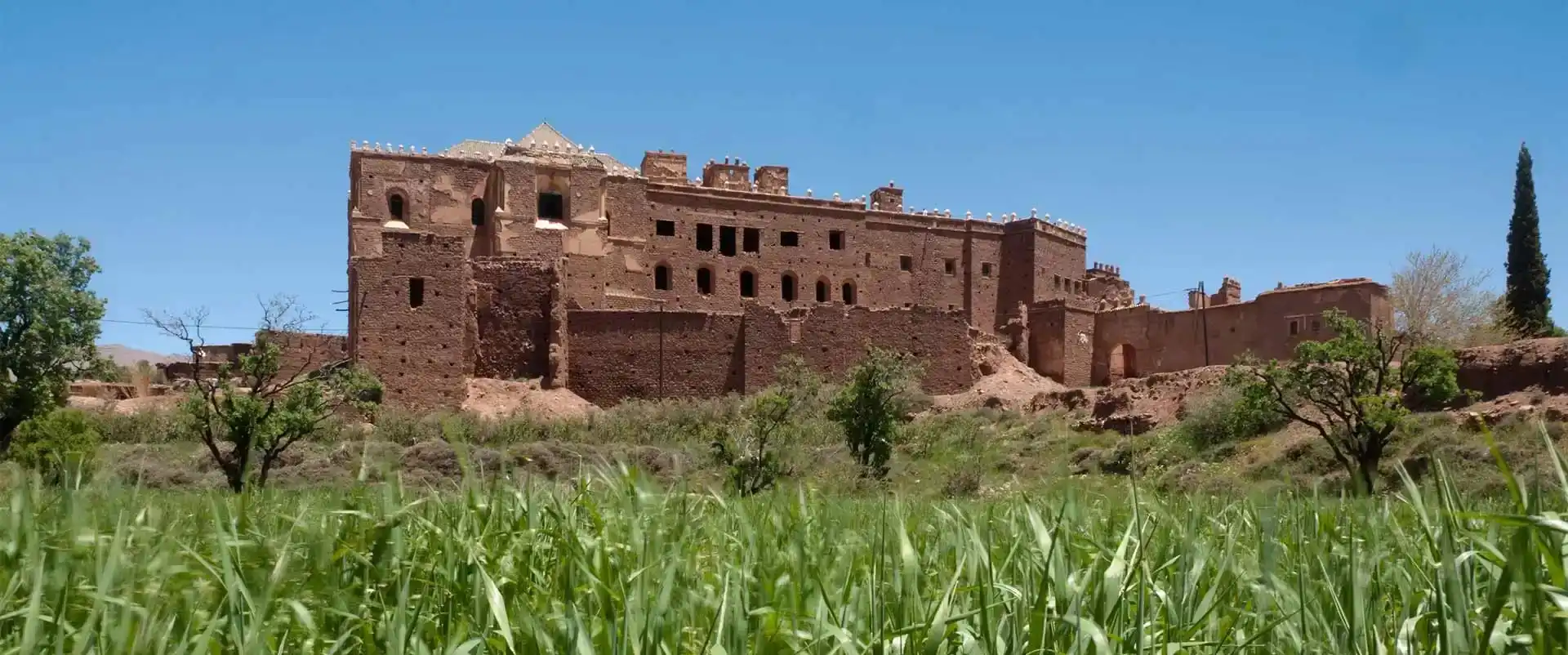
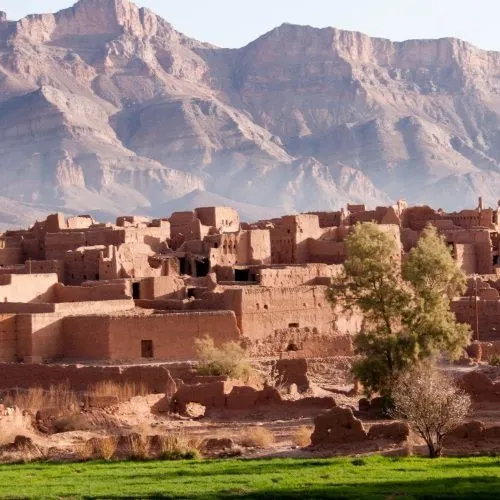
The Glaoua are an Amazigh tribe established around Telouet, on the southern slopes of the High Atlas. Its ruling lineage, the El Mezouari El Glaoui, lived in a modest kasbah sometimes nicknamed the nest of the little sparrow. According to the tradition that has been handed down, this small bird was associated with Providence and regarded as a sign of good omen.
Yet this little bird’s nest was to be transformed into a veritable eagle’s nest.
From the second half of the 19th century onwards, the El Glaoui family was to embark upon a long and arduous march that would lead it towards power and wealth. From one generation to the next, its representatives would establish themselves as powerful servants of the Makhzen, that system of governance particular to Morocco, structured around delegations of authority granted by the central power to provincial governors known as caïds.
In the case of the Glaoua clan, this delegation of authority would reach its apogee, since over the years its representatives would become known as the Lords of the Atlas: in peace as in war, the caïds from the Glaoua tribe, like those of other great caïdal families, would thus establish themselves as powerful masters, exercising their authority over vast territories as well as over the populations who inhabited them.
The caïd, between agent of the Makhzen and tribal chief
The term Makhzen has carried different meanings according to the period. It can refer to the government of the sultan, but also, more broadly, to the system of governance of a country long made up of tribes and territories fiercely attached to their autonomy.
The word makhzen comes from the Arabic مخزن, makhzan, meaning a place of storage, from the verb خزن, khazana, “to store”. It is notably the origin of the French word “magasin”.
The term was once used to designate the place where a village community stored its food supplies. From the 17th century onwards, the word came to designate the Treasury, that is to say the place where taxes were collected, and by extension all those responsible for its administration. Over time, the entire governmental administration serving the sultan came to be identified with this term.
Around the sultan, regarded as amîr al-mu’minîn, that is to say the Commander of the Faithful, the Makhzen was organised around a central government made up of viziers (ministers) and a myriad of agents recruited from families of Chorfas, that is to say those linked by descent to the Prophet, as well as families of scholars, merchants or warriors, all charged with maintaining order, collecting taxes and exercising a role of arbitration, particularly in matters of land in order to regulate property.
The country’s rural territories were under the authority of a caïd appointed by the sultan, assisted by a khalifat and cheikhs.
These caïds enjoyed a broad delegation of authority in the service of the central power. In practice, however, the political, military and fiscal presence of the Makhzen varied considerably from one territory to another.
The history of Morocco is thus often presented through the opposition between the Bled el-Makhzen, where the sultan’s government exercised effective authority, and the Bled es-Siba, where the tribes retained greater political and military autonomy.
This distinction, however, should not be understood as a rigid separation between an organised state and a “land of anarchy”. In many rural or mountainous regions, the authority of the sultan was negotiated, intermittent or exercised through alliances, while his religious legitimacy or his role as arbiter could continue to be recognised.
The expression Bled es-Siba, widely used and simplified by French colonial historiography, therefore refers to a political reality far more complex than its former translation as “land of anarchy” might suggest.
This situation often led the sultans to choose as caïd a man who already possessed recognised authority among the population concerned, generally the chief of the dominant tribe.
Some of these caïds wielded considerable power in the history of the country. Many waged war against one another and an even greater number made the accumulation of wealth their primary concern.
The Caïd: the word comes from the Arabic قائد, qāʾid, meaning “commander”. In Morocco, it designated a local governor appointed by the sultan, who could combine administrative, fiscal, judicial and military powers, while sometimes also being the chief of his own tribe.
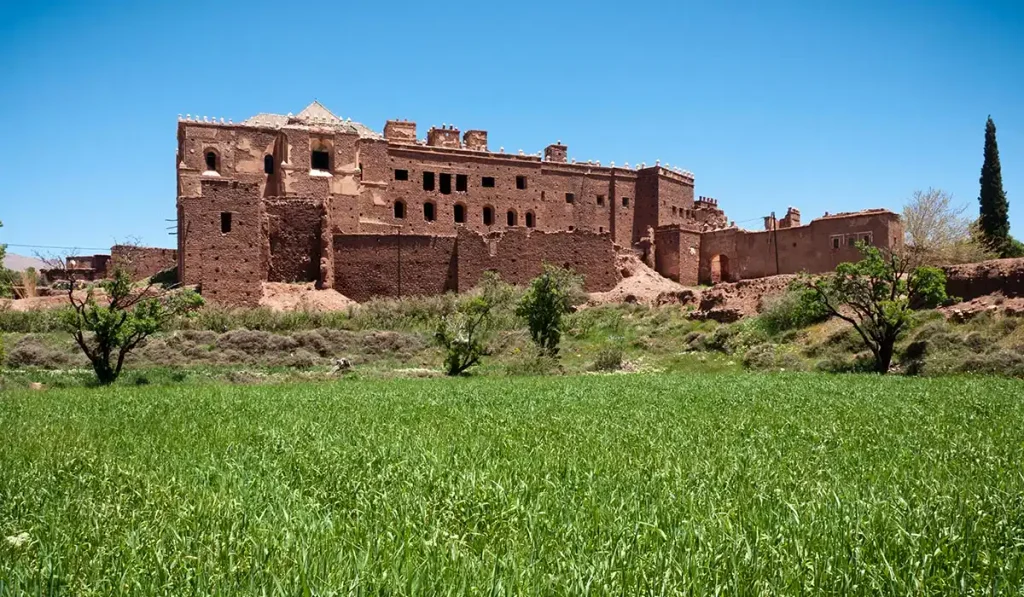
Telouet, a place of encounters and a strategic trading point
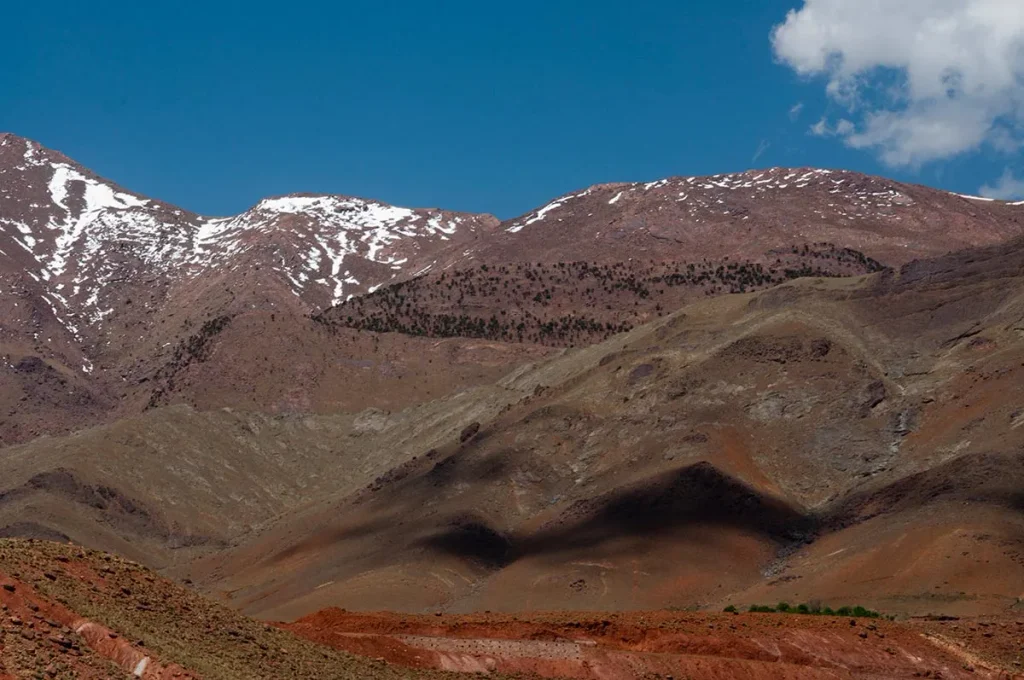
In former times, the High Atlas region formed part of dissident Morocco. The gigantic Atlas mountain chain constituted a veritable natural wall between the imperial cities of the North and this pre-Saharan Morocco made up of mountains, valleys, rocky plateaux, oases and sand dunes. These vast territories, like a refuge, had been inhabited by Berber communities since time immemorial.
On the southern slopes of the High Atlas, at an altitude of 1,870 metres, lies the small village of Telouet, which had always been a strategic point because it stood on the route of the many trans-Saharan trading caravans that crossed the mountain ranges at the Telouet Pass, the Tizi N’Telouet or Tizi N’ Glaoua, situated at an altitude of around 2,400 metres.
In Phoenician and Punic times, the route over the Telouet Pass may already have represented an important crossroads. It was known to merchants, geographers and travellers as the Gate of Deren or Gate of the Atlas.
This passage was one of the principal routes linking northern Morocco with the territories of the Drâa, Tafilalet, Dadès and Todgha, and then with the routes leading towards the distant Bilad al-Sudan, the historical Arabic name given to the regions situated south of the Sahara.
Telouet was therefore not merely an isolated village in the heart of the mountains. It was a place of passage, encounters and trade, where peoples and political ambitions met.
Punic: the adjective refers to anything relating to the Carthaginians of Antiquity. It comes from the Latin punicus or poenicus, itself derived from Poenus, “Carthaginian”, from the Greek Phoînix, which could designate both Phoenicians and Carthaginians.
The first steps of a tribe among many
The Glaoua — Igliwa in the Amazigh language — form a sedentary Amazigh tribe belonging to the Tachelhit-speaking area. Their historical territory extends on both sides of the main ridge of the High Atlas, notably around Telouet, the Rdat valley and the Asif Mellah.
The populations of this part of the High Atlas have been associated, according to various historical classifications, with the great Amazigh groupings of the Masmouda and Sanhadja. These affiliations must nevertheless be understood within a long history shaped by alliances, migrations and tribal recompositions.
The ruling lineage of the tribe was known as El Mezouari. This name derives from the Amazigh term amezwaru, meaning “the one who is first”, the one who precedes or leads in a function or a community.
The El Glaoui had long been regarded as a Makhzen family, that is to say one serving the Alaouite dynasty, at least since the time of Sultan Moulay Ismaïl, who ruled Morocco from 1672 to 1727.
The earliest of their ancestors mentioned in certain historical annals was a man named Abdessadek. In those days, however, the lineage enjoyed neither great renown nor exceptional power.
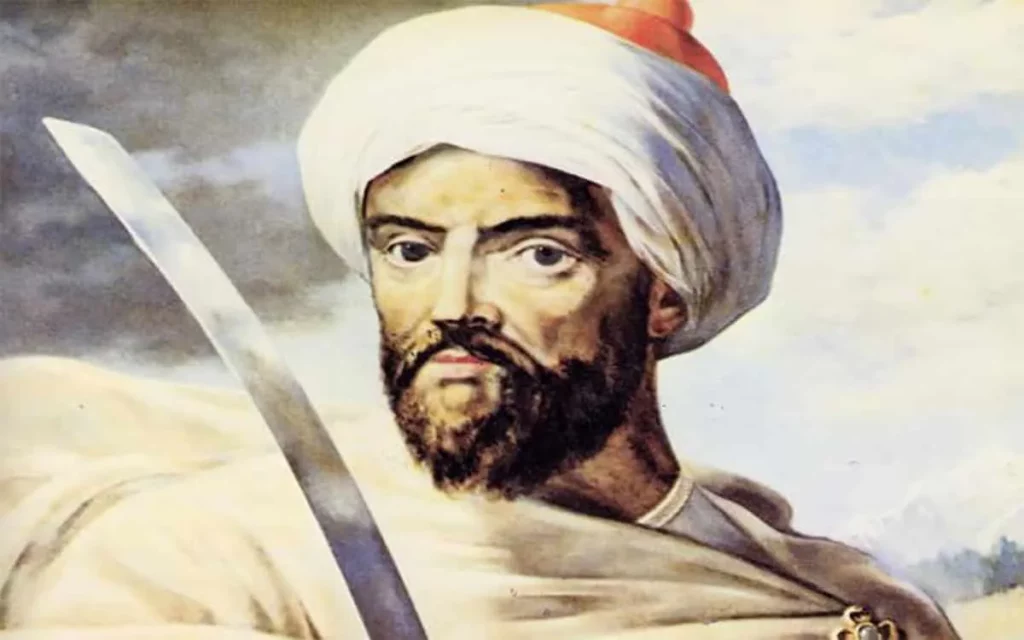
It was not until the first half of the 19th century that the family began its ascent towards power.
The first step was taken by a man named Hammou Amezouar El Glaoui, better known at the time by the Arabic first name Ahmed. He was appointed by his people as Amghar or cheikh, that is to say chief of the Telouet tribe. At that time, Telouet was still subject to the authority of the powerful caïd El-Hachemi Zemrani of Demnate, a locality situated around thirty kilometres away.
Caïd El-Hachemi Zemrani belonged to a lineage connected to the Banu Mā’qīl and was originally from the douar of Zemrane, around 50 kilometres north-east of Marrakech. As a Makhzen caïd, he enjoyed a historic right of authority over High Atlas tribes such as the Glaoua, Ghoujdama and Fetouaka. His authority extended as far as the Dadès valley.
The Banu Mā’qīl: (in Arabic: بَنُو مَعقَل ) are a tribe of Yemeni Arab origin who entered the Maghreb in the 11th century, spreading as far as southern Algeria, Mauritania, Western Sahara and Morocco. (Source: Wikipedia)
The modest cheikh Ahmed married the daughter of another cheikh, Ahmed Ben El Hadj Mohamed of the neighbouring village of Taghennouste. This marriage somewhat raised his social standing, but it was above all the strategic position of his village that enabled him to increase his influence. Indeed, he was able to offer hospitality and security to all the camel caravans passing through.
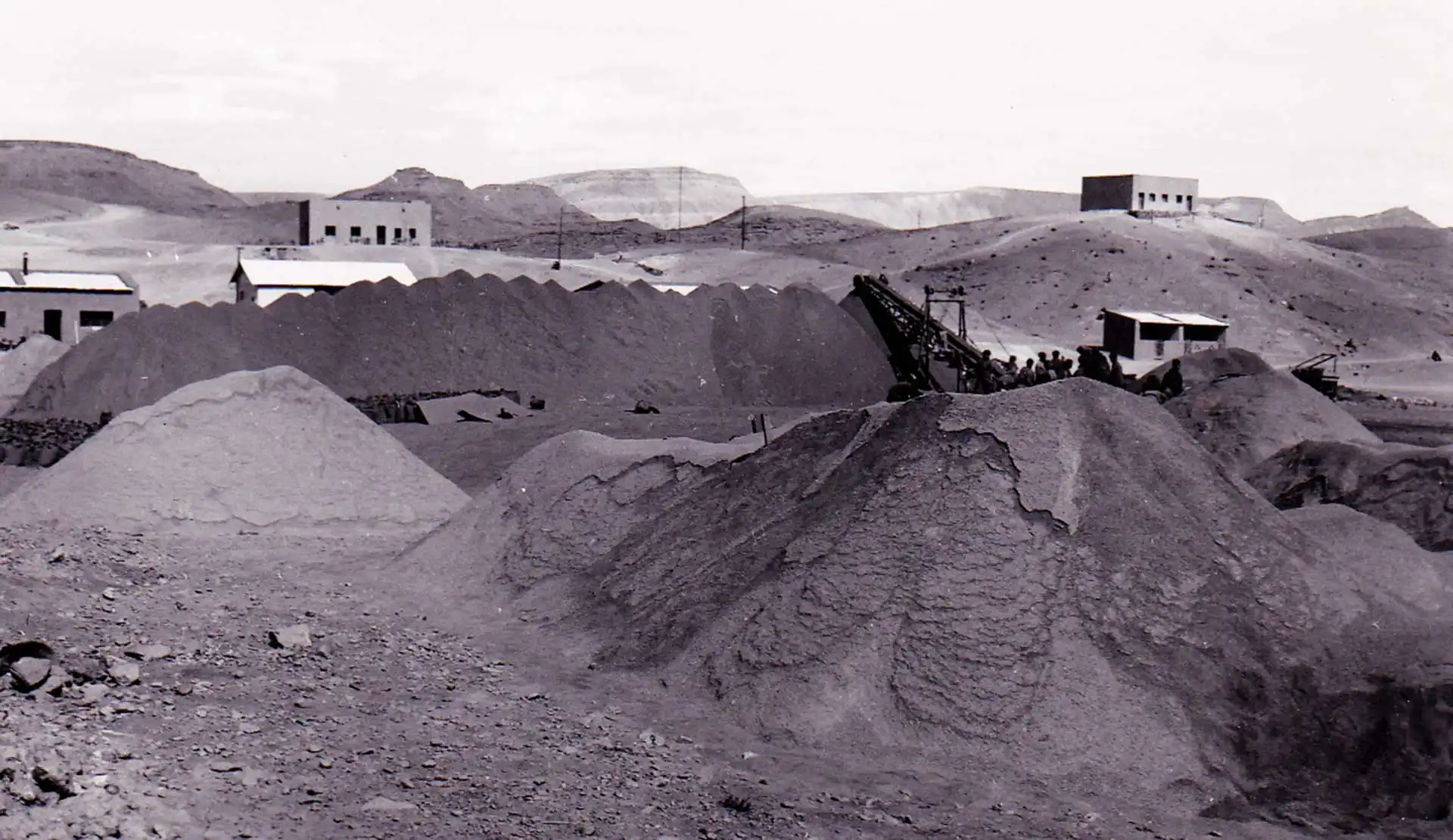
In exchange for this welcome protection, he required the merchants to pay taxes, providing him with a regular source of income. Providence was also kind to him, allowing him to exploit a salt mine discovered at Adouz, very close to Telouet.
Chief Ahmed’s flourishing activities quickly aroused the concern of his father-in-law Ahmed Ben El-Hadj and provided his enemies within his own clan with a pretext to drive him out of Telouet. He took refuge among the Aït Ounila, a neighbouring tribe hostile to his own. Amghar Ahmed died during his forced exile in 1855.
The conquering pride of the chief of Telouet
It was during this exile on the banks of the Ounila wadi that the son of Amghar Ahmed was born. He would be called Mohamed Ben Hammou and would grow up with the burning ambition of avenging the humiliation inflicted upon his father by seeking to regain the title of tribal chief in the family stronghold of Telouet.
Mohamed Ben Hammou was a small man and for this reason received the nickname Ibibet, meaning the little sparrow.
Despite the lightness of this nickname, the young Mohamed established himself as a fierce warlord only a few years after his father’s death. In 1858, he took command of an attack against the hamlet of Taghennouste and killed his grandfather, cheikh Ahmed Ben El Hadj, in the battle of Tighoufar Ait Rbaâ.
The fearless young chief then believed he could begin expanding his power south of the Atlas, but once again his advance came up against the opposition of the powerful caïd of Demnate.
“Ibibat was a vigorous man, an indefatigable walker. He had travelled across the immense plains surrounding Marrakech and cast more than one envious glance at the riches that were lacking in his own country. He, the modest cheikh of the Atlas, dreamed of replacing his powerful caïd El Hachemi Zemrani, of Demnat”
Jacques le Prévost – El Glaoui
Chief Mohamed Ibibet aimed at nothing less than uniting all the components of his Glaoua tribe under a single banner, in order to make it a powerful tribe in the High Atlas and beyond, following the example of the great caïdal families of the Mtougui or Goundafa.
The Goundafa, or Ignifissen in Berber, formed a group of tribes situated along the banks of the N’Fiss valley in the High Atlas. Long insubordinate to the sultan, they would join the Makhzen network in the latter part of the 19th century, and their chief Si Ahmed would pledge allegiance to Moulay Hassan I, who appointed him caïd. His son, Si Tayyeb Goundafi, would assume the caïdal office upon his death in 1885 and extend his tribe’s territory of influence from the Haouz plain to that of the Souss.
The final marches before victory
Caught between these great caïds, Amghar Mohamed Ibibet nevertheless managed to attract the attention of the central power, always keen to exploit tribal rivalries in order to maintain its own authority. He was therefore seen as an ideal ally in the region because of his impulsiveness and audacity in the face of the dangers confronting him. The Alaouite sultan Moulay Abderrahman Ben Hicham, who reigned from 1822 to 1859, appointed him Amghar N’oufla, meaning Supreme Cheikh, over the tribes of Ait Telouet, Ait Ounila and Ait Tammante.
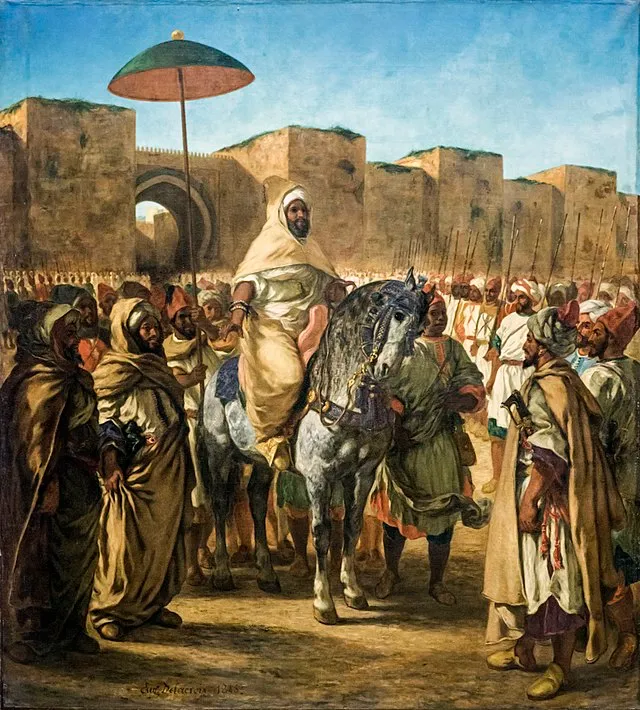
The Supreme Cheikh had no time to savour the pleasure of his new title, even though it fulfilled his most intimate dream. Like his father Ahmed before him, he encountered the fierce jealousies of the Demnate clan. Indeed, upon the death of caïd El-Hachimi Zemrani in 1858, his brother Omar succeeded him and made every possible effort to tarnish the reputation of his rival from Telouet and thereby halt the growth of his power.
Omar Zemrani succeeded in convincing the sultan that Mohamed Ibibet was plotting against the Sharifian power and obtained a mandate to arrest him and bring him to trial.
But that was to reckon without the little sparrow’s good star and ingenuity. The sultan died in 1859 and Mohamed Ibibet hurried to Marrakech to attend the ceremony of allegiance to the new sultan, Moulay Mohammed Ben Abderrahmane, who would reign over Morocco until 1873 and later become known as Mohammed IV.
During this oath of allegiance, the cheikh of the highly influential Naciria Zaouia of Tamegroute, Sidi Boubker Ben Ali Ennaciri, would complete the strategy of the chief of Telouet by interceding with the new sultan, who then decided to pardon Amghar Mohamed El Glaoui. He raised him to the rank of Makhzen caïd in 1864 and placed all the tribes of the Aït Ouaouzguite confederation under his command.
Mohamed Ibibet’s hour of glory had arrived. He took advantage of it to build a new kasbah in his stronghold of Telouet beside the old one, then embarked upon a policy of expansion towards the regions of the South-East, with the first objective of taking control of the kasbah of Taourite, in the present-day city of Ouarzazate, another strategic point for controlling the caravan routes.
To achieve this, he established alliances with the chiefs of the different tribes of Ouarzazate and succeeded in seizing Taourirte in 1877, putting cheikh Mohamed Ben Abdellah to flight. This important conquest secured him control over commercial activity at this other crossroads of all the routes leading towards the Drâa valley and the important oasis of Skoura, as well as towards the Dadès and Todgha valleys.
Amghar Mohamed Ibibet took advantage of the central position of the kasbah of Taourirte to crush the insubordinate tribes of the South, notably that of his historic rival, the powerful Amghar Mohamed Zanifi of Tazenakht. As a proud caïd recently promoted to the rank of Makhzen caïd, and foreshadowing what the armies of the French Protectorate would undertake several decades later, he set himself the ambition of subduing all the dissident tribes of the South and forcing them to pledge allegiance to the sultan.
Read also: The Naciria Zaouia of Tamegroute: anatomy of a birth
The little sparrow’s aborted flight
An excessive ambition for the little sparrow who dreamed of being an eagle. Mohamed Ben Hammou El Glaoui would make the mistake of overestimating his strength and, above all, of wanting to move faster than the still-powerful music of tribal pride and ambitions in Morocco at the end of the 19th century.
His conquering ambitions required considerable financial means, and he believed it possible to impose heavy charges and levies upon the other tribes of the Aït Ouaouzguite confederation, the Aït Zineb, Tikirt, Ikhzamen, Ouarzazate… This pretension aroused the indignation of their chiefs, who lost no time in uniting in an alliance known as the allies of Tagouzoult, in order to curb the excesses of the chief of the small douar of Telouet. Local tradition associates the name Tagouzoult with the idea of courage or bravery.
Powerless in the face of the strength of the enemies united against him, Mohamed Ibibet abandoned his undertaking and withdrew to his sole stronghold of Telouet, suddenly finding it more reasonable to concentrate upon consolidating his commercial activities in the High Atlas. He thus revived the Monday souk at Ighil N’oubiane created by his father. He built a new caravanserai in order to better control the caravans arriving from the Tizi N’Telouet pass, created another souk on Thursdays at Zrekten and, beside it, another caravanserai.
Amghar Mohamed Ben Hammou El Glaoui, known as Ibibet, from his small village nestled at the foot of the imposing mountains, had fallen in love with the dream of the Atlas and imagined it possible that the name of his clan, the name of the Glaoua, might carry authority over Morocco’s thousand and one tribes. Destiny decided otherwise and forced him to be patient.
“In the paternal kasbah established on the plateau of Telouet and which soon became an imposing fortress, the ‘little sparrow’ of Telouet brought to an end in 1888 a life of no particular distinction”
Jacques le Prévost – El Glaoui
But the destiny of the Glaoua is like a Berber carpet that acquires all its splendour thread by thread. Just as he himself had done with his father, cheikh Ahmed, restoring his pride and raising the name of their family higher still, Mohamed Ben Hammou would see his dream of power taken up by his two sons, men of an altogether different stature, the elder Madani and the younger Thami.
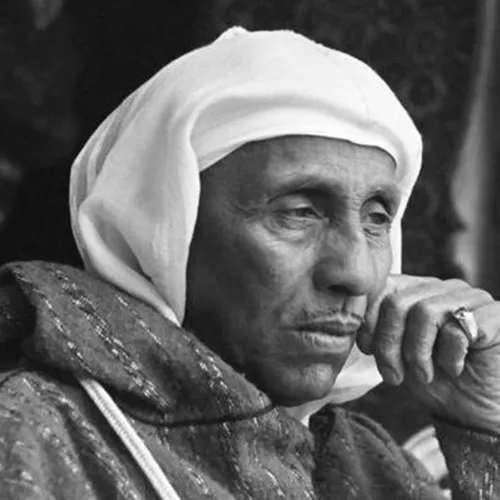
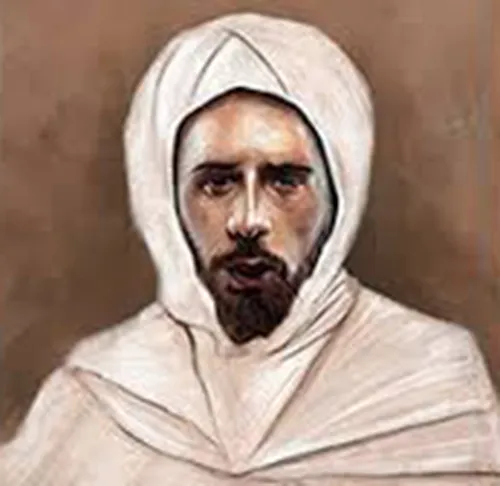
Upon his death, he bequeathed to his first son, Madani El Mezouari El Glaoui, a well-established authority and a considerable fortune that would allow him to reach the very heights of the Makhzen with his appointment to the highest possible office, that of Grand Vizier to the sultan, and in the heart of the second, Thami El Mezouari El Glaoui, he sowed the seed he had carefully kept within himself from the beginning, the seed that carried the promise that a day would come when the sparrow would become an eagle.
Key points
- The Glaoua are an important Tachelhit-speaking Amazigh tribe, established on both sides of the High Atlas around Telouet.
- The El Mezouari El Glaoui constitute the ruling lineage of this tribe and not a separate tribe.
- The family’s rise is closely linked to Telouet’s strategic position on a major caravan route between Marrakech and southern Morocco.
- Mohamed Ben Hammou El Glaoui, nicknamed Ibibet, strengthened the political and commercial power of his lineage during the 19th century.
- His appointment as a Makhzen caïd marked a decisive turning point in the history of the Glaoua.
- His first attempts at territorial expansion encountered strong resistance, but they prepared the way for the future rise of his sons Madani and Thami.
- The history of the Glaoua helps us understand the complex relationships between tribal powers, trade, the great caïdal families and the Makhzen before the Protectorate.

The Glaoua Saga
More to Explore

Leave a Reply