


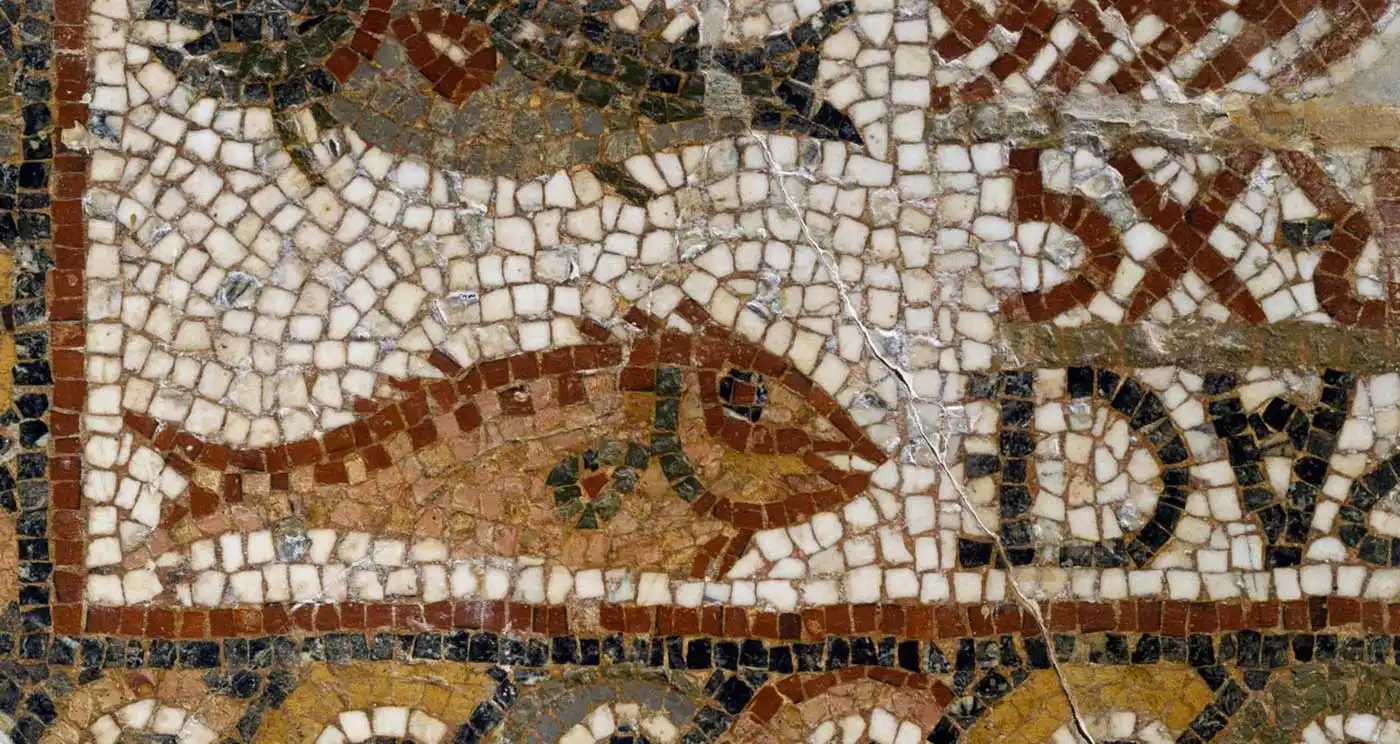
Legend or historical reality? The former presence of a Christian princess within the walls of the ksar of Aït Ben Haddou rests upon tangible elements that cannot simply be dismissed. Sudestmaroc.com set out to investigate whether the most visited site in South-East Morocco, a resplendent emblem of traditional Amazigh earthen architecture, might have roots in a past far older than the one commonly acknowledged.
Overview
- In search of the lost princesses.
- Morocco, a meeting place for faiths and traditions.
- The wandering of the oppressed as the first vehicle for the spread of the faith.
- The emergence of African Christianity.
- Amazigh kingdoms as refuges for Christianity.
- The music of their existence still resonates today.
He had just crossed the Telouet Pass, one of the rare passages through this veritable mineral wall that cuts Morocco in two. Entering this insecure region, where the only law was that of the Amazigh tribes, he had adopted the disguise of a Jewish traveller, while his guide, Rabbi Mordecai Aby Serour of Akka, accompanied him both to share his already considerable experience of exploration and, above all, to enable him to enter naturally into the villages through their Jewish communities. At the end of the nineteenth century, Charles de Foucauld had considered it wiser to travel under the appearance of a population at once accepted and looked down upon, and therefore unlikely to attract much attention, present in these lands since distant times, rather than in the guise of a European who would inevitably have been perceived as a Christian, and therefore as a potential enemy.
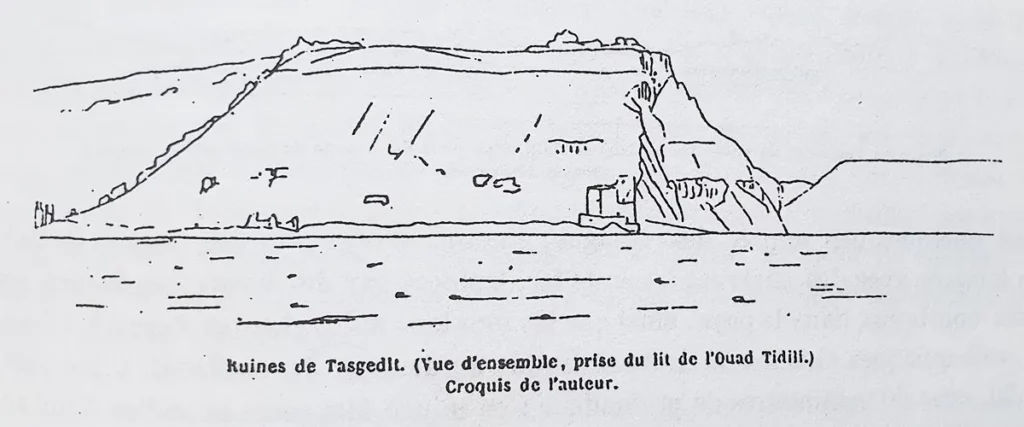
During his week-long stay in Tikirt, he took the opportunity to go and look more closely at the ruins of an ancient citadel around which, to use his own expression, a thousand legends were woven. The account he gives makes it easy to imagine how the story must have been told to him, in such a way as to arouse the curiosity of anyone who heard it:
« Long ago, many centuries ago, three princesses, daughters of a Christian king, ruled over these lands: one, Doula bent Ouâd, lived in this fortress of Tasgedlt; another, Zelfa bent Ouâd, inhabited a similar one, on the banks of the Asif Marren, near Teççaïout; the third, Stouka bent Ouâd, another similar one at Taskoukt, on the Oued Imini: in these three places similar ruins can be seen.»
Charles de Foucauld — Reconnaissance au Maroc — 1883
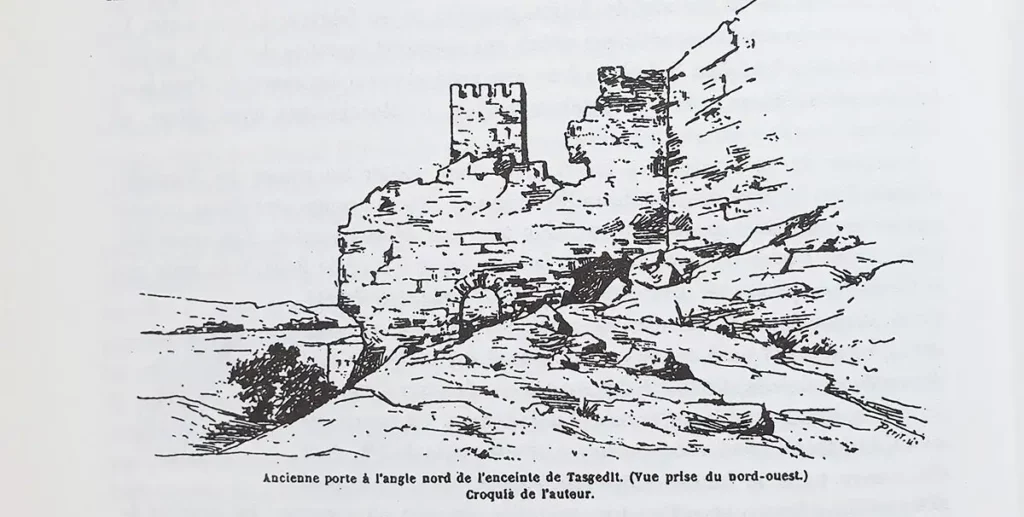
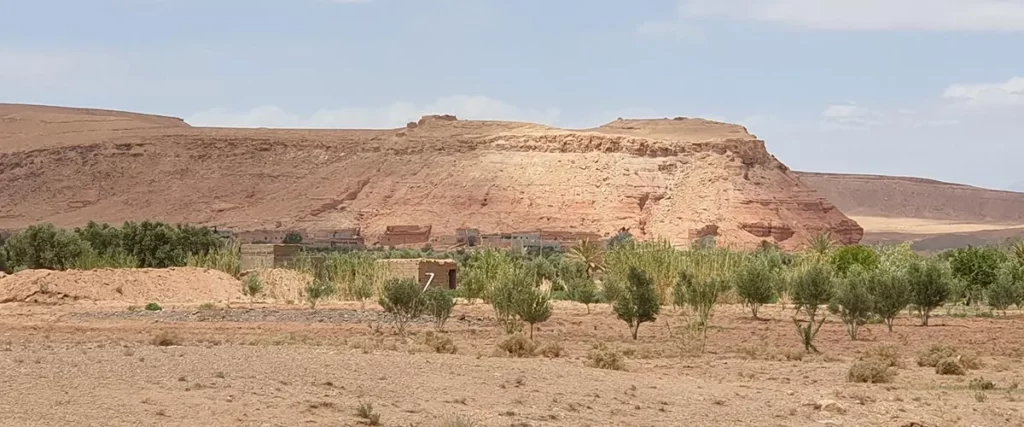
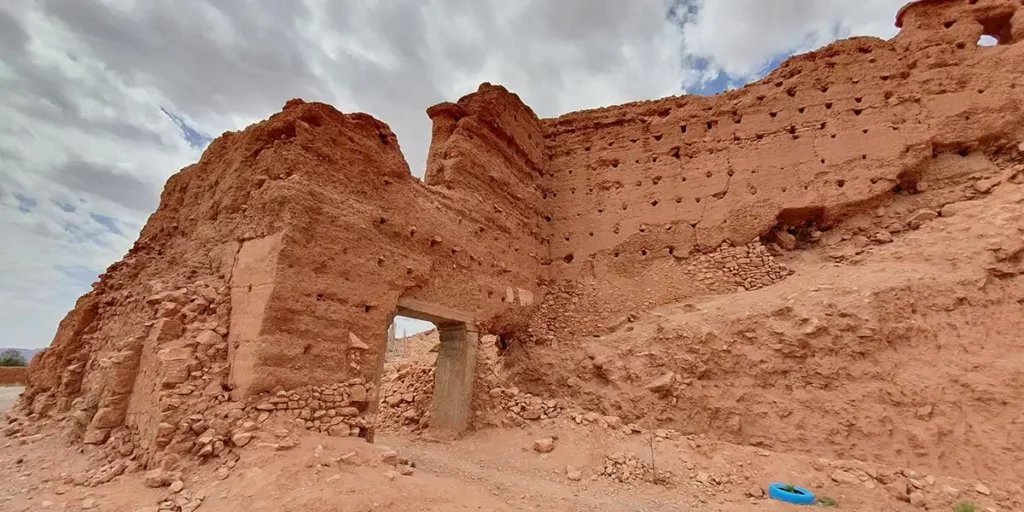
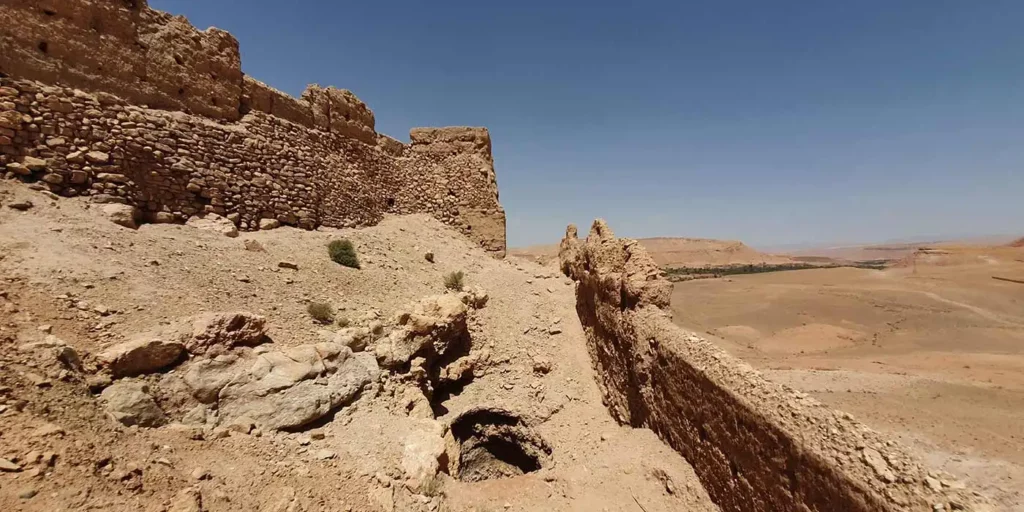
After travelling the few kilometres that separated him from it, he stopped to make out from a distance the remains of what appeared to be a fortress punctuated by towers, climbing the slopes of a mountain in order to encircle it and thus protect other scattered ruins marking the site of former buildings. He took the time to sketch the overall view, as well as its most unusual feature, in the form of an entrance gate. Even today, what remains of the structure, and the imposing width of its enclosing walls, suggest the importance of the place and lend weight to the idea that someone of considerable standing must indeed once have lived there.
In search of the lost princesses
Charles de Foucauld nevertheless admitted that he placed little faith in the reality of this beautiful legend. He explained that the story he had been told stated that, with the arrival of the Muslim armies from the seventh century onwards, this Christian royalty fell and the princesses were forced to flee in haste. He considered, moreover, that the ruins, despite appearing in similar form in each of the three places where the sisters were said to have settled, must instead have been the remains of old kasbahs built by one of the sultans.
His conclusion, however, contradicts his own observation that these vast territories had always remained beyond the control of any sultan. More importantly, it runs up against the sheer reach of a legend that has carried the story of the princesses through the centuries and which rests upon other factual observations that the explorer, strangely, had not made at the time.
It is within the ksar of Aït Ben Haddou, only a few kilometres from the ruins of Tasgedlt, that, while wandering through the maze of its narrow streets, one comes across a troubling element that rekindles the glimmer of the legend. The oral tradition of the village relates that a very ancient well, situated between the first two defensive walls that once protected the village and its granary, bears the name Anou n’Tarmouyte — the well of the Christian woman.
More striking still, when one tries to learn a little more about this strange name, the elders of the ksar community are fond of telling their own version of the story. According to them, King Ouâd did indeed exist in very distant times, but he had four daughters, not three. The fourth, named Aïssatou, took over the reins of power after her father’s death and is said to have established herself precisely in the place that would later become the ksar of Aït Ben Haddou.
Still according to their account, it was she who had the well dug and, when the Muslim troops arrived, she was indeed forced to flee to escape their assaults, leaving the village through its northern gate and heading towards Telouet, no doubt in the hope of reaching the other side of the Atlas.
Today, a ruined tower overlooking this ancient well, on the spot where the northern gate of the ksar once stood long ago, is known as L’Borj n’Tarmouyte — the tower of the Christian woman.
Morocco, a meeting place for faiths and traditions
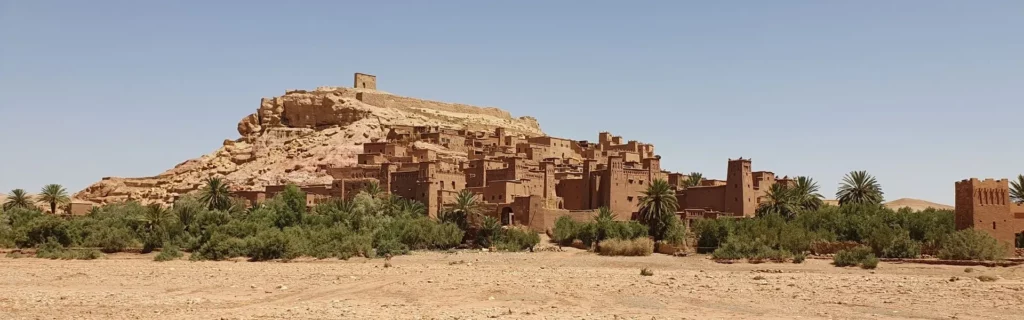
Standing on the banks of the Ounila wadi, the fortified village — an igherm in the Amazigh language — of Aït Ben Haddou has been known throughout the world since its inscription on UNESCO’s World Heritage List in 1987. Its distinctive silhouette has become a symbol of Amazigh architecture in Morocco and, ultimately, of Morocco itself. Once a stopping place for the great camel caravans of trans-Saharan trade, the imposing ksar was nevertheless passed by Charles de Foucauld and his guide without their stopping there, and so they passed by the story of Aïssatou, the fourth Christian princess.
The legend and the traces that, for a little while longer, remain alive in the memory of the elders remind us that, in Morocco, before the seventh century and the arrival of the first troops of General Uqba ibn Nafi al-Fihri from the Arabian Peninsula, the Amazigh population, native to these territories, had already welcomed, over a period of nearly a thousand years, communities from the East carrying Phoenician, Jewish, Roman or Christian cultures.
What, then, are we to make of these movements of people that brought together so many faiths and traditions? How far might this intricate mixture have flowed? Upon what fertile, or even arid, lands might it have flourished into a community, a principality or a kingdom?
The wandering of the oppressed as the first vehicle for the spread of the faith
The final words spoken by Jesus of Nazareth, as reported in the Gospel of Mark, might suggest that the expansion of Christianity arose above all from ideological determination:
Then he said to them, « Go into all the world and preach the gospel to all creation »
Mark 14.15
The reality, as so often, is more complex. The disciples and followers of Jesus, commonly known as the Galileans, constituted after his death only one group among many within a Judaism that was certainly dominant but was then fragmented and undergoing a crisis of meaning. Their wandering began very quickly, however, with their expulsion from Jerusalem after the lynching, around the year 35, of one of the first charismatic figures among these Jews in the process of becoming Christians, a man named Stephen, who has since been regarded as the first Christian martyr.
These first exiles would soon establish themselves nearby, in Antioch or Cyprus, in Phoenicia or Damascus, creating the first centres of what would slowly become a new religion.
The destruction of the Temple of Jerusalem by the Roman armies in the year 70, commanded by Titus during the reign of his father Vespasian, set in motion a lasting dynamic of dispersion among the Jewish people, whatever their confession.
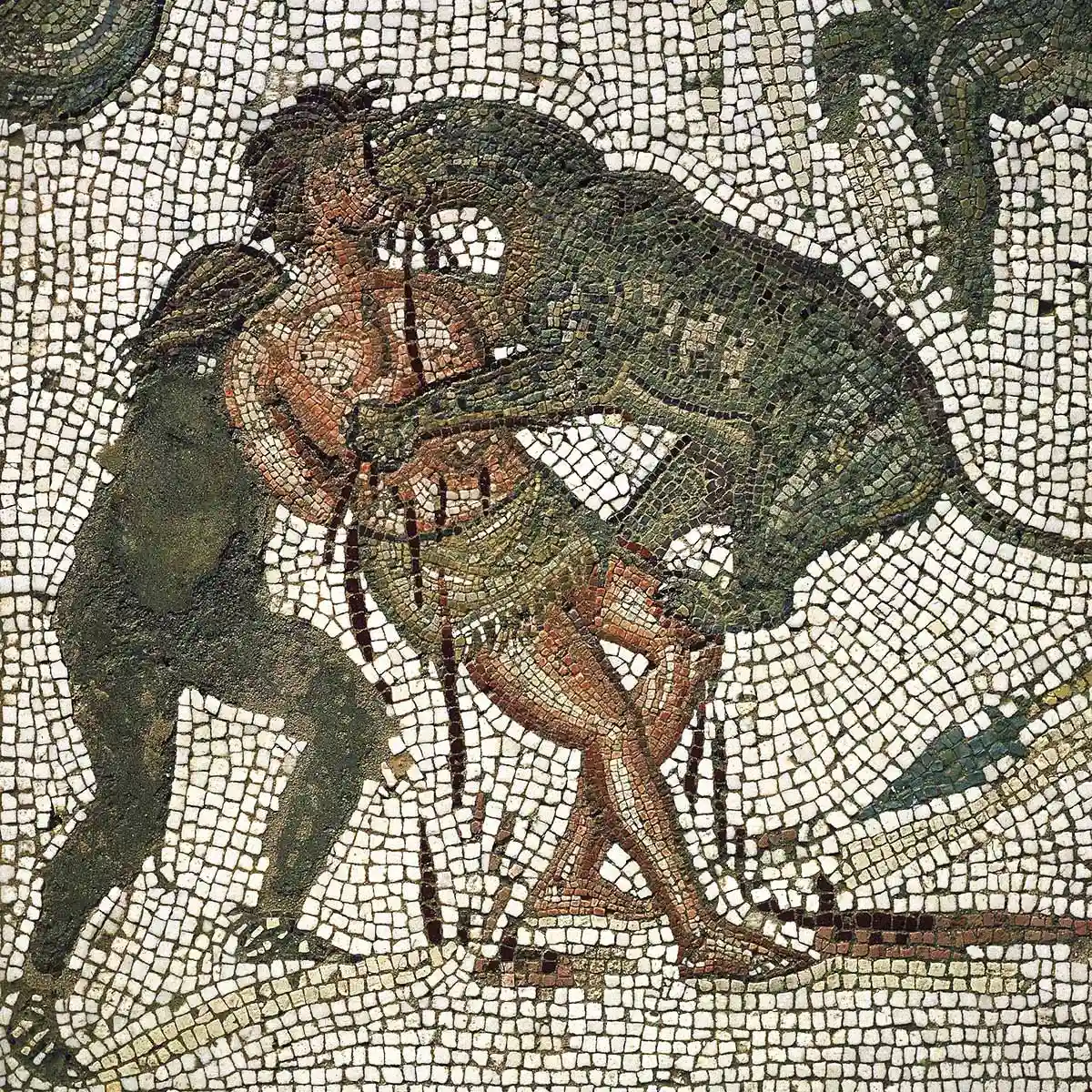
El-Jem Archaeological Museum, Tunisia
The emergence of African Christianity
The arrival of these exiled populations in the territories of North-West Africa was a natural development, not least because of the attraction of Carthage, in present-day Tunisia, a city under Roman rule since 146 BC and home for a long time to an important Jewish community. In 180, history records that twelve Christians, the martyrs of Scilli, were executed there on the orders of the proconsul of Africa and, scarcely fifty years later, a Christian community had become established to such an extent that the Bishop of Carthage, its leader, was able in the 240s to convene a council bringing together nearly a hundred other bishops from neighbouring Christian communities.
Bishop : the word comes from the Greek episkopos, literally meaning “overseer”, in other words the moderator or person responsible for a community. Source: Wikipedia.
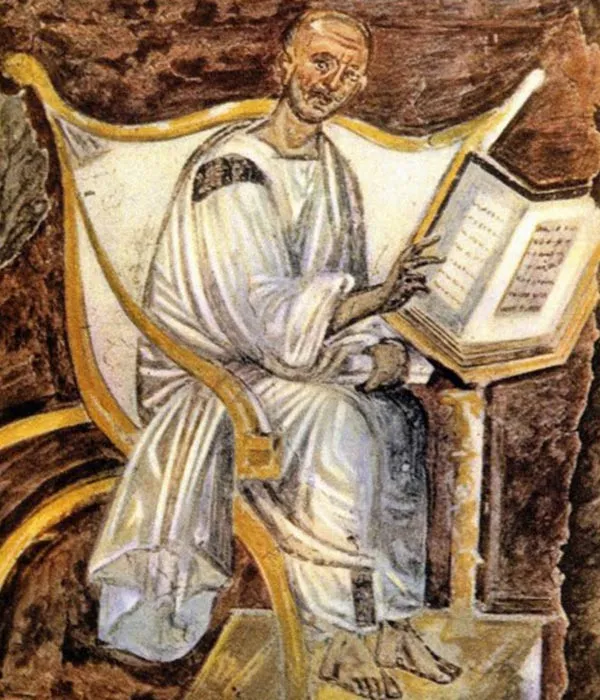
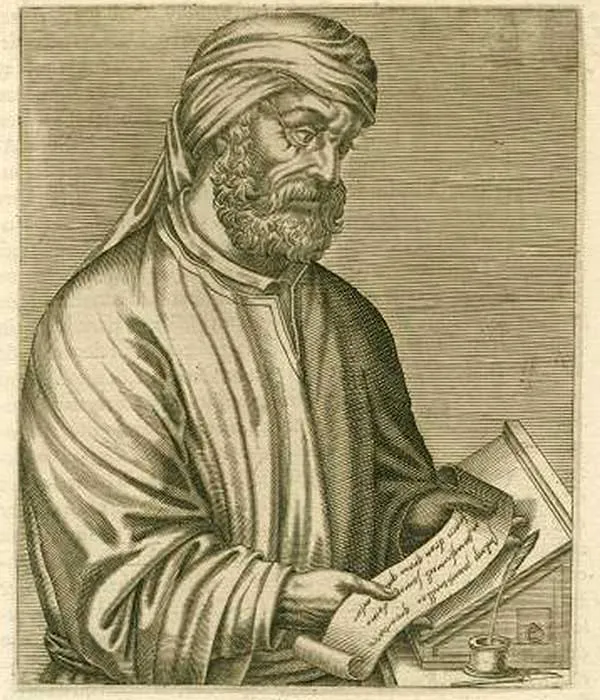
Carthage would thus become one of the great centres of Christianity in Africa, from which important North African figures emerged, such as Tertullian, Cyprian and Augustine of Hippo, who would remain in history as Saint Augustine.
At the end of the second century, the writer and philosopher Tertullian testified in one of his works to the rapid expansion of Christianity. Addressing the Roman authorities, he wrote:
« We are but of yesterday, and we fill everything: your cities, your islands, your fortresses, your councils, your palaces, your senate, your public places… »
Tertullian / Apologetics – Source: History of Morocco / François Decret
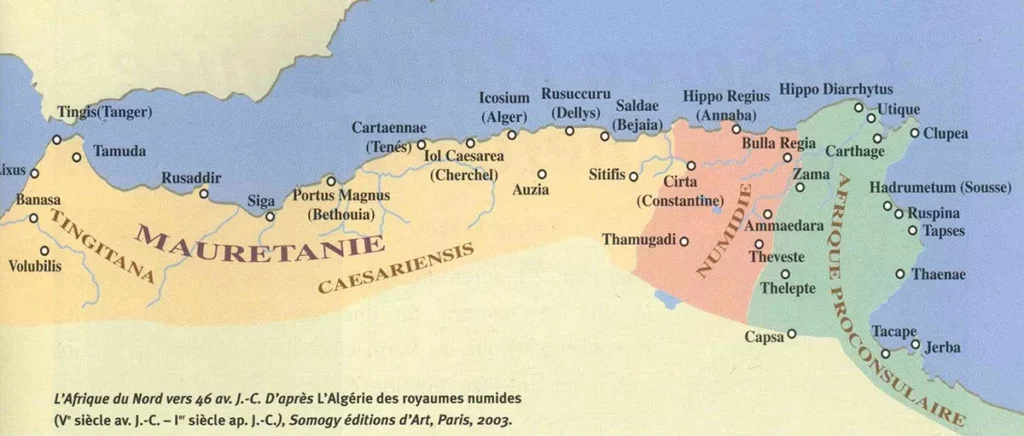
Christianity is thus considered to have first taken root in the already Romanised towns of the ancient Amazigh kingdom of Mauretania, also known as the Kingdom of the Moors, under the reign of different rulers such as Bocchus, Juba II and Ptolemy. This was the case in Tangier (Tingis) or Volubilis, Asilah (Zilis), Ceuta (Septem), Larache (Lixus), Tetouan (Tamuden-sis) and Salé (Salensis).
But once again it was under the pressure of violence that the dispersal of the new believers increased, and some of them may have been driven to leave exposed areas such as the large cities and seek refuge farther inland, precisely beyond the mountains. The fierce persecution unleashed against the Christians of Africa at the beginning of the fourth century, under the Roman emperor Diocletian, must therefore have caused numerous further exoduses.
Mosaics of Hagia Sophia, Constantinople
Amazigh kingdoms as refuges for Christianity
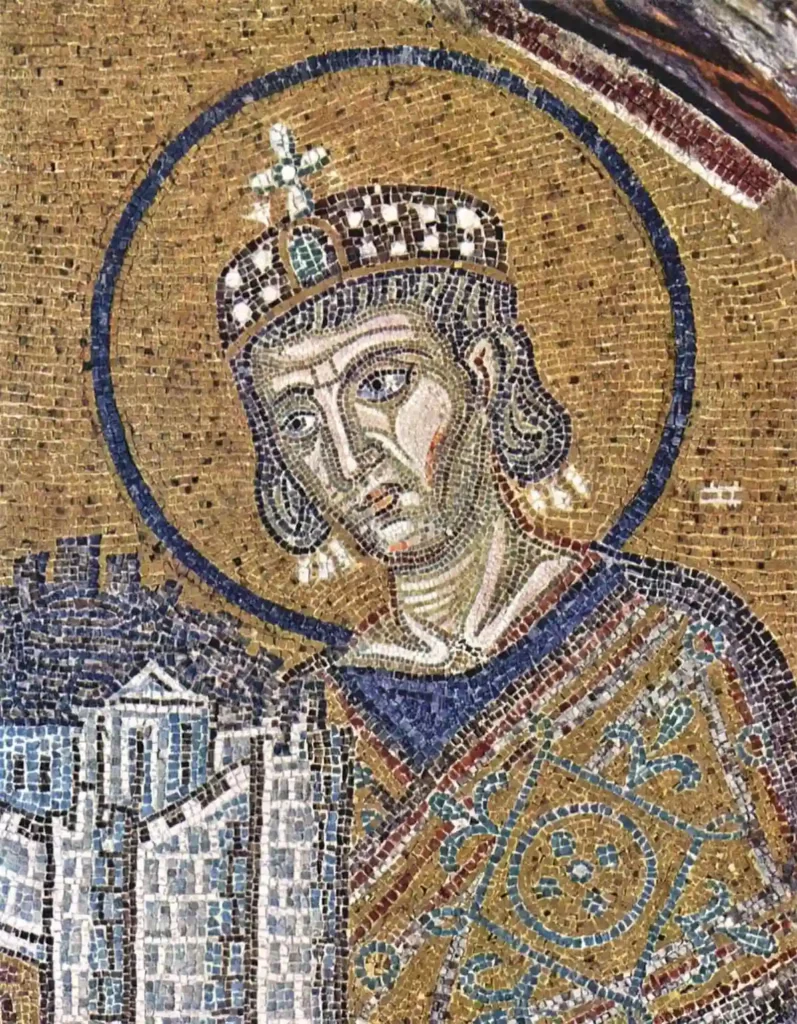
It would take the Constantinian turning point and the recognition of Christianity in 313 for a period of relative calm to allow the new religion to develop more peacefully over the following decades. Yet this final period of persecution by Roman power also led, within a still emerging Christianity, to the rise of a divergent ideological current that gained considerable support among the poorest and least educated communities, particularly across the vast rural areas.
This current, known as Donatism, opposed the new alliance being forged between Christianity and the Roman state. Its followers and thinkers sought to define a vision of faith more firmly rooted in what they called the Holy Spirit, that is, the flowing of the spirit of God among human beings. The movement would eventually be declared heretical and fiercely opposed, but before that happened it had spread among the population a vision of Christianity strongly centred upon the cult of saints and martyrs, something that cannot help but recall the ease with which Amazigh tribes would embrace Sufism a few centuries later and allow, in rural Morocco, the development of a popular tradition dedicated to the glory of saints, illustrated by the emergence and multiplication of zaouias.
Zaouïa : is a Muslim religious building which constitutes the center around which a Sufi brotherhood is structured. By extension, it often refers to the brotherhood itself. Source: Wikipedia
Chaos returned in force with the invasion of the Vandals from Europe in 429. This period of great violence lasted almost a century, during which Vandal rulers, already followers of Arian Christianity, imposed a different Christian doctrine, once again triggering persecution, confiscation of property, destruction of places of worship and forced conversion. The consequence was, yet again, another exodus for Christians anxious to remain faithful to their original beliefs, this time towards the interior territories of the country where various Amazigh kingdoms and principalities had emerged, fiercely resistant to successive invaders.
All these excluded and persecuted populations must have found welcoming havens of peace within these Amazigh territories. The rulers of these kingdoms, themselves often Christian, continued for a long time to use Roman titles, as did the sovereign Masuna within the Kingdom of the Moors and Romans, who was described as Rex gentium Maurorum et Romanorum.
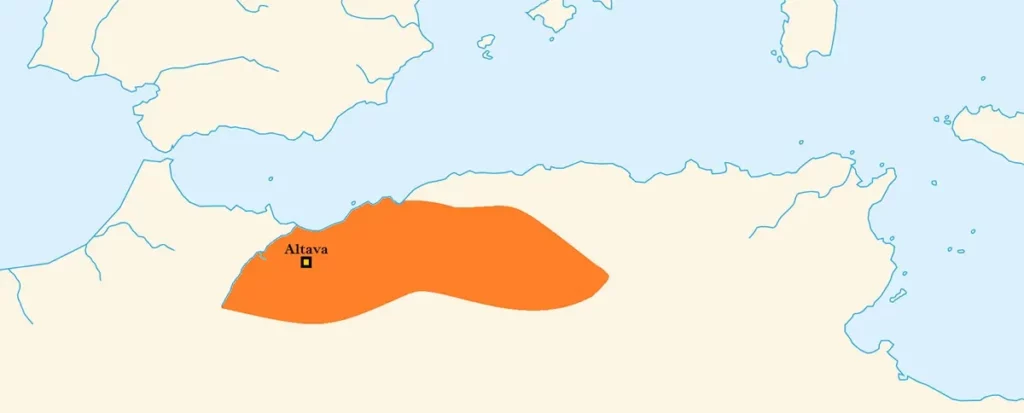
The Kingdom of Altava succeeded it at the end of the fifth century and maintained an Amazigh Christian culture across the territories of the former province of Mauretania Caesariensis, corresponding today to central and western Algeria and part of north-eastern Morocco.
The scenario of chaos resumed with the invasion of the Vandals from Europe in 430. This period of great violence lasted almost a century and saw the emergence of another version of Christianity, called Arianism, which once again brought about a new cycle of persecution, confiscation of property, destruction of places of worship and forced conversion. Again and again, the consequence of this was a new exodus for Christians loyal to their original faith. Once again this exodus was into the interior territories of the country, where various Berber kingdoms and principalities had emerged fiercely resistant to all successive invaders.
All these excluded and persecuted peoples had to find benevolent havens of peace in these Amazigh territories. The heads of these kingdoms, often Christian, carried Roman titles for a long time, as did the sovereign Masuna within the Kingdom of the Moors and the Romans, and who was designated as the Rex gentium Maurorum and Romanorum.
At the end of the 5th century, the kingdom of Altava took over from the Kingdom of the Moors and Romans and brought to life a Christian Berber culture in the territories of the former province of Mauretania Caesarean. Today this corresponds central and western Algeria and part of north-eastern Morocco.
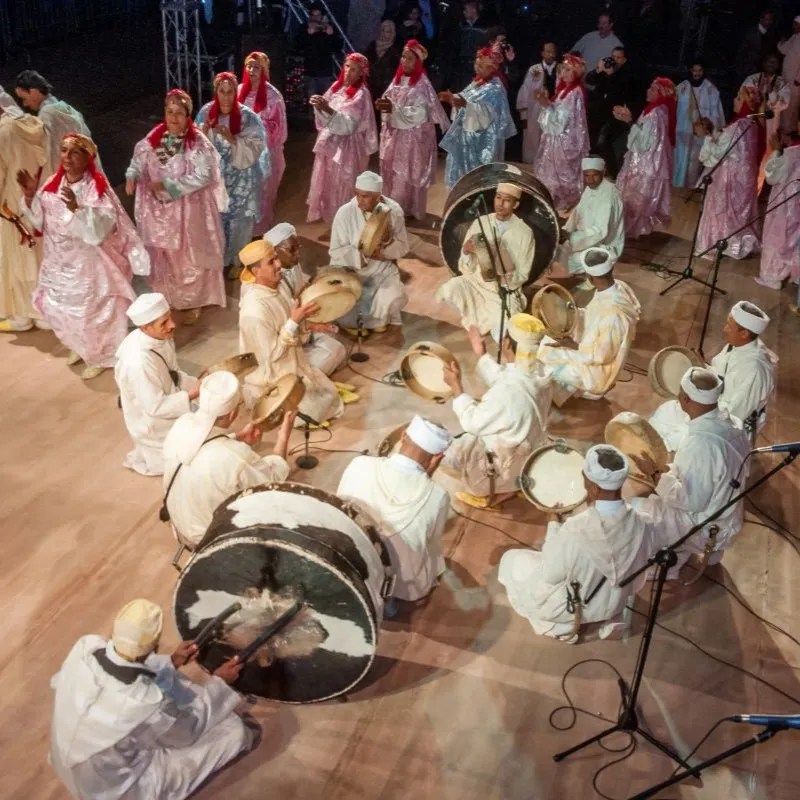
The music of their existence still resonates today
The establishment and influence of Christianity in North Africa is therefore a historical reality throughout the first centuries of the first millennium. Its diffusion beyond the urban centres is more than probable, towards the territories of the interior where the powers of the time exercised almost no authority. Confessional confrontation with the paganism still widespread among the indigenous Amazigh populations must certainly have created friction, but important theological or ritual bridges must also have facilitated conversion to Christianity.
We also know that the arrival of Islam in the seventh century, as far as the shores of the Atlantic, did not bring about the immediate disappearance of Christian communities. Their complete disappearance would occur five centuries later under the Almohad dynasties, at the same time as other Muslim experiences across the Maghreb, such as Shiism and Kharijism, also disappeared.
Despite the absence of historical sources capable of attesting to it today, it is therefore probable that the territories of South-East Morocco may once have been home to a Christian kingdom.
The existence of Doula, Zelfa, Stouka and Aïssatou, the four princesses, daughters of King Ouâd, belongs within this hypothesis, as does their rule over the lands that today form the rural commune of Aït Zineb.
The persistence of their memory among the inhabitants of the ksar of Aït Ben Haddou, at the time of Charles de Foucauld’s passage as well as today, strengthens the possibility that something lies behind this story: the music of their names still resonates in the names of the places that are said to have welcomed them long ago.
Where Doula Bent Ouâd is said to have settled, in the fortress of Tasgedlt visited by Charles de Foucauld, the douar today bears the name Tadoula, the prefix Ta being, in the Amazigh language, the expression of the feminine form of a noun. The douar where Stouka Bent Ouâd is said to have lived is today called Taskoukt.
And the ksar of Aït Ben Haddou, once said to have been the home of Princess Aïssatou, was for centuries known by the name of its official founders, the ksar ofAït Aïssa.
One final clue casts a magnificent light upon the legend, almost as though to validate it for ever: Aïssa is the Arabic form of the name Jesus.

For more than twenty years, Éric Anglade has lived in a village of South-Eastern Morocco, where he explores and documents the region’s history, heritage, and living traditions. He founded sudestmaroc.com as a space for sharing fieldwork and cultural insight, bridging local knowledge with global perspectives. He also works alongside women carpet-weavers to help sustain their craft and welcomes travellers at Le Jardin de Yuda, his guesthouse envisioned as a meeting place for exchange and transmission.
Staying near Aït Ben Haddou
Le Jardin de Yuda is my home in a small Amazigh village between Ouarzazate and Aït Ben Haddou. I welcome a small number of guests there, in an earth-built house surrounded by a garden – Eric Anglade
More to Explore

Leave a Reply