Planning your trip to South-Eastern Morocco
Between the High Atlas, the Dadès and Drâa valleys, the oases of the Tafilalet and the fringes of the Sahara, travelling through South-Eastern Morocco requires a few useful points of reference. Distances cannot be measured in kilometres alone, the seasons vary greatly from one area to another, and some habits that are useful in towns become less so once you reach the villages, mountains or desert. Here are the essentials for planning your trip and, above all, taking the time to discover the region.
Overview
When to visit South-Eastern Morocco?
South-Eastern Morocco can be visited all year round, but conditions vary greatly depending on altitude and season.
Spring and autumn are the most pleasant times of year: mild temperatures, green and flowering valleys, and moderate heat on the edge of the desert.
In winter, the days are often sunny, but evenings and nights can be cold, particularly at altitude. It is also an excellent season for spending time in the desert.
In summer, temperatures are high in the pre-Saharan valleys, so mornings and late afternoons are the best times to explore.
Throughout the region, there can be a considerable difference between daytime and night-time temperatures.
Understanding South-Eastern Morocco
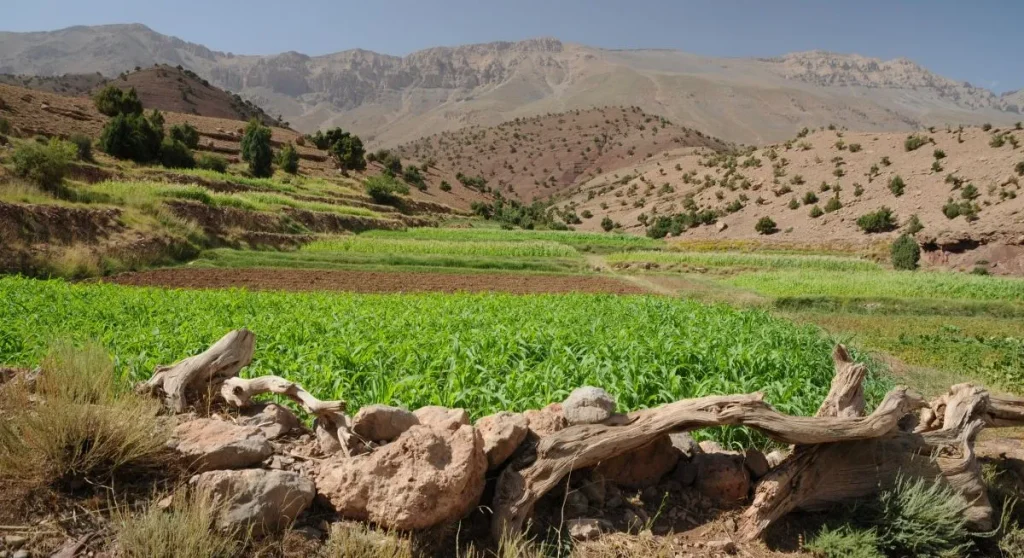
South-Eastern Morocco is not a single destination. It is organised around several main access routes and a number of distinct travel areas.
From Marrakech: this is the main western gateway. The road crosses the High Atlas before reaching the kasbah of Telouet, the famous ksar of Aït Ben Haddou and then Ouarzazate, followed by the Skoura oasis and the Dadès Valley as far as Tinghir. From Ouarzazate, you can also follow the Drâa Valley and its oases towards Zagora, continuing further south to the desert beyond M’Hamid El Ghizlane.
From Agadir and the Souss: via Taroudant and Taliouine, the road leads towards the Siroua massif, Tazenakht, then Ouarzazate and the Drâa Valley.
From Fez or Meknes: the route passes through Midelt and then Errachidia, gateway to the Tafilalet and the Ziz Valley, before reaching the dunes of Merzouga.
By air: Ouarzazate, Zagora and Errachidia all have airports.
The main travel areas
Ouarzazate and Aït Ben Haddou: the central gateway to South-Eastern Morocco.
The Dadès Valley and Tinghir: oases, cultivated valleys and spectacular landscapes.
The Drâa Valley, Zagora and the desert beyond M’Hamid El Ghizlane: a major route south through palm groves, ksour and old kasbahs.
The Siroua and Tazenakht: a mountain region known for carpet weaving and closely connected to the Souss.
Midelt, the Ziz, the Tafilalet and Merzouga: a transition zone between the Atlas Mountains, valleys, oases and desert.
Two gateways to the desert
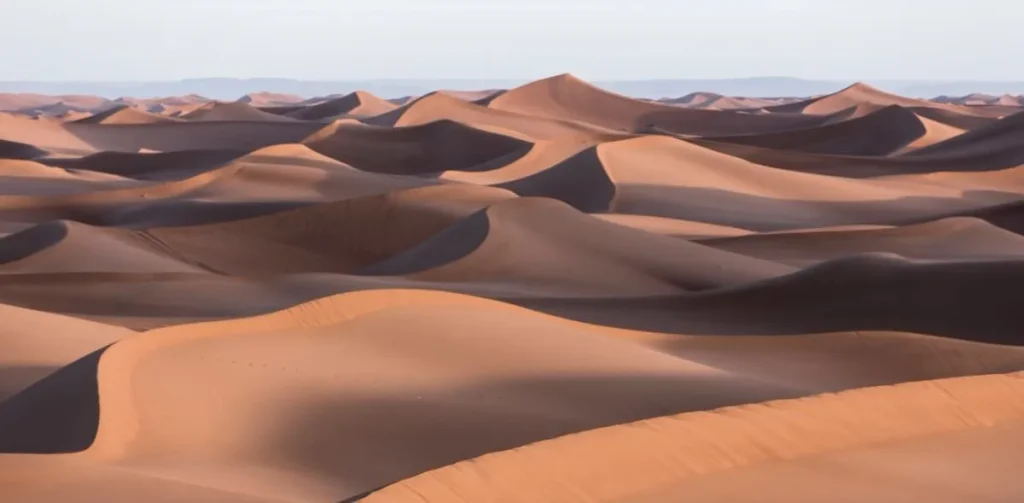
Merzouga opens onto Erg Chebbi; Zagora leads towards Erg Chigaga and the Saharan expanses further south.
Travelling by car
A car is the most flexible way to explore South-Eastern Morocco.
Be aware that distances can be deceptive: mountain passes, villages, roadworks and winding roads all add to journey times. Think in terms of driving time rather than kilometres, and avoid planning too many long stages.
On secondary roads or tracks, ask locally about road conditions and fill up with fuel before entering isolated areas.
Driving also requires constant attention: unexpected overtaking, motorcycles, pedestrians or animals may appear suddenly, particularly near villages and at dusk. Observe speed limits carefully: radar checks are frequent, including on long straight stretches of road and on the approaches to towns and villages.
| Route | Distance | Driving time |
|---|---|---|
| Marrakech → Ouarzazate via the Tizi n’Tichka Pass | 196 km | 4 to 4½ hrs |
| Ouarzazate → Aït Ben Haddou | 34 km | 40 min |
| Ouarzazate → Skoura | 40 km | 40 min |
| Ouarzazate → Tinghir | 163 km | 2½ to 3 hrs |
| Tinghir → Todgha Gorges | 15 km | 20 min |
| Tinghir → Merzouga | 191 km | 3 to 3½ hrs |
| Errachidia → Merzouga | 123 km | 1¾ to 2 hrs |
| Ouarzazate → Agdz | 66 km | 1 hr 10 to 1 hr 20 |
| Ouarzazate → Zagora | 157 km | 2¾ to 3 hrs |
| Zagora → M’Hamid El Ghizlane | 95 km | 1 hr 45 |
| Ouarzazate → Tazenakht | approx. 90 km | approx. 1½ hrs |
| Agadir → Ouarzazate | 339 km | 5½ to 6 hrs |
| Fès → Midelt | 201 km | 3½ to 4 hrs |
| Midelt → Errachidia | 139 km | 2 to 2¼ hrs |
Driving times are approximate and exclude stops. Traffic, roadworks, weather and mountain roads may increase journey times.
Other means of transport
Long-distance coaches connect the main towns, including Ouarzazate, Tinghir, Zagora, Errachidia, Midelt and other regional centres.
The main coach companies are CTM and Supratours.
Shared grand taxis also play an essential role. They connect towns and smaller centres, sometimes over considerable distances, and provide access to destinations that are less well served by coaches.
Locally, petits taxis, shared taxis and informal transport complement this network.
Read more: Transport in Ouarzazate: how to get here and travel around the region
Festivals, harvests and moussems
The calendar of South-Eastern Morocco is marked by harvests, moussems and several major festivals. Exact dates can vary from year to year.
April: International Nomads Festival in M’Hamid El Ghizlane.
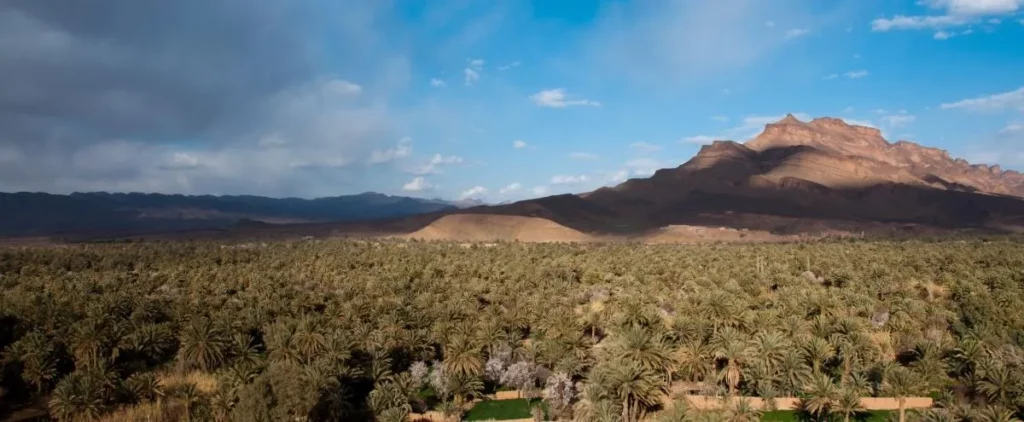
April–May: rose harvest in the Valley of Roses, followed by the Rose Festival in Kelâa M’Gouna.
September: Imilchil Marriage Moussem and the Festival of Mountain Music.
October: apple harvest in Midelt and date harvest in the Tafilalet, together with the International Date Fair in Erfoud.
Autumn: National Ahwach Arts Festival in Ouarzazate.
Mid-October to November: saffron harvest followed by the Saffron Festival in Taliouine.
Many other moussems and village festivals complete this calendar, often with dates announced only shortly beforehand. Always check dates before planning a trip around a particular event.
Money, bank cards and cash
The currency is the Moroccan dirham (DH or MAD). Bank cards are widely accepted in towns, where cash machines are also common.
In villages, souks, small restaurants, taxis and workshops, carry cash and small denominations.
What about the rial?
In some shops and markets, prices may still be quoted in rials:
1 dirham = 20 rials. So 100 rials is equal to 5 dirhams.
Phone, Internet and navigation
Mobile coverage is good in towns and in most inhabited valleys. A Moroccan SIM card or eSIM makes it easy to stay connected.
In the mountains, isolated areas and desert regions, the signal may disappear. Download offline maps before setting out on secondary routes.
For the actual condition of a road or track, local information is often the most reliable.
Respecting places and people
In villages as well as towns, a few simple rules help make encounters easier.
Photography: ask permission before photographing someone at close range, particularly in villages and souks.
Clothing: modest clothing is preferable in rural areas and near religious sites.
Guides: at tourist sites, people may spontaneously offer their services. Always agree on the route and price before following them; for an organised excursion, use a professional guide.
Tips: they are appreciated but not compulsory. A few dirhams are often enough for a small service.
Ramadan: daily life changes during the month of fasting. Some shops and restaurants alter their opening hours; out of respect, avoid eating or drinking conspicuously in front of people who are fasting.
Water, food and health
Bottled water is readily available in towns and villages. In hot regions, the main thing is to drink regularly and protect yourself from the sun.
Bring enough of any personal medication to last for the duration of your stay.
Travel insurance covering medical care, assistance and repatriation is recommended, particularly for hiking, mountain stays or travel in isolated areas.
As health recommendations may change, check the latest advice from official sources before travelling.
Entry requirements for Morocco
Entry requirements depend on your nationality. Depending on your circumstances, you may not need a visa in advance, or you may need a visa, e-Visa or electronic travel authorisation.
The usual maximum length of a tourist stay is 90 days, and a valid passport is required.
As regulations may change, check them before departure on the official Accès Maroc portal, particularly if you are travelling with a vehicle, an animal or equipment subject to customs formalities.
Key points
- Spring, autumn and winter are the most pleasant seasons for travelling throughout South-Eastern Morocco.
- Distances can be deceptive: mountain roads, villages and stops often make journeys longer than expected.
- A car makes exploring the region considerably easier, but buses, coaches and grand taxis also make it possible to travel between the main towns.
- Bank cards are widely used in towns and tourist establishments, but cash remains essential in many villages, souks and small shops.
- Differences between daytime and night-time temperatures can be considerable, including on the edge of the desert.
- It is better to build a journey around individual valleys and regions than to plan a succession of long daily stages.
A question? Something to share?
Use our contact form.
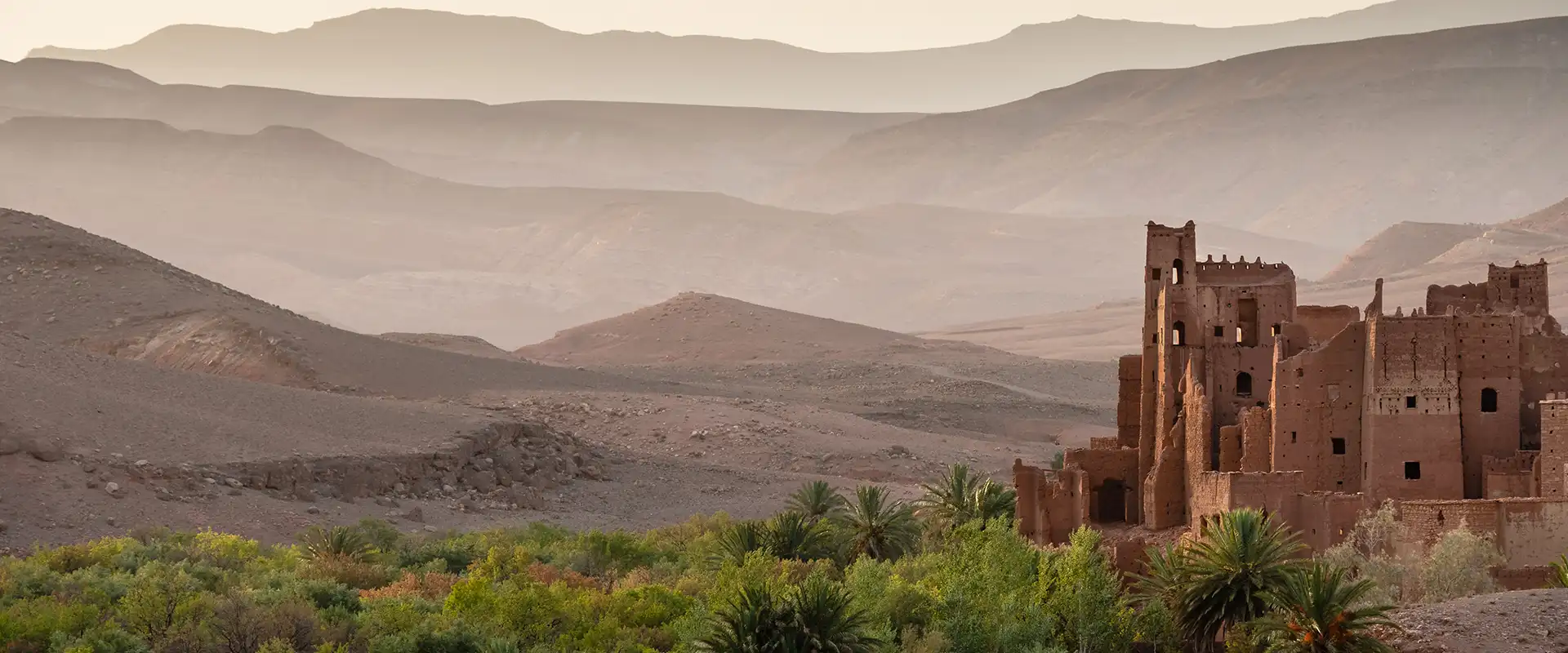
Discover South-East Morocco