What if schoolchildren across the Maghreb had been taught that their common ancestors were the Berbers? This article begins with that question and invites us to revisit North African history from a different perspective.
It explores how Berber — or Amazigh — identity, long neglected or underestimated, might have provided a powerful source of cultural unity among the peoples of the region.
From the ancient origins of the Berbers to a heritage that remains alive today in languages, traditions and ways of life, this is a journey back to the roots — and an attempt to understand how embracing a shared memory can positively shape the common future of the Maghreb.
Overview
The identity of peoples, between alchemy and narrative.
Everywhere, in a shared past, there is the Berber.
The Berber paradox through time.
The Berber, the “other” who had to come from elsewhere.
In search of an impossible origin.
This “stranger”, indigenous for 9,000 years.
The Berber tree unfolds.
The mosaic of a story without borders.
Had this simple phrase echoed in the minds of Moroccan schoolchildren throughout their years at school — as “our ancestors, the Gauls” once did for generations of French children — the face of Morocco might have been changed.
And if, alongside them, young Algerians, Tunisians, Libyans and so many others scattered across the north of the African continent had repeated the same refrain — our ancestors, the Berbers… — it is quite possible that the face of the world itself might have been different.
Imagine that little tune passing through the minds of these children, generation after generation. The peoples of the Maghreb might by now — and perhaps for a long time — have been naturally united within a single, shared national entity.
Better still, the North African origin of anyone living or travelling in Europe might immediately have been understood as synonymous with Berber identity and might have become, more than a simple visa, a genuine passport for moving freely around the world.
Of course, this picture belongs to fiction and today describes no more than an impossible utopia. From a very early stage in their history, the populations of the southern Mediterranean were inevitably brought into contact and mixed with peoples arriving from every direction.
And some territories, because of their geographical position — Morocco, for example, at the meeting point of two continents — became true crossroads, places where the cultural traces of successive waves of human movement were engraved more deeply than elsewhere.
The identity of peoples, between alchemy and narrative
In reality, the process through which countries construct their identity has little to do with the genealogy of peoples. More often than not, it is a matter of dialectic rather than history. The primary intention is to construct the narrative of a people, rather than simply to recount its history. The historical accuracy of such identity narratives is clearly secondary.
Ultimately, it is almost always a form of alchemy through which human diversity is melted down, fused and recomposed, before emerging as a third, synthetic unity — one capable of giving a nation, at a particular moment in its history, the means to cohere and exist as a body.
It was precisely this process that allowed Morocco, in the preamble to its 2011 Constitution, to affirm that its unity, forged through the convergence of its Arab-Islamic, Amazigh and Saharan-Hassani components, had been nourished and enriched by its African, Andalusian, Hebrew and Mediterranean tributaries.
Everywhere, in a shared past, there is the Berber
Whatever narrative is being pursued, whatever forms of human diversity are being brought together, the makers of a nation’s identity always work with fundamental materials, with its deepest underlying components.
And everywhere across northern Africa, in a past shared by all, there is the Berber.
Wherever one looks, from the eastern to the western reaches of North Africa, there has always been this same human substratum, rooted in a deep past common to all the territories concerned.
This is a factual reality, impossible to erase despite the many attempts made over the centuries, undeniable despite the ambiguity surrounding this enigmatic designation: Berber / Amazigh.
Today, the Berber is indisputably regarded as the oldest common denominator linking so many peoples and nations. Yet one fact remains: all these peoples and nations have been unable to make this common ancestor their own — and therefore unable to share it.
The Berber paradox through time
The mystery contained in the very designation “Berber” partly explains the difficulties that emerged, century after century, in constructing a Berber identity capable of establishing itself as something shared by all.
Gabriel Camps, one of the foremost specialists on the subject, described in striking terms what might be called the Berber paradox:
“In fact, today there is neither a Berber language, in the sense that it would reflect a community conscious of its unity, nor a Berber people, and still less a Berber race. On all these negative points, scholars agree… and yet the Berbers exist.”
Gabriel Camps, Les Berbères, mémoire et identité, Éditions Errance, 1980.
The historian does not attempt to resolve this paradox. Faithful to scientific rigour, he observes that the Berbers of the distant past may not have used a truly common language, but that they did at least possess:
“… an original writing system which once spread, like them, from the Mediterranean to the Niger.”
Gabriel Camps, Les Berbères, mémoire et identité, Éditions Errance, 1980.
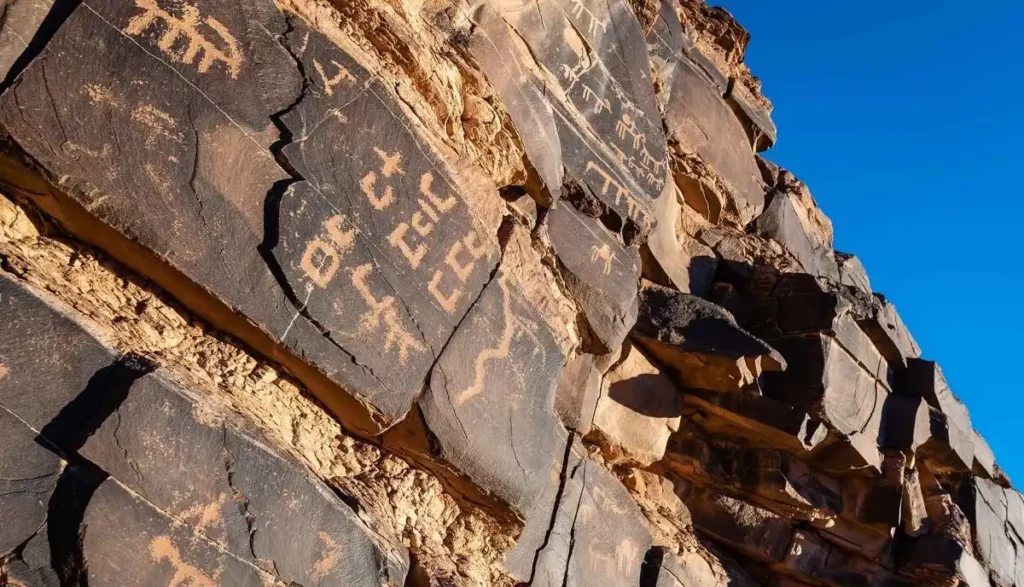
Tifinagh script engraved in rocks in south-east Morocco
This script, generally described today as Libyan or Libyco-Berber, survives in the Tifinagh alphabet of the Tuareg, the Amazigh community that has preserved some of the most fundamental elements of ancient Berber culture.
Very early on, however, Punic writing, then Latin and finally Arabic took its place among these peoples. Linguistic Arabisation eventually developed into socio-cultural Arabisation, to such an extent that, in some countries:
“… almost the entire population calls itself Arab, believes itself Arab and consequently is Arab. Yet very few among them have even a few drops of Arab blood in their veins — the new blood brought by the conquerors of the 7th century or by the Bedouin invaders of the 11th century: the Beni Hilal, Beni Solaïm and Mâqil, whose numbers did not reach 200,000 according to the most generous estimates.”
Gabriel Camps, Les Berbères, mémoire et identité, Éditions Errance, 1980.
The paradox is clear. Across all the territories of North Africa, and without interruption over time, vigorous intermingling took place through successive Punic, Jewish, Roman, Vandal, Byzantine, Arab, Turkish and, finally, European influences.
Yet everywhere, a local identity remained alive and meaningful despite this accumulation of outside influences. Very early on, people therefore sought to understand what exactly this Berber presence was — a presence capable both of absorbing the foreign newcomer and of maintaining its own continuity.
This mystery troubled the minds of successive arrivals to such an extent that, again and again, they made the Berber a foreigner to the very lands they had just discovered. They imagined him, like themselves, as someone who must have come from elsewhere, from some distant place. They wanted him to be anything other than simply from here.
The Berber, the “other” who had to come from elsewhere
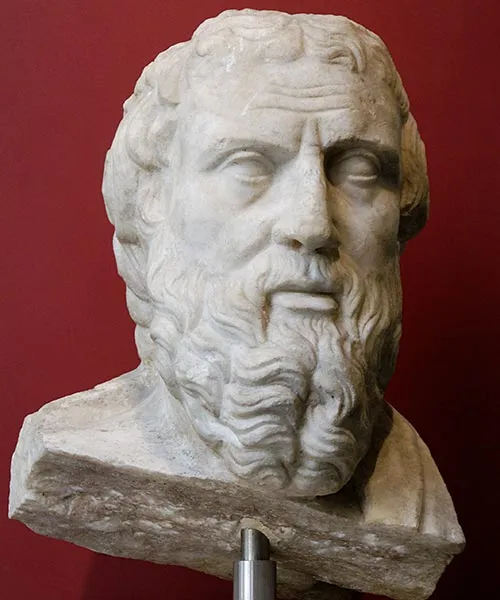
In the 5th century BC, the Greek historian and geographer Herodotus was among the first to describe the peoples inhabiting the lands stretching westwards from Egypt. He called them Libyans and distinguished between those who lived as nomads along the coast and others who were farmers, living in houses among mountainous and wooded landscapes — apparently the regions of the Atlas — whom he called the Maxyes.
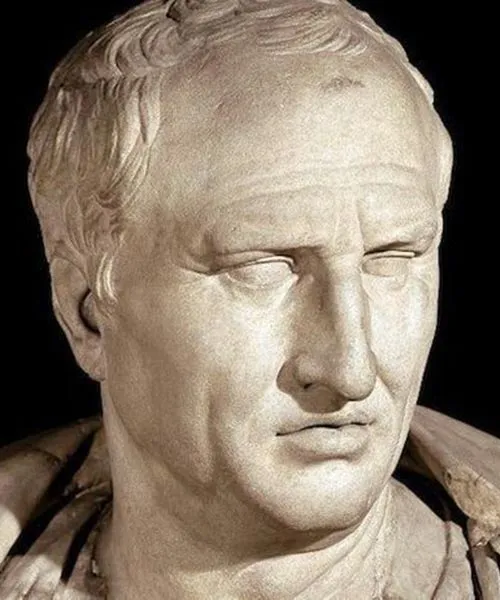
Several centuries later, his Roman counterpart Sallust offered a more detailed portrait of these indigenous populations. The nomadic group came to be associated with the name Gaetulians, while the sedentary group retained that of Libyans. According to Sallust, together they represented the populations inhabiting these territories since prehistoric times, primitive hunter-gatherers whom he described as:
“… rough and barbarous, feeding on the flesh of wild animals or on the grass of the fields.”
Sallust
Predictably, the Roman historian imagined them as having been civilised by peoples who had arrived from the East — more specifically the Medes and Persians — and who were then said to have remained in the region.
HerodotusSallust
The Medes were an ancient Iranian people who inhabited a region in what is now north-western Iran.
Gabriel Camps explains that the name Maxyes is the Greek rendering of Imazighen — the plural of Amazigh — which indigenous groups used to identify themselves as a community.
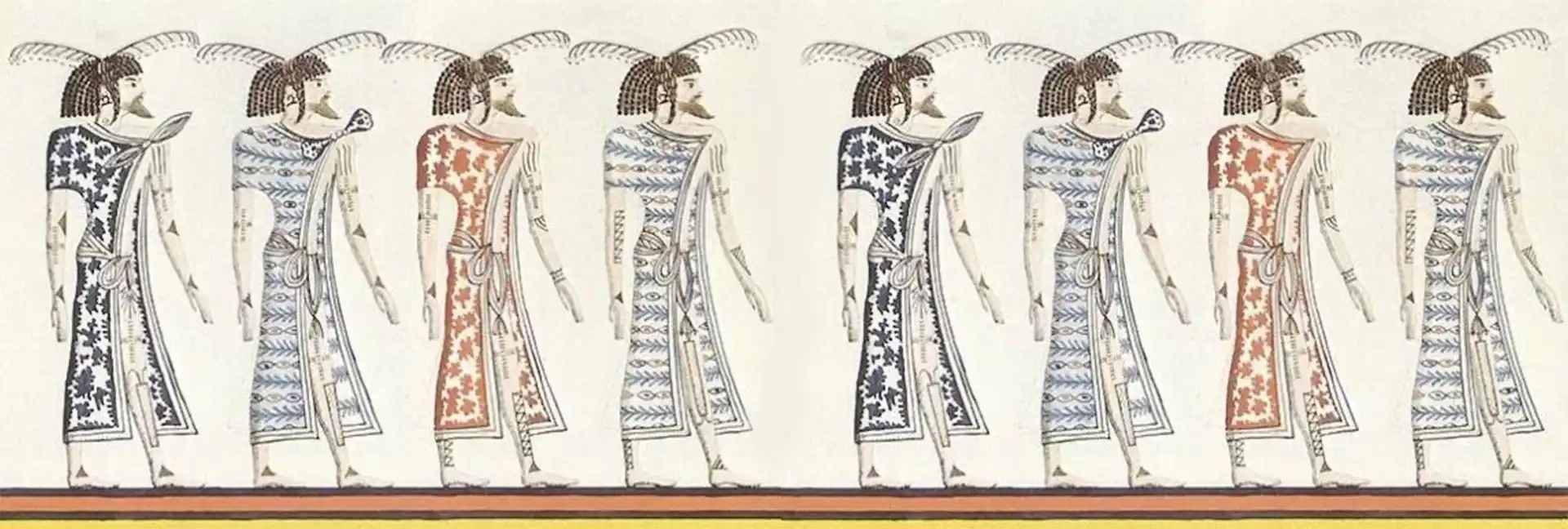
Thus, the foreigners who came to these territories between Egypt and the Atlantic Ocean gave the populations they encountered names based on their own phonetic interpretation of this ancient self-designation: Meshwesh among the Egyptians, Mazices or Madices among the Romans, and Mazigh among the Arabs.
Camps developed the theory that the appearance in ancient accounts of Mede peoples supposedly originating in the East may in fact have resulted from a distortion of the Roman designation Madices — the Imazighen encountered locally.
According to this interpretation, the linguistic distortion reflected a deeper difficulty: an inability to conceive that indigenous populations outside the Roman world might possess cultural and civilisational qualities of their own.
In search of an impossible origin
Imazighen, Maxyes, Madices, Medes… This litany of names for the Berber would later be condensed into the generic designation Moors, used to describe the non-Latinised populations of North Africa.
Yet throughout the centuries, observers continued to seek an ancestry for the Berber outside the territory in which he lived. Again and again, this mysterious Berber, despite being visibly present on the land, was connected to some distant root.
The Byzantine historian Procopius of Caesarea argued for a Phoenician origin. Saint Augustine, from his city of Hippo near Carthage, saw more specifically Canaanite roots among his compatriots. Another Greek historian, Strabo, saw nothing less than Indians behind the Moors.
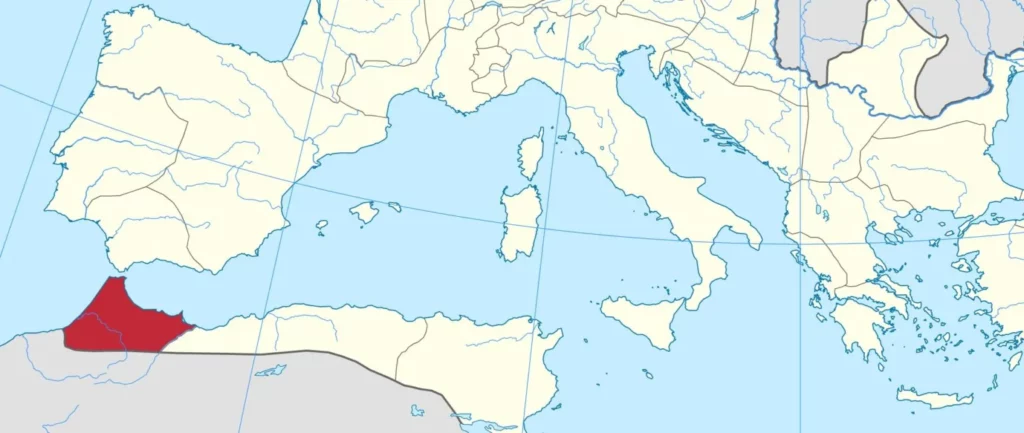
Herodotus, for his part, claimed Trojan ancestry for the Imazighen, while Plutarch described the great Greek hero Heracles leading Mycenaean communities as far as Mauretania Tingitana — northern Morocco — around 1500 BC.
Canaan is the ancient name of a region in the southern Levant. It corresponds approximately to parts of present-day Israel and Palestine, Jordan, Lebanon and western Syria. Over time, this broad region has been known by various names, including the Holy Land, Palestine, the Land of Israel and Bilad al-Sham.
Position of Mauritania Tingitana in the Roman Empire
In the 14th century, the famous historian and geographer Ibn Khaldun was more categorical still:
“The Berbers are the children of Canaan, son of Ham, son of Noah. Their ancestor was called Mazigh. The Philistines were their kin…”
Ibn Khaldun
The Philistines were an ancient people of the Near East who settled in the south-western Levant along the Mediterranean coast towards the end of the second millennium BC and during the first half of the first millennium BC.
European historians of the 19th century continued this relentless search for Berber origins. Some gave credence to eastern or Indian theories, even going so far as to attribute the dolmens and other megalithic monuments discovered in Algeria to Celtic or Gallic origins — and therefore French, or more broadly northern European ones.
This “stranger”, indigenous for 9,000 years
Anthropological and prehistoric research offers a very different picture, one less burdened by ideological preconceptions.
Human presence in North Africa, and particularly in the Maghreb, reaches back into the very distant past.
The human populations identified in the region include the early Homo sapiens of Jebel Irhoud in Morocco, the Aterian populations represented at sites such as Dar es-Soltan near Rabat, also in Morocco, and the later Mechta-Afalou populations represented at Afalou Bou Rhummel in Algeria.
These populations belong to different periods of North African prehistory and bear witness to human developments deeply rooted in the region itself, unfolding alongside broader human developments elsewhere on the planet.
In the interpretation developed by Gabriel Camps, a further stage occurred around 9000 BC with the arrival from the Near East of populations he described as “Proto-Mediterranean”, associated with the development of Capsian culture.
According to this model, these newcomers subsequently developed along different branches, each displaying particular morphological characteristics. Camps distinguished two major tendencies: more robust populations on the one hand, and more gracile ones on the other, with an infinite range of intermediate forms.
Over the millennia, these Proto-Mediterranean populations were seen as spreading across a large part of the Mediterranean world, from Libya to Italy.
Gabriel Camps could therefore write:
“With the Capsian Proto-Mediterraneans, we have the first Maghrebians whom we can, without undue risk, place at the head of the Berber lineage. This takes us back some 9,000 years! (…) These Capsians were of eastern origin. But their arrival was so ancient that it is no exaggeration to describe their descendants as truly indigenous.”
Gabriel Camps, Les Berbères, mémoire et identité, Éditions Errance, 1980.
The Berber tree unfolds
Thus, the Berber has firmly anchored his genealogical root in the very lands where he developed: the Maghreb. And, in step with the other human groups on our planet, he will enter the radical transformations of the Neolithic period, with the transition to settled life, agriculture and animal husbandry.
He will continuously receive and assimilate the human and cultural contributions arriving from the East, from the Sahara and from the European continent via Spain. Some of these contributions will, of course, prove more influential than others, particularly the Bedouin migrations of the 11th century, which will seal the Arabisation of the populations.
Yet in every period, these territories of the Maghreb and their human communities will function as remarkable civilisational crucibles from which peoples, cultures, kingdoms and, much later, nations will emerge.
Throughout the millennia, this original Berber will thus take part in the broader course of human development.
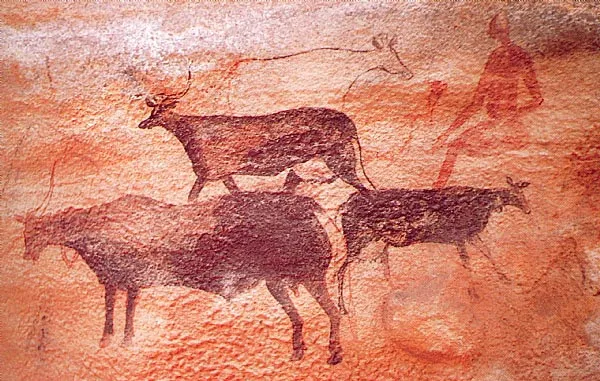
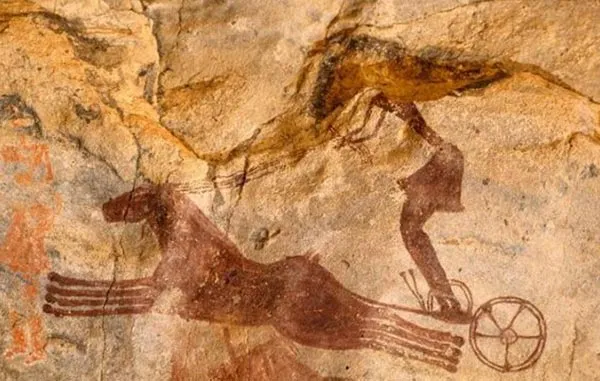
He will be the herdsman of the Bovidian period, whom we find depicted in rock art. He will be the charioteer of the Horse Period who, armed with his javelin, will cross the vast expanses of the Sahara. Having become a horseman, he will be the Gaetulian observed by the Roman conquerors, and then the Garamantian nomad, a true ancestor of the Tuareg, a proud warrior armed with his long sword.
Before that, he will have been the Libyan described by Herodotus, or the Maxyes. He will become the Numidian of the great Masaesyli and Massyli kingdoms under King Massinissa. Finally, the Berber will cross the centuries under the name of the Moor, from the westernmost lands of the continent to Andalusia.
Under the gaze of Ibn Khaldun, the Berber will unfold no longer into localised peoples but into tribal lineages.
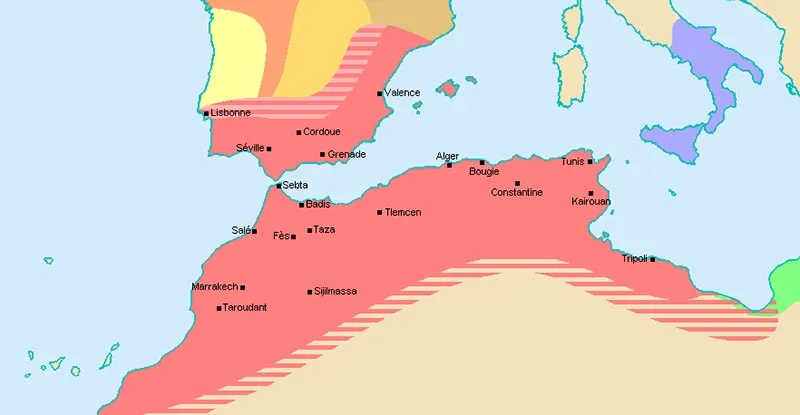
He will be the Sanhaja, son of Znag, the camel-herding nomad, or the Zenata, among the first to become deeply Arabised. Both will found major dynasties: the Almoravids, from whom a vast empire will emerge, and the Marinids.
He will be the Berber of the Masmuda tribes, from which the great Almohad dynasty will flourish, its power uniting all the ancestral territories of his Proto-Mediterranean forebear.
The Almohad Empire was at its height between 1195 and 1212
The mosaic of a story without borders
The Berber, the Amazigh of distant times, will not only unfold into tribes, peoples, cities and kingdoms; he will also give rise to numerous powerful and remarkable figures, who will engrave their names on the pages of a story without borders, truly shared by all across North Africa.
He will be Sheshonq I, Pharaoh of Egypt around 950 BC and founder of the 22nd Dynasty; the famous King Massinissa, who contributed to Rome’s victory over Carthage in 202 BC; Jugurtha, King of Numidia; Juba II; Ptolemy of Mauretania; and Masuna, king of the Kingdom of the Moors and Romans at the beginning of the 6th century.
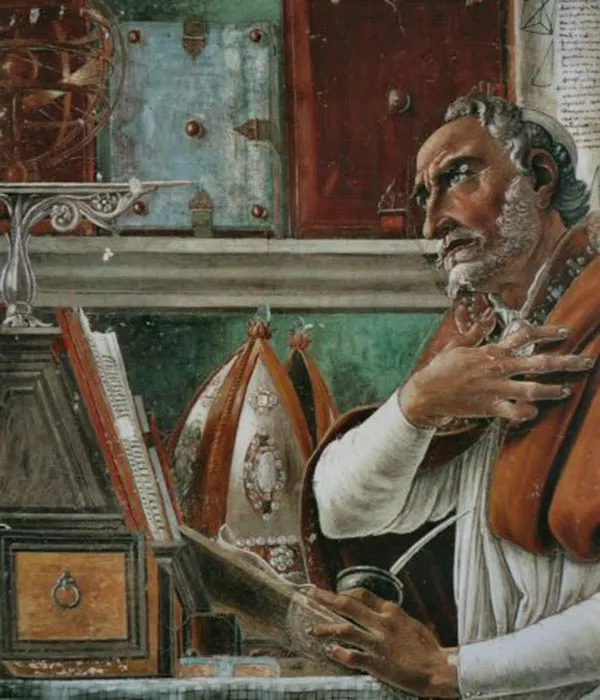
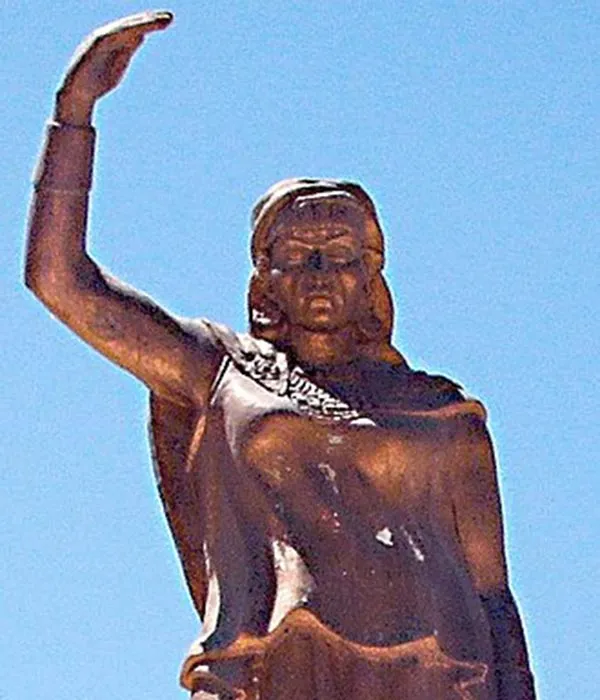
Over the centuries, the Berber will carry innumerable destinies: that of Dihya, the Zenata Berber queen, or that of Tin Hinan, from Tafilalet and queen of the Tuareg of the Hoggar. He will carry that of Saint Augustine, Bishop of Hippo; Arius, priest of Alexandria; Donatus Magnus, Bishop of Africa; Tertullian, Father of the Church; and Macrinus, Diadumenian, Caracalla and Aemilian, all Roman emperors.
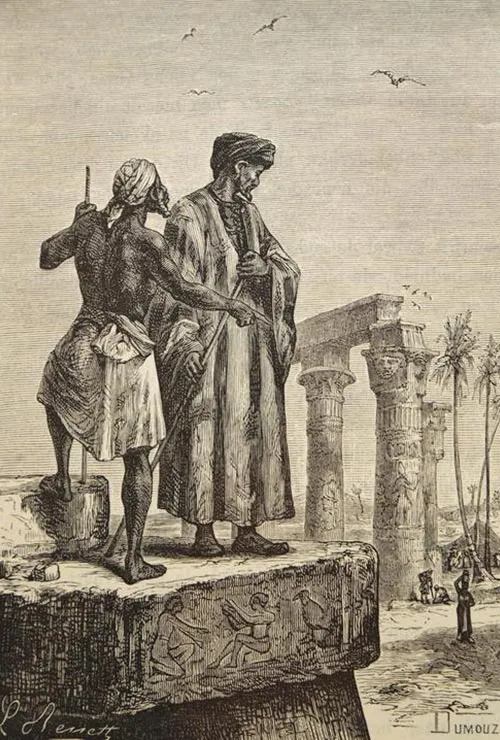
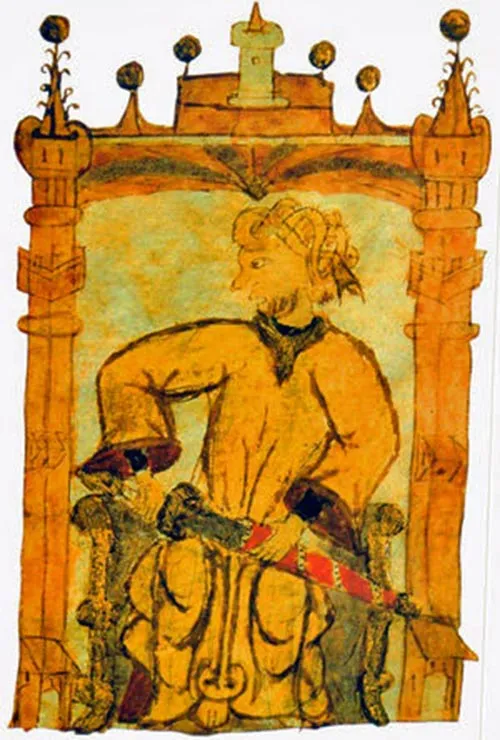
He becomes Tariq ibn Ziyad, the Umayyad general who set out to conquer the Iberian Peninsula in 711. He travels through unknown lands under the name of Ibn Battuta, one of the greatest explorers of the Middle Ages.
Ibn BattûtaAugustine of HippoTariq ibn ZiyadDihya
He expresses his thirst for freedom under the names of Lalla Fadhma N’Soumer, Abdelkrim el-Khattabi and Assou Oubasslam, military leader of the Moroccan resistance to French colonialism.
He reveals the full range of his talents in the figures of Mohand Ou Lhocine, the Kabyle poet and mystic; Si Mohand Ou Mhand; Muhammad Awzal; the Algerian writer Kateb Yacine; Mohamed Choukri; Mouloud Mammeri; Jean Amrouche; the singer Idir… and so many others, men and women of every age and every land, all traversed and brought together by this unfathomable, unalterable thread of Amazigh origin.
The conclusion is unequivocal: in these lands of North Africa, from Egypt to the Atlantic Ocean, the Berber stands at the heart of the history unfolding there. He has been both the ink and the paper of a story without author and without title. And yet his spirit remains present and alive, proud and free, wherever he has settled and put down roots, growing into a tree of lives whose roots reach back 9,000 years.
For more than twenty years, Éric Anglade has lived in a village of South-Eastern Morocco, where he explores and documents the region’s history, heritage, and living traditions. He founded sudestmaroc.com as a space for sharing fieldwork and cultural insight, bridging local knowledge with global perspectives. He also works alongside women carpet-weavers to help sustain their craft and welcomes travellers at Le Jardin de Yuda, his guesthouse envisioned as a meeting place for exchange and transmission.
Your subscription is confirmed. See you soon on sudestmaroc.com.
Receive our periodic newsletter, featuring our latest stories, research and publications on the memories, cultures and territories of South-East Morocco.


 Eric Anglade



Leave a Reply