In the Drâa Valley, a modest 16th-century zaouia would become one of Morocco’s great centres of Sufi influence. Faith and learning played their part in that rise — but so did location, lineage, ambition, marriage, rivalry, retreat and return. The story of the Naciria Zaouia is also a thoroughly human one.
Overview
The birth of a zaouia on the caravan route.
M’hammad Ben Nacer, the key figure in the zaouia’s destiny.
A disputed succession, retreat and return.
From Tamegroute to a centre of Sufi influence.
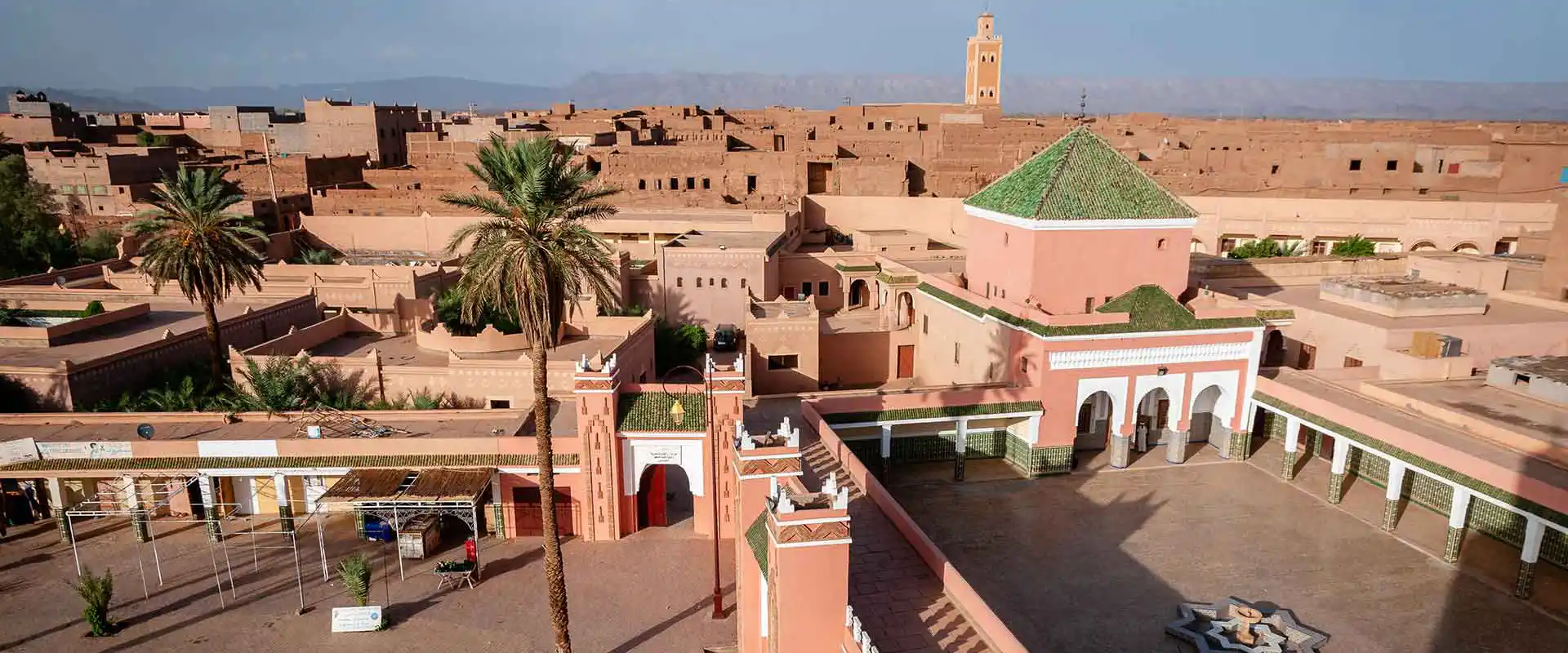
The zaouia of Tamegroute, known today as the Naciria Zaouia, stands in the Drâa Valley at the gateway to the Sahara. Founded in the 16th century, it belongs to the spiritual lineage of the Shadhiliyya, one of the great Sufi traditions that emerged in the Maghreb in the 13th century.
For centuries, this Sufi tradition would exert considerable spiritual, socio-economic and political influence in Morocco and in many other countries.
When the zaouia of Tamegroute was founded in 1575, Morocco had entered the Saadian period. Yet the religious landscape in which such an institution could flourish had largely been shaped during the preceding Marinid era.
The Marinids, a Zenata Berber dynasty, were renowned for covering Morocco — the land so beautifully known as Maghreb Al-Aqsa, the Far West — with madrasas, schools devoted to religious learning.
It was also during their rule that what historians call the great cycle of the zaouias began to take shape in Morocco. As these religious institutions multiplied across the country, political power gradually lost its monopoly over religious authority while, conversely, the zaouias acquired a genuine political function.
The zaouia of Tamegroute, like so many others in Morocco, cannot therefore be reduced to its religious and mystical character alone. It played an important role throughout the Drâa Valley before inspiring the creation of numerous other zaouias bearing the same name elsewhere in Morocco.
Very early on, the spiritual dimension of its identity was joined by a temporal one, made up of power, influence and authority — attributes firmly rooted in this world, clearly material, and ultimately simply human.
In 1883, the French explorer Charles de Foucauld ventured into these remote parts of Morocco and recorded in Reconnaissance au Maroc the impression made upon him by the zaouia:
“The power of Sidi Ben Nacer is immense throughout the Oued Drâa Valley, the Sous Valley and the valleys of the Dadès and Idernis rivers; it extends westwards as far as Tatta and Agadir Irir, and eastwards halfway to Tafilalet. (…) Pilgrims come to Tamegroute from much farther afield still, from Mogador, the Sahel and Tafilalet. (…) On every occasion, the Sultan shows the greatest respect for this saint.”
Charles de Foucauld – 1888
The Naciria Zaouia, now part of Morocco’s national cultural heritage, is thus the outcome of a turbulent human adventure.
Its fabric is woven from conflicts of interest, ambitions and the ardent passions of its protagonists, as well as from the unpredictable play of circumstance. In many respects, it resembles the classic, almost novelistic pattern of all those epic tales that fill the history books of humankind.
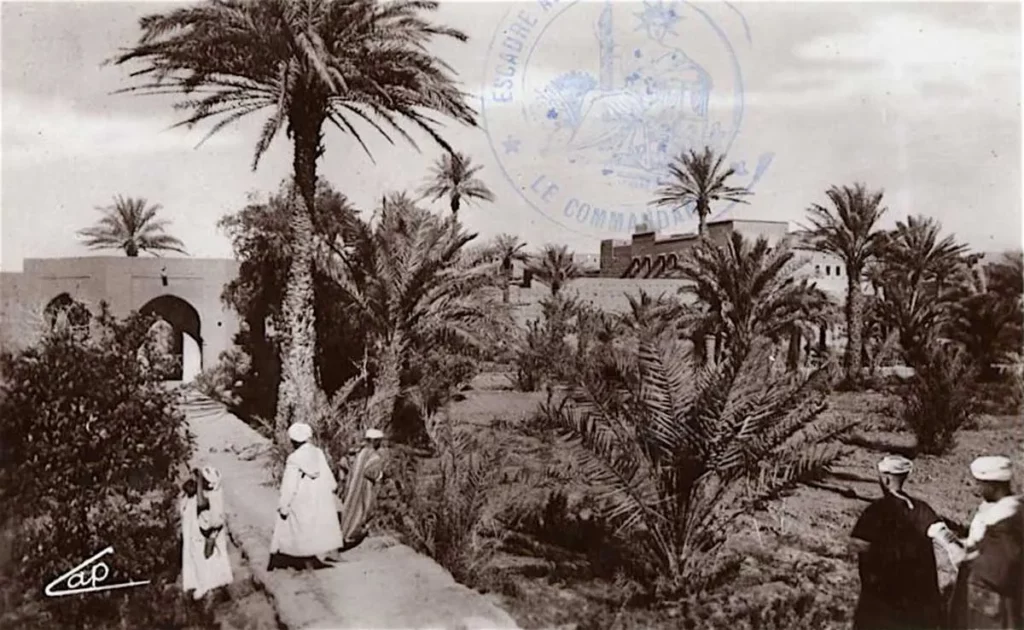
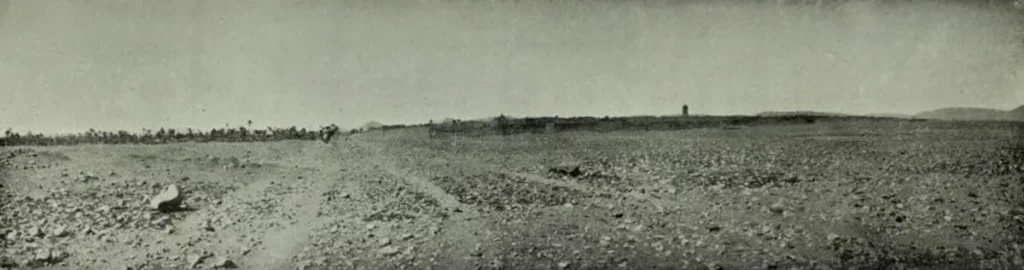
Tamegroute in 1904
The birth of a zaouia on the caravan route
In 1575, a man named Abou Hafs Omar Ben Ahmed El Ansari settled in Tamegroute and founded the zaouia that would later become known as the Naciria Zaouia.
His journey to reach Tamegroute had barely been a journey at all: he came from a neighbouring ksar just a kilometre away, where, two hundred years earlier, his ancestor Sheikh Ibrahim Ben Mohamed Ben Ahmed El Ansari had already established a zaouia known as Sidi En-Nass, literally the Zaouia of the Lord of the People, in homage to the Prophet.
Another French explorer who reached Tamegroute in 1904, the Marquis de Segonzac, described this earlier sheikh in his account Au cœur de l’Atlas as a hermit whose sole intention had been to live unknown.
No one knows why Abou Hafs Omar decided to establish a zaouia of his own rather than continue his religious journey in the footsteps of his ancestors.
Writing in 1918, Marcel Robin offered the following explanation in his exploration report:
“Branching out is common in the history of the zaouias. The causes are varied: conflict between members of the same marabout family; excessive growth in the number of family members whom the resources of the mother zaouia can no longer support; or the ambition of a family member who feels capable of exploiting a personal baraka for his own benefit.”
Marcel Robin
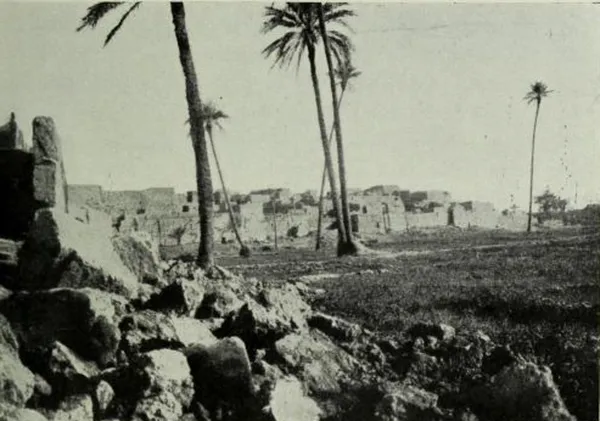
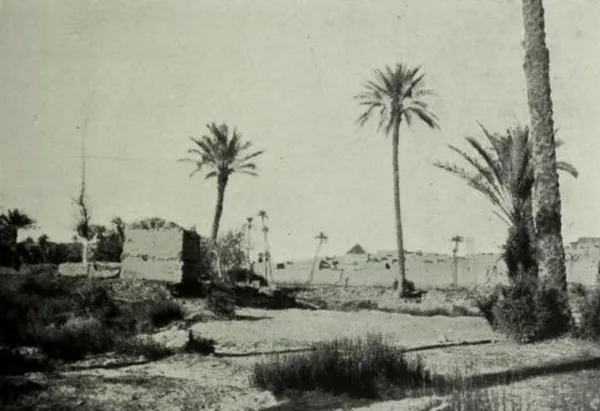
It is worth observing that the Sidi En-Nass Zaouia was indeed confined within a ksar buried deep among the palm trees, an atmosphere perfectly suited to its mystical intention.
Tamegroute was another matter altogether.
Even then, it was a vigorous village standing directly on the caravan route followed by travellers arriving from sub-Saharan Africa and heading towards the great cities of the north.
The ambition of a new zaouia could hardly have found a better setting from which to take flight than such a meeting place of people and wealth.
It should also be remembered that this was truly the golden age of the zaouias. The Drâa Valley was teeming with local brotherhoods, each organised around its own institution: the zaouia of Tagmadarte, that of Tanmslat, the Essalhya Zaouia of Tagounite and the zaouia of Tamnougalte.
Abou Hafs Omar Ben Ahmed El Ansari’s initiative proved successful. The zaouia took shape in Tamegroute and received the respect it had expected.
After his death, his daughter Lalla Mimouna, herself a woman of deep piety, took charge of the affairs of the young zaouia. She oversaw the collection of its revenues and organised its social activities.
At the time, these consisted of accommodating and feeding students, known as tolbas, as well as the zaouia’s guests: pilgrims, passing travellers, merchants, the poor and the sick, all of whom could find refuge and safety within its sacred walls.
Alongside Lalla Mimouna, a man named Sidi Abdallah Ben Houceine El Qebab was appointed spiritual master of the zaouia of Tamegroute.
He was also known as Erraqi because his family origins lay on the banks of the Euphrates, in present-day Iraq. He too came from the Sidi En-Nass Zaouia, but his path of Sufi initiation and the standing of his teachers, linked directly to Sheikh Al Ghazi of Sijilmassa, had surrounded him with a particular aura of holiness.
Marcel Robin’s account tells us that:
“The baraka of Sidi Abdallah possessed the particular virtue of granting male descendants to husbands whose wives were sterile, bore them only daughters, or whose children died in infancy.”
Marcel Robin
Ahmed Ben Ibrahim El Ansari, faithful to his master’s teaching, lived in piety and in detachment from the material pleasures of life.
In doing so, he strengthened the spiritual influence of the modest zaouia of Tamegroute — one among so many others.
But its reputation, and its power, were suddenly about to cross a decisive threshold through the agency of its next master.
A man from elsewhere.
TamegrouteTamegrouteTamegroute / In the heart of the Atlas mountains / 1904
M’hammad Ben Nacer, the key figure in the zaouia’s destiny
Thirty years earlier, in 1603, M’hammad Ben Nacer had been born in the Kasbah of Aghlane, in the Ternata palm grove near Zagora, itself situated in the Drâa Valley.
His father, Mohamed, also headed another, modest zaouia and was a revered man because of his claim to sharifian descent — a genealogical connection to the Prophet through a line leading back to Jaafar Ibn Abi Talib, brother of Ali, the fourth caliph, and son of Abu Talib, the Prophet’s paternal uncle.
Family legend even tells that the name Nacer had been bestowed by Jaafar himself.
The young M’hammad received the foundations of his religious education from his father before continuing his studies at the mosque of the ksar of Tissergate.
At the end of this period of training, he received the title of faqih, meaning that he was recognised as a jurist versed in the rules of Islamic law.
M’hammad then took up his first position as a Quranic school teacher at Eldjorfa in the Dadès Valley.
He later returned to his native village to teach in his father’s zaouia and was appointed imam and teacher at the main mosque.
By the age of twenty-six, he had already forged a reputation throughout the Drâa Valley as a rigorous scholar. His theological knowledge and his understanding of Islamic jurisprudence had deepened considerably.
Yet the journey of this young imam was only beginning.
An ardent desire to assert himself was taking shape within M’hammad. The next logical step in his path was to deepen his practice of Sufism.
As custom required, he set out in search of a master who could teach him and allow him to enter a recognised spiritual lineage.
He decided to join the zaouia of Tamegroute, a little farther downstream from his own village along the Oued Drâa.
He knew that some of the figures possessing the greatest spiritual aura of the time could be found there: Sidi Abdallah Ben Houceine El Qebab, whose family origins lay in Mesopotamia, and his disciple Sidi Ahmed Ben Ibrahim El Ansari, son of Lalla Mimouna.
And so, in 1631, a young imam and aspiring Sufi left his small zaouia in Aghlane to settle in Tamegroute.
Ten years later, the sheikh of Tamegroute, despite his reputation for holiness, was murdered while returning from a pilgrimage to Sijilmassa.
At this decisive point in its history, the zaouia of Tamegroute had to choose a successor worthy of the position.
As it happened, M’hammad Ben Nacer alone, then thirty-eight years old, appeared to fit the profile of the charismatic leader required.
He had quickly become the favourite disciple of the master of the zaouia who, according to tradition, had designated him as his successor at the head of the brotherhood.
The same tradition held that the sheikh had entrusted M’hammad, after his death, with the care of his children and of his wife Hafsa Al Ansari — which meant taking her as his own wife.
The grafting of the two family names could now be carried out, and the zaouia of Tamegroute could erase the name Al Ansari and become the Naciria Zaouia.
Arrival at Tamegroute / On the edge of the Atlas / 1904
A disputed succession, retreat and return
This episode was related by the 17th-century Moroccan historian Mohamed El Saghir El Ifrini, whose account was itself based on the testimony of Hosein Ibn Nacer, sheikh of the Zaouia of Aghlane and brother of M’hammad Ben Nacer.
Reality, of course, was more complicated.
M’hammad’s accession to the official leadership of the zaouia proved more difficult than expected and would not become effective until five years after the death of Sheikh Ahmed Ben Ibrahim El Ansari.
Despite the last wishes attributed to the deceased sheikh, M’hammad Ben Nacer encountered opposition from members of the zaouia who were reluctant to see an outsider become master in their own house.
In his work Al-Yousi, Jacques Berque relates that the El Ansari clan may even have launched a violent offensive against a zaouia that was in the process of passing under the authority of the Ben Nacer family.
Faced with such hostility, M’hammad decided to return to his original zaouia in the village of Aghlane, taking the widow Hafsa with him.
The official story — told, therefore, through the words of his brother — justifies this withdrawal by invoking the declarations of Sheikh Ahmed Ben Ibrahim El Ansari himself, attempting in the process to erase the affront of such opposition, hardly flattering to M’hammad’s prestige:
“Before dying, he entrusted him with the affairs of the zaouia, ordered him to marry his own wife and not to transmit the wird until he had received a clear order and authentic authorisation from his master Sidi Abdallah Ben Houceine El Qebab. He also said to him: ‘You will live in Aghlane.’ (…) Later, M’hammad Ben Nacer was struck by an illness affecting his legs; the condition persisted and worsened until he was completely unable either to stand or to sit. (…) “One day, while we were downstairs in the house, we saw him come down the stairs and walk as though nothing had happened. We asked him: ‘What is this, O Lord?’ He replied: ‘While I slept, I saw the master Abdallah Ben Houceine, may God have mercy upon him. He came to me, took me by the hand and raised me to my feet. Then he said to me: Lead the prayer. So I stepped forward and led the prayer before him and his companions.’”
Mohamed El Saghir El Ifrini The wird refers here to the authority to transmit Sufi initiation to others.
M’hammad Ben Nacer could now return to Tamegroute with his head held high, haloed by the marks of his ordeal and his dreams.
He later married the widow Hafsa, thus marrying their names for eternity.
Yet another dream was required — this time Hafsa’s — before she put aside her own reluctance and finally consented to the marriage.
The profound transformation of the zaouia’s identity brought about by M’hammad Ben Nacer’s accession to power thus followed the familiar pattern of those human dramas that sometimes become the crucible of great individual destinies.
Here, in Tamegroute, all the ingredients had come together.
The right place, upon which the ambition of an exceptional individual could settle.
A marriage allowing entry into a respected lineage.
Adversity in the accession to power.
Flight and retreat before the victorious return.
Premonitory dreams.
A miraculous healing.
And a charismatic personality capable of combining piety and knowledge in a single man.
From then on, the zaouia of Tamegroute would be known as the Naciria Zaouia, seat of the Naciriyya brotherhood.
And the name would be passed down through M’hammad Ben Nacer’s descendants to the present day.
From Tamegroute to a centre of Sufi influence
This founding pattern would later be complemented by well-judged alliances with the Berber tribes that controlled different parts of South-East Morocco, territories that had not yet come under the central authority of the Sultan.
M’hammad Ben Nacer and his successors would establish relations with the sultans that were at once distant and respectful.
Over the centuries, this position would allow them to act as intermediaries between central power and the tribes.
Thus, harkas — sharifian military expeditions carried out in southern Morocco — would sometimes be accompanied by a Naciri naqib, one of the sheikhs from the expanding network of Naciria zaouias.
He would serve as political adviser to the leader of the expedition and help conduct negotiations with the tribes.
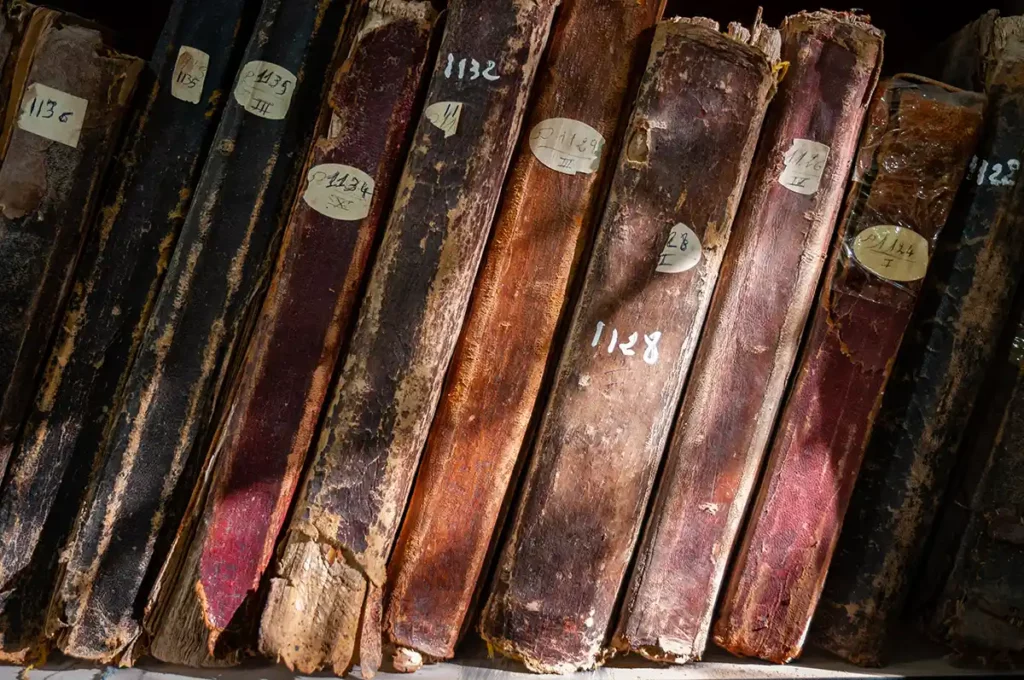
Books from the Zaouïa Naciria library / JP Datcharry
Sheikh M’hammad Ben Nacer made his zaouia into a flourishing centre of Sufi culture.
A library would be founded there in the 17th century by one of his successors, Ahmed Naciri.
The Naciria Zaouia would thus become a beacon of light in Morocco, but also across Africa, drawing scholars, ulema and students in search of knowledge, attracted by the precious works gathered within its walls.
The douar of Tamegroute would in turn become a crossroads for commercial caravans, while the zaouia developed its connections and its influence.
Sidi M’hammad Ben Nacer had succeeded in his transformation — and in inscribing both his own name and that of his zaouia in time.
He died in 1674 and was buried near the entrance to the Naciria Zaouia, in a mausoleum now known as theGarden of the Sheikhs, in homage to the thread of Sufi sages who, generation after generation, wove the history of Morocco.
The zaouia of Tamegroute was founded in 1575, on a major caravan route linking sub-Saharan Africa with northern Morocco.
Its location contrasted sharply with the secluded setting of the earlier Sidi En-Nass Zaouia, hidden among the palm groves nearby.
The arrival of M’hammad Ben Nacer in 1631 marked a decisive turning point in the history and ambitions of the institution.
His succession was contested: opposition from the Al Ansari family preceded his withdrawal to Aghlane and his eventual return to Tamegroute.
Through succession, marriage and the gradual replacement of the Al Ansari name, the zaouia became the Naciria Zaouia and the centre of the Naciriyya brotherhood.
Over time, spiritual authority was joined by considerable social and political influence, making Tamegroute a major centre of Sufi learning and an intermediary between the Moroccan state and the tribes of the South.
Sources
La zaouïa de Tamegroute, Archives berbères, 1918.
Marquis de Segonzac, Au cœur de l’Atlas, 1904.
Abdallah Hammoudi, Sainteté, pouvoir et société : Tamgrout aux XVIIe et XVIIIe siècles, 1980.
Maxime Durocher, « Les voies soufies », Atlas des mondes musulmans médiévaux, CNRS Éditions.
For more than twenty years, Éric Anglade has lived in a village of South-Eastern Morocco, where he explores and documents the region’s history, heritage, and living traditions. He founded sudestmaroc.com as a space for sharing fieldwork and cultural insight, bridging local knowledge with global perspectives. He also works alongside women carpet-weavers to help sustain their craft and welcomes travellers at Le Jardin de Yuda, his guesthouse envisioned as a meeting place for exchange and transmission.
Your subscription is confirmed. See you soon on sudestmaroc.com.
Receive our periodic newsletter, featuring our latest stories, research and publications on the memories, cultures and territories of South-East Morocco.
For more than twenty years, Éric Anglade has lived in a village of South-East Morocco, where he explores and documents the region’s history, heritage, and living traditions. He founded sudestmaroc.com as a space for sharing fieldwork and cultural insight, bridging local knowledge with global perspectives. He also works alongside women carpet-weavers to help sustain their craft and welcomes travellers at Le Jardin de Yuda, his guesthouse envisioned as a meeting place for exchange and transmission.





Leave a Reply