


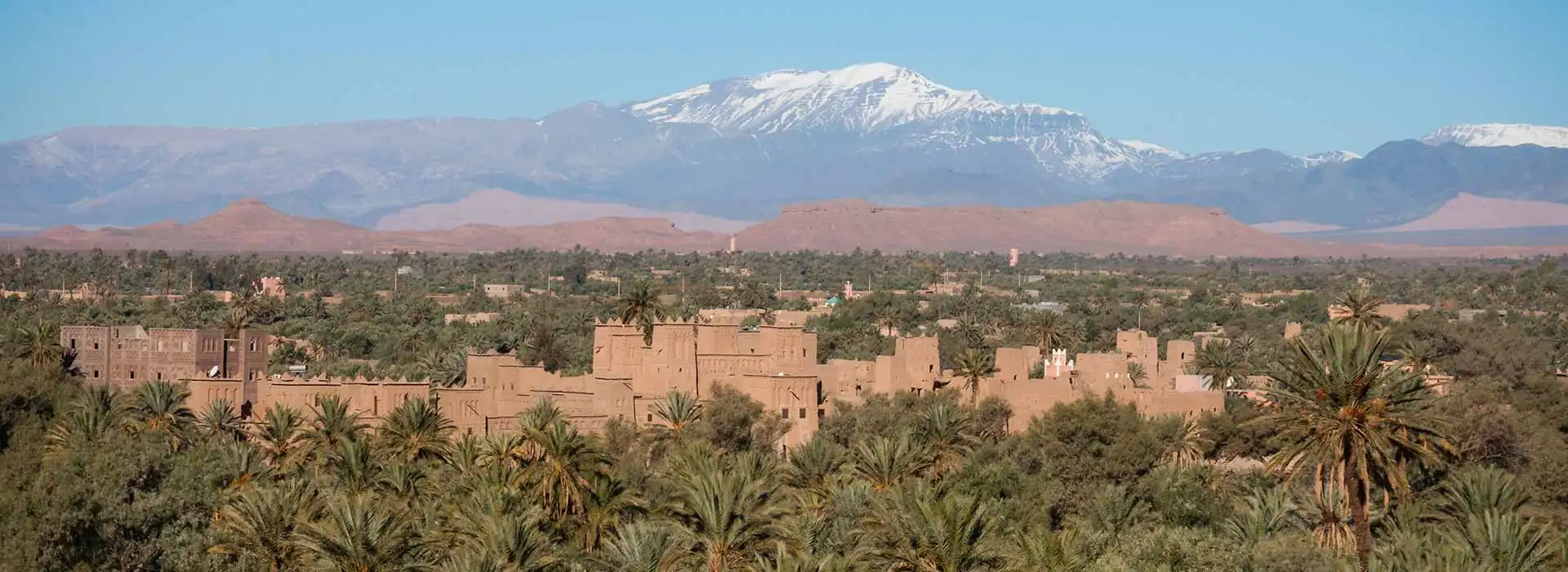
Skoura is far more than a palm grove. It is an oasis civilisation shaped by three communities — Amazigh, Arab and Jewish — whose terraced gardens, earthen kasbahs, underground irrigation channels and craftsmanship tell the story of centuries of shared life. To portray this oasis as faithfully as possible, SudEstMaroc.com drew on the precious memories of Mohamed Mrabou, one of the last living witnesses to the traditional life of the palm grove.
Panorama
- A palm grove shaped by the seasons.
- An architecture rooted in the oasis.
- A crossroads of ethnic and cultural diversity.
- Remembering Skoura’s Jewish community.
Skoura has therefore preserved a remarkable degree of ecological and cultural authenticity. Its lush gardens and magnificent earthen kasbahs are the legacy of generations of inhabitants who shaped this landscape through their knowledge and labour. An island of greenery and life, Skoura reflects much of the history of South-East Morocco.
A palm grove shaped by the seasons
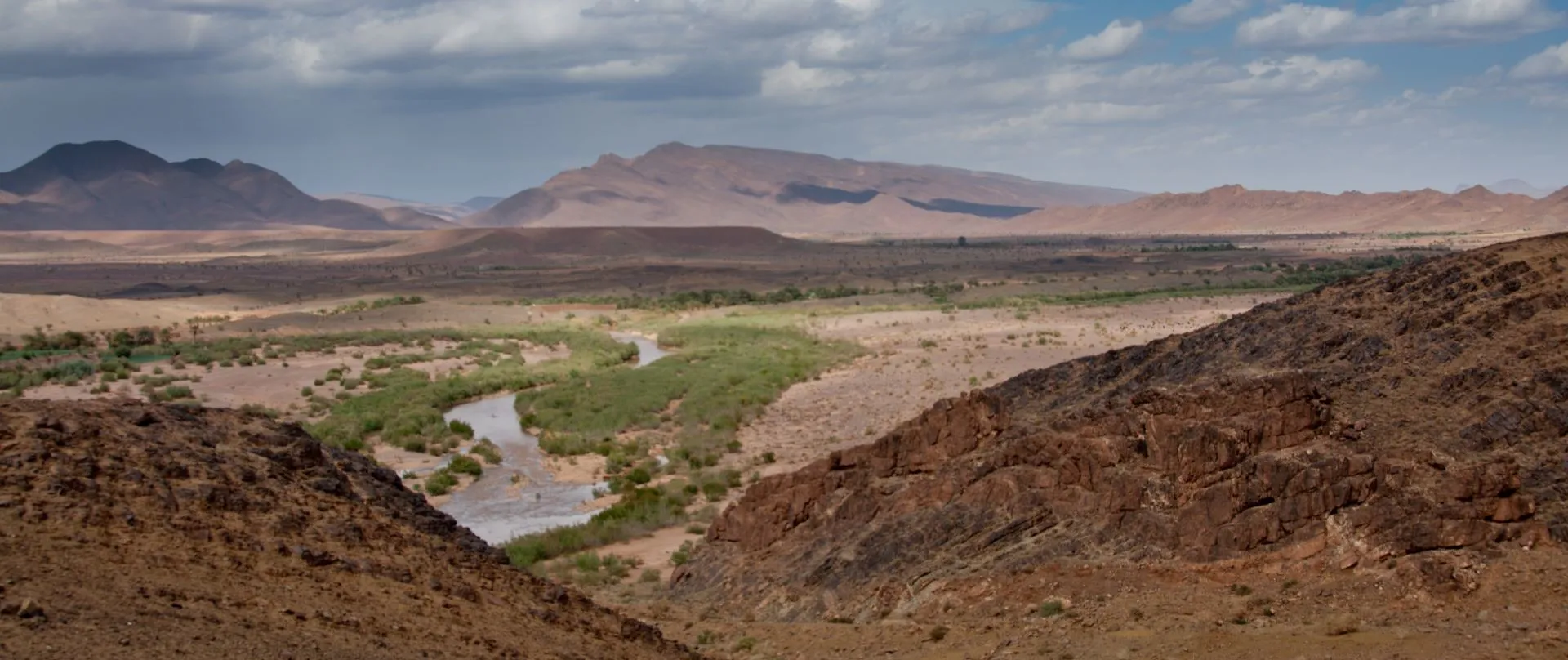
At the foot of the Atlas Mountains, the Skoura palm grove unfolds across a fertile landscape. Its gardens are filled with date palms and fruit trees — olive, pomegranate, almond, apricot and fig trees among them. Beneath their shade grow lower crops of wheat, barley, alfalfa and maize, extending towards the banks of the wadi.
Oral tradition tells that, long ago, Skoura was a great lake inhabited by many species of birds, the most common of which was the partridge — askour in Amazigh, or taskourt in the feminine form.
Different communities are said to have migrated from the neighbouring mountains and the edges of the desert, particularly from the Drâa and Tafilalet, and settled around the shores of this lake. According to one legend, the largest of these communities came from the Drâa, then known as the “Valley of Olives”, and brought olive trees with them to plant in this abundantly watered land.
These communities are then said to have drained the lake and created gardens planted with palms, olive trees and pomegranate trees. Over time, the place supposedly came to be known as Skoura, through the repeated use and gradual transformation of the word askour, meaning “partridge”.
The Skoura oasis flourishes or suffers according to the seasons. In rainy years it can become a luxuriant paradise, while prolonged drought brings hardship and desolation. The Dadès wadi carries water more consistently and passes through several villages in the palm grove, including Sidi Flah. The Hajjaj wadi, which runs through the length of the oasis, feeds the gardens only during periods of flooding; for the rest of the year, its bed remains dry.
Further reading: The oasis bears the germ of tomorrow’s Morocco — and of the world
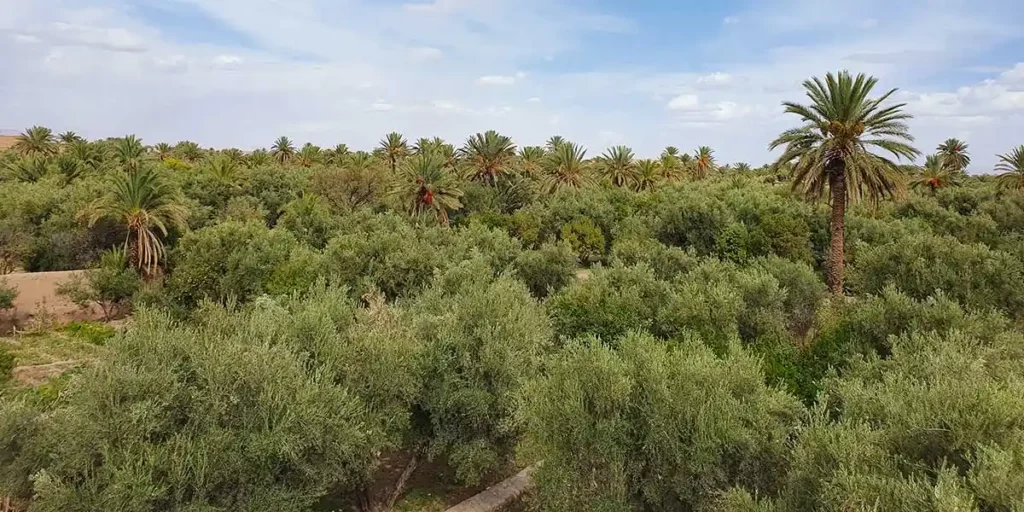
The people of Skoura have traditionally relied mainly on agriculture. The scarcity of surface water led the inhabitants, from very early times, to develop an ingenious irrigation system known as the khettara, or qanat. It consists of underground galleries designed to collect water from the foothills and carry it towards the villages and their family gardens.
These drainage galleries provide a relatively constant supply of water, allowing fields to be irrigated throughout the year.
Khettara: the khettara is considered one of the oldest systems for managing irrigation water in oasis environments. Its origins are generally traced back more than 3,000 years to ancient Persia. Similar systems are known as kiraz in Afghanistan, qanat in Iran, fouggara in Algeria, khettara in Morocco, aflaj in Yemen, karez in China and kanawat in Syria.
(Source: savoirs.rfi.fr)
Periods of hardship have nevertheless left a deep mark on local collective memory. During the first half of the twentieth century, severe drought affected the entire region, bringing famine and typhus. Mohamed Mrabou, who was born in the Skoura palm grove, still remembers those painful years:
“People were weakened and dying in despair. Death was constantly taking members of families. The small quantities of rice distributed to the destitute in the centre of Skoura were nowhere near enough. The tragedy triggered a mass exodus towards the north, particularly Marrakech and Casablanca…”
Mohamed Mbarou
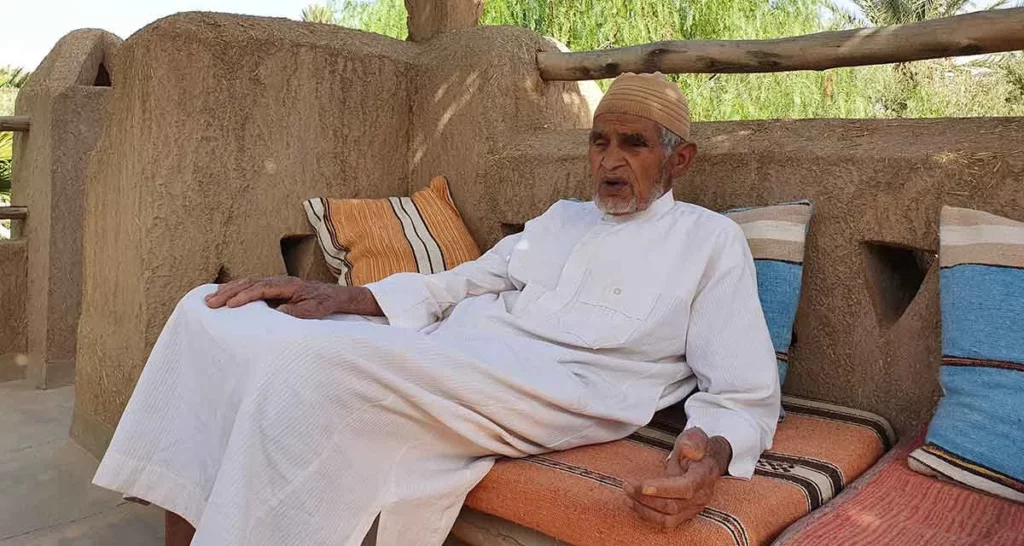
Alongside these dark years, Skoura also experienced periods of extraordinary prosperity, when abundant rainfall transformed the palm grove. Mohamed Mrabou remembers them with particular pleasure:
“I remember years when water flowed abundantly at the surface in Amzzaourou, particularly in the villages of Tajannat, Boumehcha and Oulad Brahim. When we dug into the ground, we would find water at a depth of only three or four metres.”
Mohamed Mbarou
An architecture rooted in the oasis
Skoura is also a remarkable expression of oasis architecture. Numerous villages are scattered throughout the palm grove. In earlier times, part of their population was subject to corvée obligations, providing labour for the local lord who controlled the territory. This forced labour included work in the fields as well as the construction of kasbahs.
“Corvée labour governed our daily lives. We escaped this burden only two days a week.”
Mohamed Mbarou
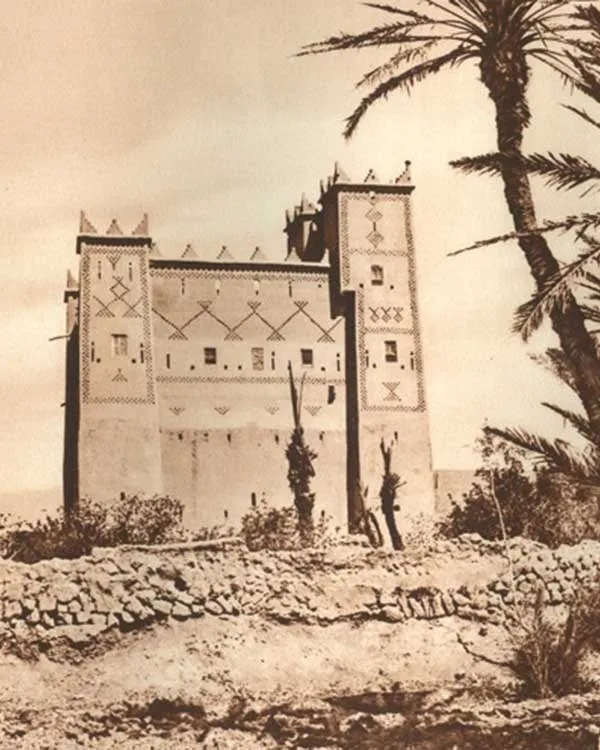
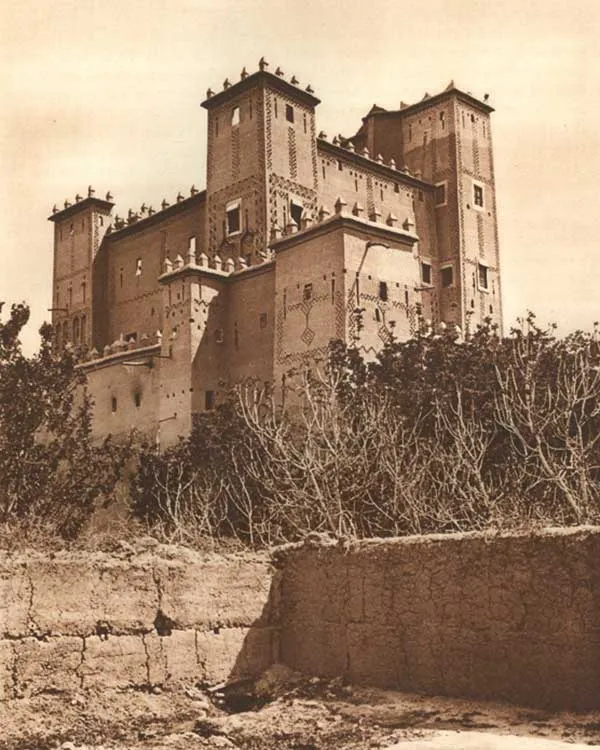
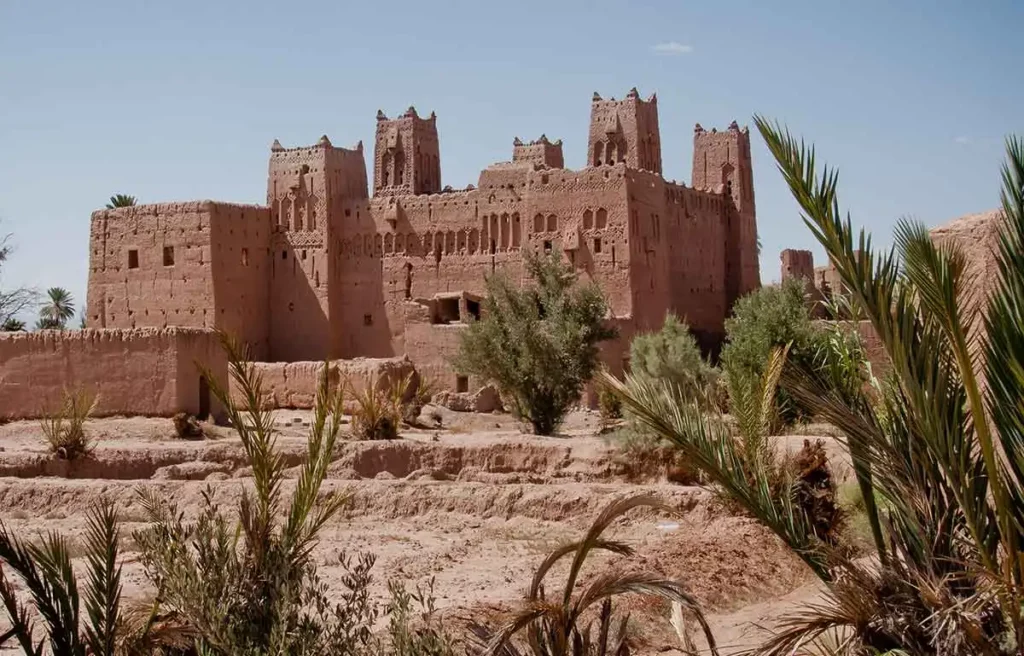
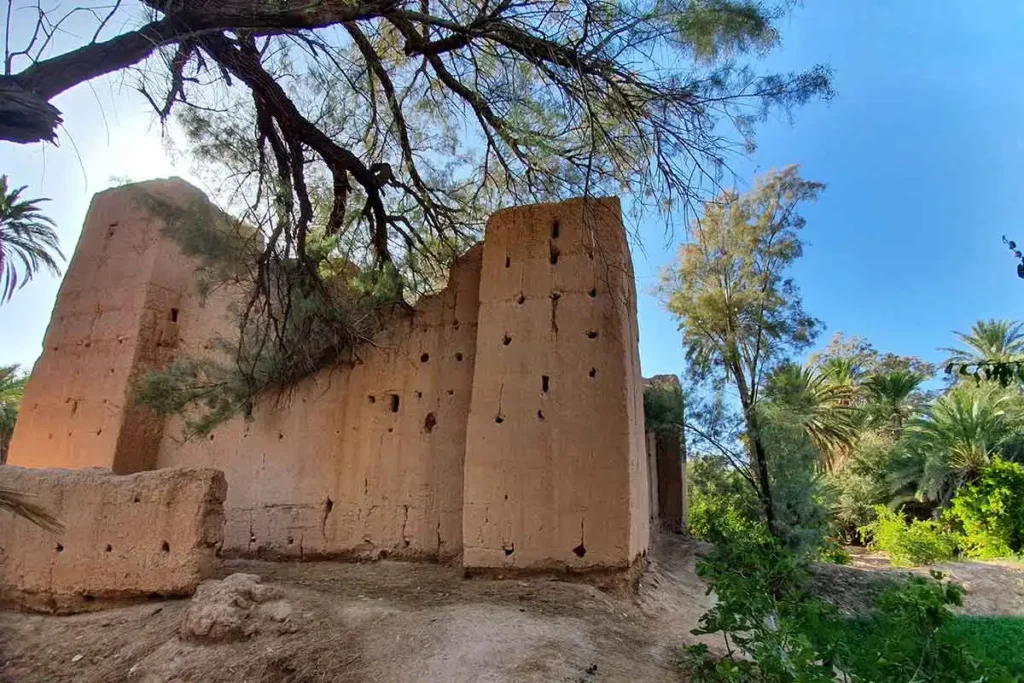
The villages stand alongside the kasbahs, large fortified residences built from the reddish earth known locally as tabia. These buildings were symbols of authority and were occupied by leading families and local notables who, despite their influence, remained vassals of the lord who ruled the wider region.
Among them were the Kasbah of Si Abd El Kebir, once Khalifa of Skoura, the Kasbah of Mohamed Ben Hamadi, the Kasbah of Aït Abou and the Kasbah of Ben Moro. These fortified houses generally bear the names of the families to whom they belonged.
The Kasbah of Amridil, famously represented on Moroccan fifty-dirham banknotes, was home to a family of considerable religious reputation and influence, descended from the Naciria Zawiya of Tamegroute.
Square in plan and usually flanked by towers at each of their four corners, the kasbahs are striking both for their scale and for the refinement of their architecture. Monumental walls and carefully balanced proportions are enriched by harmonious decoration: crenellations topped with pyramidal forms, arcaded friezes, recessed motifs and relief work.
Older decorative traditions coexist with elements introduced more recently, particularly under Hispano-Moorish influence. Together, these kasbahs form an exceptional architectural heritage and reveal the extraordinary skill of the region’s master builders, specialists in the demanding art of earthen construction.
A crossroads of ethnic and cultural diversity
The inhabitants of Skoura are known as the Ahl Skoura. Their origins are traditionally associated with an Arabised branch of the Amazigh tribal group once known as the Masmouda, one of the three major historical Berber groupings alongside the Zenata and Sanhaja.
A significant part of the population came from the Tafilalet and Drâa regions. Under the Almohads, the inhabitants of the Skoura oasis belonged to the Haskoura confederation, whose centre was Demnate.
Alongside this population of Amazigh origin, Arab communities associated with the Beni Hilal and Beni Maâkil also settled in Skoura, while populations of African origin added further dimensions to the oasis’s human diversity.
Skoura thus developed as a genuinely composite society, shaped by successive migrations and by communities that eventually formed a shared social world.
A large part of the population belonged to the ordinary people, locally referred to as the laâouam, an Arabic term roughly corresponding to “the common people”.
Another important group were the Haratines1, traditionally associated with agriculture and valued for their farming skills. Their name was locally understood as referring to agricultural labourers. This Black population formed an important part of the farming community. Haratine communities are found throughout the Drâa Valley and Tafilalet and constitute a fundamental part of the human history of South-East Morocco.
The Haratines: known in Amazigh as Ismengen (singular Asmeng) and sometimes historically referred to as Black Moors, they are Black inhabitants of Saharan regions. They are said to include descendants of enslaved people brought from sub-Saharan regions such as Sudan through trans-Saharan networks, including during periods of slavery in the Arab-Muslim world.
(Source: Wikipedia)
Another Black community, described locally as being of Sudanese origin, was known as the Laâbid, a word literally meaning “slaves”. Traditionally associated with domestic service, they formed part of the household servant class.
Closely linked to the Gnawa tradition, they carried a musical and spiritual heritage that travelled across the region. Each year they celebrated a ritual known as the Derdba, literally associated with the beating of drums. The procession left Douar Chebbaka and made its way to the tomb of the marabout Sidi Mbarek, where an animal was sacrificed as an offering. Their music was associated with blessing and healing for those who were suffering.
Zawiyas and Sufi brotherhoods formed another essential component of life in the palm grove, exercising religious, social and spiritual influence. Their representatives bore names such as Ezzaoui or Elmrabet, referring to a religious person or ascetic devoted to a contemplative life.
Members of these religious communities were exempt from taxation and corvée labour and generally took no part in intertribal conflicts. Their zawiyas offered refuge to the vulnerable, provided Qur’anic teaching and accommodated students.
Traces of several survive today, including the Zawiya Aït Sidi Rehhal and Zawiya Si Abdelmoumen in the villages of Ksar Oulad Âamer, and the Zawiya Aït Si Yaâcoub in Douar Ouled Brahim.
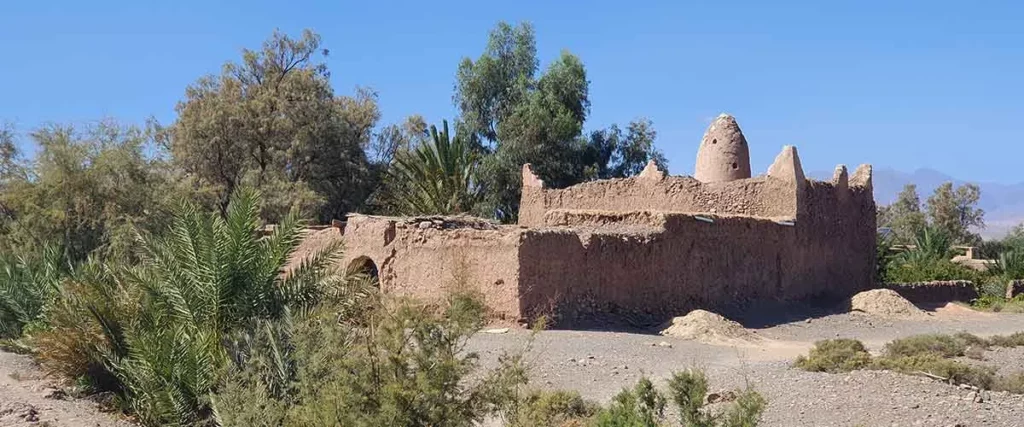
One mysterious zawiya, however, survives only in stories told by Skoura’s elders: the “Zawiya of the Stone”, or Zaouiat Lahjer. No one now knows exactly where it stood. It disappeared long ago, leaving behind only its name.
Remembering Skoura’s Jewish community
As elsewhere in South-East Morocco, Skoura’s Jewish community was held in high esteem within the oasis. Its presence reaches far back in the memories handed down by local elders, suggesting that Jewish families may have participated in the early development of the oasis and certainly played a major role in its growth over the centuries.
Their importance was particularly evident in trade and craftsmanship, from skilled manual occupations to building work. Jewish families were therefore an integral part of the human and cultural fabric of Skoura.
The names of some of the Jewish families who once lived here are still remembered: Aït Mouchi Haroun, Aït Ben Âalia, Israel Ben Bihi, Ishak, Aït Âannou, Masâaoud, Mochi Haroun Hayoun and Haddou Ben Chaloum, among others.
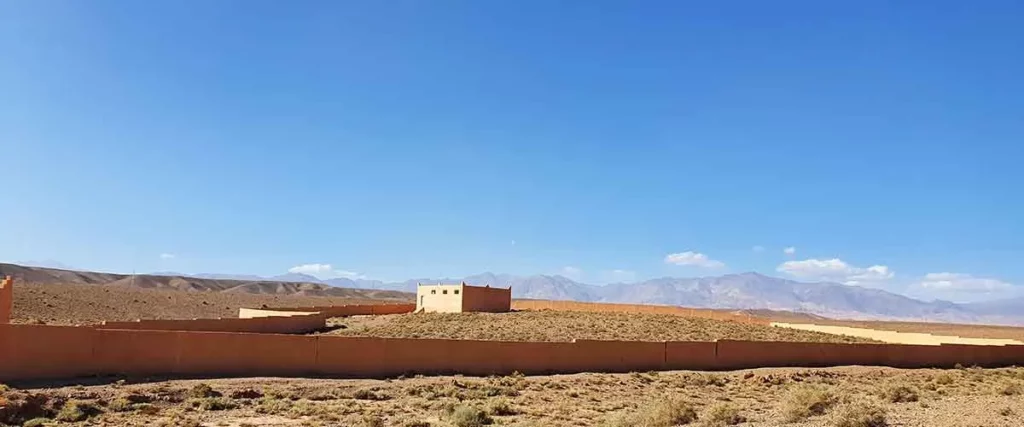
This centuries-old presence left visible traces in the oasis. Places associated with the Jewish community and known locally as El Hara survive in villages such as Oulad Âamer, while Jewish cemeteries can still be found at Boumehchad and Ouled Yaâgoub — a name that literally means “sons of Jacob”.
The Jews of Skoura celebrated festivals such as the Mimouna, held at the end of Passover, as well as a celebration associated with pomegranates known as Âid Erramman.
Their revered saint, by whose name oaths were sworn, was Moulay Ighi, also known as Rabbi David Laskar, whose mausoleum stands in the village of Zerkten in the Marrakech region.
Local memory also recalls a period in which Muslim and Jewish communities living within the same territory took part in one another’s traditional celebrations in a spirit of mutual respect and affection — in Skoura as in other parts of South-East Morocco.
Mohamed Mrabou still remembers the years he spent living alongside Skoura’s Jewish community. For him, that period formed a full and important part of his own life and of the life of the palm grove:
“The Jewish community was at the heart of the palm grove. We all lived together like one family. The Jews were master craftsmen and great traders. When they left unexpectedly, they sold all their possessions, their fields and their houses. They were people who kept their word — serious and honest…”
Mohamed Mrabou
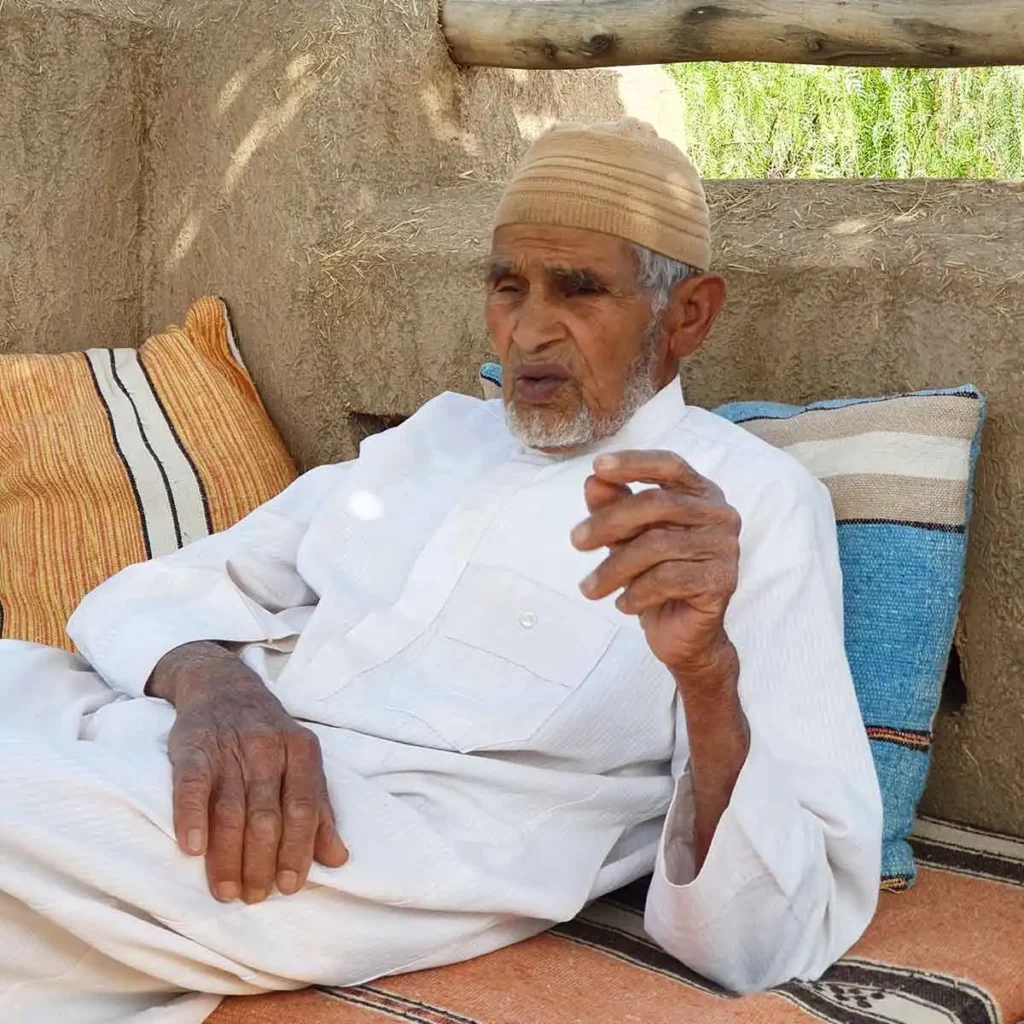
This is the face of the Skoura palm grove: an oasis rooted in some of Morocco’s oldest traditions yet still very much alive, carrying within it the many colours of the cultural mosaic that has shaped the identity and character of South-East Morocco.


Leave a Reply