


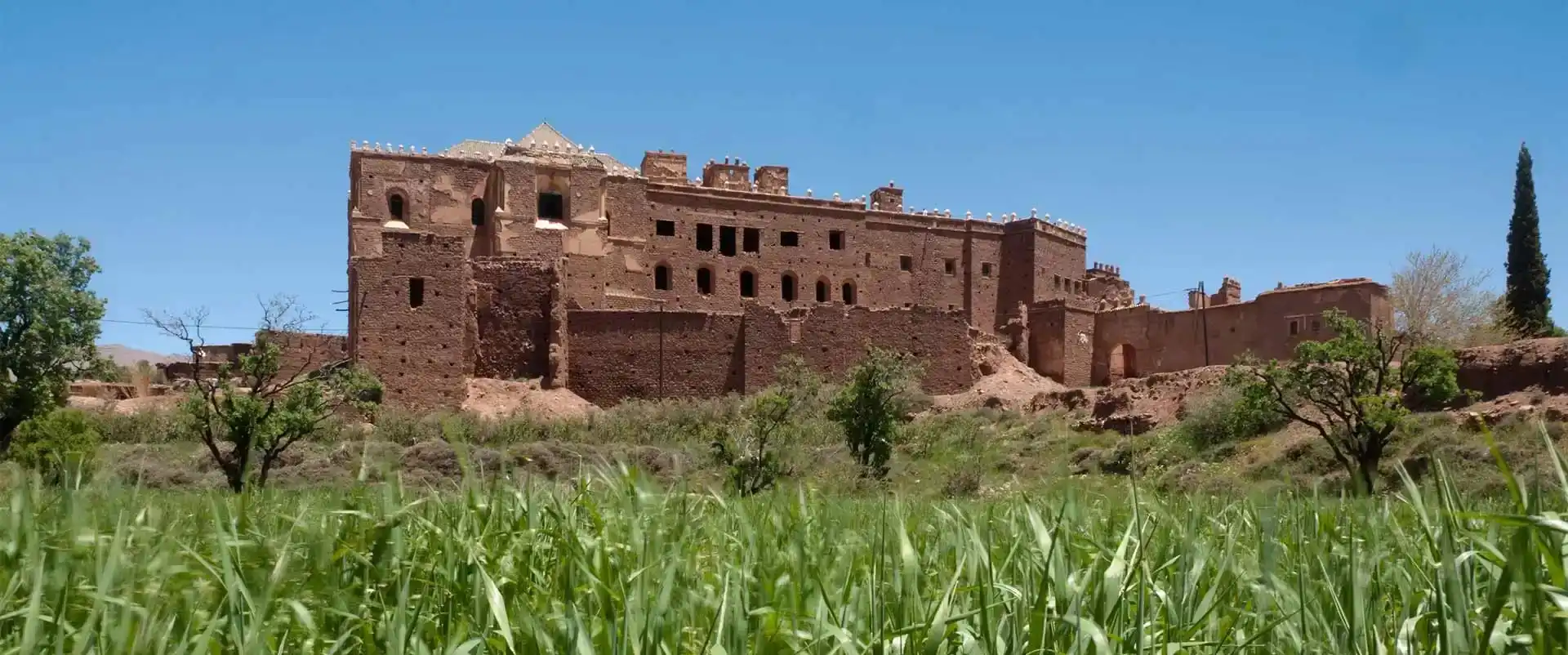
Telouet, the cradle of the Lords of the Atlas
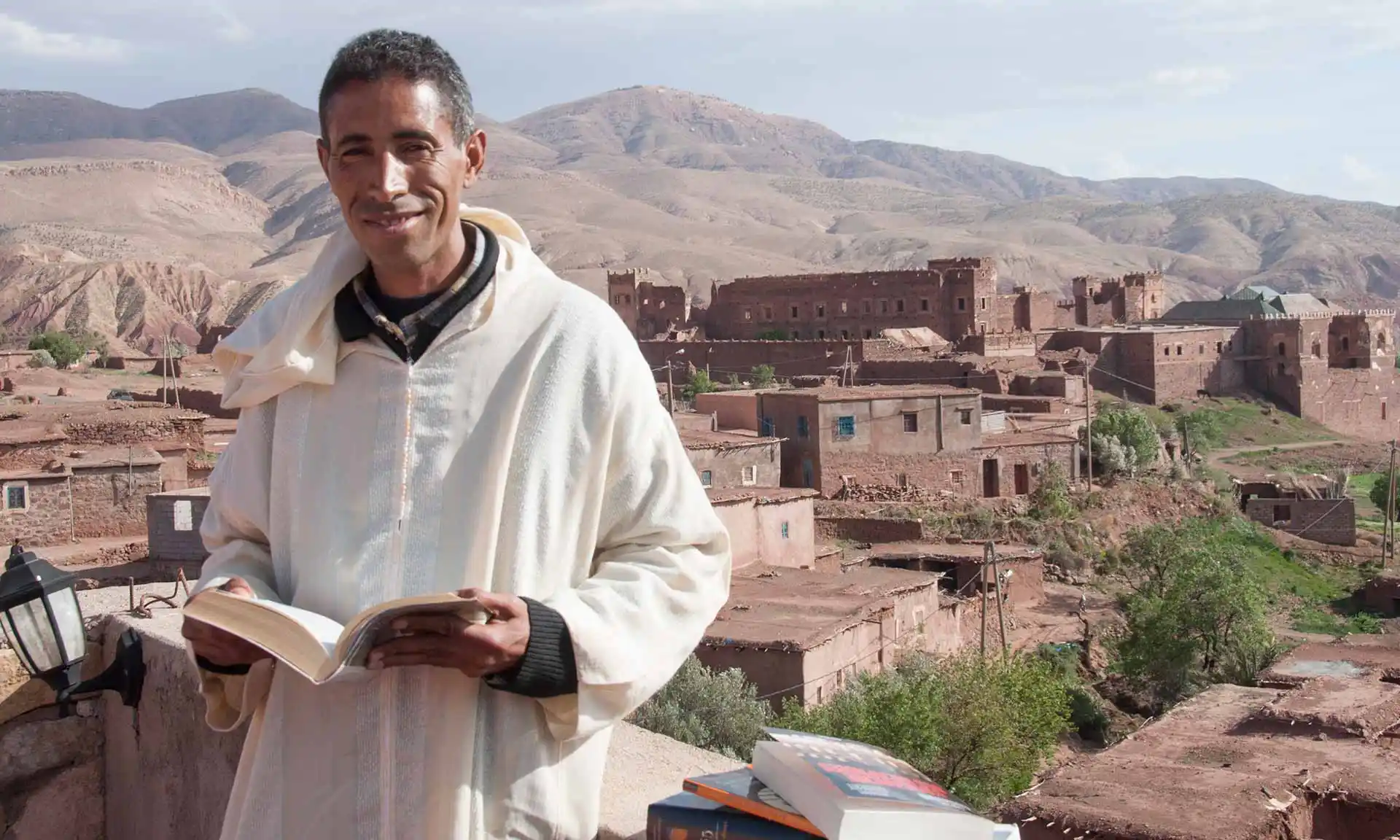
Despite his young age, Ali Ahdadi is the living memory of Telouet. His deep passion for local history and his close contact with the village elders make him a rare oral source for reconstructing the human, historical and cultural past of his native land.
Throughout the Middle Ages, Islam became increasingly established in the region, while Arab groups gradually settled there. They built madrasas, Quranic schools and zaouias, places of religious teaching but also of social and spiritual life.
Famous marabouts settled in the region, including Sidi Ouarghal, Sidi Ouissaâden and Sidi Daoud. As for the dark-skinned population known as the Haratine, some were descended from enslaved people originating from Mali, Guinea, Sudan and other African countries. Their history, however, is more complex, and the Haratine as a whole cannot be regarded simply as descendants of enslaved people brought from sub-Saharan Africa.
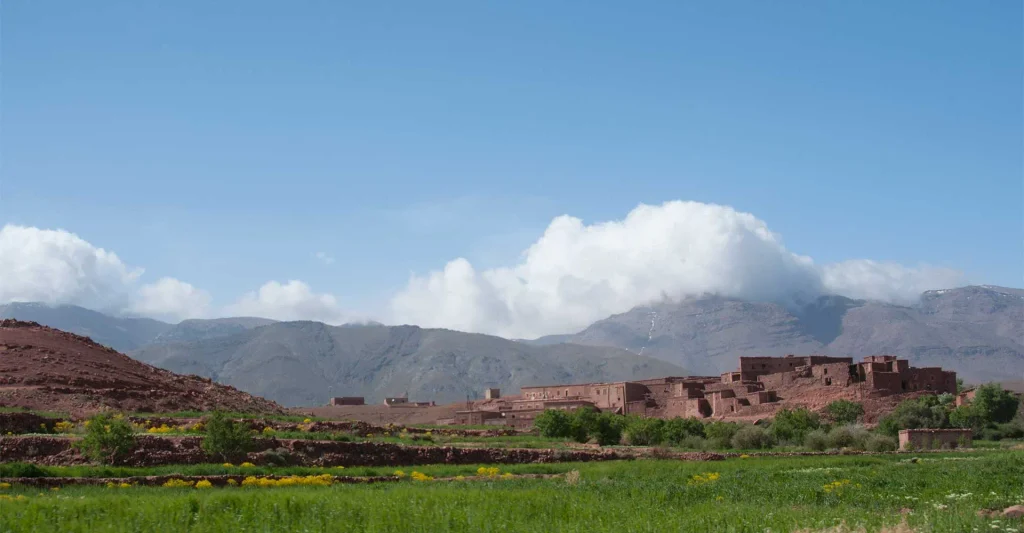
The village was then an essential stopping point for the old trading caravans crossing the Telouet Pass, Tizi N’Telouet. Telouet was also a passage for military expeditions, such as the one sent by Ahmed El Mansour Eddahbi towards the Sudan in 1590 and led by Djouder Pasha.
From the late seventeenth century onwards, the rise of the Glaoua in the region marked a turning point in the history of Telouet.
The rise of the Glaoua
According to a genealogical tradition, the family descends from a marabout named Mohamed Ou Saleh, originally from the region of Asfi and himself said to have been connected to the Umayyad dynasty. When they arrived in Telouet, the Glaoua built a zaouia. They bestowed blessings, manifestations of the baraka inherited, according to tradition, from one of their ancestors.
Once their religious influence had been established, their political ambitions grew.
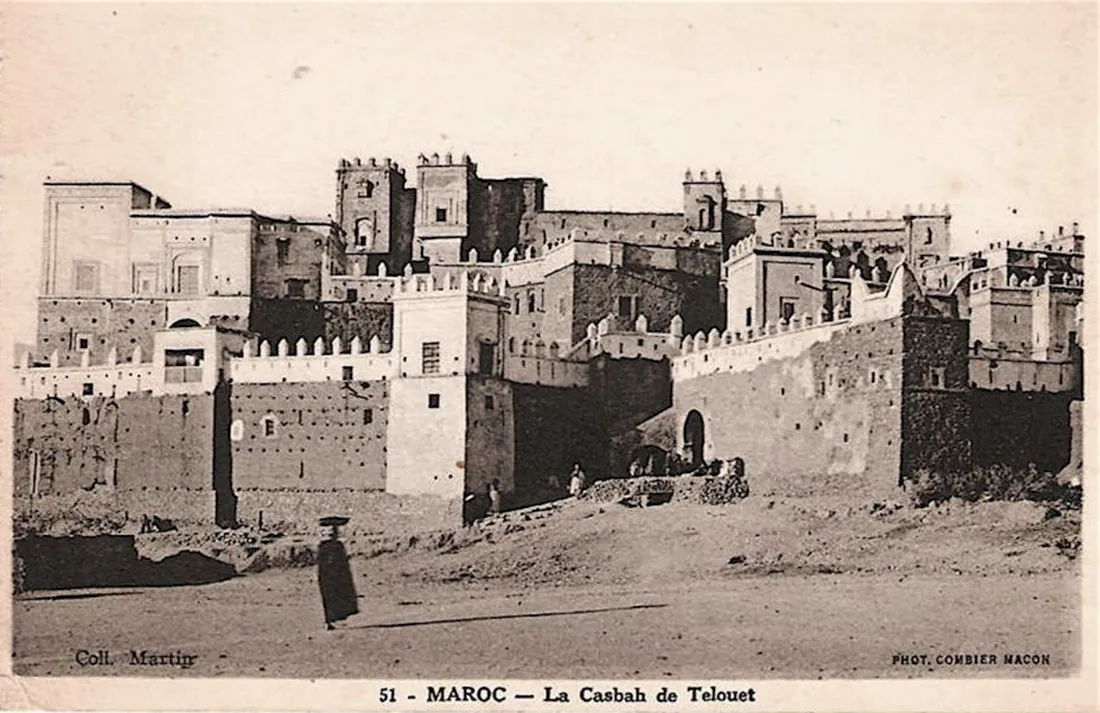
At the end of the seventeenth century, during the reign of Sultan Moulay Ismail, Ahmed Er-Radi Amezouar, an ancestor of the family, was appointed caïd of the Glaoua. This title enabled the Glaoua clan to establish lasting control over the caravan route and levy a toll on those who used it.
In 1893, Sultan Moulay El Hassan, Hassan I, was returning from a military expedition, a harka, in the Tafilalet. On the return journey, the Sultan and his army were caught by heavy snow at Telouet. El Madani El Glaoui organised a diffa, a great reception in their honour. In recognition of this hospitality, the Sultan considerably strengthened El Madani’s authority over the territories of the South and presented him with weapons, including a Krupp cannon, now preserved in the Kasbah of Taourirt.
In 1907, El Madani El Glaoui was appointed Minister of War, and then Grand Vizier in 1908.
The expression Bled es-Siba referred to regions where the administrative and fiscal authority of the Makhzen was weak or contested, in contrast to the Bled el-Makhzen. The distinction, however, was neither absolute nor permanent, as the Sultan’s religious authority could continue to be recognised.
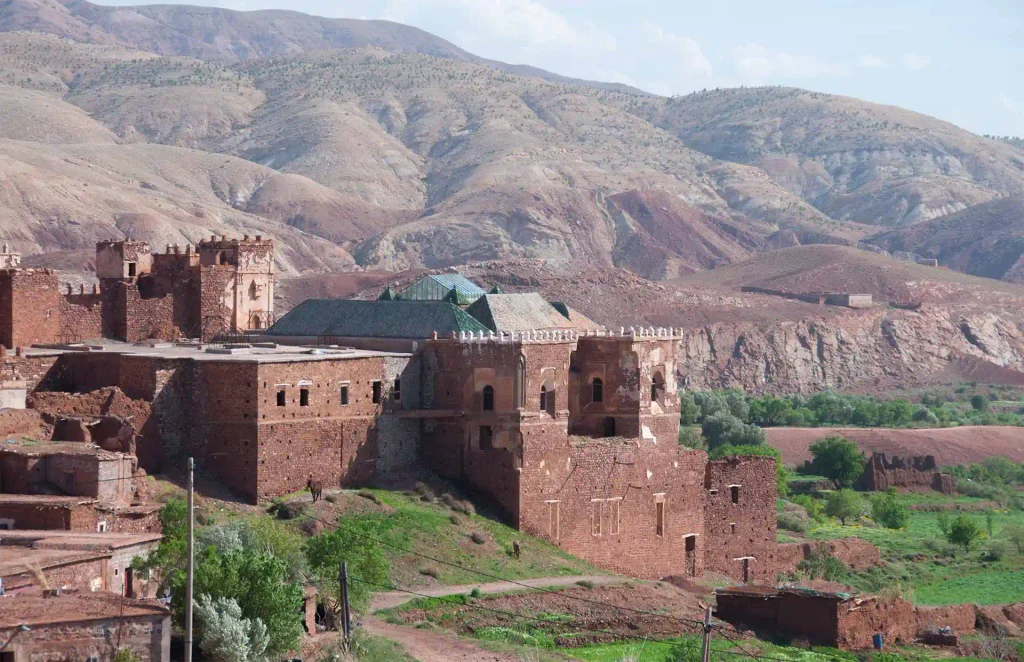
The growing power of the Glaoua thus transformed Telouet into a residence of the new caïds and a command post for the South. Construction of the great Kasbah of Telouet, the castle of these new lords, began around 1860, close to an older complex.
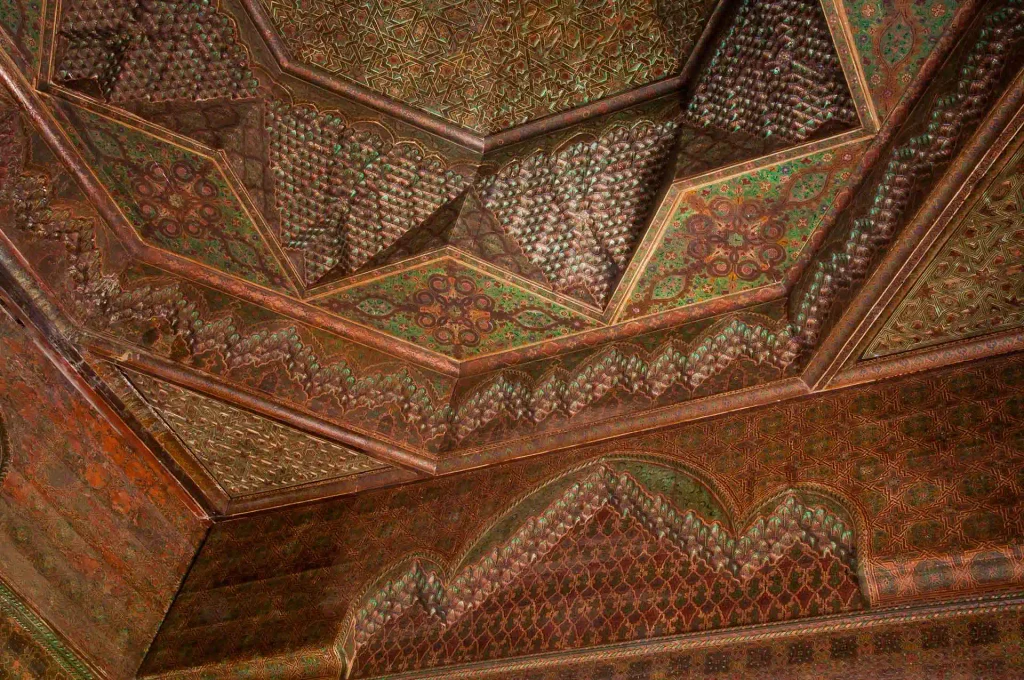
Between the nineteenth and twentieth centuries, Oriental and Hispano-Moorish styles were introduced as the kasbah was extended. It became a fully fledged centre of command as well as an aristocratic residence, housing a court of justice, a prison, living quarters, a ceremonial courtyard, stables and more.
The famous Lhaj Thami El Glaoui also lived in the Kasbah of Telouet. After becoming Pasha of Marrakech, he acquired considerable economic power through the ownership of extensive landed property and shareholdings in the Omnium Nord Africain and the CTM.
Illustrious visitors
A man of refined tastes, Lhaj Thami played golf in Marrakech and collected carpets and precious stones. Above all, he welcomed illustrious figures such as Resident-General Steeg, Sultan Sidi Mohamed on 16 November 1931, Winston Churchill in 1937, General Patton in 1942, Jacques Majorelle and many others.
The kasbah today
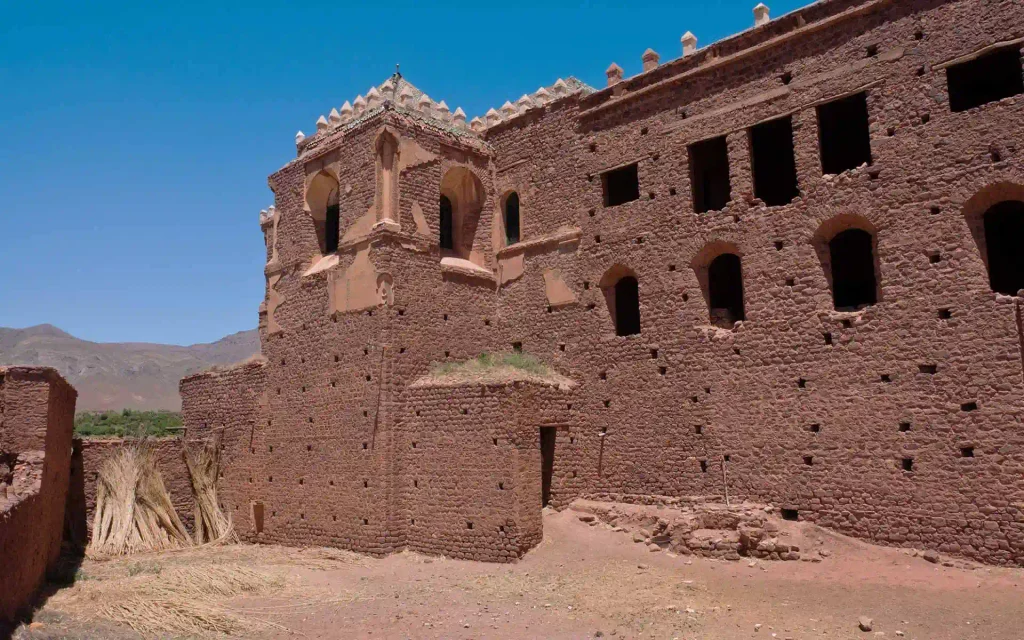
Already weakened by the climate and decades of abandonment, the kasbah was severely damaged by the earthquake of 8 September 2023.
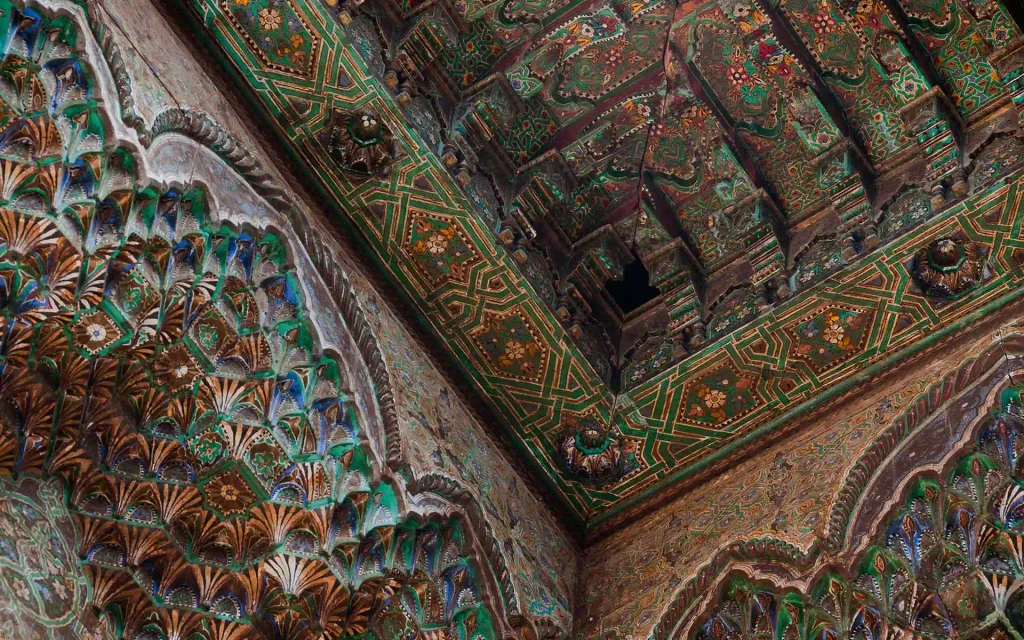
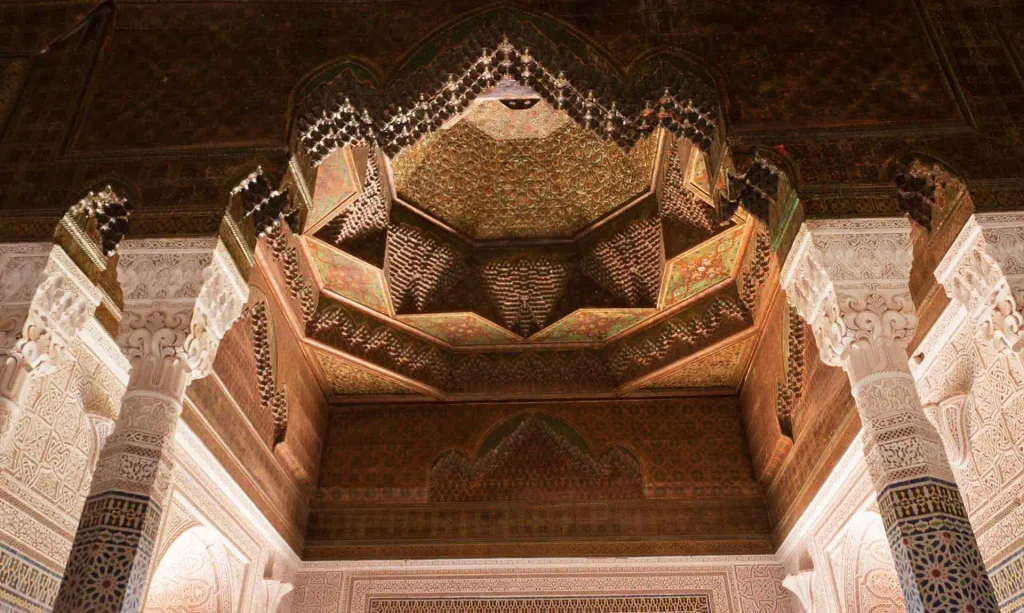
Only the main residence and a few of its adjoining buildings remain, still sufficiently well preserved to meet the curious gaze of visitors and reveal the delicacy and beauty of the craftsmanship of former times, the refinement of its old masters and the way of life of a population that is no more.
Every corner of the kasbah is a page in the human history of old Telouet. Within its walls lies the story of those caïds whom history remembers as the Lords of the Atlas.
Read more: the Glaoua saga
Discover: Telouet kasbah: the Glaoui palace in the High Atlas

Staying near Aït Ben Haddou
Le Jardin de Yuda is my home in a small Amazigh village between Ouarzazate and Aït Ben Haddou. I welcome a small number of guests there, in an earth-built house surrounded by a garden – Eric Anglade
More to Explore

Leave a Reply