


Discovering Amazigh Culture in Morocco
The Berber world is like a world unto itself, full and vast with a history that reaches back into the distant past of our humanity, rich and colourful with an identity mingled, at its roots, with three horizons, solid, almost mineral, yet vibrating with the many resonances of its culture. Today, Amazigh identity is recognised as an integral part of Morocco’s identity, or at the very least of its unity, as clearly stated in the 2011 Constitution.
Sudestmaroc.com takes you on a journey of discovery into this Amazigh world, beginning with an exploration of its culture through the eyes of someone both expert in and passionate about his subject. Dr Mohamed Chtatou answers our questions.
Mohamed Chtatou – The Berber, who calls himself Amazigh — Imazighen in the plural — is one of the descendants of the pre-Arab inhabitants of North Africa. Today, Berbers live in communities scattered across Morocco, Algeria, Tunisia, Libya, Egypt, Mali, Niger and Mauritania. They speak several Amazigh languages, all belonging to the Afro-Asiatic family and related, among others, to ancient Egyptian. These Berber populations have been present in this part of the continent since very ancient times.
The Upper Palaeolithic is the period of Prehistory characterised by the development of certain techniques — blades, tools and weapons made from hard animal materials, spear-throwers, etc. — while at the same time witnessing an extraordinary flourishing of art. The Upper Palaeolithic extends from approximately 45,000 to 12,000 years before the present. (Source: Wikipedia)
The indigenous population of North Africa was formed through the arrival of several waves of populations, some coming from Western Europe, others from sub-Saharan Africa, and still others from north-eastern Africa.
The origins of the Berber peoples are not clearly known, but their history is long and ancient, much of it remaining unknown to us because of the scarcity of written sources. Berber populations have nevertheless possessed their own alphabetic writing system since Antiquity, known as Libyco-Berber, attested from at least the sixth century BC and of which Tuareg Tifinagh is one of the surviving legacies.
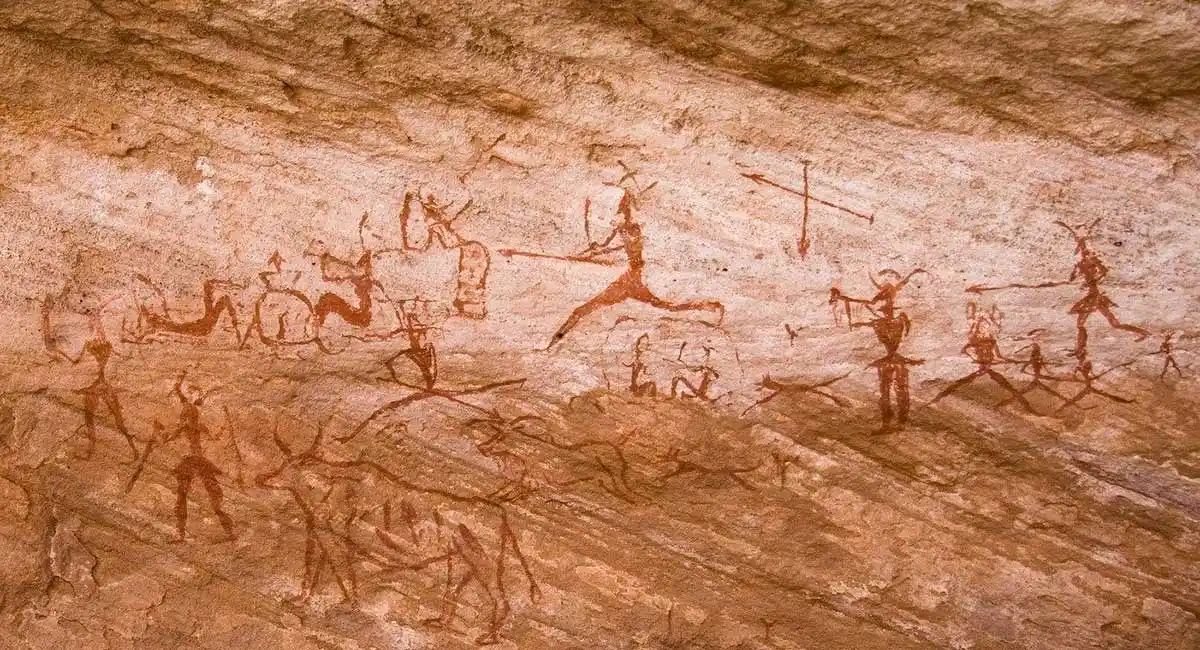
Among the oldest traces of the history of North African populations are also rock paintings. Rock art several millennia old has notably been discovered at Tadrart Acacus in Libya. Many of these paintings depict animals and scenes from everyday life. Paintings have also been found at Tassili n’Ajjer, in south-eastern Algeria.
From around 2000 BC onwards, Berber languages spread westwards, from the Nile Valley to the Maghreb, across the northern Sahara. By the first millennium BC, their speakers were the native inhabitants of the vast region encountered by the Greeks, Carthaginians and Romans. A succession of Berber peoples — Mauri, Masaesyli, Massyli, Musulami, Gaetuli and Garamantes — subsequently gave rise to Berber kingdoms under Carthaginian and Roman influence.
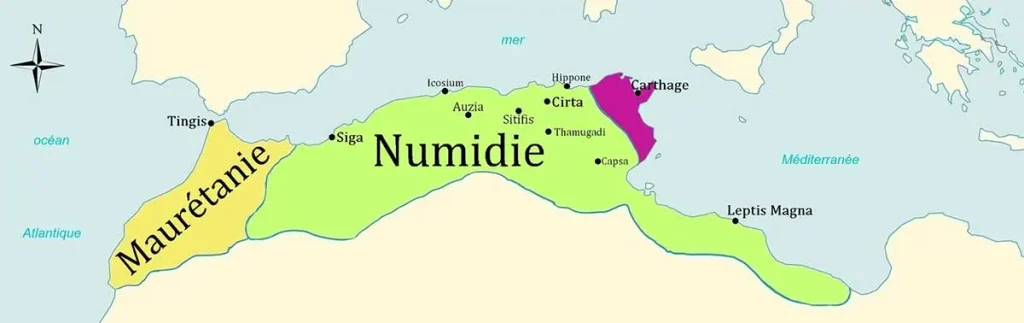
Among these kingdoms, Numidia gradually came under Roman rule during the first century BC, part of its territory being turned into a province following the defeat of Juba I in 46 BC; Mauretania, meanwhile, was annexed to the Roman Empire in the first century AD. Other kingdoms emerged in Late Antiquity, following the Vandal invasion of AD 429 and the Byzantine reconquest of 533, before disappearing in the context of the Arab conquests of the seventh and eighth centuries.
Sudestmaroc.com – Given the vast geographical area occupied by Berber populations, are we dealing with one Berber culture or several Berber cultures?
MC – Broadly speaking, two major groups can be distinguished: the Amazigh populations of the Maghreb and the Tuaregs, the Amazigh populations of the Sahara and the Sahel.
The former are mainly sedentary, with a nomadic minority, while the Tuaregs historically developed largely nomadic ways of life. Amazigh populations extend from the Siwa Valley in Egypt to Morocco and, historically, to the Canary Islands, through Libya, Tunisia and Algeria. The Tuaregs live mainly in Mali, Niger, Algeria, Libya and Burkina Faso.
Sudestmaroc.com – What was the traditional model of organisation within Berber communities?
MC – First of all, the basic unit of the traditional Berber community is the nuclear family, generally patrilineal. From this unit, the tribal group is formed by bringing together several families around the name of a common ancestor. It is indeed from the name of this founding ancestor that tribes derive their public identity. They use the designation Aït, which literally means “the children of” and, by extension, the descendants or people of, followed by the name of the common ancestor.
In principle, all families within a tribe are equal, governed by a code of honour under the authority of a council of elders, the jmāʿah — a democratically elected political body — which maintains harmony within the community and delivers judgements in the event of disputes, notably by determining compensation and punishment.
In reality, the various Berber societies were not quite so egalitarian. A tribe regularly accepted newcomers into its village, but they were then regarded as inferior. More generally, the elders who held power often came from the same ruling families.
The Tuaregs, a people of aristocratic nomads
The Tuaregs of the Ahaggar and southern Sahara, also known as the “Blue Men” because of their indigo-dyed robes and face veils, were aristocratic nomads who ruled over vassals, serfs and slaves who cultivated the oases on their behalf; they in turn recognised supreme chiefs or kings known as amenukals. Under the name Tifinagh, the Tuaregs preserved a form of the ancient Libyco-Berber consonantal script, although historically much scholarly writing was produced in Arabic by a class of Muslim scholars.
Read: Tifinagh, the Berber singularity engraved in time
Sudestmaroc.com – How is Berber identity structured?
MC – Three main themes can be distinguished within Amazigh culture, forming an important and fundamental trinity in its system of values. These themes have transcended Berber culture and have been widely accepted as basic concepts of Moroccan identity.
This trinity revolves around the following notions: first comes the importance of language as a vehicle for culture and the principal marker of identity (tamazight/awal), both as a means of communication and as a means of perpetuating history. Then comes the omnipresence of the strong and indivisible system of kinship and belonging to the extended family (ddam/tamount), expressed through solidarity and coexistence. Finally, there is the powerful connection to the land, identification with its bounty and belief in its sacred nature (akkal/tammourt/tamazirt); this last marker of identity is also very strong among other peoples around the Mediterranean.
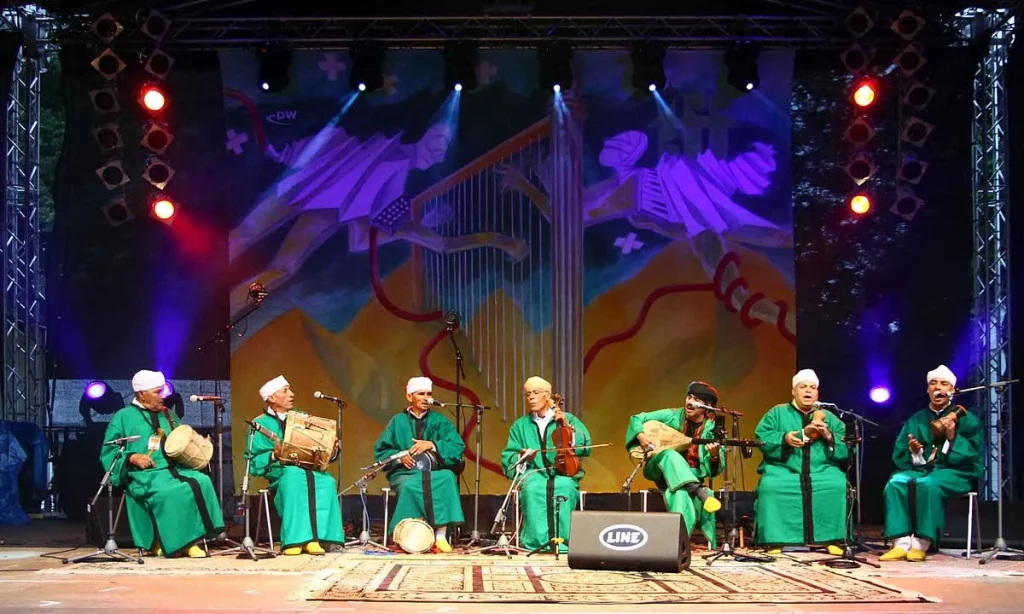
The most obvious theme within the Amazigh community in Morocco is the importance of language in society, civilisation and lived experience. When one considers the culture of the Amazigh people, there is a clear correlation between the centrality of language and the preservation of a civilisation and traditions stretching back thousands of years. This is the case, for example, with the Master Musicians of Jajouka in northern Morocco. Their trance music and anthropological theatre have come through four thousand years of history without so much as a scratch.
The history and belief system of the Amazigh people have been preserved orally, from father to son; one generation passed history, wisdom and laws to another, almost automatically, through the mother tongue, a powerful linguistic vehicle. Indeed, despite the existence of three distinct Amazigh dialects in Morocco, the history and laws of the Amazigh people have remained in step with one another and survived countless invasions over a long history spanning eight millennia.
The matriarch as the pivotal figure of the Amazigh family
The idea of kinship, expressed through people linked by blood, shared experience and history, nevertheless highlights an important distinction between Amazigh and Moroccan culture, in the sense that the Amazigh community system places emphasis on the matriarch as the pivotal figure of a family imbued with democratic values, whereas Moroccan culture, with its Arab substratum, favours a very strong and uncompromising patriarchy.
Among the Amazighs, blood ties are sacred in marriage, parenthood and family belonging. Two tribes may, for example, seal their alliance through a marriage. Blood, in the context of sacrifice, is also a sign of reconciliation, a request for forgiveness and respect (tagharst). It is also a symbol of hospitality: a sheep is slaughtered to welcome a guest or stranger because shedding blood establishes a bond of respect with the newcomer and includes him within society, the jma’ath.
The land, a sacred possession
The Amazighs regard the land as a sacred possession which not only sustained life, but also provided protection against Western and Arab imperial campaigns and helped preserve both language and the community system. Indeed, the sale of any inherited plot of land was for a long time strongly stigmatised (hchouma) within Amazigh culture.
Amazigh civilisation has survived the erosion of time and invading cultures thanks to the boundless love that the indigenous peoples of North Africa bear for the land that feeds, protects and strengthens them. It can also be said that Amazigh identity has managed to defy time because the mountains (akkal) protected it against acculturation and invasion.
The Amazigh attachment to the land finds expression in agriculture and in festivals celebrating its bounty for the community. Such celebrations can be found among the ancient Amazigh populations of the Jbala, in particular the Aït Serif clan and their musicians, the Jahjouka, who celebrate the fertility of the land through music and dance during their annual festival known as Boujloud in Arabic and Bou Irmawen/Ilmawen in Tamazight.
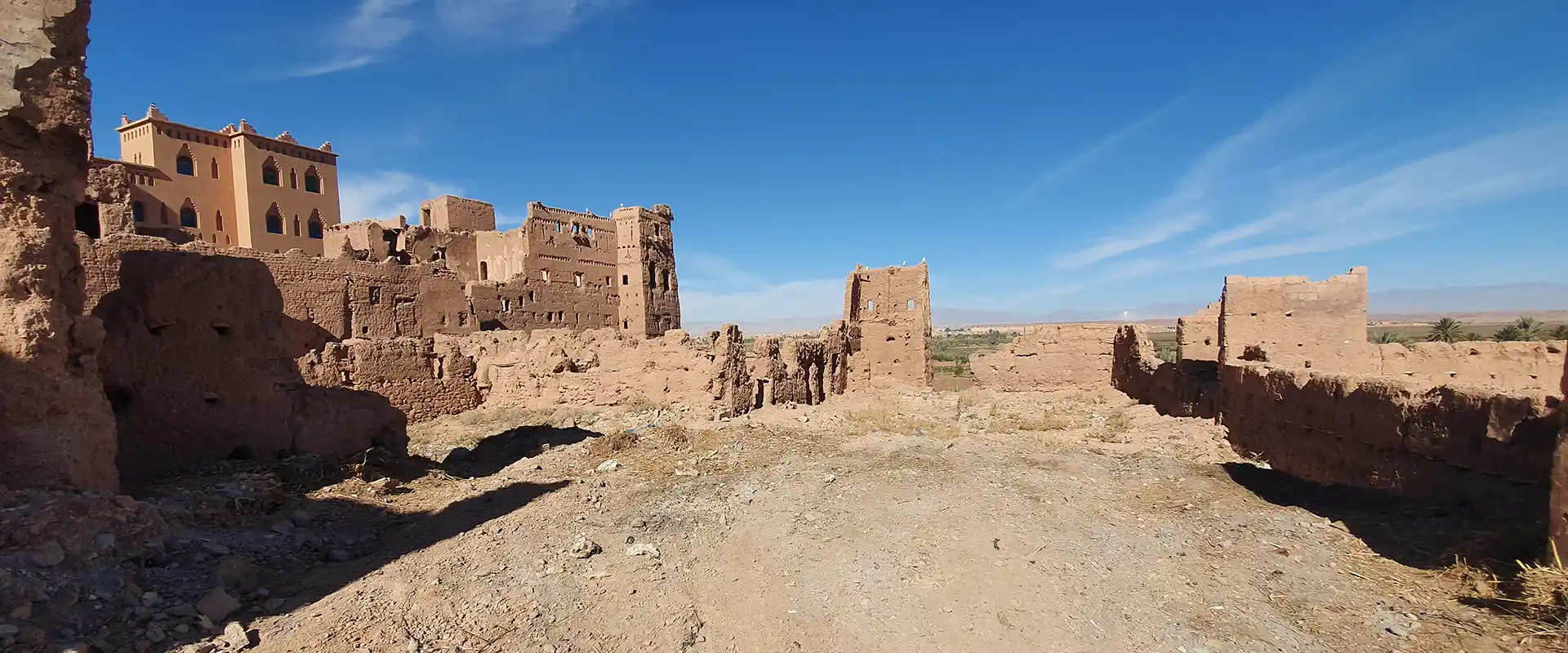
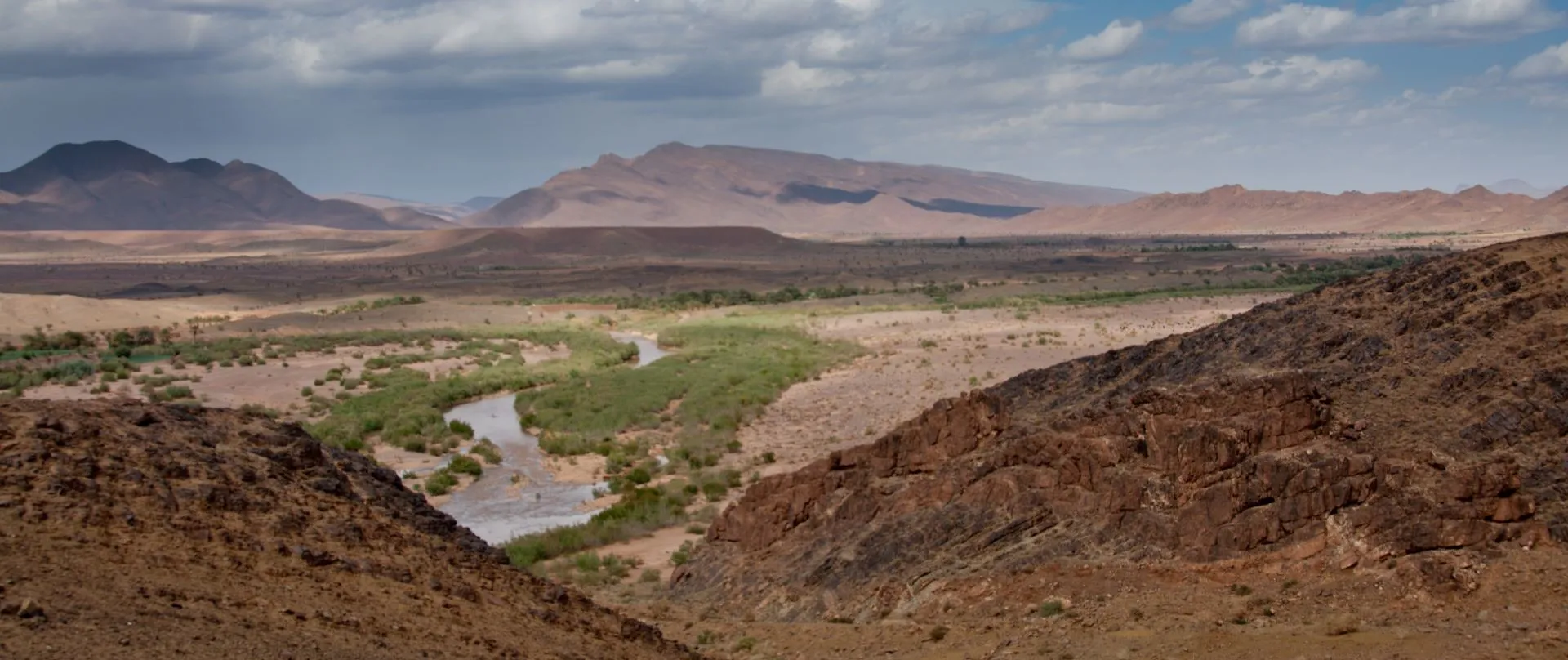
The rural territories of South-East Morocco
Sudestmaroc.com – External political and cultural powers have repeatedly occupied Amazigh territories, from the Phoenicians to the French. How did Berber culture develop in the face of these successive pressures? Did it display a capacity for assimilation, cultural intermingling or preservation?
MC – The history of the Berbers living today in Morocco, Tunisia, Algeria, Libya and Egypt has been profoundly marked by domination by population groups from elsewhere — first the Romans, then the Arabs, and later the French, Spanish and Italians.
“Adaptation and rebellion” — these were the only options open to Berbers under foreign domination. As “free men” — one of the meanings traditionally attributed to the term Imazighen — they largely chose non-adaptation and withdrew into mountainous regions in order to practise their culture within their families and escape persecution by foreign rulers.
Tattooing was one of the means of rebellion. The signs and ornaments decorating the backs of men’s hands spoke of tribal belonging and religion — and they were forbidden under Muslim rule.
In resisting assimilation by the cultures of conquering peoples, the Berber world was able to ensure its own cultural continuity throughout history through its arts and the symbols of identity carried within them. Music obviously played an important role. Ancient Berber culture is extraordinarily rich and diverse, with a wide variety of musical styles. These range from bagpipes and oboes — in a style that can recall certain Celtic music — to pentatonic music reminiscent of Chinese music, all combined with African rhythms and a very substantial body of authentic oral literature. These traditions have been kept alive by small groups of musicians who travel from village to village, as they have done for centuries, performing at weddings and other social occasions with their songs, stories and poems.
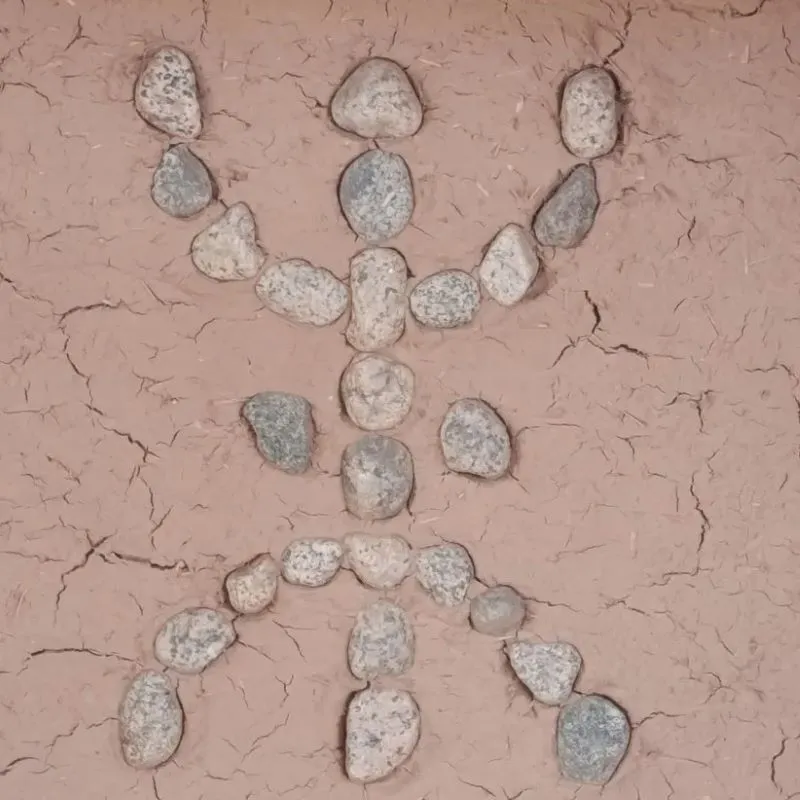
Read: Yaz, the Amazigh symbol of the free man
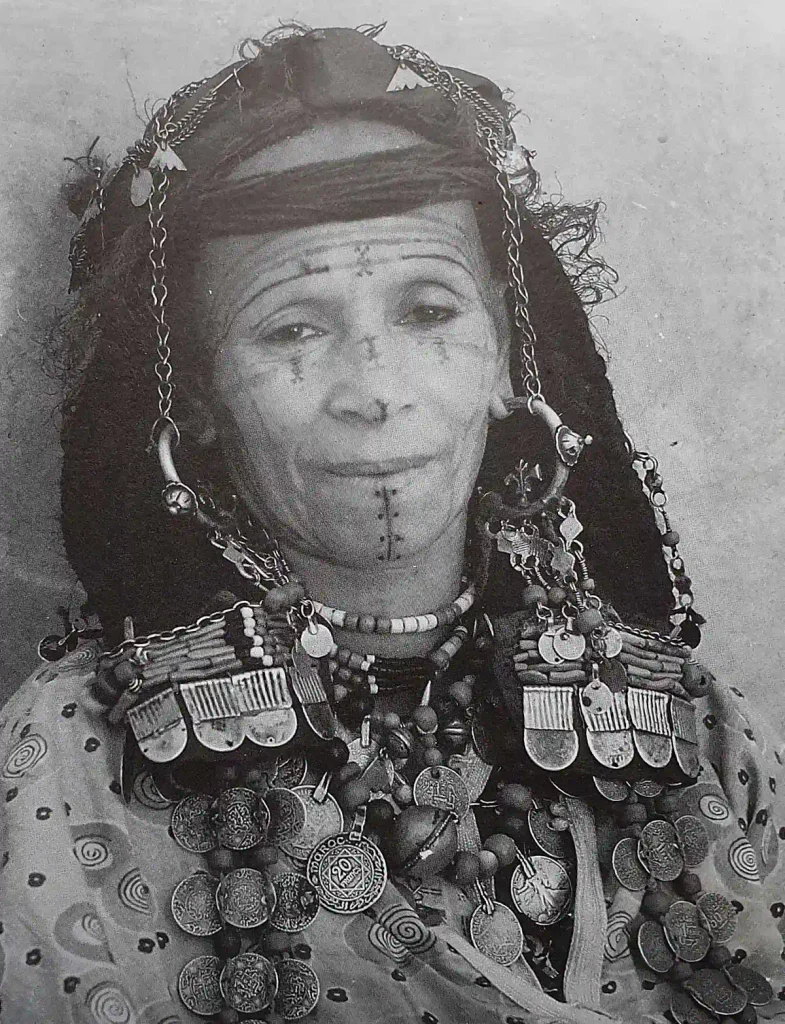
Source: Coiffures féminines du Maroc – Edisud
The mother, a vehicle for Berber cultural continuity
Berber mothers have been largely responsible for the survival of the Berber language and cultural identity. Mothers share traditional stories and beliefs with their children. Women also preserve cultural traditions through crafts such as weaving, jewellery, tattooing and pottery.
Rural women, particularly those who are illiterate, preserve Tamazight as a living language, infusing traditional art forms with an oral dimension through which linguistic traditions are passed from one generation to the next. In music and poetry, Amazigh women use their verses to keep the community informed about the comings and goings of its members, recount important events, uphold moral and social codes, and remind the wider community of the bonds that unite it and of its shared memory.
Sudestmaroc.com – The Amazigh New Year represents a distinctive Amazigh tradition. Could you trace its origins and symbolism?
MC – Anthropologists emphasise that it is difficult to establish precisely the possible historical roots of the Berber New Year, known as Yennayer. The contemporary Amazigh calendar conventionally dates its starting point to the accession of Chachnak — Sheshonq I — a pharaoh of the Twenty-Second Dynasty of Libyan origin, around 950 BC.
The Amazigh New Year marks the first day of the agricultural year for Berber communities. It belongs to a traditional calendar linked to the Julian calendar. By convention, the Amazigh year is now calculated by adding 950 to the Gregorian year: 2026 therefore corresponds to the year 2976. Depending on region and tradition, Yennayer is celebrated around 12, 13 or 14 January; in Morocco, the official date of the Amazigh New Year is now fixed at 14 January. Berbers sometimes call this festival “Id Suggas”, while some Arabic-speaking communities refer to it as “Hagouza”, in reference to the agricultural year.
The Julian calendar is a solar calendar used in ancient Rome, introduced by Julius Caesar in 46 BC to replace the Roman Republican calendar. It remained in use in Europe until it was gradually replaced by the Gregorian calendar from the late sixteenth century onwards. Today, the Julian and Gregorian calendars are thirteen days apart.
Amazigh people celebrate Yennayer in Morocco, Algeria, Libya, Tunisia and parts of Egypt. In Algeria, Yennayer has been recognised as a national holiday since 2018. In Morocco, the situation has changed since this interview was originally conducted: following a royal decision announced on 3 May 2023, 14 January became an official paid national holiday dedicated to the Amazigh New Year.
As an agricultural festival, Yennayer is a celebration of life. Like the celebration of 1 January, it is a time when people make wishes for longevity, prosperity and the future. It is considered an auspicious day for marriages and other important events in life. Children undergo important rites of passage during Yennayer. Boys may receive their first haircut, while parents send their children out to collect fruit and vegetables.
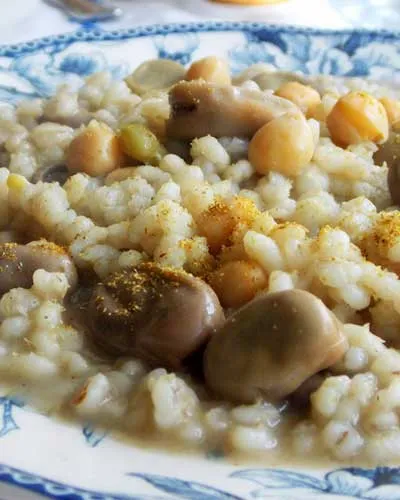
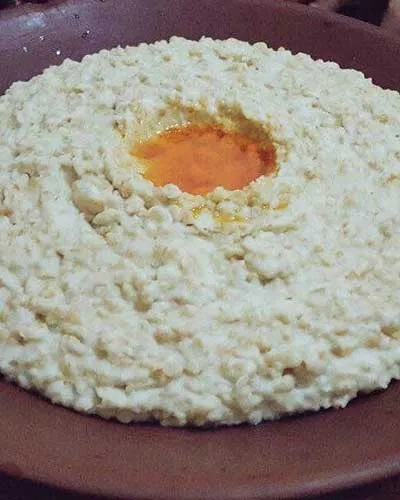
Food occupies an important place in the celebration, and several dishes are traditionally served on this special day. Orkimen is a thick soup made from dried broad beans and wheat. Couscous is another traditional dish and, at Yennayer, is specially prepared with seven vegetables. Tagoula is a cereal-based preparation served, depending on region and tradition, with butter, ghee, argan oil or honey.
A date stone or a piece of almond may be hidden inside the tagoula or couscous. Whoever finds the stone or nut is believed to be blessed throughout the coming year. In the past, that person would be entrusted with the keys to the storeroom for the rest of the year.
Read: Yennayer, the Berber new year
There are also many remarkable traditions and practices surrounding the food Amazigh families prepare for this festive night. Alongside special dances and songs of love, fertility and prosperity welcoming a new agricultural year, Amazigh people, particularly those living in rural areas, find in the occasion an opportunity to come together, exchange food and reconcile with those with whom they may have had disagreements.
Sudestmaroc.com – What is the role of women in Berber culture?
MC – Women’s oral tradition — among earlier generations, many of whom were illiterate — has been a major factor in the survival of Tamazight, because women use the language in domestic communication, in raising children, and in repeating folk tales, poems, proverbs, songs, and family and cultural histories.
Amazigh has been part of Morocco’s primary education system since September 2003, and its gradual expansion continues. This relatively recent presence within the education system in no way diminishes the essential historical role played by Amazigh women in transmitting the language to subsequent generations. As the people traditionally most closely involved in caring for children, they long provided children’s first link with Tamazight, giving it its full status as a mother tongue and helping ensure its longevity despite its historically limited representation in the public sphere.
Read: The story of the women of Taznakhte embroidered on the loom
Another reason why women may be regarded as the principal actors in the preservation of Tamazight lies in their related role as guardians of culture. Alongside managing their households and raising their children, women play an essential role in preserving Amazigh artistic and cultural heritage through their work in areas such as textiles, music, poetry and dance.
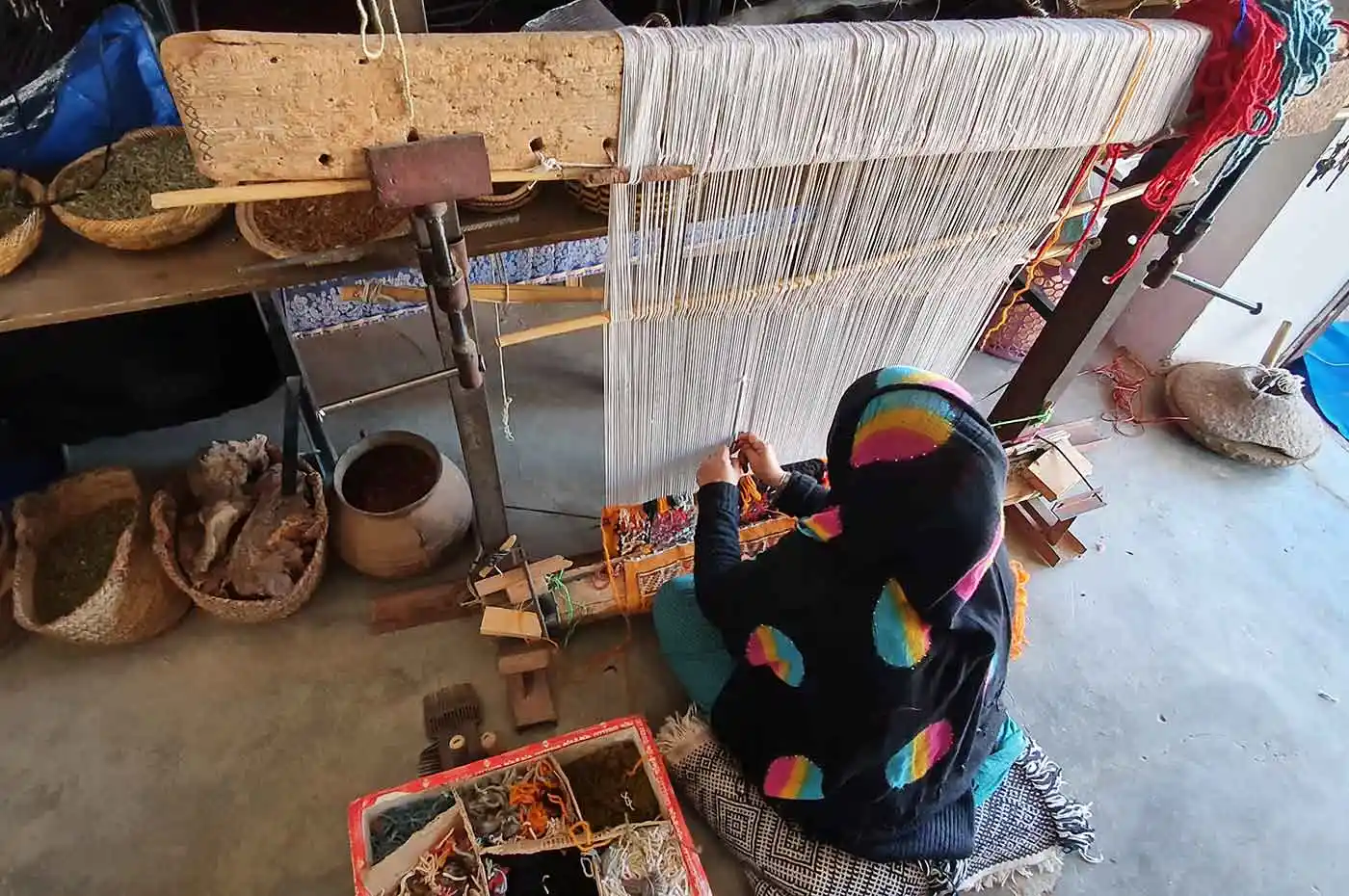
Here again, women are particularly important because they infuse these arts with traditions transmitted orally from one generation to the next. Women, for example, give Tamazight names to the motifs in their textiles and pass them on to their daughters. The names vary according to the resemblance the weaver sees between a motif and surrounding objects or the natural world, meaning that the same motif may carry a multitude of descriptive Tamazight names among different artists and families.
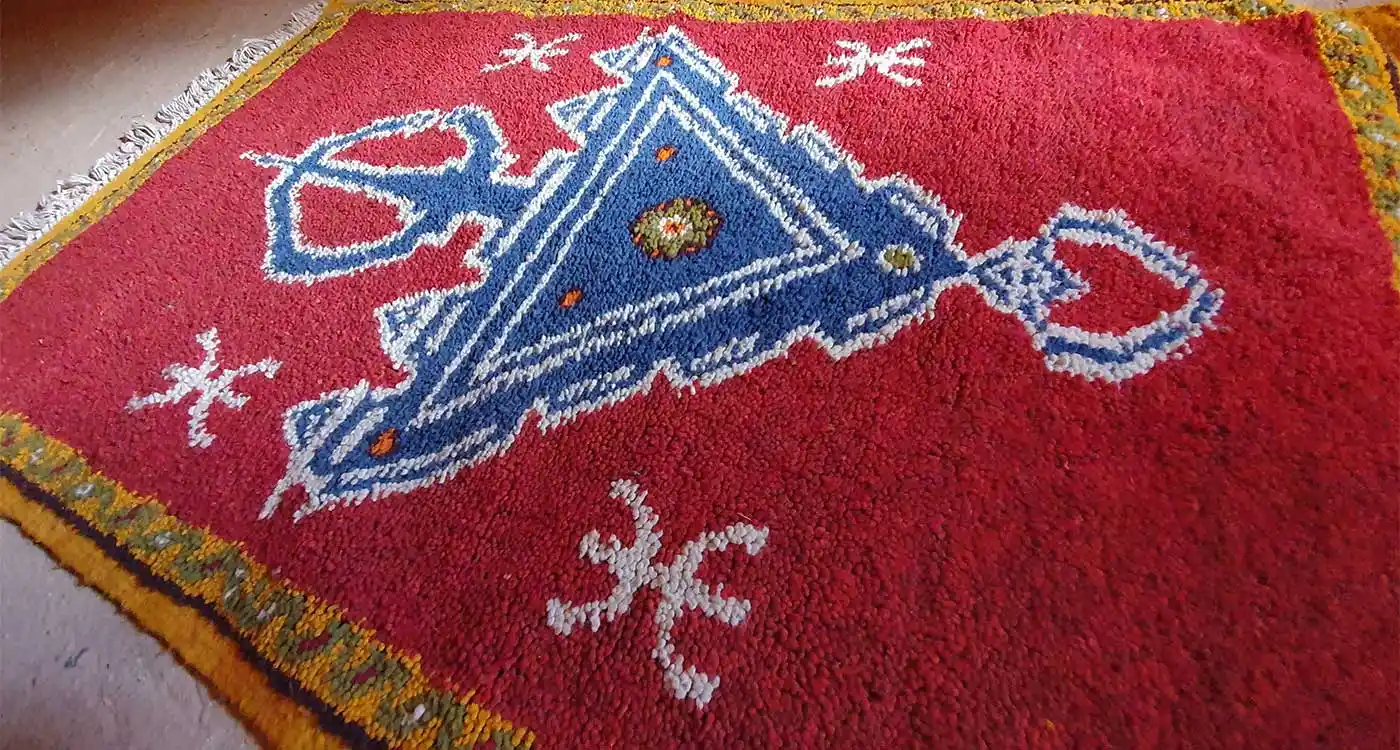
Moroccan Amazigh rugs are unique and have a fascinating history. They represent one of the best-known forms of folk-art rug making. These rugs have been made for centuries. The weaving of Moroccan rugs has traditionally been the responsibility of Amazigh women, in terms of their conception, weaving and artistic expression alike.
Women were responsible for preserving and passing on the knowledge required to make these rugs, including the secrets of family motifs, knotting techniques and the colours to be used. All this knowledge concerning the history of Amazigh rug weaving was transmitted matrilineally, each generation of women being responsible for passing it on to the next. Rugs were used within tribal groups as household coverings, horse blankets, standards, flags and other utilitarian objects.
Sudestmaroc.com – What are the distinctive features of Tuareg culture within the wider Berber cultural community?
MC – Although they have retained their language and many of the customs of their Berber ancestors, the Tuaregs have developed a unique culture of their own, a genuine synthesis of numerous traditions, including not only Berber and Arab traditions but also elements drawn from the peoples of the Sahel.
An aura of mystery and romanticism surrounds the desert nomads known as the Tuaregs. Long known as warriors, traders and highly skilled guides through the harsh and arid Sahara, the Tuaregs have seen their independence seriously threatened by repeated droughts that kill their herds and by international borders that severely restrict their movements. Many have been forced to abandon their nomadic way of life and settle permanently, forming small villages or moving to towns and cities in search of work.
Berbers once sought refuge in the oases of the Sahara
The Tuareg people represent a Saharan branch of the Berber world, which has been present in North Africa for several millennia. Although today’s Tuaregs are Muslims, their ancestors gradually moved into and established themselves across the Sahara as North Africa underwent major historical transformations, notably following the Arab conquests of the seventh century and the Bedouin migrations of later centuries. Many Berber groups thus found refuge in the oases and Saharan territories, where they developed or continued nomadic ways of life.
These nomadic pastoralists inhabit a vast region stretching from central Algeria and Libya in the north to northern Nigeria in the south, and from Libya in the east to the regions around Timbuktu in Mali in the west. The largest Tuareg populations today live in Mali and Niger, but also in Algeria, Libya and Burkina Faso.
Tuareg society is traditionally highly stratified, with several social categories including nobles, vassals, religious specialists, artisans and formerly servile groups. Tuaregs are traditionally monogamous, and their social organisation gives an important place to descent and transmission through women. In this respect, they differ markedly from many other societies in the region.
Sudestmaroc.com – Is it ultimately possible to distinguish the Berber component within Moroccan identity?
The cultures that make up Morocco are inextricably intertwined. Amazigh culture is nevertheless one of the central elements in the country’s way of life and dominant system of popular beliefs. One example is Twiza, a community support network which is originally an Amazigh concept but has become one of the foundations of contemporary Moroccan social structure.
In Morocco, Amazigh customs and systems of belief lie at the heart of many expressions of popular Islam, including Sufism as it developed within the Moroccan Sunni Maliki context.
Read: The Naciria Zaouia of Tamegroute, anatomy of a birth
The relationship between Islam and the Amazighs in Morocco is mutually reinforcing. Islam constitutes the religious tradition of the Amazighs. The Amazighs, in turn, colour that tradition with their languages, customs and local beliefs, some of which predate Islam. Thus, the ancient Amazigh animistic belief in the religious significance of the seasons acquired an additional layer of Islamic meaning when the Moroccan disciples — sing. mourid, pl. muridoun — of the Amazigh Sufi Sidi Harazem associated the miracle (karamah) of the spring with this Friend of God. Popular Islamic mysticism, or Sufism, in Morocco reconfigures pre-Islamic religious phenomena through an Islamic theological medium. Amazigh awliya’ Allah, or Friends of God, perform the crucial work of locating the Islamic tradition within its Amazigh linguistic and religious context. Popular Sufi Islam in Morocco is therefore a tradition that values both the local Amazigh cultural context and the Islamic tradition.
It should not be forgotten that the Amazighs constitute Morocco’s indigenous population. They have lived continuously in this country for millennia. The relationship between Amazigh culture and Moroccan society is therefore a natural one. The beliefs and ways of life of Morocco’s earliest inhabitants are thus deeply embedded at the heart of contemporary Moroccan culture.
Mohamed Chtatou
Mohamed Chtatou is Professor of Business Communication at the International University of Rabat (UIR) and of Pedagogy at Mohammed V University in Rabat. He is also a political analyst for Moroccan, American, Arab, French, Italian and British media on Middle Eastern politics and culture, Islamism and religious terrorism. He specialises in Sufism and political Islam in the MENA region and has a particular interest in the roots of terrorism and religious extremism.

More to Explore
Leave a Reply