


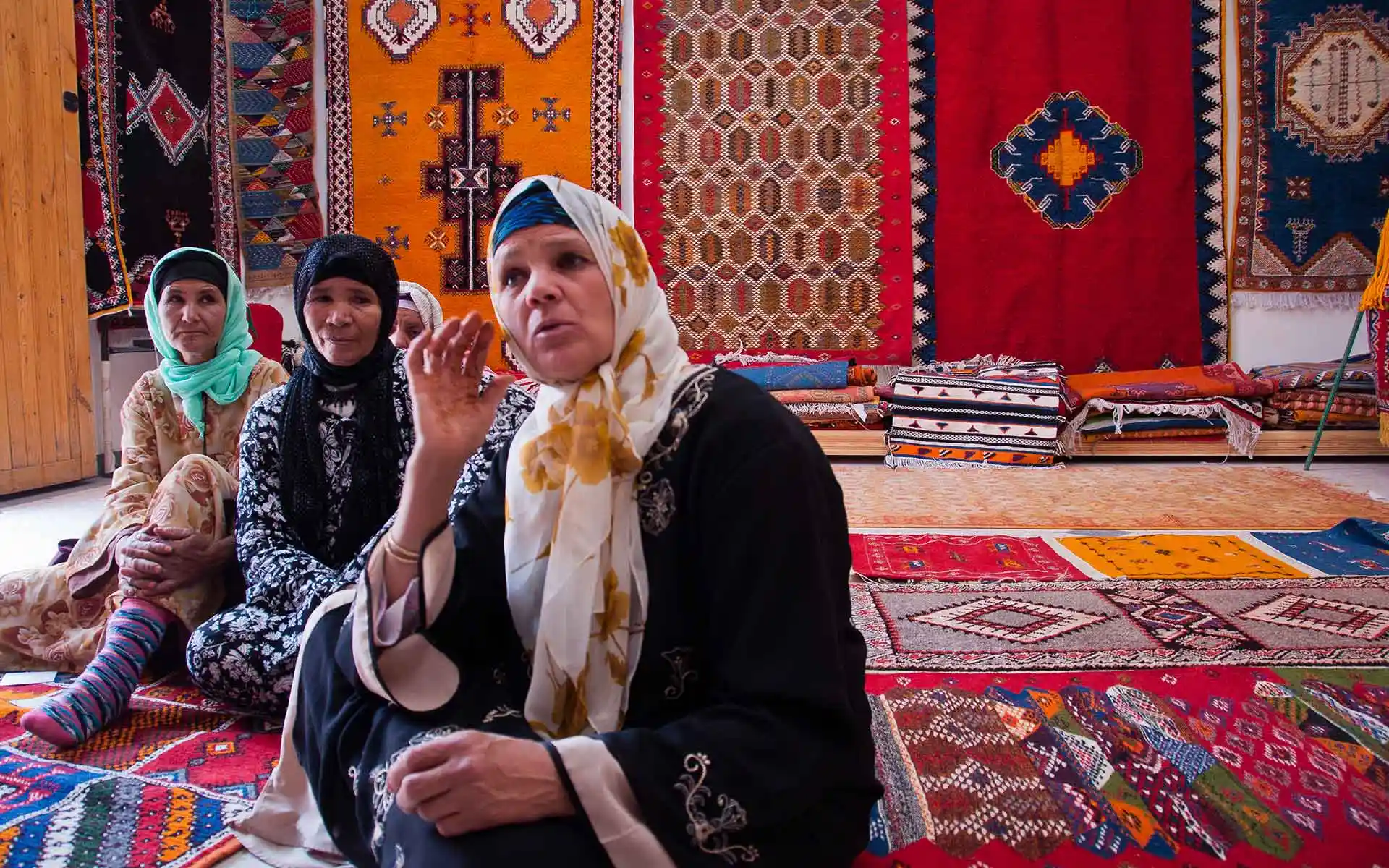
The story of the women of Taznakhte, woven on their looms
In Taznakhte, the carpet has long told much more than a story of craftsmanship. Behind the threads, colours and motifs lie the lives of women who learnt to weave from childhood. In 2012, Abdeljalil Didi met Mbarka Bahssi, a weaver and activist determined to have their work recognised.
Long are the days and nights of these women weavers of Taznakhte. Girls, teenagers and women who bring together art, expression and creativity. They build success and commitment as women by weaving carpets whose beauty and authenticity are second to none. Mbarka Bahssi is one example among many. A woman in her sixties who has spent a whole part of her life weaving carpets. An activity she began learning at the age of nine.
The loom as a space of freedom
In the past, looms stood in every home. Warp and weft threads became canvases on which the women of Taznakhte painted magnificent pictures, carpets rich in colour and adorned with different designs. Above all, these were moments of sharing, companionship and solidarity reserved exclusively for women. Washing the wool, untangling it, combing it, spinning it: painstaking work, courageously carried out by these selfless women.
For them, weaving was a space of freedom and creativity, where women could freely tell the story of their lives through motifs and colours.
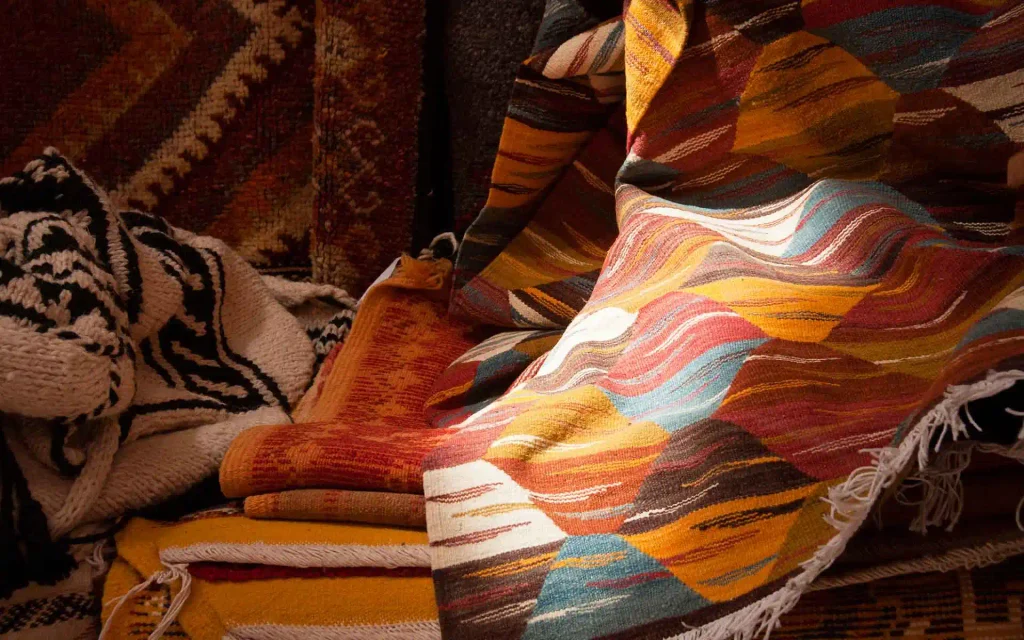
Mbarka Bahssi steps out of the shadows
Today, Mbarka straightens up and steps to the front of the stage. In a cultural and socio-economic context radically different from that of the past, she refuses the role of a mere worker ant toiling away in the shadows. She wears many hats within her association, “Tifaoute pour la femme rurale de Taznakhte”. Very active, she is also an ambassador for the Taznakhte carpet. She represents it throughout the kingdom. Sleeves rolled up, her tongue is as sharp as a fine blade.
Mbarka steps into the fray to denounce the precarious situation of poor carpet craftswomen. “The women wander through the souk, thirsty and hungry, carrying their carpets. They have left behind mouths to feed, kids to put through school and water and electricity bills to pay. The middlemen, greedy for profit, throw them crumbs. Crushed by need, they sell their carpets for next to nothing; sometimes their profit does not even exceed 20 dirhams. It is unjust,” she protests.
Mbarka defends the cause of the Taznakhte carpet and calls for dialogue and for this precious local product to be properly valued. Ande she concludes :
“Our centre is open. We will weave carpets for as long as we have the strength to do so. I am asking those in charge to take an interest in these women who manage with whatever means they have. These women who are safeguarding a cultural heritage of great value, namely the carpet,”
Mbarka
Her message delivered, Mbarka takes up her combs again, heralding the beginnings of a new carpet.
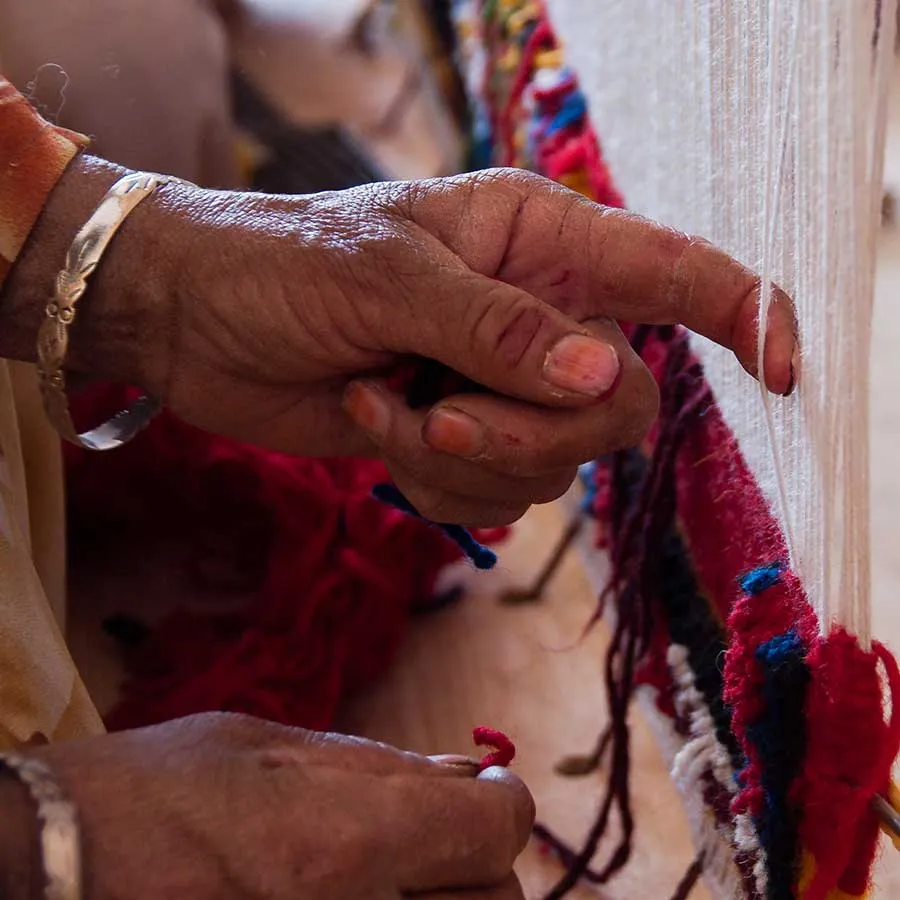
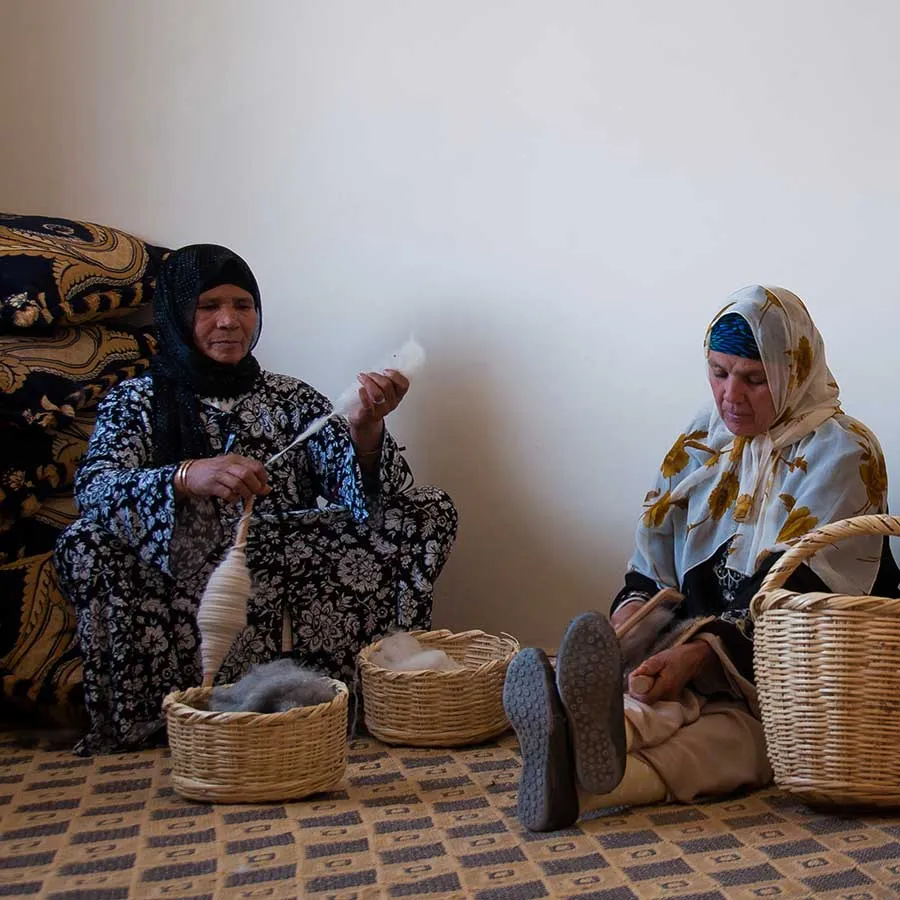
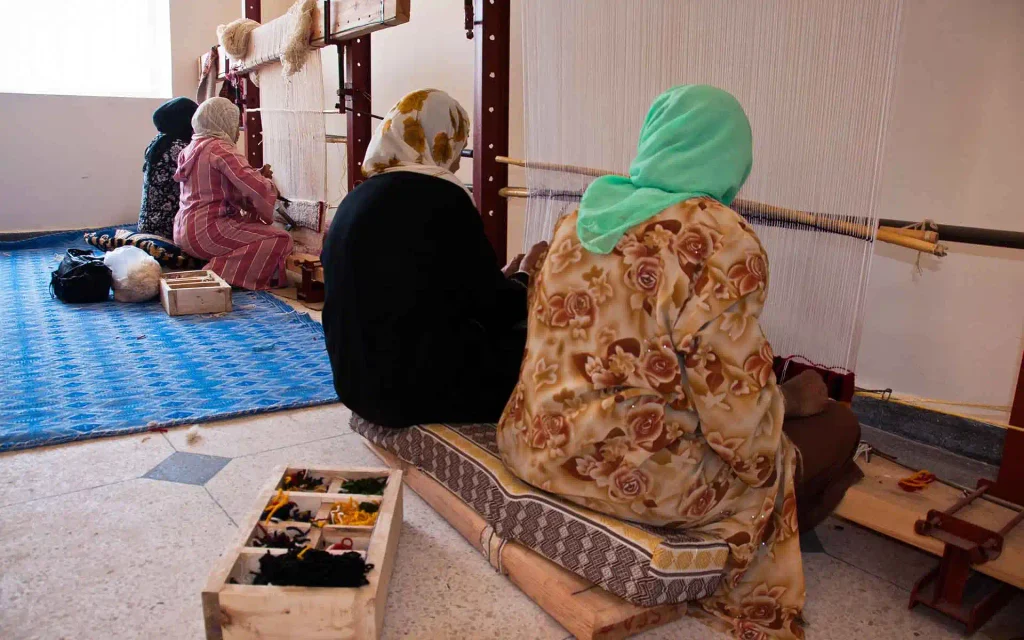
Behind every carpet, a woman’s story
Wherever a Taznakhte carpet is laid out or hung, let us think of these brave, resourceful women who are its artists. Every woven carpet is the human story of a woman, a wife, a mother or a widow who has drawn into it her hopes and her sorrows. As we admire the beauty of the finished piece, let us pay tribute to its craftswomen, who tell their story on the loom, thread by thread.
Discover: Henna in Morocco, from the land of Tazarine to women’s hands
Association Tifaoute pour la femme rurale de Taznakhte
Centre féminin de promotion du Tapis, centre de Taznakhte.
Tel : +212 546 62 82 07 / +212 662 64 99 23
Editorial note — 2026
This report was first published in July 2012. Since then, sudestmaroc.com has continued its work on the women weavers of Taznakhte, the Aït Ouaouzguite carpet and the place of women in passing on this heritage. Other portraits and reports now extend the story told here and follow the initiatives through which craftswomen are seeking greater control over the production and sale of their carpets.

More to Explore

Leave a Reply