


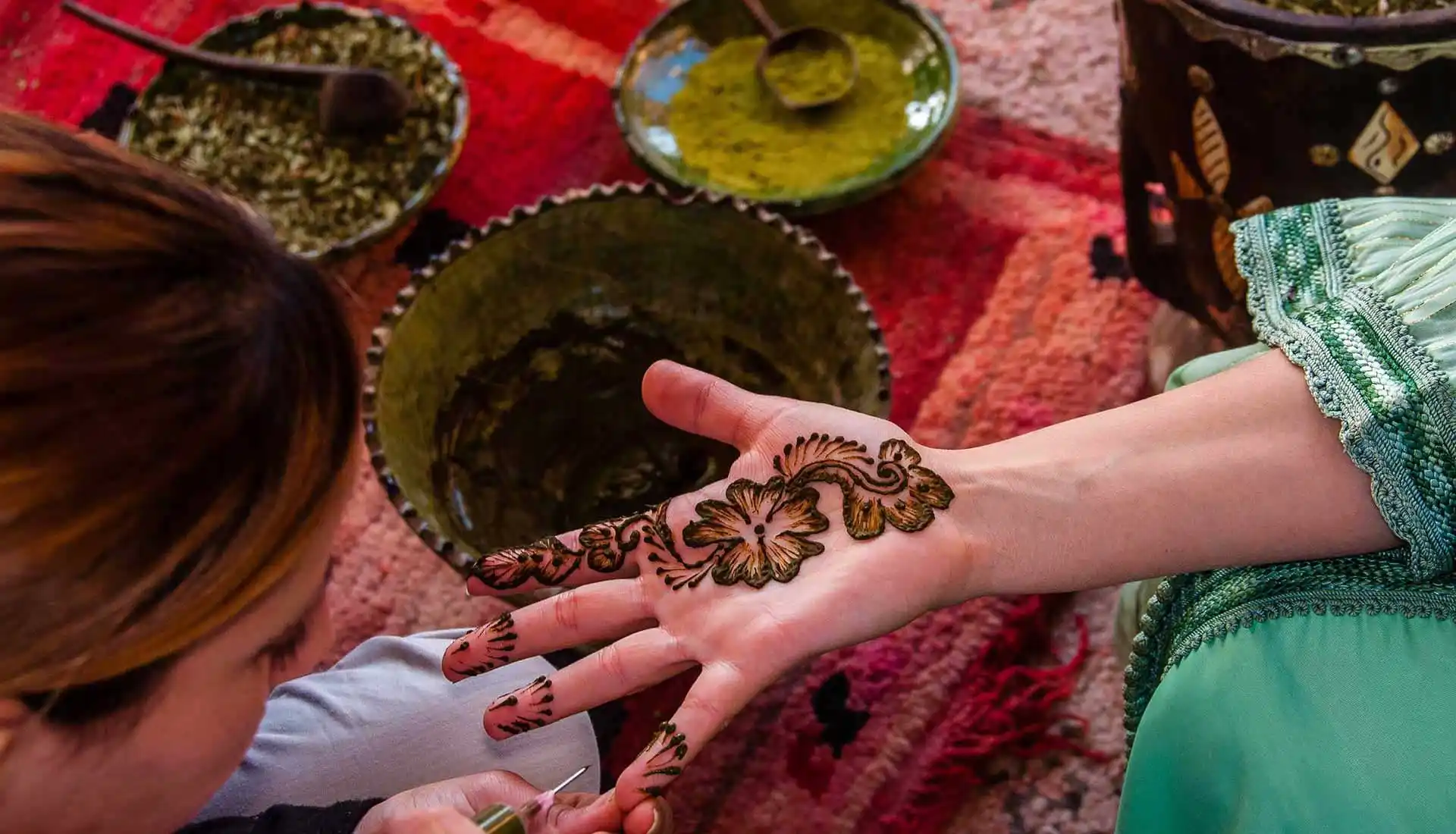
Henna in Morocco, from the land of Tazarine to women’s hands
Plant of hot lands, green powder turned into colour, adornment, ritual and language, henna has accompanied some of life’s great moments in Morocco for generations. In South-East Morocco, it is also a local crop, particularly present around Tazarine and in the Maïder Basin. In 2012, sudestmaroc.com met Tlagmasse and Amina, two young women who had turned this art into a profession. In their own way, their portraits tell the story of the still-living transmission of a female savoir-faire now inscribed on the Intangible Cultural Heritage of Humanity list.
Overview
- A plant of hot lands.
- In South-East Morocco, henna has its terroir.
- From powder to design.
- Henna accompanies the great passages of life.
- Tlagmasse, ‘I love henna’.
- Amina, a needle, henna and happiness.
- A savoir-faire passed from woman to woman.
- Henna, Intangible Cultural Heritage of Humanity.
A plant of hot lands
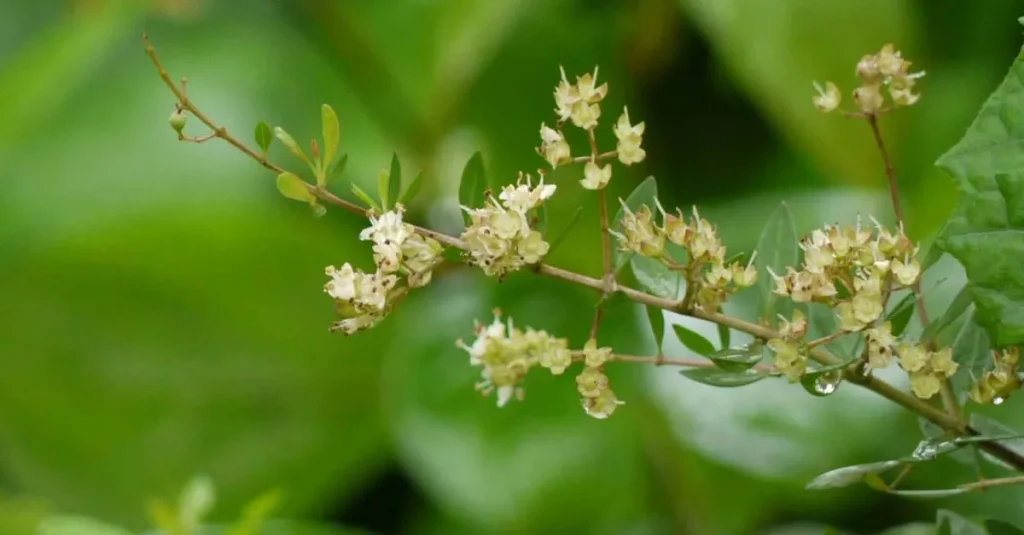
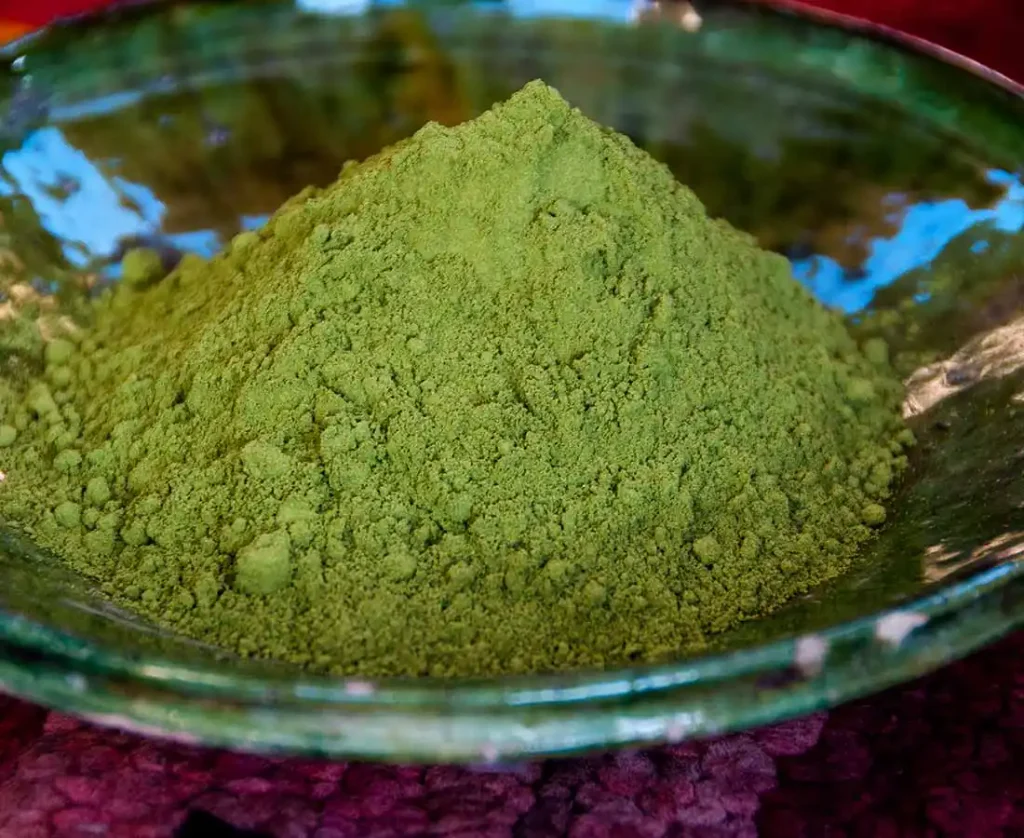
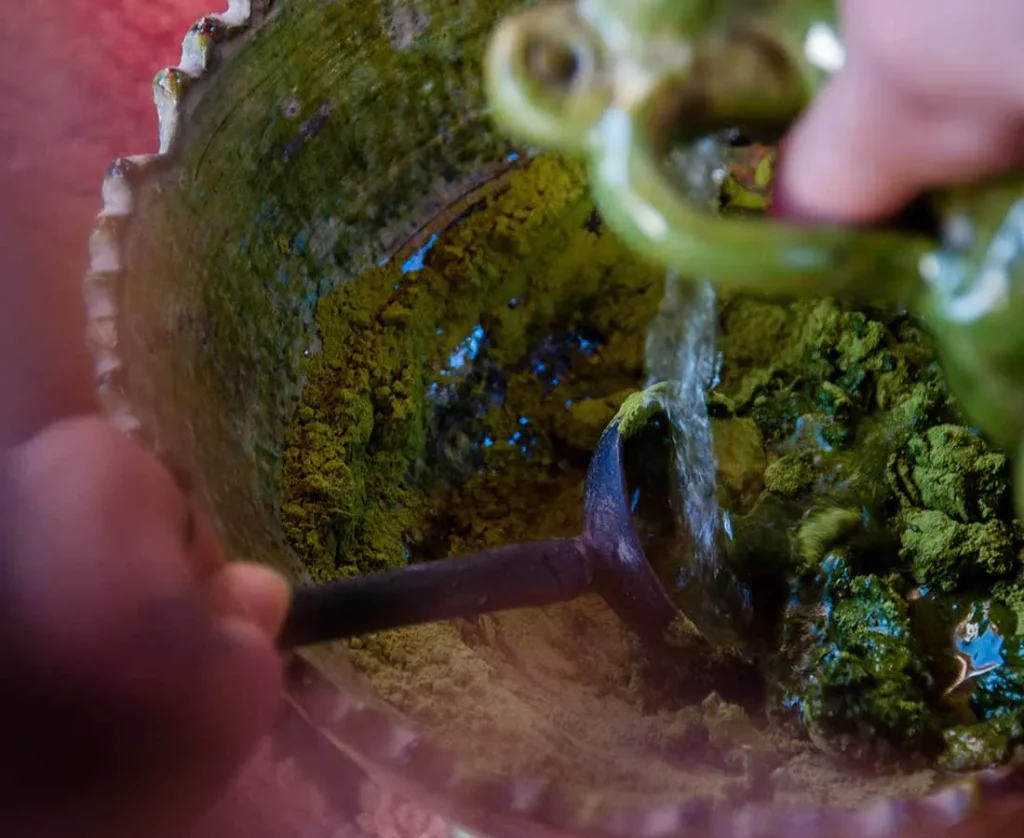
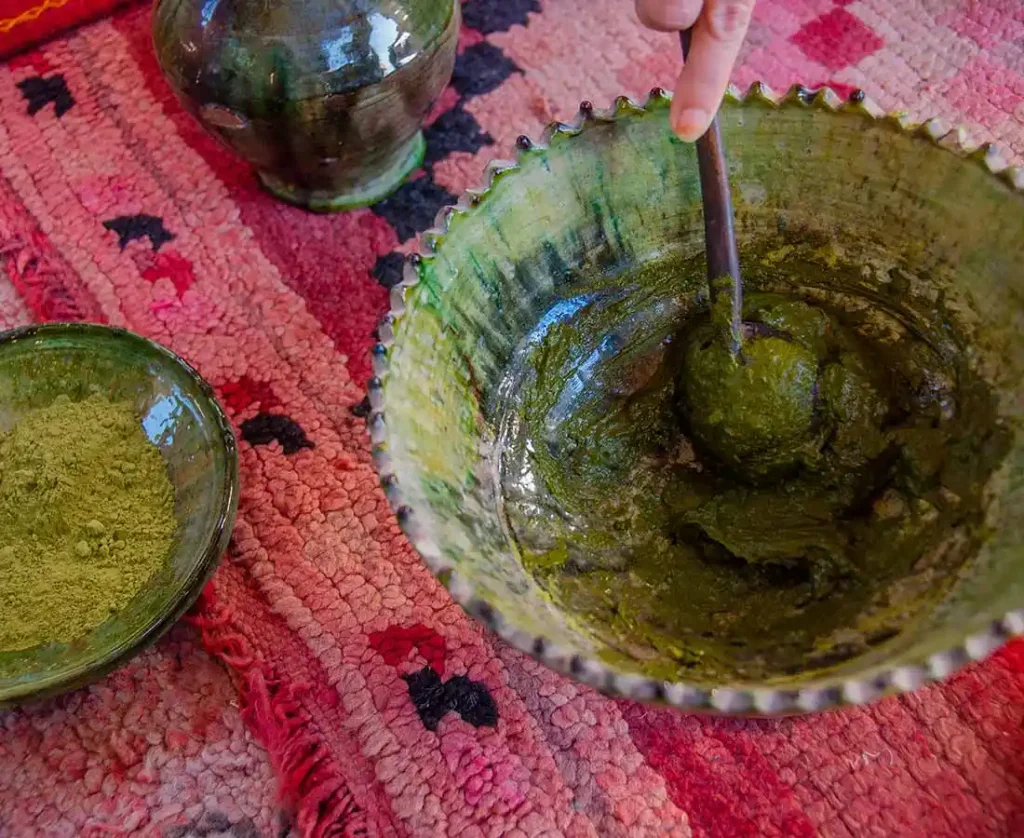
Lawsonia inermis is a shrub that thrives in hot, dry climates. Its leaves are harvested, dried and then ground until they become the green powder so familiar in Morocco’s souks. Mixed with water and, depending on the practice, various other ingredients, it becomes a paste whose colouring power comes mainly from a natural pigment, lawsone.
When the paste is applied to the skin, the colour gradually appears, at first orange and then darker, tending towards reddish-brown. It is commonly referred to as a ‘henna tattoo’, although it is not a tattoo in the strict sense: no ink is introduced beneath the skin and the design gradually disappears as the superficial layers of the skin are renewed.
But to reduce henna to a natural dye would be to miss what matters most. In the societies where its use has been passed down, the plant accompanies bodies, celebrations, the passages of life and relationships between generations. It belongs as much to the world of gesture as to that of symbol.
Henna: henna (Lawsonia inermis) is a thorny shrub of the Lythraceae family that can grow up to six metres high. It is known as mehndi, mendhi, mehendi (or mehandi) in India, ḥenna in Arabic, and lḥenni or anella in Berber.
In South-East Morocco, henna has its terroir
The henna found in Ouarzazate was not necessarily born in Ouarzazate.
A significant proportion of the henna circulating in the region comes from the more southerly and easterly territories of South-East Morocco, where the heat and aridity provide particularly favourable conditions for its cultivation.
The Ouarzazate Regional Office for Agricultural Development identifies its main production areas as Tazarine, Aït Boudaoud, Aït Ouallal, Nkob and Taghbalte, in Zagora Province, as well as Alnif, in Tinghir Province. It estimates that just over 1,000 hectares within its area are devoted to the crop, with an average annual production of around 2,800 tonnes.
Tazarine is therefore much more than a name associated, in the shops, with a reputed henna: the plant genuinely belongs to the agricultural landscape of this part of Morocco.
Since 2021, this relationship between a product and its territory has also been recognised through the ‘Henna of the Maïder Basin’ Geographical Indication. Its area covers seventeen communes across the provinces of Errachidia, Zagora and Tinghir.
The specifications accompanying this recognition reveal what is easily forgotten when henna is known only in its powdered form: behind it lie nurseries, irrigation, harvesting by hand with a sickle or scissors, followed by the drying of the leaves in the shade for several days before they are cleaned, ground and sieved. Up to four harvests can take place between May and November.
Before the decorated hand, there is therefore a land, a plant, and the men and women who cultivate it.
From powder to design
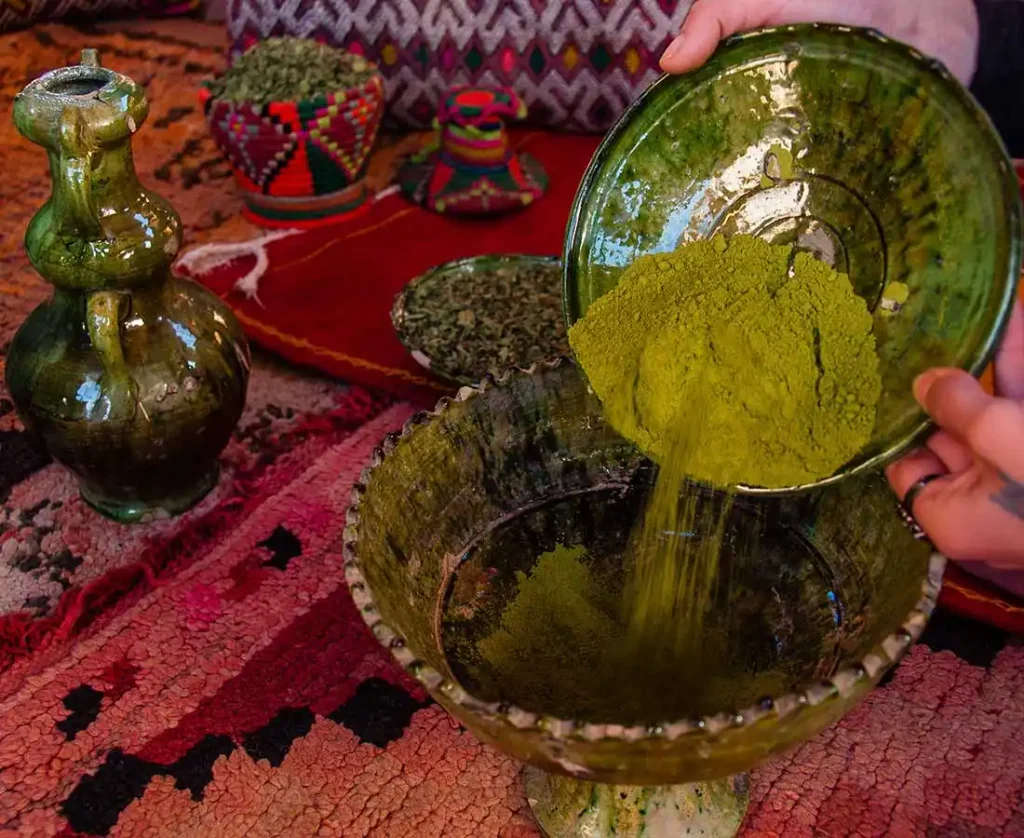
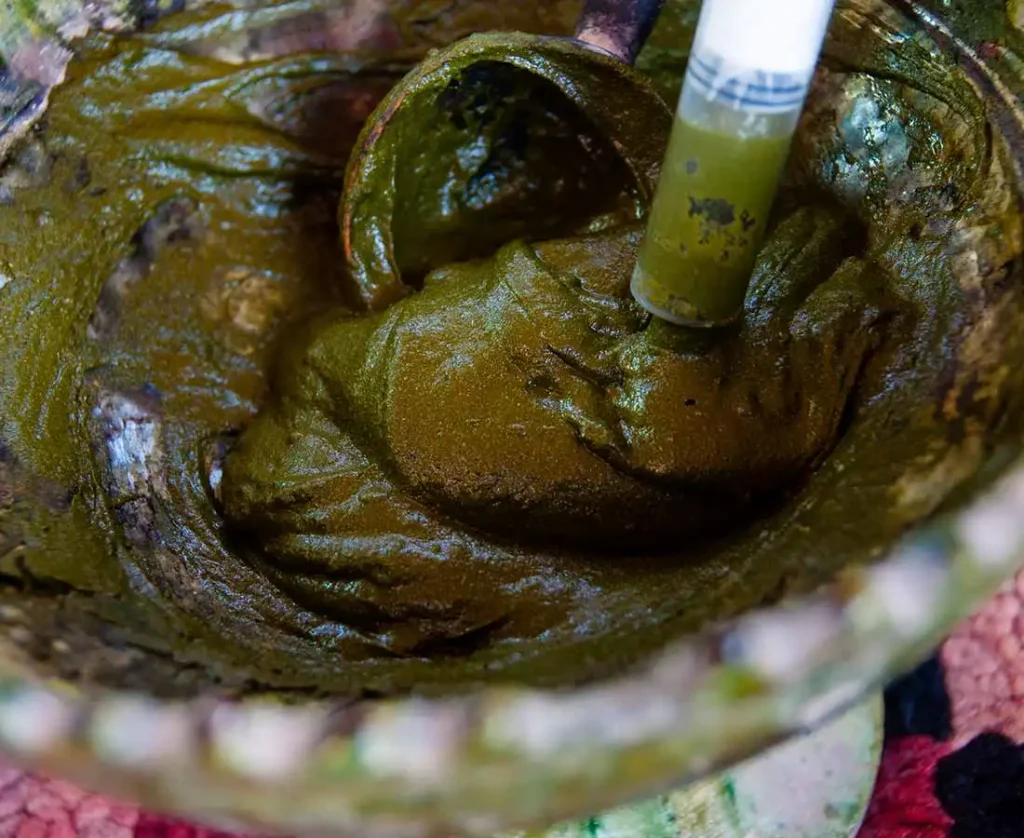
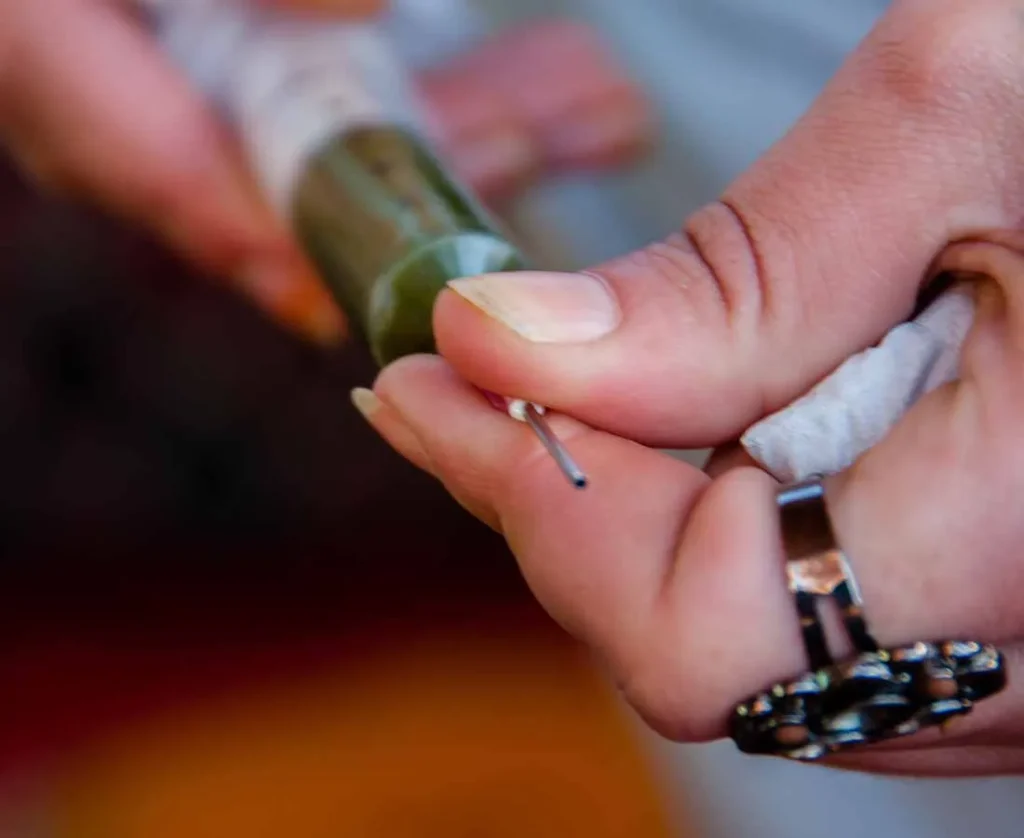
Between the dried leaf and the adorned hand lies another savoir-faire: that of preparation and application.
The paste must have the right texture, supple enough to allow the line to be drawn but firm enough to remain in place. Then comes the design. Lines, arabesques, flowers, foliage, interlacing or geometric compositions follow one another according to styles, regions, fashions and, above all, the imagination of the woman holding the instrument.
For there is no single Moroccan henna ‘pattern’.
As with carpets, embroidery or the decorative arts, repertoires circulate, change and mingle. Some practitioners favour compositions inherited from their region; others draw inspiration from pattern books, magazines, the creations of other hennayas or, today, the images circulating on social media.
Yet the gesture remains deeply personal. The same form, traced by two different hands, will never produce exactly the same design.
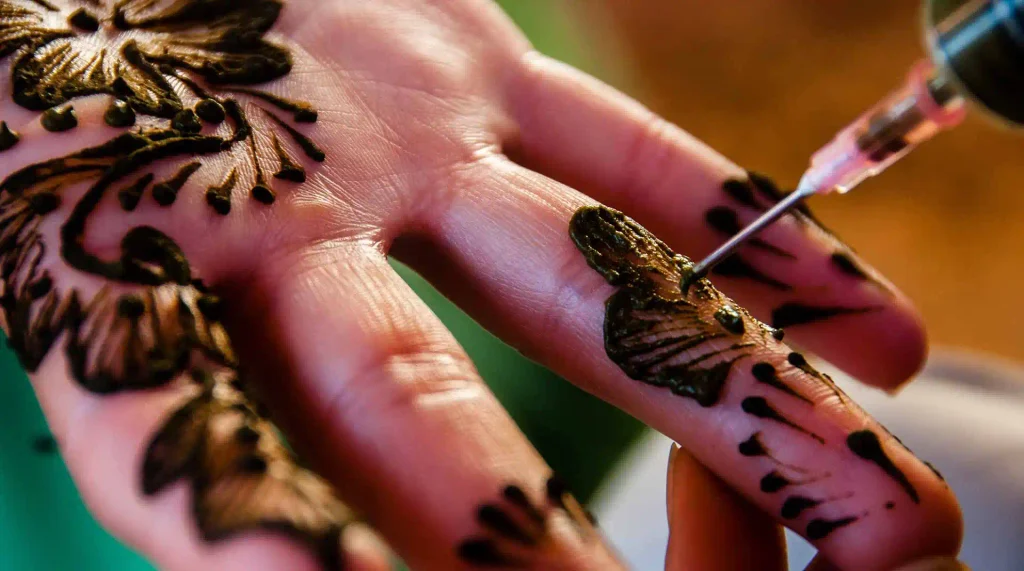
The hennaya — also known as a nekkacha depending on the region and usage — works quickly, but her speed is that of a gesture learned over many years: a succession of lines that must remain assured even as the design takes shape directly on the skin.
Henna accompanies the great passages of life
In Morocco, as in many societies of North Africa and the Middle East, henna is not merely a form of embellishment.
It appears at weddings, births and various family or religious celebrations. It is associated with festivity, joy and beauty, but also with protective beliefs and an entire imaginary world passed down within families.
Marriage is undoubtedly the moment when its presence is most visible.
The henna ceremony then becomes a particular moment: the bride is surrounded by women, the gestures take their time, and the decoration of the hands and feet is accompanied by objects, songs, words and practices whose forms differ from one family and one region to another. Henna no longer merely decorates a body: it symbolically marks a passage.
It is precisely this social dimension that explains why the plant cannot be separated from those who use it. UNESCO itself describes henna as a ‘symbol of joy’ and stresses that the rituals surrounding it help to strengthen social bonds.
Knowledge is not passed down through written rules alone. For a long time, and still very often today, one learns by watching: a mother, a neighbour, a relative, a more experienced professional. One watches the preparation of the paste, the pressure of the hand, the way in which a pattern is constructed; then comes the moment of trying it oneself.
This is exactly how the two women met by sudestmaroc.com in 2012 described their apprenticeship.
Editorial note — 2026
The two portraits below were first published on sudestmaroc.com in 2012. We have chosen to reproduce them in their original form, as testimonies to a period and a practice. Only occasional typographical errors have been corrected.
Tlagmasse, ‘I love henna’
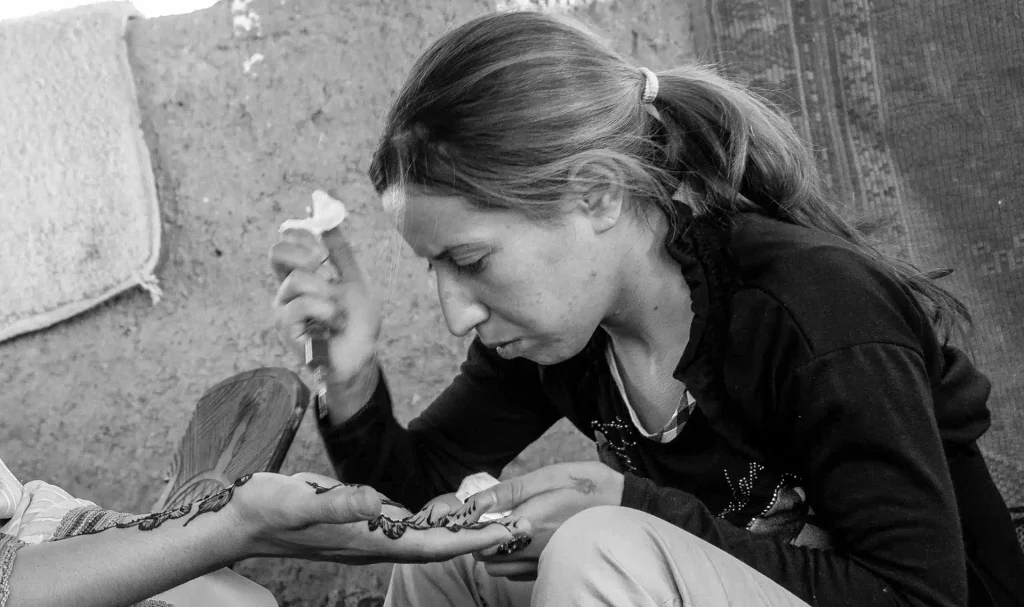
This portrait was produced in 2012 by Hafsa Bouheddou. References to age and personal circumstances correspond to that date.
‘I have always been passionate about henna and tattooing. My passion was also welcomed by those around me, who greatly encouraged me to continue in this direction. But along the way, many obstacles have sometimes led me to question my choice.’
Tlagmasse
Tlagmasse was born in 1991. Alongside her studies, which she abandoned during lower secondary school, she had a passion for henna and tattooing. She enjoyed sketching shapes in pencil which she would then turn into beautiful henna designs. She turned this inclination into a profession. Yet Tlagmasse admits that she does not think she will go much further in this field, for various reasons including the lack of guidance and the growing number of women practising this activity, each with a style of her own.
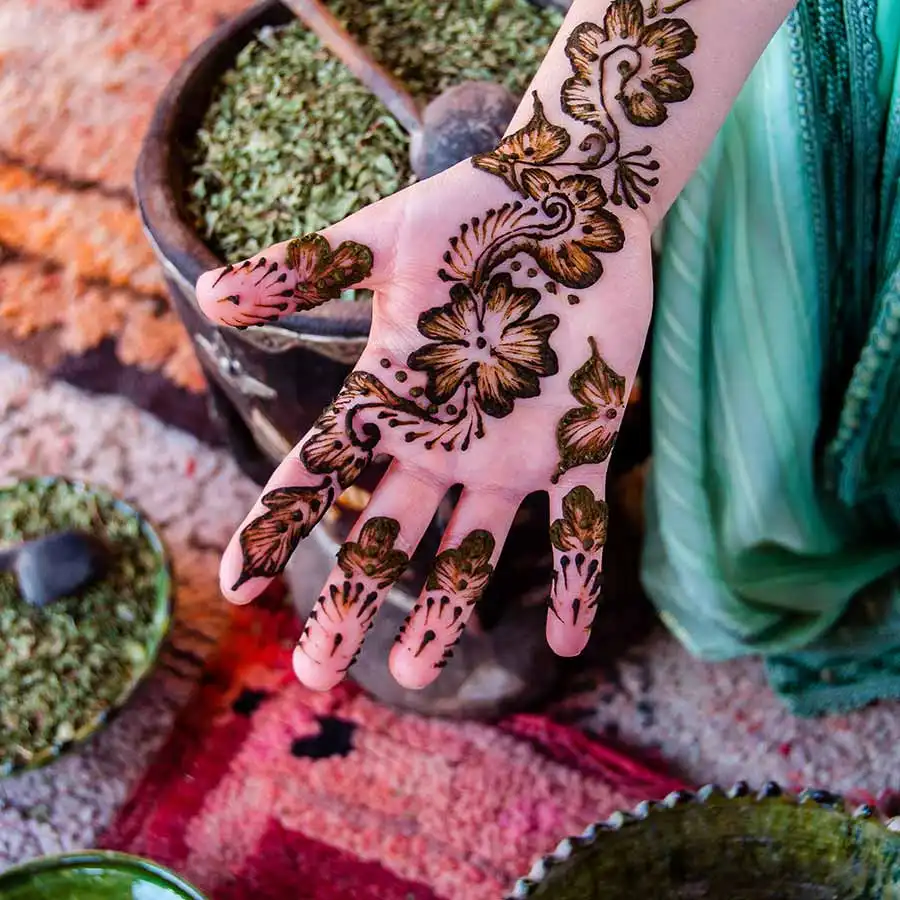
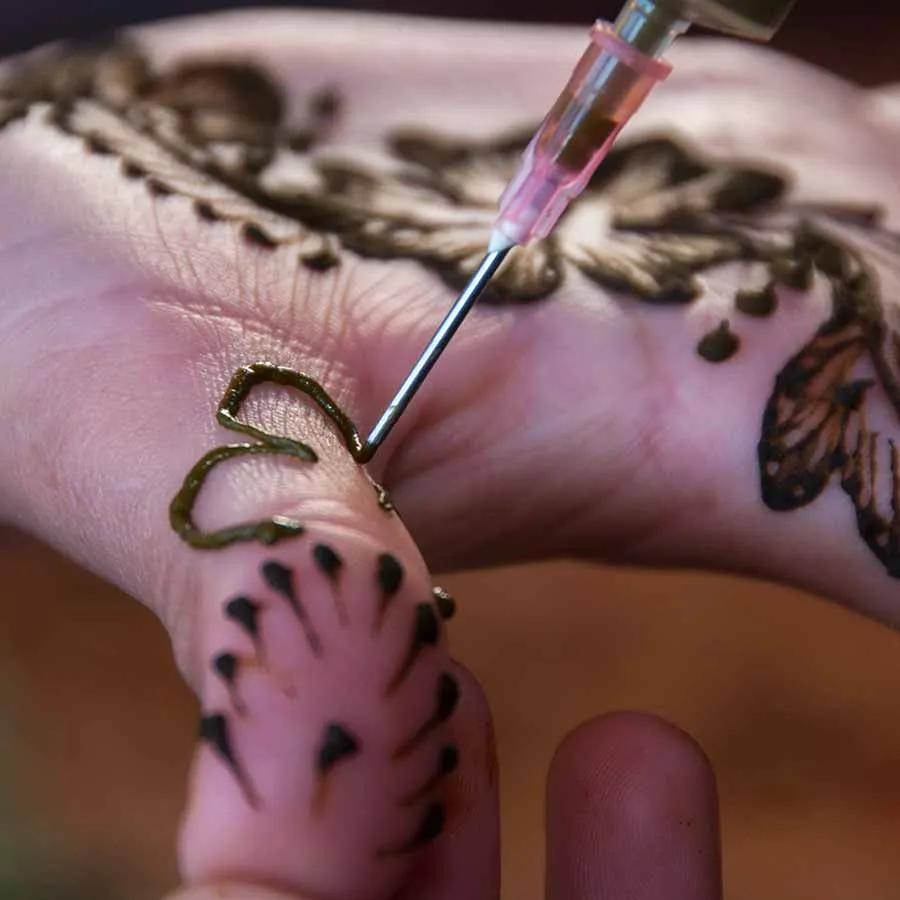
Festivals and summer are the periods when there is greatest demand for henna, both from the local population and from tourists. Tlagmasse distinguishes herself through an oriental style known as lkhetfa. For her, the challenge is to draw inspiration from the history of the region so that her tattoos are not simply drawings but meaningful images.
Read also: The history of the women of Taznakhte embroidered on the loom
For Tlagmasse, henna is also a demanding activity that causes pain in her back and legs. She sometimes spends an entire day sitting down, particularly during periods of high demand. Some clients, meanwhile, delay their payment or bargain too much over the original price. Yet Tlagmasse takes care to satisfy her clients and loves her profession, an activity specific to women within Moroccan culture.
Amina, a needle, henna and happiness
This portrait was produced in 2012 by Meryem Ouidder. References to her professional experience and practice correspond to the situation described at the time of the interview.
Even as a very young girl, Amina adored drawing, and so it was quite naturally that, at barely thirteen years old, she began practising tattooing using henna. It did not take her long to excel in the field.
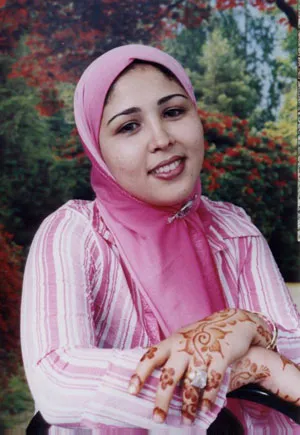
Today, this woman from Casablanca can pride herself on twelve years of experience not only as a henna tattooist (Nakacha) but also as a bridal dresser (Nagafa). Armed with her kindness and seriousness, Amina has managed, not without difficulty, to make her way behind the scenes of this profession. Those who have known her are struck by the cheerfulness and enthusiasm she has always been able to spread around her.
Although she had no prior knowledge, Amina constantly seeks to update her knowledge and skills as a professional henna tattooist. She is grateful to all those who trained her in the profession, particularly her neighbour.
Amina succeeded in sharpening her skills by continually keeping herself informed about new developments in the art of henna tattooing and by collecting patterns sold as photographs or cut out from magazines. Added to this was the fact that she regularly accompanied the most highly regarded tattooists, who passed on their know-how to her. To combine her studies with her passion, our tattooist needed the unconditional support of her mother, to whom she remains deeply grateful today: her mother supplied her with all the equipment she needed to progress in her work.
After completing her studies, Amina devoted herself entirely to her passion; today, this talented professional tattooist says she is impatient to see her work known to a wider public. Offering something new to all her clients is her motto, which is why she constantly makes a point of including traditional Moroccan motifs in her work.
Like all hennayas, Amina has her expert secrets, particularly for making the green colour of henna last longer on the hands of unmarried girls wishing to marry, thus leaving them time for success. These practices take place in a truly sacred atmosphere, in the presence of the famous tray (sinia) specially used for the application of henna, itself decorated and holding the necessary utensils: a bowl of henna, eggs, dates, Fassi lipstick, rose water, khol beldi, miswak, milk, perfume cones and a sugar loaf, symbolising the sweetness of life. According to hennaya Amina, henna mingles myth with religion and carries the hope of increasing the chances of marriage for unmarried girls who colour their thumb and middle finger with henna. Thus the day of henna corresponds to the weekly day of Muslims, Friday. Hadiths praising the virtues of the sacred plant are recited.
Read also: The Taznakhte carpet, tradition, art and beauty
Like an artist, Amina executes her designs with an excellence whose secret belongs to her alone. She uses her dexterity and, above all, her imagination to turn her client’s hand into a genuine work of art and, as a result, to win a smile of satisfaction from her clients at the end of each tattooing session.
Working as a henna tattooist is today an honourable and widely sought-after profession. The price of a tattooing session, besides not requiring a great deal of time, is affordable for every budget.
The city of Ouarzazate is renowned for the quality of its henna, particularly that of Tazarine. It is also home to many experienced and talented tattooists, and Amina says she is very proud to be one of them. Today she lives with her husband, a caterer by profession, in this city of a thousand and one kasbahs and an inexhaustible source of artistic inspiration.
A savoir-faire passed from woman to woman
The stories of Tlagmasse and Amina are not identical, and that is precisely what makes them interesting.
One draws and is still searching for her place in a profession she loves but whose difficulties she can already see. The other describes an apprenticeship begun in adolescence and patiently built alongside a neighbour, her mother and other professionals.
Yet both show the same thing: henna is also a chain of transmission between women.
The gesture observed becomes the gesture reproduced; the pattern received becomes the pattern transformed; knowledge that once belonged to a mother, a neighbour or an older hennaya becomes, in turn, a way of earning a living.
This transmission does not in any way prevent invention. Quite the opposite. Patterns change, tools evolve, influences circulate. New forms appear alongside older compositions. What is passed down, therefore, is not simply a catalogue of designs: it is the mastery of a gesture sufficiently alive to continue transforming itself.
Henna, Intangible Cultural Heritage of Humanity
Twelve years after these two portraits were published on sudestmaroc.com, this cultural dimension received international recognition.
In 2024, ‘Henna: rituals, aesthetic and social practices’ was inscribed on UNESCO’s Representative List of the Intangible Cultural Heritage of Humanity, as part of a nomination bringing together sixteen countries, from North Africa to the Arabian Peninsula and the Middle East, including Morocco.
It is not the plant alone that has been recognised in this way.
The inscription encompasses knowledge relating to its cultivation, the harvesting of the leaves, their processing, the preparation of the paste and its application, but also the rituals, social practices, songs, words and forms of transmission that accompany its use.
In other words, everything that connects the field to the hand.
When Tlagmasse and Amina spoke about their passion in 2012, they were of course not yet talking about ‘intangible cultural heritage’. They were talking about a profession, clients, patterns, learning, difficulties, celebrations and weddings.
But they were already talking about exactly that.
Knowledge received. A gesture learned. And a colour which, from the hot soil of southern Morocco to women’s hands, continues to circulate.
Crédit Photographie : Abdellah Azizi
www.azifoto.com
Key points
- Natural henna comes from the dried and ground leaves of Lawsonia inermis, a plant adapted to hot, dry climates.
- South-East Morocco has important production areas, particularly around Tazarine, Nkob and Alnif.
- Henna of the Maïder Basin has benefited from a recognised Geographical Indication since 2021.
- In Morocco, henna accompanies weddings in particular, as well as other important moments in family and social life.
- Its application is a savoir-faire widely passed down between women, while leaving considerable room for individual creativity.
- In 2024, the rituals, social practices and know-how associated with henna were inscribed by UNESCO on the Representative List of the Intangible Cultural Heritage of Humanity.
- The portraits of Tlagmasse and Amina published by sudestmaroc.com in 2012 now stand as testimonies to the professional practice of henna in Ouarzazate in the early 2010s.
Sources
- UNESCO, Henna: rituals, aesthetic and social practices, inscription on the Representative List of the Intangible Cultural Heritage of Humanity, 2024.
- Ouarzazate Regional Office for Agricultural Development, data on henna cultivation and local products in South-East Morocco.
- Official Bulletin of the Kingdom of Morocco, Order of 5 August 2021 recognising the Geographical Indication ‘Henna of the Maïder Basin’ and approving its specifications.

For more than twenty years, Éric Anglade has lived in a village of South-Eastern Morocco, where he explores and documents the region’s history, heritage, and living traditions. He founded sudestmaroc.com as a space for sharing fieldwork and cultural insight, bridging local knowledge with global perspectives. He also works alongside women carpet-weavers to help sustain their craft and welcomes travellers at Le Jardin de Yuda, his guesthouse envisioned as a meeting place for exchange and transmission.
More to Explore

Leave a Reply