


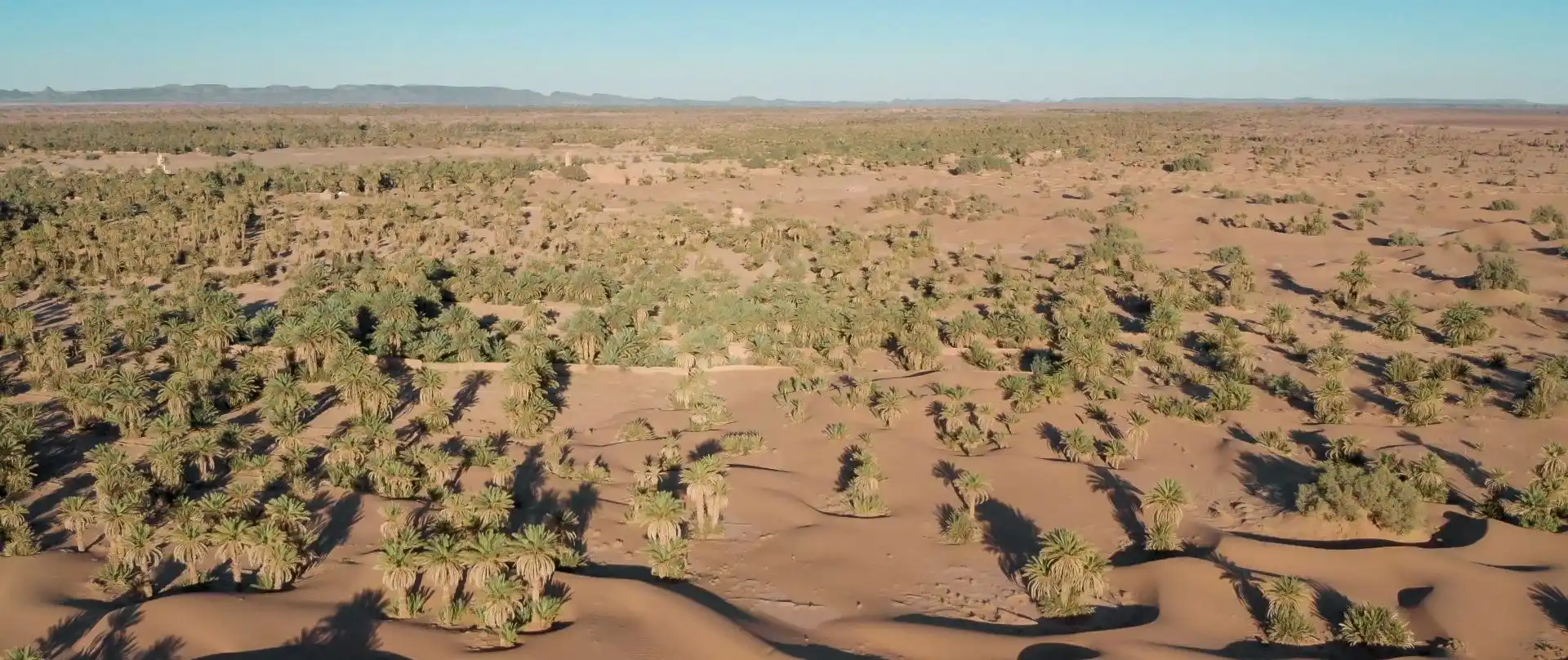
The oasis bears the germ of tomorrow’s Morocco — and of the world
An oasis is not merely a refuge carved out of an arid landscape. It is the product of a collective intelligence that has learnt, over centuries, to organise scarcity, share water, cultivate the land and make community possible amid adversity. At a time when Morocco’s oases are disappearing, what they carry may be less the memory of a vanished world than the promise of one still waiting to grow.
Overview
- The oasis is an ecosystem of life amid adversity.
- The oasis is an art of being in the world and on Earth.
- The oasis is a chosen place of habitation.
- The palm tree, symbol of the oasis from its birth to its decline.
- The oasis civilisation is disappearing.
- The distant memory of a collective intelligence.
- The oasis is the expression of a civilisation of restraint.
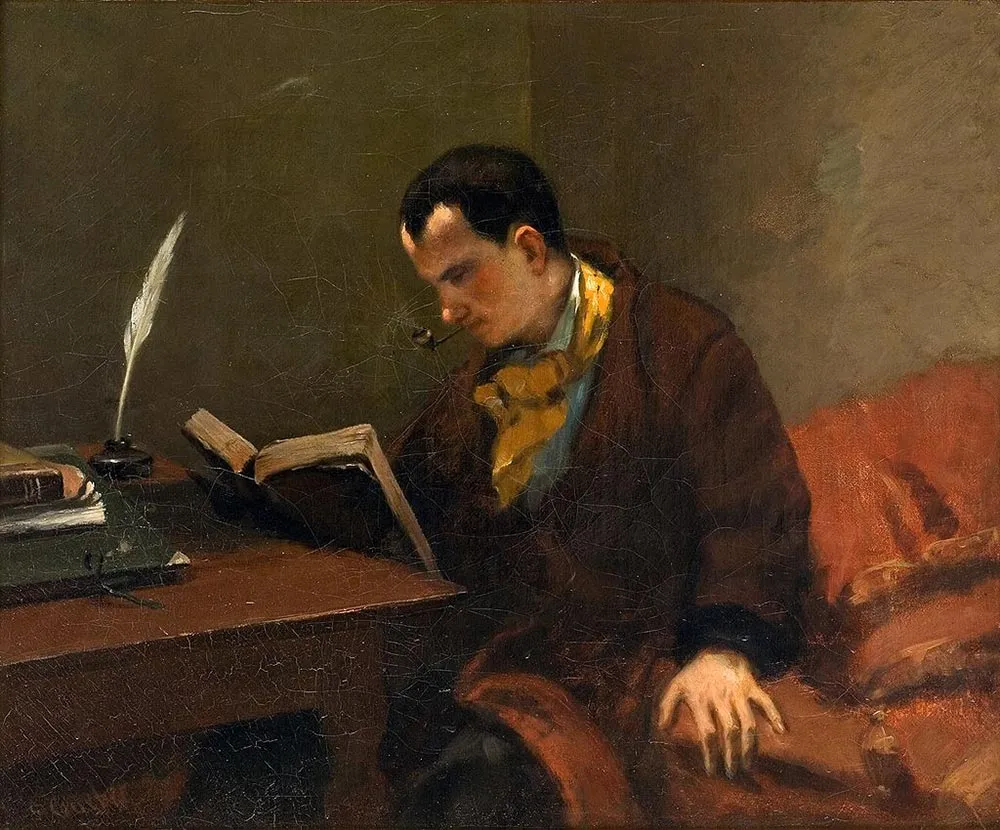
If we draw upon the imagination of the poet Charles Baudelaire, the promise of the oasis would even be the very reason for the journey. The invitation to leave for somewhere else, for a distant place that must surely be better, where our ever-encroaching dissatisfactions, our recurring insatiabilities, might at last find the remedy that would quieten them.
The word is feminine, almost maternal, as is the term — the island — that the ancient Greeks used to describe the oases they encountered in their earliest observations of Africa. The geographer Herodotus, born in 480 BC, would even go so far as to describe the oases of Egypt and Libya as the ‘Islands of the Blessed’, opening the way to the long litany of descriptions which, down to our own time, would engrave within us, in indelible ink, the image of the oasis as a place of unexpected peace, rendered indispensable in the face of the violence of existence and of the world.
For this is precisely what is at stake: the oasis exists only in relation to the harshness of its environment and, before becoming an inexhaustible source for dreams of well-being, it is a tangible response, at once instinctive and reasoned, to the difficulty of existence on Earth.
The oasis is an ecosystem of life amid adversity
The oasis is the fruit of human genius in its capacity to adapt to the conditions imposed upon it by nature — and by life. In its very foundations, it is precisely not a gift of nature, for it is the pure expression of a collective intention, the intention that led groups of human beings, at a particular moment in their long journey, to decide to stop where there was nothing and there to create community, home and then culture.
Over the centuries, the oasis became for humankind the symbolic place in which it affirmed its art of organising the economy of life amid adversity, among scarce natural resources and in the face of every contingency, all those unforeseen events that forever arise like acts of fate, all those dangers that endlessly threaten.
Like a saving island, the oasis would function as an ecosystem of life in which human beings would continually mingle, where traditions and arts would develop, where techniques and crafts would be invented, where economies would grow — everything that contributes to the dynamic emergence of civilisations.
Such an idyllic vision of the oasis must not, however, make us forget all the effort required to shape it and enable it to grow, nor its structural fragility and the unceasing labour its inhabitants had to provide in order to maintain a balance between the diverse and opposing forces that surround it and of which it is itself composed.
The oasis is an art of being in the world and on Earth
More than an achievement, the oasis is the expression of our humanity balanced on a point of Earth facing the void: a living and active humanity, strengthened by its experience and expertise, and capable of creating harmony within itself and with everything that surrounds it.
For this fragile balance to remain stable, it has constantly required vigilance and rigour from human beings, respect for rules, innovation, labour, collegiality, sharing, solidarity and responsibility.
From its origins to the present day, the oasis has thus been for humankind an extraordinary place in which to learn an art of being in the world and on Earth.
This knowledge is precious as we confront the challenges of the future, at a time when the establishment of a new balance with Nature and the Living World, but also within and between human communities, becomes more imperative with every passing year.
And yet today, Morocco’s oases are disappearing. They have become the symbol of the dark genius of humankind, of our propensity to deny nature and tear apart the book of our own experience, though its lessons were learnt at the cost of blood and sweat, along the thread of so long a journey.
The oasis is a chosen place of habitation
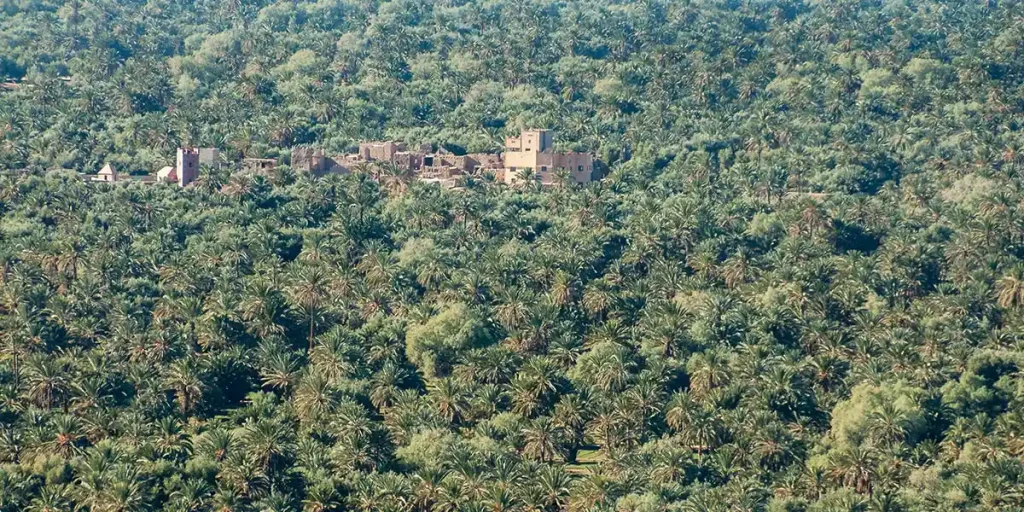
Archaeological research indicates that the first oases appeared in the Arabian Peninsula nearly six thousand years ago, at the very heart of the Neolithic period. The emerging oasis was then the expression of a new way of life for the people of that time, in response to climatic changes spreading aridity across regions that had once flourished, but also echoing the movement towards settlement that was slowly drawing human communities away from their ancestral practices of hunting and gathering, and therefore from their permanent wandering according to the seasons.
The creation of an oasis is thus an act of settlement, since it consists in shaping a place for the communal life of a human group, chosen according to the presence of good cultivable soil and usable water. Here we clearly rediscover the etymology of the word oasis, directly linked to the Greek term ὄασις, itself derived from Coptic, the Afro-Asiatic language descended from ancient Egyptian, translating the word ouahe, which then meant ‘place of habitation’.
Human ingenuity had to channel the surrounding waters, whether surface water flowing from permanent springs or deeper water drawn from underground aquifers. The soil had to be worked so that it could support emerging forms of cultivation, through the hard tasks of levelling, clearing stones and enrichment. It was in this East teeming with life that techniques for capturing spring water were developed through khatarats or foggaras, terms used in the Maghreb countries, or the qanats of ancient Persia — techniques found in almost all the oases of North Africa and Morocco, as in Marrakech, the Skoura palm grove or that of the now vanished city of Sijilmassa.
The palm tree, symbol of the oasis from its birth to its decline
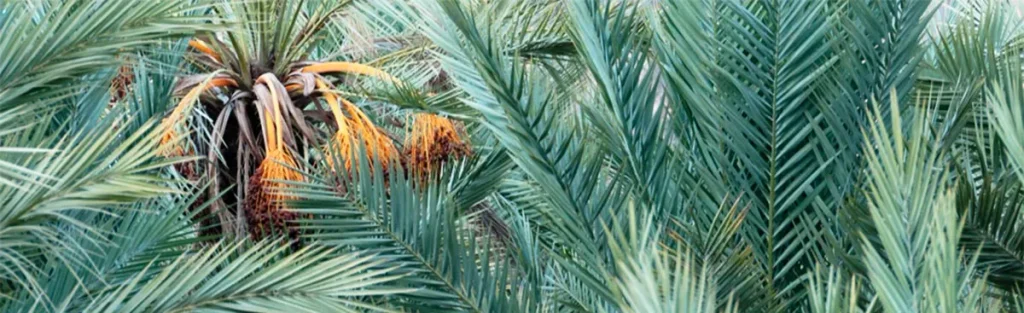
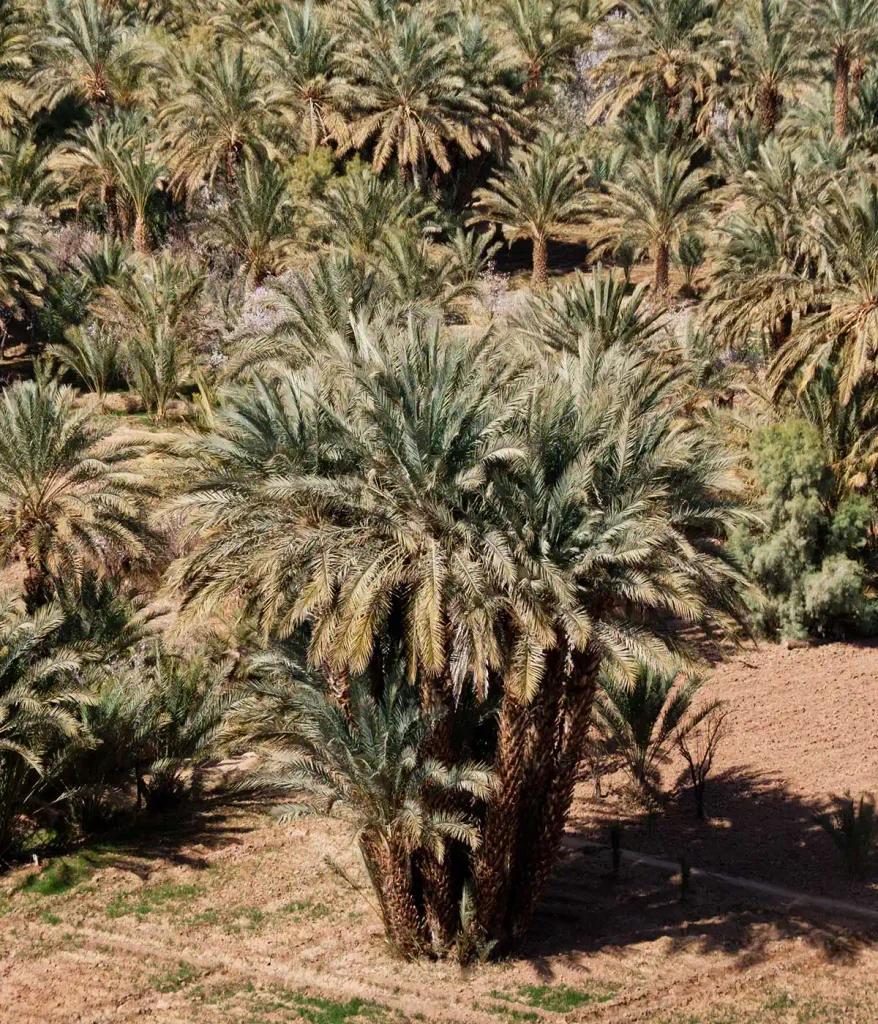
The oasis is also the privileged place in which the date palm flourished and, from the Iranian plateaux to Morocco, across the broad band of territories forming the northern Sahara, became the emblem of these places of life. A lasting source of shade and fertile humus, the palm provided oasis inhabitants with a valuable foodstuff while also allowing agricultural crops to be arranged in vertical layers: beneath its broad fronds came fruit trees and olive trees, and beneath them vegetables, cereals and fodder for animals.
Léon Lehuraux, a camel corps officer, writer and ethnologist born in 1885, described the oasis in these words:
‘The palm is a monumental tree, powerful and royal; it possesses strength, majesty and perfect elegance; its solitary trunk fills a landscape several leagues across and peoples a solitude.’
Le palmier-dattier du Sahara algérien, published in 1945
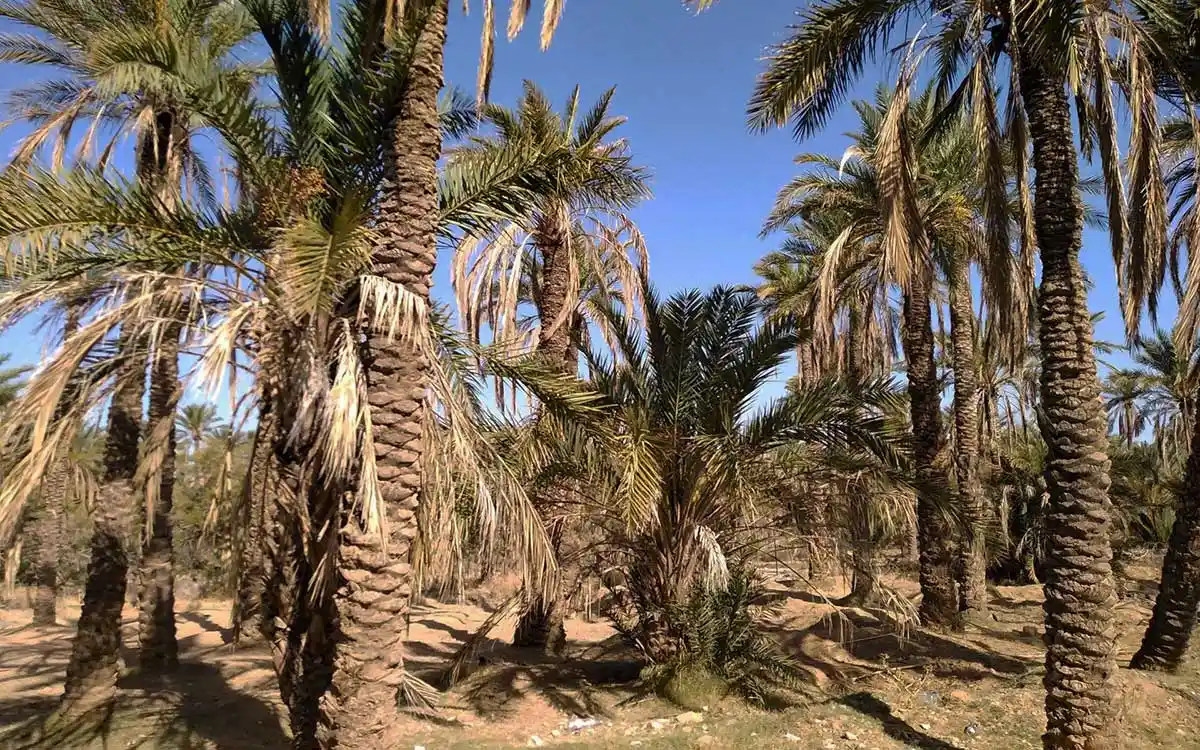
Once the symbol of the peace and coolness offered by the oasis, the date palm has also become the symbol of its decline. In Morocco, at the beginning of the twentieth century, the country’s various oases contained nearly 15 million palm trees; by the end of the century, only a third of them remained, the whole having fallen victim to environmental degradation caused by climatic variations, plant diseases, the exodus of populations and the consequent loss of agricultural know-how.
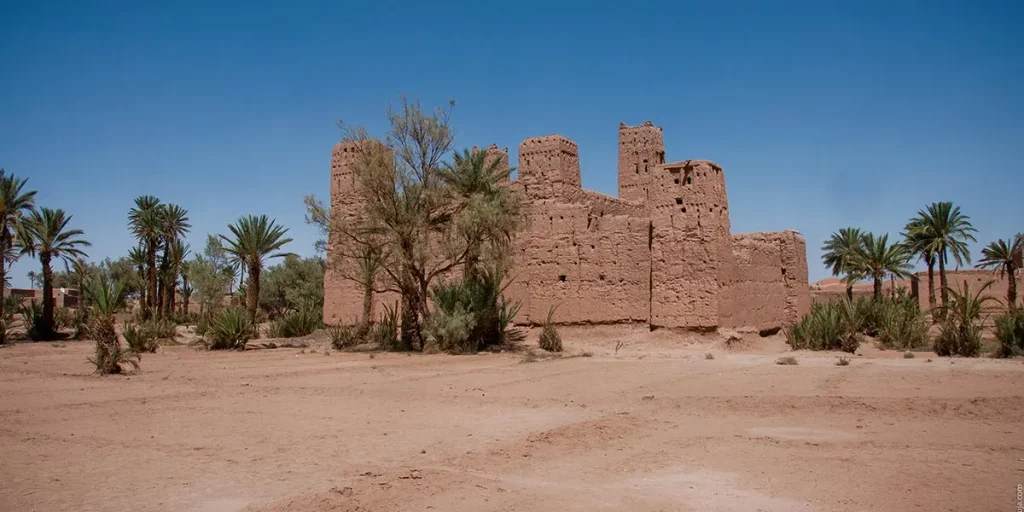
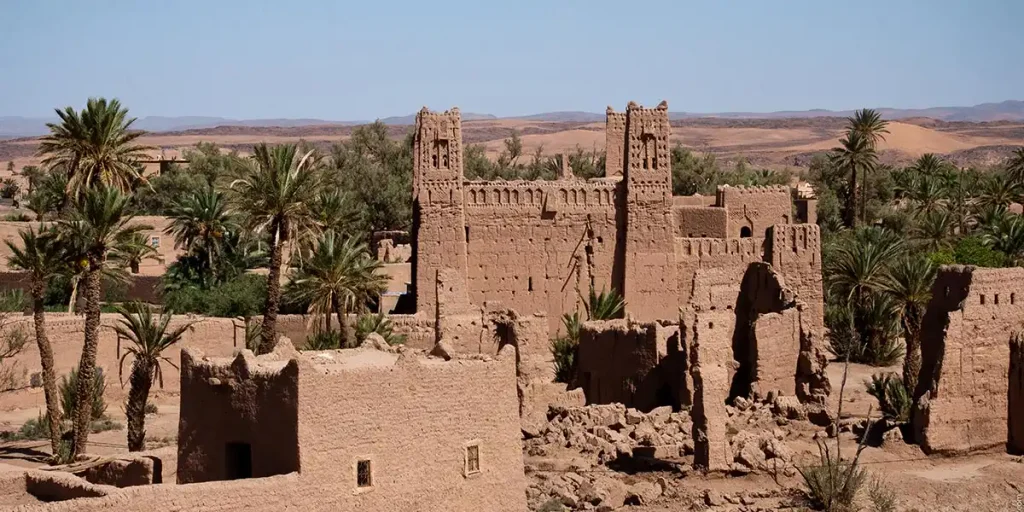
Today, it is no longer unusual to encounter expanses of dried-out palms. The pomegranate and apple trees that once grew beneath the shade of their protective elders are disappearing. Earthen houses are crumbling into ruins and dust.
The oasis civilisation is disappearing
Indeed, here in Morocco as in other countries, the oases are dying, slowly but inexorably, despite the various moments of ecological awareness that have marked recent decades.
The international community responded in 1971 by establishing an ambitious scientific programme under the auspices of UNESCO, the Man and the Biosphere Programme. Within this institutional framework, Morocco decided in 2000 to bring together its pre-Saharan territories, where its ancestral oases are located, under the designation of the Biosphere Reserve of the Oases of Southern Morocco. Almost 80,000 square kilometres are concerned, around 11% of the national territory, encompassing the entire Upper and Middle Drâa and Ziz-Gheriss basins across the three provinces of Errachidia, Zagora and Ouarzazate.
Despite this, nearly twenty years later, the decline of the oases remained evident.
It must be acknowledged that the problems are numerous and that the oases are victims of forces both endogenous and exogenous. Global climate change naturally comes first to mind, since it is now rendering ineffective the traditional ability of oasis communities to manage water scarcity.
Other major factors have contributed to the impoverishment of the oases, such as the irresistible attraction of urban life and its consumerist logic, which have transformed people’s fundamental needs. Young people no longer found existential fulfilment beneath the shade of palm trees, within rural ways of life. The country’s modernisation has led to the predominance of a certain agricultural productivism in oasis territories, particularly in pursuit of export objectives and through the development of monocultures, all at the expense of biodiversity and the measured use of land and groundwater.
More broadly still, Moroccan society as a whole appears to bear some responsibility for the abandonment of the knowledge associated with oasis civilisation. A report published in 2011 as part of the work of the Royal Institute for Strategic Studies, under the direction of Mr Driss Fassi, highlighted this state of affairs:
‘Coexistence with the Sahara is centuries old, even millennia old since Prehistory, and it has rarely been challenged. Gradually, however, it became fixed in a conservative behaviour that allowed no genuine development of techniques for the future.’
Le système oasien du Maroc : essai pour l’établissement d’une stratégie d’aménagement du système oasien du Maroc
The distant memory of a collective intelligence
This inertia of creativity — the very human virtue that lay at the origin of the achievement of those who founded all these oases — went hand in hand with the failures of local governance within those same oases. The oasis has always existed through respect for a balanced management of water use, the maintenance of irrigation systems and the care given to palm trees… all of which required the involvement of the entire human community concerned and strict observance of collectively established rules.
Today, after the slow disappearance of tribal authority and its replacement by the administrative machinery of the central State, the mobilisation of a collective intelligence placed at the service of managing oasis territories has become a distant memory. The proliferation of individual wells and the use of motorised water pumps alone have brought about a lasting disruption of the water balance of these territories.
Finally, the rapid development of tourism has also inevitably disturbed the oasis ecosystem, through an escalation in construction — and therefore in water consumption — accompanied by massive damage to landscapes caused by the anarchic proliferation of tourist routes, particularly those involving motorised vehicles.
The oasis is the expression of a civilisation of restraint
The efforts undertaken in Morocco to safeguard threatened oasis areas will not, on their own, change anything. The example provided by the National Agency for the Development of Oasis Zones and the Argan Tree illustrates this. The launch in 2008 of a vast palm-planting programme certainly helped restore vitality to the date economy, improving the quality of production and the level of exports, but this policy of numbers does nothing to address the challenge of preserving oasis knowledge.
The multiplication of palm farms in the Drâa-Tafilalet region will not be enough to keep alive the oasis civilisation which nevertheless found in South-East Morocco one of its most fertile grounds in which to flourish.
Any preservation policy that forgets that the oasis is, first and foremost, a place of habitation inevitably misses its target. And today more than ever, the oasis must be seen for what it is: the harmonious adjustment between nature and human beings within an intention of communal life and durability.
The oasis must be recognised as the memory of ecologically compatible ways of life and, at the same time, as the laboratory in which they evolve. The oasis must assert itself as the place in which a civilisation of restraint finds expression, in the face of one of abundance and waste. The oasis must once again become what it has always been: a place of human conviviality, of welcome, encounter and exchange.
This is everything the oasis carries within it in Morocco: the inheritance of individual and collective virtues that, today more than ever, need to be rediscovered and put into practice in the face of the upheavals passing through our human societies and the transformations that, little by little, are imposing themselves upon our ways of life.
Once again, the oasis bears within itself the germ of a world in which life would be good. Once again, it falls to human beings to plant that seed in the earth, and help it grow.
Read also: Skoura palm grove: the quintessential oasis
Key points
- The oasis is the product of a collective intelligence based on shared water, adaptation and solidarity.
- In Morocco, oases are declining because of climate change, rural exodus, overuse of resources and the loss of traditional knowledge.
- Preserving oases means more than planting palm trees: it means sustaining a civilisation and its balances.
- The oasis carries within it principles that may help shape the future: restraint, shared responsibility and a more balanced relationship with the living world.

For more than twenty years, Éric Anglade has lived in a village of South-Eastern Morocco, where he explores and documents the region’s history, heritage, and living traditions. He founded sudestmaroc.com as a space for sharing fieldwork and cultural insight, bridging local knowledge with global perspectives. He also works alongside women carpet-weavers to help sustain their craft and welcomes travellers at Le Jardin de Yuda, his guesthouse envisioned as a meeting place for exchange and transmission.
More to Explore

Leave a Reply