


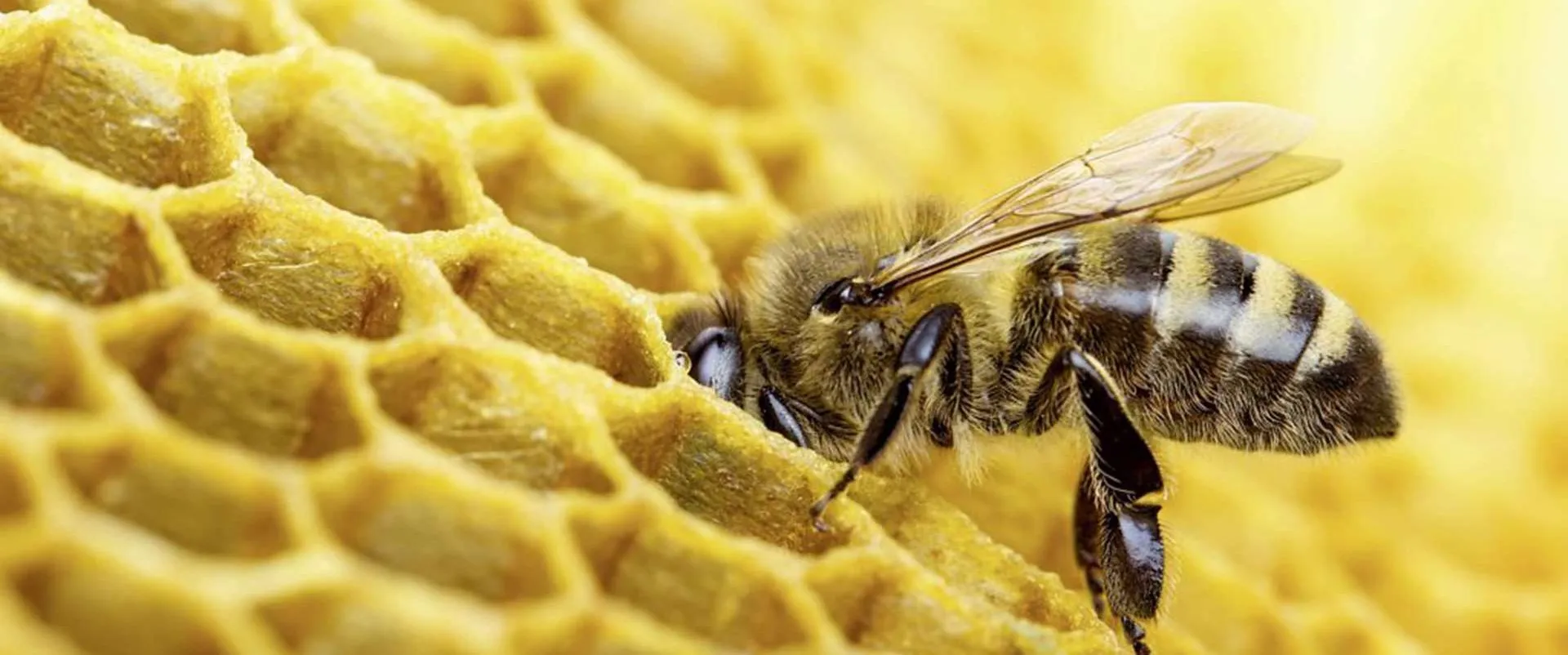
A nomad in the kingdom of bees
With a degree in Arabic literature, Noureddine Ouadi chose to follow the bees rather than pursue a career in the civil service. As a migratory beekeeper based in Ouarzazate, he travels from one region to another, following the flowering seasons. This is the portrait of a man who has turned his passion for honey into a profession, and his love of nature into a commitment to protecting it.
From Arabic literature to the world of bees
Noureddine Ouadi loves bees as much as he loves nature. Born in 1972 and originally from Guelmim, he grew up in Ouarzazate. He has a distinctive personality and a charm all his own when he speaks.
There is something about him that readily captures his listener’s attention, making the time pass unnoticed. The world of bees fascinates him. It was in 1995 that he first fell under their spell.
The son of a civil servant responsible for beekeeping at the Ouarzazate Regional Office for Agricultural Development (ORMVAO), Noureddine discovered the world of bees by leafing through his father’s documents.
‘At first, beekeeping was just a hobby for me. I became attached to it because it produces something luxurious: honey. And above all, I love the idea of harvesting something from nature without harming it!’
Noureddine Ouadi
This curiosity led him to build up a solid knowledge of the subject. In April 2000, he embarked on modern migratory beekeeping, taking out a loan from Crédit Agricole under a self-employment scheme.
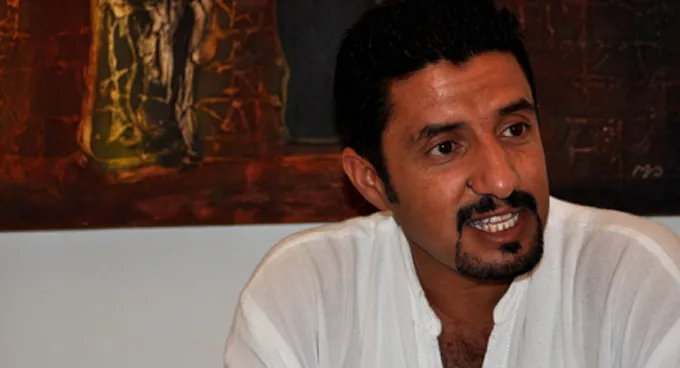
It was an unexpected turning point in his life. With a degree in Arabic language and literature, everything seemed to be leading him towards a career in the civil service. Yet suddenly he found himself working in beekeeping, a world far removed from the university lecture halls where he had studied Arabic literature.
This successful transition from one field to another certainly reveals something of this young man’s abilities. He is not someone content to wear the same hat all his life. The image of a graduate confined to a fixed body of knowledge does not suit him. He is resourceful, outgoing and enthusiastic.
A migratory beekeeper following the flight of the bees
Noureddine leads a nomadic life. A migratory beekeeper who follows the flight of the bees, he accompanies them wherever they can find food. He moves his hives from one area to another, allowing his colonies to forage according to the seasons and the abundance of vegetation.
Far from treating beekeeping as merely a means of earning a living, he displays affection, even admiration, for the bees with which he has developed an exceptional relationship. To illustrate his feelings, he quotes a popular saying:
‘It is the bee that decides whether it wants you or not.’
Noureddine Ouadi
Even the way he talks about honey has a sweetness to it. His words flow gently and harmoniously, accompanied by graceful gestures. He speaks about his subject with complete ease, without distance or pretence.
Noureddine describes the different varieties and colours of honey in a way that makes your mouth water: from yellow to white and even black honey. He pauses to list nectar-producing plants, such as citrus trees and thyme, explaining how they account for the different colours and flavours of honey.
His words then take on another dimension, revealing yet another side of this man, deeply concerned about the balance of the ecosystem. Noureddine clearly understands the role bees play in maintaining that balance.
This time, he supports his argument with a statement then commonly attributed to Einstein: ‘If bees were to disappear, humanity would have only a few years left to live.’
Editor’s note: this quotation, frequently attributed to Albert Einstein, is apocryphal. No reliable source confirms that he ever said it. It has been retained here as part of the account recorded in 2012.
He is certainly an example of a committed young entrepreneur. His knowledge goes hand in hand with a concern for the environment. Out in the field, he constantly observes the state of his immediate surroundings. As far as he is concerned, the situation is far from reassuring.
Harmful human practices are hastening the destruction of nature:
‘The disappearance of a single tiny insect or a single tree causes a serious imbalance in nature and, inevitably, in our own lives.’
Noureddine Ouadi
These are not empty, stereotyped statements. They reflect the character of a young man who remains attentive to his natural environment, aware of its fragility and, above all, its vital importance.
Noureddine strongly condemns deforestation, the indiscriminate uprooting of plants, forest fires and overgrazing. In his view, these are thoughtless and irresponsible actions that are driving humanity towards its own destruction, often without people even realising it.
Here, his commitment as an environmental advocate shines through. With a slight smile, he explains:
‘I practise modern migratory beekeeping to develop the sector, but above all to protect the bees.’
Noureddine Ouadi
The distinctive qualities of this young man are also reflected in the way he approaches his work. Nothing is left to chance. For him, everything must be carefully organised to achieve good results, from scouting suitable areas for moving the hives to choosing their precise locations.
Honey needs no one to advertise it
But what of the beekeeping sector itself? How do local professionals practise their trade? And what are consumers’ habits when it comes to buying honey?
Noureddine has his own way of looking at things: everyone must take responsibility for their choices. Honey needs no one to advertise it.
In his view, consumers have developed bad habits and, as a result, encourage the informal honey market. Preconceived ideas and buying blindly, sometimes under very poor conditions, may ultimately work against their own interests. Yet there is another category of consumers who appreciate genuine honey.
‘People pay no attention to packaging or labelling. They buy fake honey without knowing where it comes from or what it actually contains! Then they must accept responsibility for their choice.’
Noureddine Ouadi
Noureddine is also very active beyond his own business. He provides training for women’s associations involved in beekeeping and voluntarily supports traditional beekeepers, helping them develop their activities. He also regularly takes part in meetings and forums devoted to apiculture.

‘We cannot all become civil servants’
This young man has not allowed himself to be overwhelmed by the difficulties facing unemployed graduates. Grand political speeches? That is not his style. He does not constantly blame the state.
Noureddine is the kind of person who seizes the slightest opportunity rather than remaining trapped in fruitless waiting. A resourceful young man, ready to take on a different role when the moment calls for it.
He has his own principle when it comes to this issue:
‘We cannot all become civil servants. The state has other priorities. What should a graduate do? Fold his arms or demonstrate in the streets? No, you have to get moving and, along the way, perhaps you will find what you are looking for… You have to be a jack-of-all-trades.’
Clearly, Noureddine is always ready to roll up his sleeves and face the challenges of the future.
An energetic young man. A conscientious beekeeper. Noureddine is part of the momentum of a new Morocco, driven by the desire to share his profession with others.
Deep down, something always draws him back to his colonies, somewhere out in the countryside. Even with honey before him, he never loses sight of the bee. For him, its buzzing means that life goes on.
The bees of south-eastern Morocco face the challenge of climate change
Editor’s update — October 2026
When Noureddine Ouadi voiced his concerns about the future of bees in 2012, Morocco had yet to experience the full extent of the difficulties that would affect its beekeeping sector.
In 2022, substantial losses of bee colonies prompted the Moroccan health authorities to conduct nationwide investigations. The findings highlighted the combined effects of several climatic and environmental factors, particularly the lack of rainfall and the scarcity of nectar and pollen resources. The weakening of bee colonies could not be attributed to a single disease.
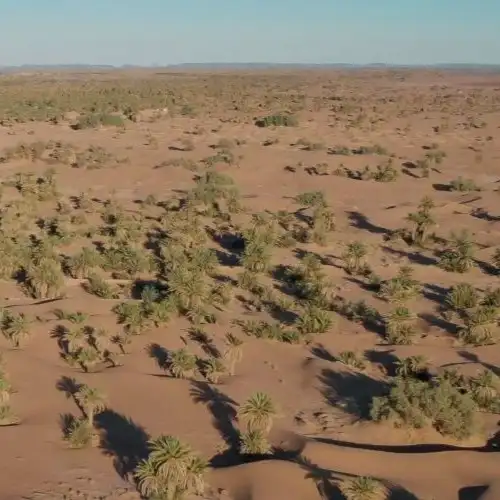
In south-eastern Morocco, this issue has particular significance for the preservation of the Saharan yellow bee (Apis mellifera sahariensis), a local subspecies adapted to the harsh conditions of the oases.
Working with Moroccan institutions, the Food and Agriculture Organization of the United Nations (FAO) launched a programme to safeguard this bee. A technical beekeeping centre was established in Er-Rich, in Errachidia Province, to encourage queen breeding, beekeeper training and the preservation of biodiversity.
In April 2026, the FAO reported that more than 10,000 selected queen bees had been bred and distributed through this programme. It also emphasised the importance of training women and young people in sustainable beekeeping.
These initiatives give new relevance to the concerns expressed by Noureddine Ouadi fourteen years earlier. Beyond honey production lies the preservation of a living heritage, the biodiversity of the oases and traditional skills closely connected to the territories of southern Morocco.
Further reading:

More to Explore

Leave a Reply