


The pilgrimage into the depths of the earth at Tazakhte
In the 1960s, as a child in Ouarzazate, Driss Boukili El Hassani would set out with his companions towards the caves of Tazakhte, then surrounded by stories, fears and mysteries. Here he recalls those walks, those explorations and a place that became one of the inner landscapes of his childhood.
I remember the happy days of my childhood in Ouarzazate, with the companions of those years, whom I can still see as though the past had suddenly come back to life.
It was the 1960s.
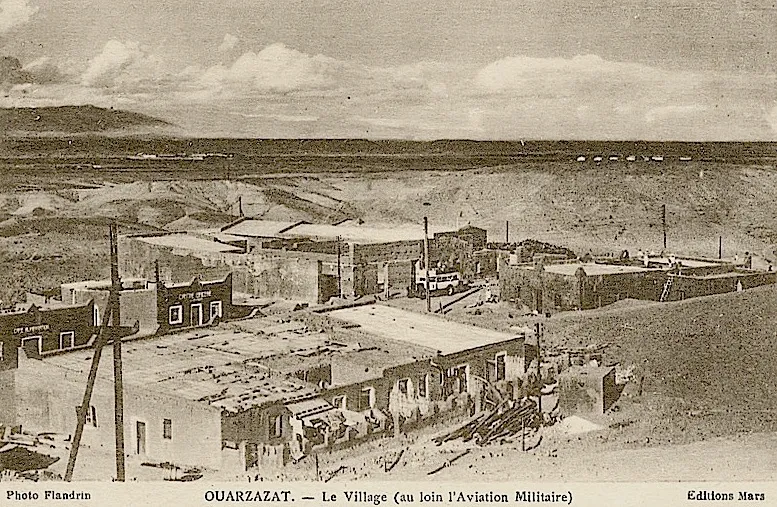
To the north, the hill where the offices of the governor of Ouarzazate then stood, still known as “the Redoubt”, as it had been during the French Protectorate, overlooked a few small neighbourhoods clustered together like a village. This was the centre of Ouarzazate, crossed by a single avenue.
Further south, the Drâa Valley fascinated us with its splendour, its banks covered with date palms and green gardens. The avenue and the valley formed two parallel axes running across the hills and rocky ridges of Ouarzazate.
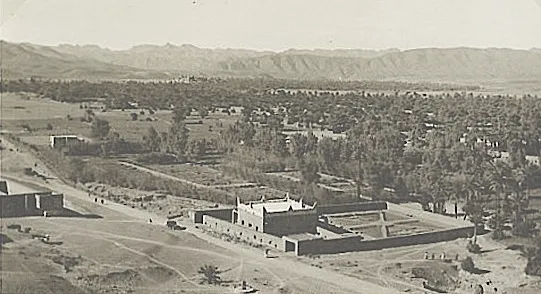
Beside the emerging town centre, a vast plateau served as a take-off and landing ground for small aircraft. It was the airport. As children, we felt a certain pride at seeing, so close to us, real aeroplanes that had come from elsewhere to our own place.
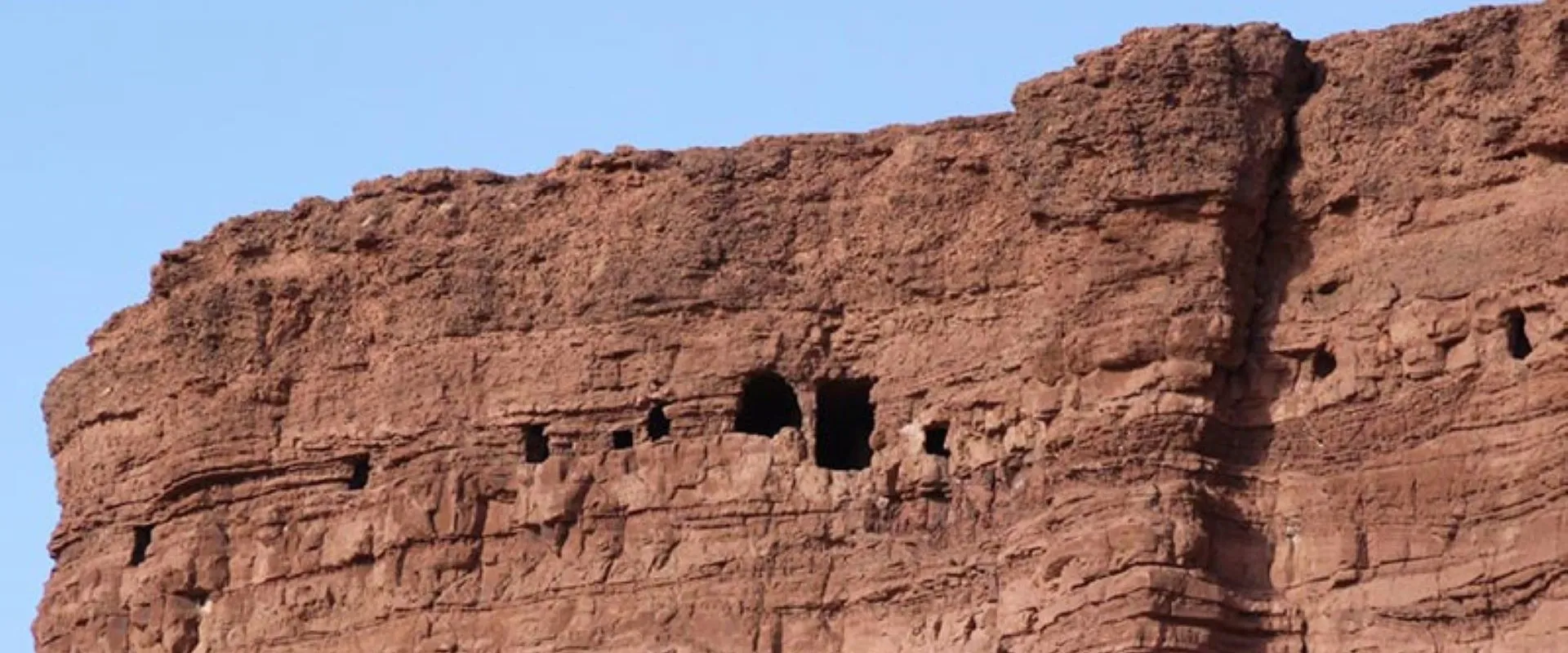
Far away on the horizon, an imposing hill could be seen. It appeared so blurred that it might have been mistaken for a mirage. This was Tazakhte, with its cavities cut into its arid walls, to which our imagination gave an almost ageless antiquity and the story of inhabitants who had disappeared long ago.
Tazakhte left a mythical imprint on our collective memory. It was a place around which fantastic stories and fabulous beliefs were woven.
The origin of its name is unknown. A source of endless unanswered questions, the mere mention of it filled us with both fear and wonder, and its deep caverns were naturally a place of adventure for minds hungry for mystery.
We were children then. Ramadan was not, for us, a month of religious rituals, fasting and prayer. It was the precious time for discovering these strange and unknown places.
In groups of friends, we often set out for Tazakhte, and it was clearly a way of asserting our courage, a kind of bravado in the face of the unknown.
The place seemed frozen in time, immersed in an almost unchanging silence. To us, it surely had to be inhabited by djinns, those supernatural beings said to inhabit underground worlds.
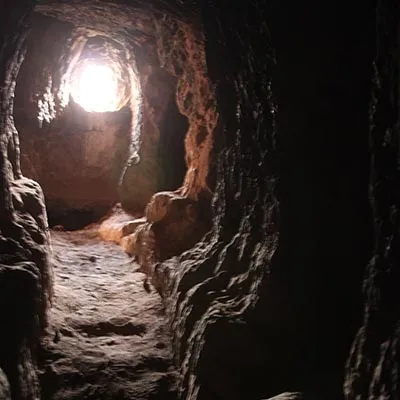
Before crossing its threshold, we bowed down in reverence
We would set out on foot to discover Tazakhte, braving the scorching heat to cover the few kilometres that separated us from our destination, wearing makeshift plastic sandals that were nevertheless sturdy, crossing rocks and hills, crushing wild plants such as harmal beneath our feet, overturning stones and sending golden scorpions fleeing from our path.
As soon as we reached the valley of the Oued El-Maleh and Tazakhte drew closer, a terrible anxiety would seize us. Yet we pretended to be brave, trying to overcome our fear and continue on our way with confidence.
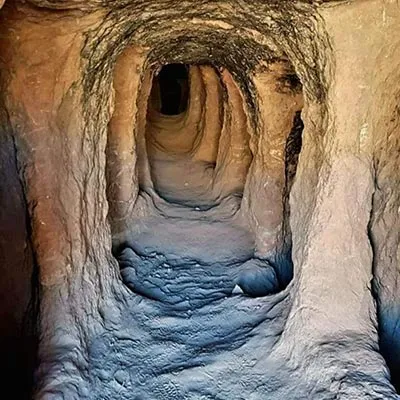
The entrance to the cave was a low, horizontal slit. Before crossing its threshold, we bowed down in reverence. Then we crawled inside, entering this frightening world that seemed to swallow us whole. We moved deeper into the bowels of the place, our bodies covered with dust and scraping against the stones.
This journey through the dark maze increased our anxiety. Yet we stubbornly continued to push forward into the darkness. A frightening silence reigned, broken from time to time by the voices and whispers of our companions.
At last, a glimmer of light brought hope to our hearts. That faint glow gradually dispersed the oppressive darkness and guided us further into the depths of the cave. Damp chambers appeared before our eyes. Galleries whose shapes seemed to have been carefully drawn by the rock itself, as though rooted in the earth. Rudimentary rooms had been arranged at the far end, beneath a vast black veil resembling a flock of crows.
This legendary cave brought each of us back to a foetal state. It was as though Mother Earth were giving birth to us anew. She subjected us to the test of adapting and surviving within our surroundings.
Then we climbed back towards the azure-blue sky like the leaves of a fragile plant. We jostled against one another like the buds of a rose, determined and full of enthusiasm, eager to enjoy this moment of joy to the full.
The ritual of returning to the earth
With the innocence of childhood, this pilgrimage to Tazakhte during Ramadan was like a ritual return to the earth. Our bodies covered in its dust and rubbed against its gravel, we experienced it as though the earth were tenderly welcoming us back into its embrace.
This passion for going to Tazakhte in a spirit of almost contemplative devotion freed us forever from the fear of the unknown and of invisible worlds. We entered into communion with this strange and unfathomable space, which revealed to us its own language, made of shapes, scents and colours that we endlessly questioned in wonder. Tazakhte stirred contradictory feelings within us, sharpening in us a romantic temperament and a taste for surrealism.
Tazakhte, this Platonic cave, still defies oblivion today and resists the failings of memory. It still stands there, forever enchanting, with its unexplored secrets preserved in its galleries and tunnels since time immemorial, and still capable of awakening in every visitor a thousand and one questions that will remain unanswered.

More to Explore

Leave a Reply