


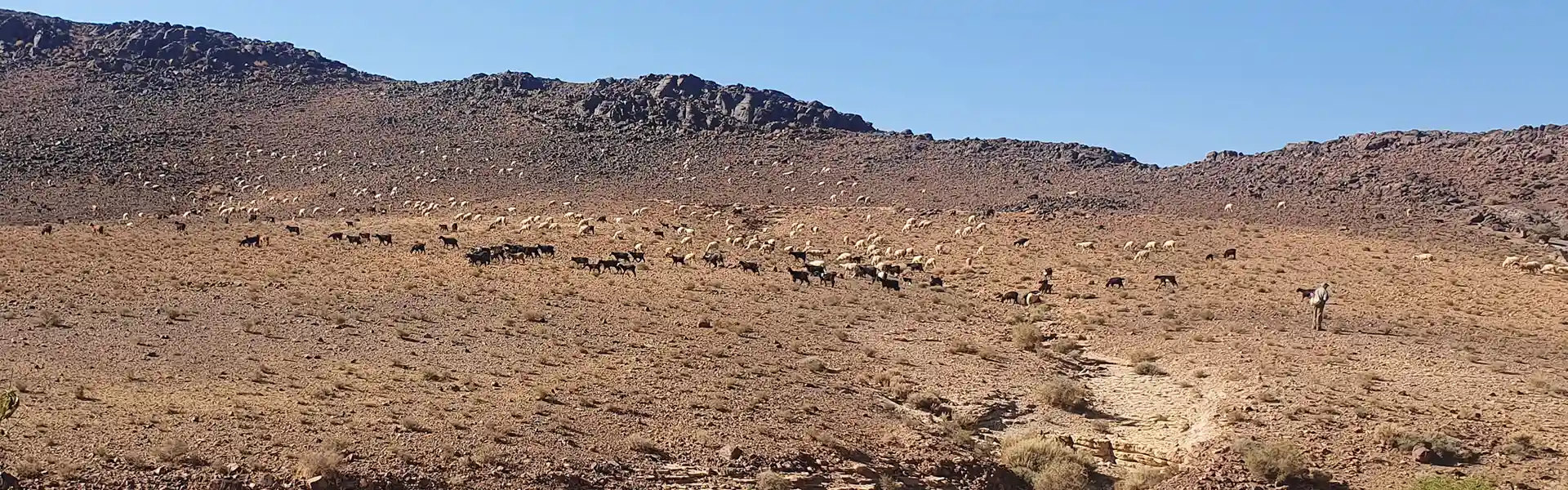
In Morocco’s mountains and valleys, the shepherd is far more than a figure of rural life. He carries with him ancient knowledge, pastoral traditions and a relationship with the land shaped over generations. Yet as the profession steadily disappears, a little-recognised part of Morocco’s living cultural heritage risks disappearing with it.
Its crafts — from carpet weaving and pottery to woodwork — its architectural heritage shaped by centuries of history, and the diversity of its regions, each with its own traditions, celebrations, culinary practices, community arts, dances, clothing and jewellery: together, they form a vibrant and welcoming image of Morocco. It is the Morocco most readily encountered by visitors, and one that underpins the strength of a rapidly expanding tourism economy.
Yet this appealing image, however effective it may be in attracting visitors, also has its limitations. It can simplify the country’s cultural identity, reducing it to folklore that can be easily displayed and quickly understood. In doing so, it risks obscuring other dimensions of Moroccan culture whose nature and expression do not lend themselves so readily to the demands of the tourist marketplace.
Behind the great emblems of Morocco’s cultural heritage lie other, lesser-known treasures. Behind the simplified image of heritage staged for visitors from around the world lies an extraordinary diversity that is too often overlooked. And there is a whole population — particularly among younger Moroccans — that remains only partially aware of the breadth and richness of its own cultural heritage.
The shepherd is quietly disappearing from Morocco’s cultural landscape
The shepherd is one of these overlooked cultural treasures.
Walking alone with flocks of sheep or goats through the valleys and mountain ranges of Morocco, the shepherd carries with him a distant chapter of the country’s shared past, from an age when human communities were nomadic and moved across lands and continents.
He is also a living expression of Morocco’s distinctive geography, a country largely shaped by the majestic Atlas Mountains, where shepherds have long been natural inhabitants of the landscape.
Shepherding is part of the ancestry of countless Moroccans whose families came from rural and mountain communities, and who may well find a shepherd somewhere among their forebears.
The shepherd fully belongs to the realm of intangible cultural heritage as defined by UNESCO. Shepherds possess specific knowledge and skills; they have a relationship with the world around them, with nature and with animals. Their way of life expresses respect for nature, and their knowledge of it is passed down within the community. We stand to lose a great deal if we do nothing to restore recognition and value to this profession.
Fatima Zahra Salih
Director of the Master’s programme in Cultural Heritage at the University of Beni Mellal
Today, the shepherd should be recognised, valued and protected within Moroccan society, just as the carpet weaver or the dancer dressed in ceremonial finery has become a recognised figure of the country’s cultural heritage.
Instead, fewer and fewer people are choosing this way of life. Grazing routes available to transhumant herds are shrinking, access to water becomes more difficult with each passing year, shepherds have no recognised social status, and there is little public support for the profession — still less for encouraging younger generations to continue it.
Gradually and almost unnoticed, the shepherd is fading from Morocco’s cultural landscape.
A collective determination to act
Some people in Morocco, however, have become aware of this disappearance and have begun asking how the process might be reversed. Morocco is far from alone: here, as in so many other countries, modernity and the passage of time are gradually eroding entire parts of the cultural fabric of human communities.
Those working to prevent this loss are still few in number, but their commitment is genuine and their approach pioneering.
Among them is the Moroccan NGO We Speak Citizen, already strongly involved in promoting some of the most vulnerable elements of Morocco’s cultural heritage. After opening a House of Oral Heritage in the ksar of Aït Ben Haddou near Ouarzazate, and after working to promote the traditions surrounding the argan tree in communities in the hinterland of Agadir, turning its attention to the world of shepherds was a natural next step.
Further reading: The House of Oral Heritage in the ksar of Aït Ben Haddou: a first in Morocco
Then there is Anne Alaime, a Belgian woman who has lived in Morocco for almost ten years, in a place where the shepherd remains a central figure: the Aït Bouguemez Valley, surrounded by the high mountains of the Central High Atlas and lying at the foot of the M’Goun massif, which rises to 4,071 metres.
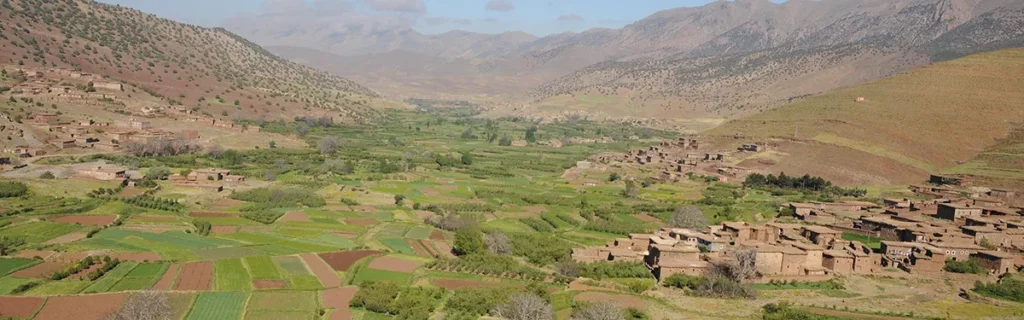
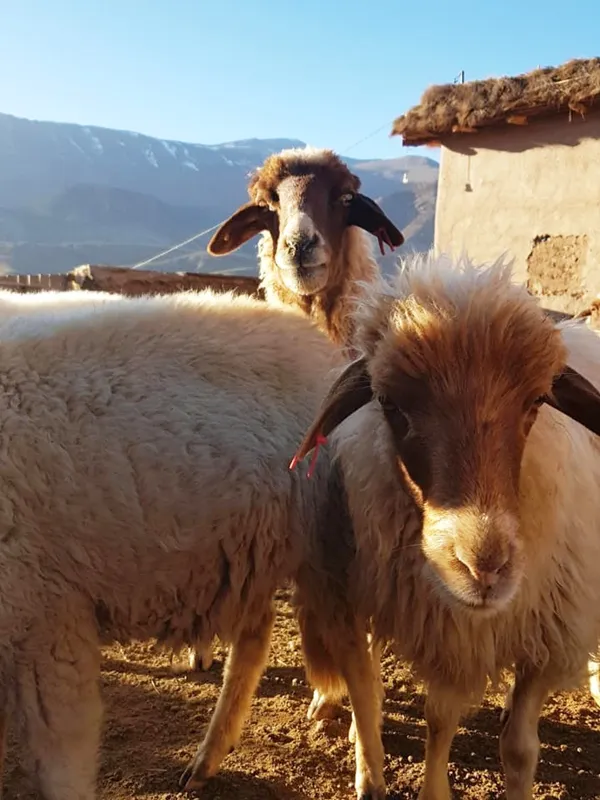
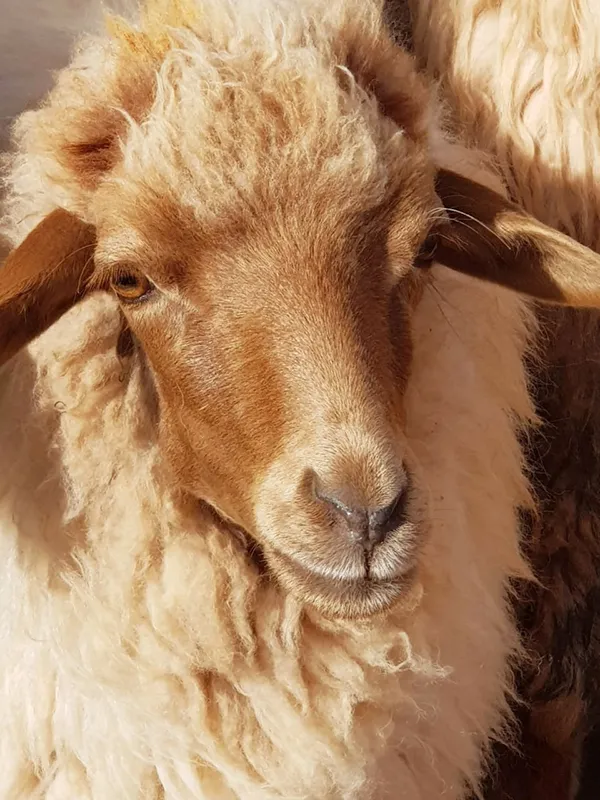
Anne developed a deep attachment to the valley, and from there came an equally natural commitment to preserving its local sheep breed, the Tighaline, particularly well adapted to these mountain environments.
The first step was to establish and develop a carefully selected flock in order to strengthen the qualities inherent in the breed, with expertise provided by the Hassan II Agronomic and Veterinary Institute.
Anne then turned her attention to the distinctive quality of the wool produced by Tighaline sheep. Drawing on the skills of the women of the valley, the aim was to revive the weaving of rugs as they had once been made, using a wool whose quality bears little comparison with that of industrially produced fibres.
Along the way, she discovered the harsh realities of a shepherd’s life and began to understand why so many shepherds discourage their own children from following in their footsteps.
Year after year, the work becomes harder. Almost everything conspires to make the profession increasingly difficult to sustain. Everything seems to be contributing to its gradual disappearance from the Moroccan landscape.
The meeting between Anne and Loubna Mouna, head of the NGO We Speak Citizen, helped transform this concern into a collective determination to act against the disappearance of shepherding, one of the oldest living strands of Morocco’s cultural heritage.
Creating a home for a profession at risk of disappearing
Meeting this challenge first required bringing people together to discover and understand the realities of shepherding and the problems it now faces.
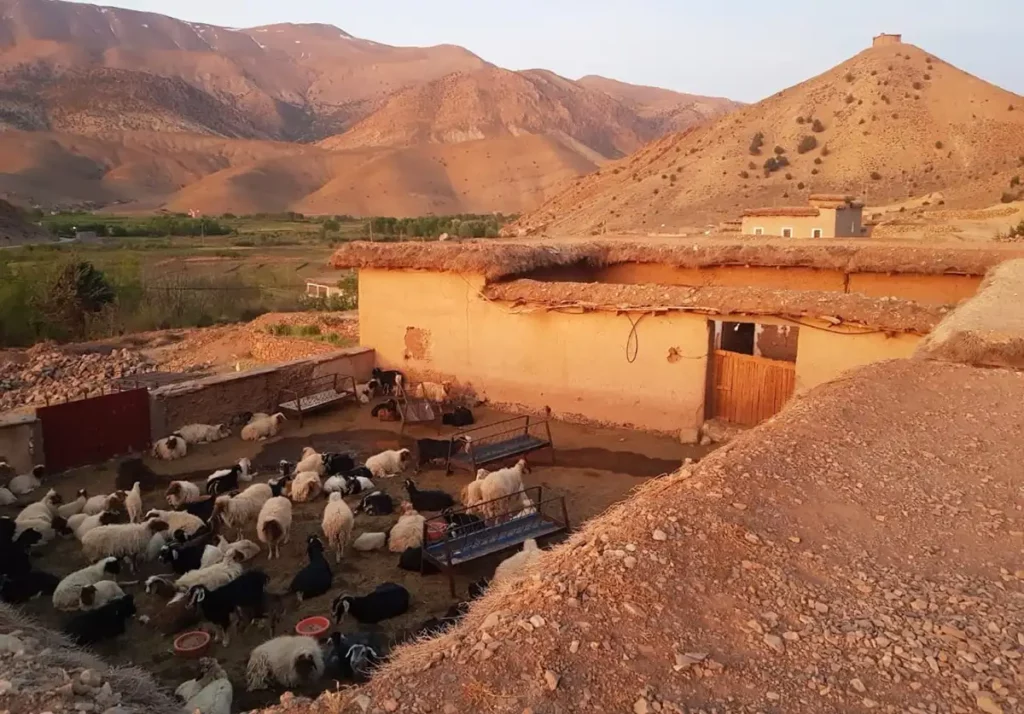
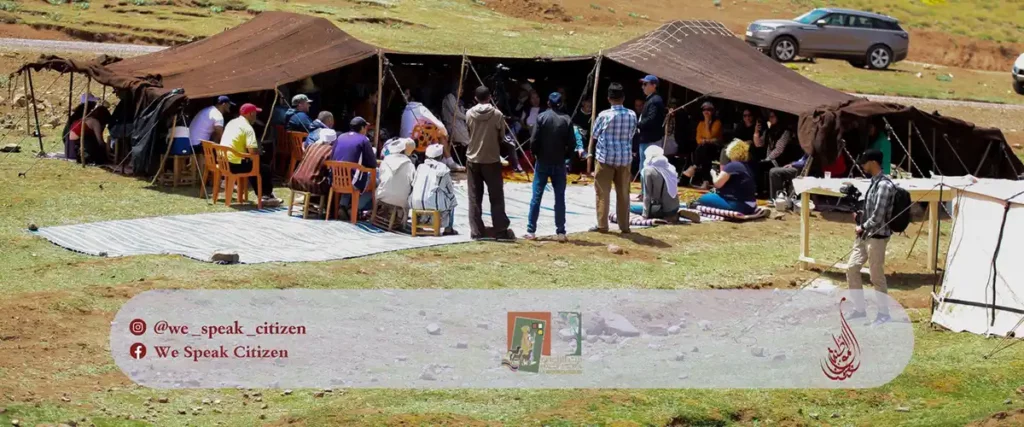
From 3 to 8 May 2023, the first Shepherds’ Days were therefore held at Anne’s project site, in her sheepfold in the village of Imelghas, Azilal Province, at the heart of the Aït Bouguemez Valley.
The gathering brought together people from Morocco’s major cities with an interest in protecting the country’s heritage, academics working on pastoralism and rural life, and, of course, shepherds from the valley itself, alongside others from neighbouring areas including Lake Izourar, the Cathedral Valley and the Ouzighimt Valley.
By all accounts, these days helped lay out a path towards concrete action: restoring the support and resources required if shepherding is to have a sustainable future.
These days confirmed our objective of creating a dedicated space for shepherds and pastoralism. The Shepherd’s House must become a focal point for this ancient profession, which is unfortunately in danger of disappearing.
Loubna Mouna
Director of the NGO We Speak Citizen

The Shepherd’s House is intended to become a multidisciplinary centre devoted to pastoral life.
Its first purpose will be to present the many dimensions of shepherding and offer future visitors a broad understanding of the profession, past and present: its human dimension, its working practices and its traditional knowledge, from transhumance routes to an understanding of plants and the stars.
The centre will also serve as a place for research into the future of shepherding and for supporting the profession as it adapts to change. It will address practical issues faced by shepherds today, including the choice of breeds, improvements in farming practices, the effects of expanding urbanisation and access to water.
A documentary collection will bring together publications and other material relating to pastoralism, while accommodation facilities are also planned to host researchers in residence.
Another important part of the project will be to increase the value of both the meat and wool produced by the Tighaline breed native to the valley, thereby strengthening the economic viability of shepherding in the high mountains.
Rugs woven from this wool are fundamentally different from the mass-produced carpets made with industrial wool that are found in bazaars throughout Morocco.
Likewise, meat from these high-mountain sheep should be capable of reaching consumers throughout the country, particularly in the major cities, at a price that reflects both its distinctive quality — resulting from mountain rearing and transhumance — and the additional production costs inherent in this particular form of livestock farming.
The project team is already considering the creation of an official certification, along the lines of a “mountain-raised” label, which could accompany the meat all the way to the point of sale.
Ultimately, however, perhaps the most important purpose of the Shepherd’s House will be to work directly with shepherds themselves and help sustain their profession, particularly the specific form of shepherding practised in the high mountains.
The difficulties they face are very practical and require equally practical responses. How can supplementary feed be provided for high-mountain flocks during winter? How can water points be created in remote and rugged areas? How can shepherds be given an officially recognised social status that would provide access to insurance and a pension?
Addressing these questions could one day make it possible for young people to choose shepherding again, as has happened in other mountain regions of Europe.
The Shepherd’s House will therefore have an important dual role: advising and supporting shepherds on the ground while also advocating on their behalf with public authorities.
The Shepherd’s House project goes to the heart of the matter
The Shepherd’s House cooperative has now been created. The first flock of Tighaline sheep is already established in Anne’s sheepfold.
The next stages, led by We Speak Citizen, will involve drawing up concrete plans for the future Shepherd’s House and then bringing together the partners needed to develop each component of the project.
Step by step, Loubna, Anne, Fatima Zahra and Younes are making their way along this steep path, determined to give one of Morocco’s living cultural treasures the recognition it deserves.
They know that this first stage has laid solid foundations for what comes next.
The reaction of those who attended the first Shepherds’ Days was itself revealing. Most were Moroccans who had travelled from the country’s large cities. They left smiling, almost exhilarated, as though their encounter with the world of the shepherds had changed something in the way they saw their own country.
This project goes to the heart of something fundamental. Among Moroccans, it has reawakened a buried awareness of their roots and therefore of their long history. In doing so, it has shed new light on the deep connection between their own existence and the land to which they belong.
Anne Alaime
At the end of the days devoted to them, the shepherds themselves were smiling too.
As they returned to the mountainsides and their flocks, perhaps they carried with them a sense of satisfaction — even relief — at having finally been recognised, for the duration of that encounter, as part of the cultural necklace worn by those who had come to meet them: one pearl among the many colours of Moroccan identity.
And with it, perhaps, the quiet but stubborn hope that one day the shepherd will once again be one of the pearls Morocco wears around its neck.
Further reading: The House of Oral Heritage in the ksar of Aït Ben Haddou: a first in Morocco
More to Explore


For more than twenty years, Éric Anglade has lived in a village of South-Eastern Morocco, where he explores and documents the region’s history, heritage, and living traditions. He founded sudestmaroc.com as a space for sharing fieldwork and cultural insight, bridging local knowledge with global perspectives. He also works alongside women carpet-weavers to help sustain their craft and welcomes travellers at Le Jardin de Yuda, his guesthouse envisioned as a meeting place for exchange and transmission.
3 responses to “The shepherd: a forgotten pearl of Morocco’s cultural heritage”
Congratulations on this article, which shines a light on the profession of shepherding.
The flocks that once covered the pastures of the Atlas and Anti-Atlas have dwindled dramatically. For almost 35 years, I have accompanied the seasonal migration of Aït Atta nomads as they move northwards from the Anti-Atlas in spring. This transhumance has always taken place alongside that of shepherds from the upper Aït Bouguemez Valley (Aït Keum), who had pasture-sharing agreements with the Aït Atta. They too used to spend the winter in the Saghro, or on the plains of the Drâa, Dadès, Tinghir and Ouarzazate regions.
In years of severe drought, they would travel as far as the Sous plains, and sometimes even farther south along the Atlantic coast — formerly on foot, today mainly by truck — in search of areas where abundant rainfall had produced good grazing.
Thirty-five years ago, around fifty Aït Atta families would migrate every spring towards Lake Izourar and the Tamda plateaus. They were so numerous that at the bivouacs it was sometimes difficult to find enough space for everyone. In May 2023, only six families made the journey, and with much smaller herds. The number of shepherds from upper Aït Bouguemez has fallen by roughly the same proportion, as has that of shepherds from the M’Goun area who move their animals up to the high plateaus and ridges of the Atlas.
Some efforts have nevertheless been made. Members of parliament have helped unlock limited funding for nomads and shepherds; springs have been developed with water-storage facilities and troughs; access tracks have been opened to make it easier to obtain supplies on souk days and can also be used by vehicles in transit. More recently, shepherds have even begun riding Chinese motorcycles. But all of this remains far from sufficient.
The professions of shepherd and livestock breeder need to be formally recognised, supported and modernised.
One of the main reasons why this way of life is being abandoned also concerns women and children. Today, they have a right to live more decent lives than their grandmothers did — women who gave birth while continuing to tend the animals, whose children became little shepherds until adulthood, married, and then continued working for their father until he was no longer able to do so.
Modernisation and a more humane way of life require a complete rethinking of how shepherds and small family livestock breeders organise their lives.
One possible approach, in my view, would be the **pooling of labour** between several livestock owners — perhaps five or six families with small herds — supported by government services and NGOs. Herd supervision could be organised on a rota, with properly trained shepherds who would also be better equipped to care for the animals.
A comparable system exists in the Pyrenees, although there the sheepdogs are a central part of the system. Here, things would have to be organised differently. Introducing trained dogs would probably not work in the same way in Morocco — at least according to the opinion of an experienced Pyrenean shepherd and specialist with whom I discussed the matter.
The quality and value of both the meat and wool produced by these herds are far superior. Recognition through a **“Mountain–Desert” label**, guaranteeing the origin of the animal, could make a real difference. It is widely understood that it is better to eat half as much of a high-quality product whose natural and organic origin is guaranteed, particularly when it is also far better for one’s health.
How many hundreds of thousands of animals were imported from abroad for the last Eid, and at what cost? Yet Moroccans regularly show that they appreciate good-quality meat.
Yes, there is an urgent need to act, because herd numbers have fallen so sharply that the consequences are already considerable. A parallel could also be drawn with the profession of farming in oasis and mountain regions.
How many specialised agricultural training programmes are actually available to young men and women from the desert regions through to the mountain areas? These are precisely the people who could take part in a modernised form of agriculture and livestock farming in which quality enhances the status of the profession, creates genuine added value and provides decent incomes.
The territories of the Atlas, Anti-Atlas, arid regions and desert are immense.
Complementary occupations — beekeeping, food processing, meat drying, cheese-making, crafts, guiding and muleteering — could also make this way of life more attractive. And none of these professions requires five years of university education.
An entire article could be written about the profession of the muleteer, which has completely disappeared from Aït Bouguemez and from parts of both the Atlas and Anti-Atlas.
Twenty years ago, the combination of these occupations with shepherding helped improve living conditions and contributed to the development of a number of valleys, particularly Aït Bouguemez.
Prices have been driven down, and modernity alone is not responsible. The lack of recognition, the absence of support, the failure to properly value these professions, and prices that do not reflect the real worth of the work and the products have all contributed to their decline.
Thank you for this wonderful and highly insightful article, which also reminds us of the universal dimension of the shepherd as a figure.
My thanks as well to the previous reader for a comment that opens the way to an important reflection on the need to reconcile tradition with modernity.
Once again, thank you for this article, which invites us to discover a side of Moroccan identity that is indeed rarely visible.
It offers an alternative to what travellers may imagine they will find when coming to Morocco — a highly folklorised and reductive image of Moroccan cultural identity — by giving them the opportunity to come closer to the authenticity of these cultural “pearls”.
Bringing these lesser-known cultural worlds to light can also give meaning to a new form of tourism: one that changes the way we look at one another, opens us to other realities of life, gives us the opportunity to reconnect with the roots that lie at the heart of our shared humanity, and encourages us to reflect on each person’s place in today’s chaotic world.
Thank you to all those — women and men from many different backgrounds — who are joining forces to work in this direction.

3 comments
Congratulations on this article, which shines a light on the profession of shepherding.
The flocks that once covered the pastures of the Atlas and Anti-Atlas have dwindled dramatically. For almost 35 years, I have accompanied the seasonal migration of Aït Atta nomads as they move northwards from the Anti-Atlas in spring. This transhumance has always taken place alongside that of shepherds from the upper Aït Bouguemez Valley (Aït Keum), who had pasture-sharing agreements with the Aït Atta. They too used to spend the winter in the Saghro, or on the plains of the Drâa, Dadès, Tinghir and Ouarzazate regions.
In years of severe drought, they would travel as far as the Sous plains, and sometimes even farther south along the Atlantic coast — formerly on foot, today mainly by truck — in search of areas where abundant rainfall had produced good grazing.
Thirty-five years ago, around fifty Aït Atta families would migrate every spring towards Lake Izourar and the Tamda plateaus. They were so numerous that at the bivouacs it was sometimes difficult to find enough space for everyone. In May 2023, only six families made the journey, and with much smaller herds. The number of shepherds from upper Aït Bouguemez has fallen by roughly the same proportion, as has that of shepherds from the M’Goun area who move their animals up to the high plateaus and ridges of the Atlas.
Some efforts have nevertheless been made. Members of parliament have helped unlock limited funding for nomads and shepherds; springs have been developed with water-storage facilities and troughs; access tracks have been opened to make it easier to obtain supplies on souk days and can also be used by vehicles in transit. More recently, shepherds have even begun riding Chinese motorcycles. But all of this remains far from sufficient.
The professions of shepherd and livestock breeder need to be formally recognised, supported and modernised.
One of the main reasons why this way of life is being abandoned also concerns women and children. Today, they have a right to live more decent lives than their grandmothers did — women who gave birth while continuing to tend the animals, whose children became little shepherds until adulthood, married, and then continued working for their father until he was no longer able to do so.
Modernisation and a more humane way of life require a complete rethinking of how shepherds and small family livestock breeders organise their lives.
One possible approach, in my view, would be the **pooling of labour** between several livestock owners — perhaps five or six families with small herds — supported by government services and NGOs. Herd supervision could be organised on a rota, with properly trained shepherds who would also be better equipped to care for the animals.
A comparable system exists in the Pyrenees, although there the sheepdogs are a central part of the system. Here, things would have to be organised differently. Introducing trained dogs would probably not work in the same way in Morocco — at least according to the opinion of an experienced Pyrenean shepherd and specialist with whom I discussed the matter.
The quality and value of both the meat and wool produced by these herds are far superior. Recognition through a **“Mountain–Desert” label**, guaranteeing the origin of the animal, could make a real difference. It is widely understood that it is better to eat half as much of a high-quality product whose natural and organic origin is guaranteed, particularly when it is also far better for one’s health.
How many hundreds of thousands of animals were imported from abroad for the last Eid, and at what cost? Yet Moroccans regularly show that they appreciate good-quality meat.
Yes, there is an urgent need to act, because herd numbers have fallen so sharply that the consequences are already considerable. A parallel could also be drawn with the profession of farming in oasis and mountain regions.
How many specialised agricultural training programmes are actually available to young men and women from the desert regions through to the mountain areas? These are precisely the people who could take part in a modernised form of agriculture and livestock farming in which quality enhances the status of the profession, creates genuine added value and provides decent incomes.
The territories of the Atlas, Anti-Atlas, arid regions and desert are immense.
Complementary occupations — beekeeping, food processing, meat drying, cheese-making, crafts, guiding and muleteering — could also make this way of life more attractive. And none of these professions requires five years of university education.
An entire article could be written about the profession of the muleteer, which has completely disappeared from Aït Bouguemez and from parts of both the Atlas and Anti-Atlas.
Twenty years ago, the combination of these occupations with shepherding helped improve living conditions and contributed to the development of a number of valleys, particularly Aït Bouguemez.
Prices have been driven down, and modernity alone is not responsible. The lack of recognition, the absence of support, the failure to properly value these professions, and prices that do not reflect the real worth of the work and the products have all contributed to their decline.
Thank you for this wonderful and highly insightful article, which also reminds us of the universal dimension of the shepherd as a figure.
My thanks as well to the previous reader for a comment that opens the way to an important reflection on the need to reconcile tradition with modernity.
Once again, thank you for this article, which invites us to discover a side of Moroccan identity that is indeed rarely visible.
It offers an alternative to what travellers may imagine they will find when coming to Morocco — a highly folklorised and reductive image of Moroccan cultural identity — by giving them the opportunity to come closer to the authenticity of these cultural “pearls”.
Bringing these lesser-known cultural worlds to light can also give meaning to a new form of tourism: one that changes the way we look at one another, opens us to other realities of life, gives us the opportunity to reconnect with the roots that lie at the heart of our shared humanity, and encourages us to reflect on each person’s place in today’s chaotic world.
Thank you to all those — women and men from many different backgrounds — who are joining forces to work in this direction.
Leave a Reply