


South-East Morocco: a land of adventure for mining explorers
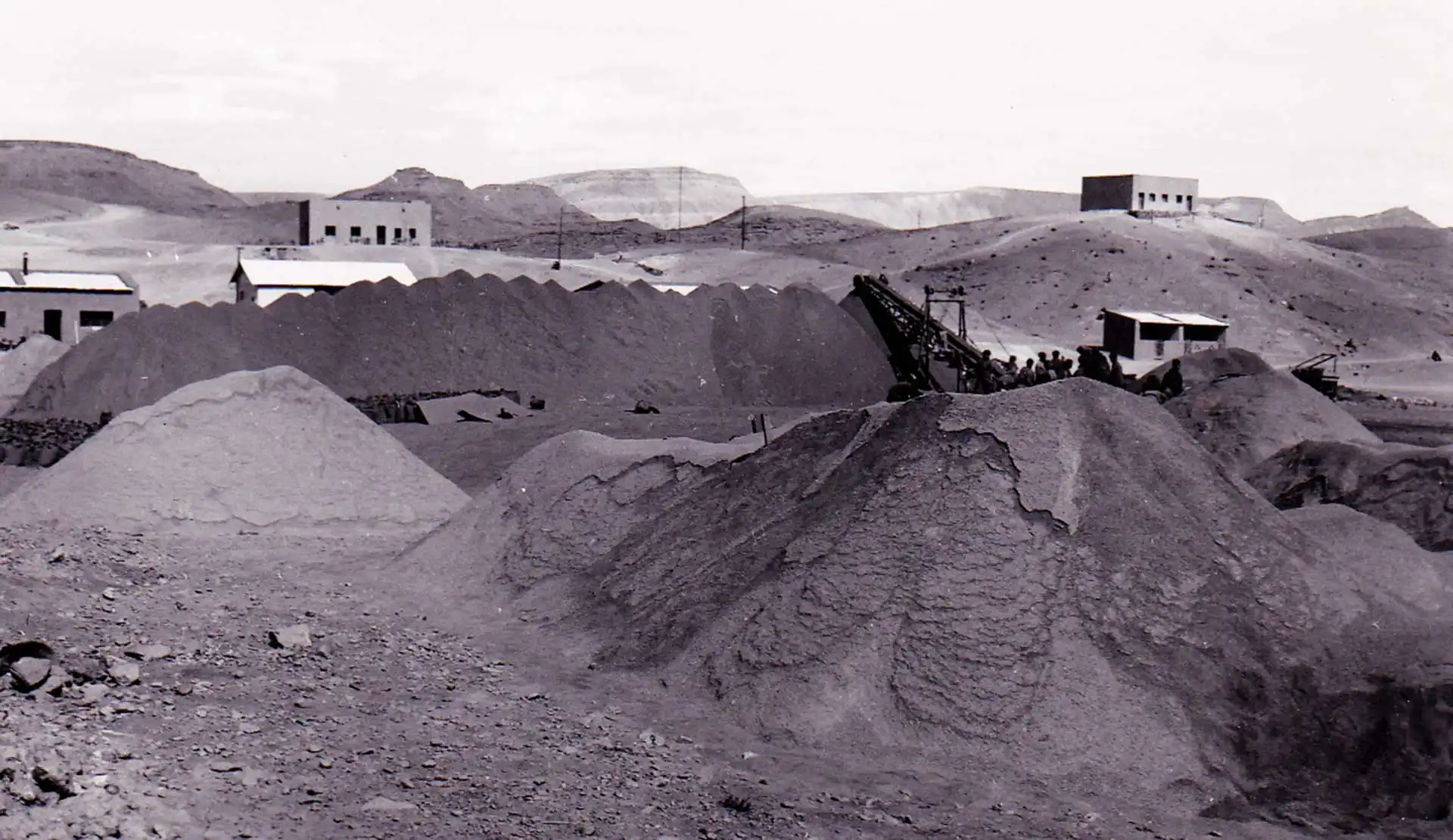
Beneath the ochre scree of Jbel Saghro, a collapsed gallery still bears the traces of a forge fire. Who lit it, and for what metal? Phoenicians, Sharifian dynasties, engineers of the Protectorate, Managem executives: since Antiquity, the same vein has run through South-East Morocco, carried by men whom the lure of wealth or the taste for the unknown brought here.
Overview
- A coveted underground wealth since Antiquity.
- Todgha and Tamdoulte, forgotten capitals of medieval silver.
- The Saadians and the golden age of Anti-Atlas copper.
- The nineteenth century and the rush of European geologists.
- The Protectorate opens the era of industrial mining.
- Jean Epinat, the man who built a mining empire.
- Thami El Glaoui, the indispensable ally of the prospectors.
- Institutions and infrastructure: building a mining economy.
- A catalyst for human development.
- Independence: the birth of Managem.
- The mining South-East in the twenty-first century.
- An epic that is still alive.
A coveted underground wealth since Antiquity
Mining activity in South-East Morocco dates back to ancient times. The region is indeed rich in a wide variety of mineral resources: gold, copper, barite, silver, manganese, cobalt, iron oxide, marble, talc, mica, lead, zinc, antimony, fluorite…
The Phoenicians are thought to have been the first to take an interest in the region’s underground resources, thanks to their recognised expertise in mining. The Carthaginians were likewise renowned for their quest for precious metals. They carried out prospecting expeditions as far as the pre-Saharan regions.
Local oral tradition also attributes ancient mining works in the region to the Portuguese, particularly at the site of Imiter, where remains are said to have been known as Burtkiz. History, however, calls for caution here: in the sixteenth century, the Portuguese presence in Morocco remained confined to the fortified trading posts of the Atlantic coast — Mazagan, Safi, Azemmour, Agadir — without ever venturing beyond the Atlas, into a South-East that was then beyond the reach of central power. Nothing, to this day, confirms that a Portuguese ever set foot in Imiter. The name Burtkiz probably belongs to a broader form of memory, in which “Portuguese” eventually came, in popular speech, to designate any foreign prospector arriving from Europe — whether in the sixteenth or the twentieth century. Medieval mining, however, was very real, and entirely artisanal.
Editor’s note (July 2026) — A reader had already pointed out this approximation to us in 2019. Our thanks to him: this too is how the history of South-East Morocco is written, collectively.
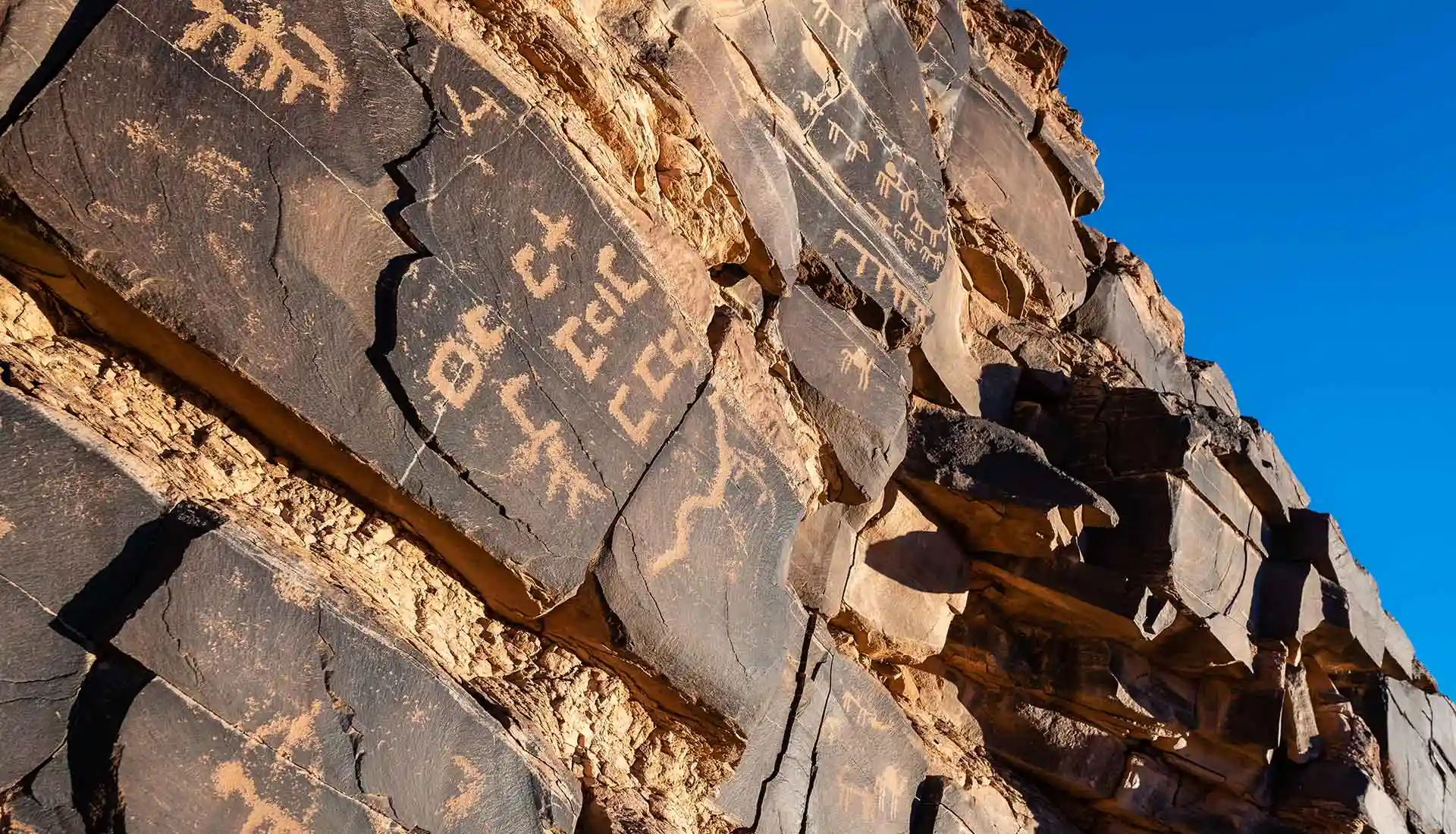
The impressive remains of ancient mining operations, and above all the study of Amazigh place names, attest to centuries of mining activity across the vast territory of the South-East, with names such as Adrar N’Ou Anas — “mountain of copper” — or Ifri N’Ou Anas — “cave of copper”. These ancient periods of exploitation are also corroborated by the presence of a khettara, or qanat, a drainage gallery used to evacuate groundwater — a technique itself originating in Iran, another country with an ancient mining tradition.
Todgha and Tamdoulte, forgotten capitals of medieval silver
From the ninth century onwards, the successive dynasties that ruled Morocco had considerable financial needs. The exploitation of silver deposits therefore began rapidly in the Todgha region, which at the time was regarded as home to one of the largest silver mines. The mining site was mentioned by Eastern authors as early as the ninth century, for its reputation had spread throughout Africa and as far as the Orient. It was at this mine in the town of Todgha that the silver coins of several powerful Muslim dynasties were struck, notably those of the Abbasids, Idrisids and Kharijites. This singular importance made Todgha a wealthy urban centre coveted by all the political powers of the time.
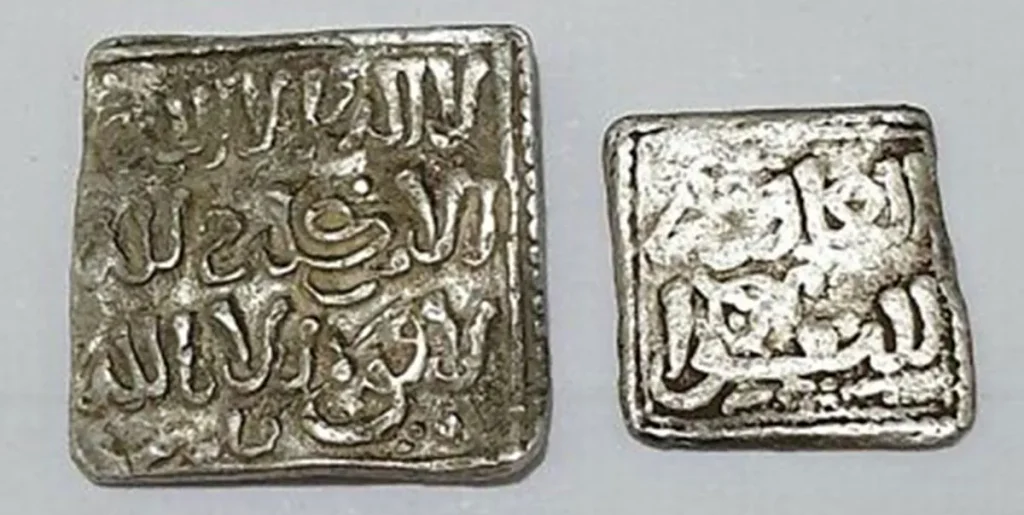
Another region was renowned for its flourishing silver mine between the tenth and eleventh centuries: Tamdoulte, from Aqqa to Tata, whose deposits lie in Jbel Addana. Ruins and debris confirm the ancient existence of major mining activity near this wealthy and densely populated town, which from the ninth to the fourteenth century combined economic prosperity with military and political importance. Square coins have been found on the site, particularly Almohad or Marinid qirāts.
The Saadians and the golden age of Anti-Atlas copper
The mines of the medieval period were characterised by the expansion of traditional production of precious metals and lead. In the sixteenth century, the Saadians thus exploited several copper mines in the Anti-Atlas. Morocco’s position in the Middle Ages as a major mining country was the result of its hegemony in Africa and on the Iberian Peninsula, thanks to its control of the trans-Saharan trade routes.
The nineteenth century and the rush of European geologists
From the nineteenth century onwards, Moroccan mines became an object of covetousness for the European powers, principally Germany, Spain and France. These rival forces, all attracted by Morocco’s natural wealth, organised first their exploration and then their establishment there for the purposes of extraction.
European expeditions towards South-East Morocco were therefore organised with the primary objective of establishing the geography of the country, followed by its geology. They included Spanish, English, German, Belgian and French geographers. These explorers travelled across the northern side of the Atlas without venturing to the south, a territory that was still dangerous and controlled by tribes that had not submitted to central authority. Thanks to these journeys, an increasingly accurate picture of the region’s geography emerged, notably through the production of small-scale maps.
French explorers visited Morocco during the second half of the nineteenth century, among them the great traveller Charles de Foucauld (1858–1916), who travelled through the South-East during his journey across Morocco from 1883 to 1884. In his travel journal, Reconnaissance au Maroc, he recorded his geographical observations, sketches and topographical surveys, helping to establish the first maps of the region and of Morocco more generally at a scale of 1:200,000.
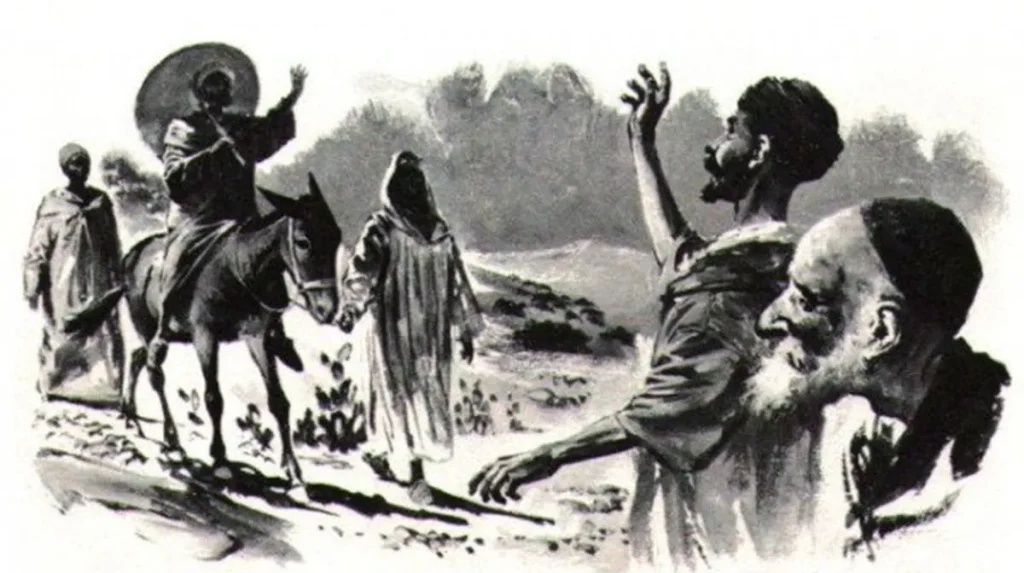
From 1888 onwards, certain geologists succeeded in crossing the Atlas and reaching Tizi N’Telouet, today known as Tizi n’Tichka. Others reached the southern slopes of the High Atlas, such as Abel Brives between 1901 and 1907, followed by Paul Lemoine in 1904, who considerably enriched scientific knowledge of the Atlas. Then came Louis Gentil, remembered for devoting his research to the geology of the southern valleys, including the Imini valley, Demnate, Tassaoute and Jebel Siroua…
The Protectorate opens the era of industrial mining
At the beginning of the French Protectorate, established from 1912 onwards, geologists were therefore among the first to explore the territories of the South-East in the wake of military expeditions. General Hubert Lyautey, the first Resident-General of the French Protectorate in Morocco, encouraged geographical and geological exploration missions into newly conquered territories. It was within this context that Pierre Despujols, head of Morocco’s Mines and Geology Department, entrusted Louis Neltner with tracing geological routes through the Atlas and Anti-Atlas.
Jean Epinat, the man who built a mining empire
Jean Epinat remains the emblematic figure of an era that witnessed both the modernisation of Morocco and the radical exploitation of its resources. Born in 1877 in a hamlet in France, he was a genuine self-made man whose social rise was meteoric. His profound knowledge of the mining sector, his experience, his influential network of contacts and, above all, his personal ambition soon brought him to Morocco in the early 1920s, where everything remained to be done. It was only natural that he should become involved in mining prospecting and exploitation.
At the request of Marshal Lyautey, who urgently needed a public transport system to be established in Morocco in order to support its development and thus the pacification of all its territories, Jean Epinat first founded the Compagnie des Transports et Tourisme Marocain in 1919, ancestor of today’s CTM bus company, a business which would become the Omnium Nord-Africain (ONA) in 1934. The new company immediately invested in several businesses and created a number of subsidiaries, including the Société Minière de Bou Azzer et du Graara (SMAG) and the Tifnout-Tiranimine company (O.T.T.), which exploited the manganese deposit at Tiouine in the Anti-Atlas, as well as the Société des Mines de Bou Skour and the Société métallurgique d’Imiter. This major industrial group, which became the principal mining operator in the South-East during the French Protectorate, came under Moroccan ownership in 1980 and went on to develop activities in many fields beyond mining, including the food industry, mass retail, telecommunications and banking.
Thanks to his close relationships with leading political and economic personalities in Morocco at the time, notably Thami El Mezouari El Glaoui and Hubert Lyautey, Jean Epinat thus established himself as one of the most influential men of the Protectorate.
Thami El Glaoui, the indispensable ally of the prospectors
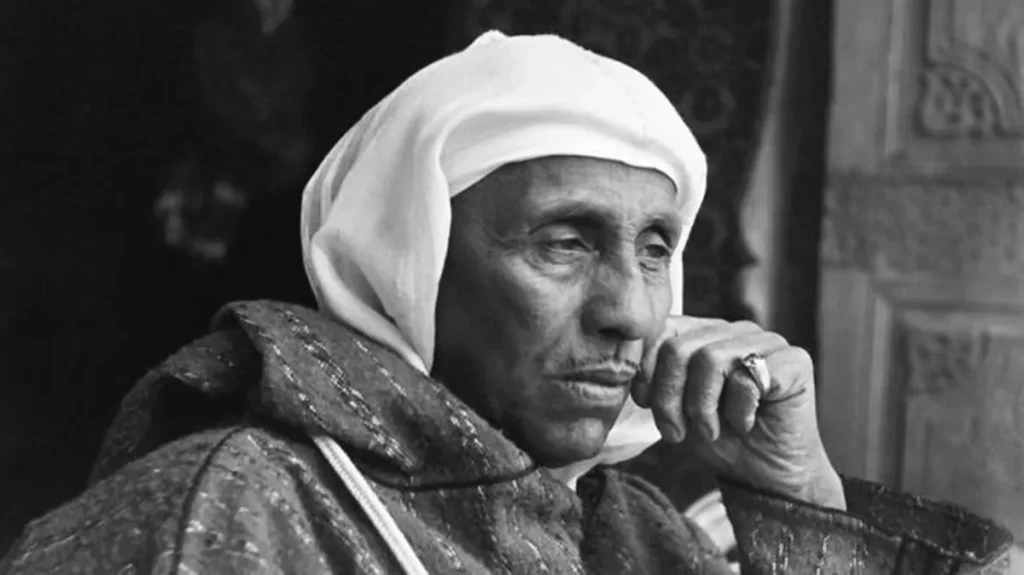
Thami El Glaoui, Pasha of Marrakesh, was at that time the most powerful caïd in southern Morocco. He too established himself as an all-powerful mining figure in the region, forging alliances with the French authorities and placing mining prospectors under his protection from the earliest years of his rule. Over the years, El Glaoui became Jean Epinat’s friend and business partner, and Epinat entrusted him with the chairmanship of the Société minière de Bou’Azzer, which exploited asbestos and cobalt. Jean Epinat, for his part, was given complete freedom to conduct prospecting expeditions throughout the High Atlas territories, leading him to the discovery of a major cobalt deposit. He also found substantial deposits of manganese, nickel and silver.
As a genuine pioneering industrialist, Jean Epinat certainly developed mining prospecting and exploitation in Morocco, but he also faced severe trials. Fierce attacks were directed against both his company and his person. In 1940, Jean Epinat was accused of commercial collaboration with Nazi Germany, and Thami El Glaoui became one of his most ardent defenders. The Pasha of Marrakesh went so far as to send a secret letter to Winston Churchill on 7 January 1944 asking for his help on Epinat’s behalf, in which he declared:
“This accusation is without foundation and comes only from jealous men. It is a genuine conspiracy mounted against my friend, as a result of which my business is also paralysed.”
Thami El Glaoui
He used his influence with the French authorities to the same end. El Glaoui also sent letters to General de Gaulle to plead Epinat’s case, including one dated 15 February 1944:
“Allow me to express my opinion concerning a friend whom I cannot, without bitterness, allow to be accused of having failed in his duty towards Free France. I have been in contact with Epinat for 23 years. I have followed most of his enterprises and have been able to observe that they have always been conducted with a clear sense both of French interests and of Moroccan interests.”
Thami El Glaoui
Read also: The Glaoua saga
Institutions and infrastructure: building a mining economy
Under the Protectorate, the exploitation of Morocco’s mineral resources primarily served the needs of France. The major challenge was therefore to export almost all mining production to metropolitan France, making it essential to establish the infrastructure required both for extraction and for transporting these products out of the territories in which the mines were located.
Mining under the Protectorate was thus marked by the emergence in Morocco of institutions and companies whose names still resonate today. At the institutional level, the Institut des Recherches scientifiques was created in 1914 and reorganised in 1920 as the Institut Scientifique Chérifien, under the direction of Dr Jacques Liouville. That same year, 1920, the Office chérifien des Phosphates (OCP) was created as a state industrial and commercial body, under the management of Alfred Beaugé, a military engineering officer. Honoré Lantenois, a mining engineer and General Lyautey’s adviser on mining affairs, was behind the creation in 1921 of the Service des Mines et de la Carte Géologique.
A further major step was taken with the creation of the Bureau de Recherches et de Participations Minières (BRPM) by the dahir of 15 December 1928, on the initiative of Eirik Labonne, Secretary-General of the Protectorate, with the aim of developing the other mineral and energy resources contained beneath Moroccan soil. More concretely, the BRPM provided French Protectorate Morocco with a legal, technical and financial structure capable of sustaining, over the long term, a mining economy full of promise.
The French strategy at the time was to connect the new Moroccan El Dorado with experienced mining operators who had already proved themselves in the mining territories of neighbouring Algeria, under French rule since 1834. The first bridge was the establishment of a partnership between the BRPM and the magnetic iron ore company Mokta El Hadid — meaning “the iron cut”. This company had been founded in Algeria in 1865 by Paulin Talabot, a brilliant graduate of the École Polytechnique already known as a builder and operator of railway lines. The partnership between the two organisations later led, in 1929, to the creation of the Société Chérifienne d’Études Minières (SACEM), which would be responsible for exploiting the major manganese deposit in the Imini valley near Ouarzazate.
The ore was transported by heavy lorries as far as Marrakesh, then by rail to the port of Casablanca. Jean Epinat, forever in search of greater efficiency, was determined to find a faster means of transport. He therefore undertook the construction of an aerial cableway to cross the Atlas over a distance of around 28 kilometres, followed by the installation of a cable car.
A catalyst for human development
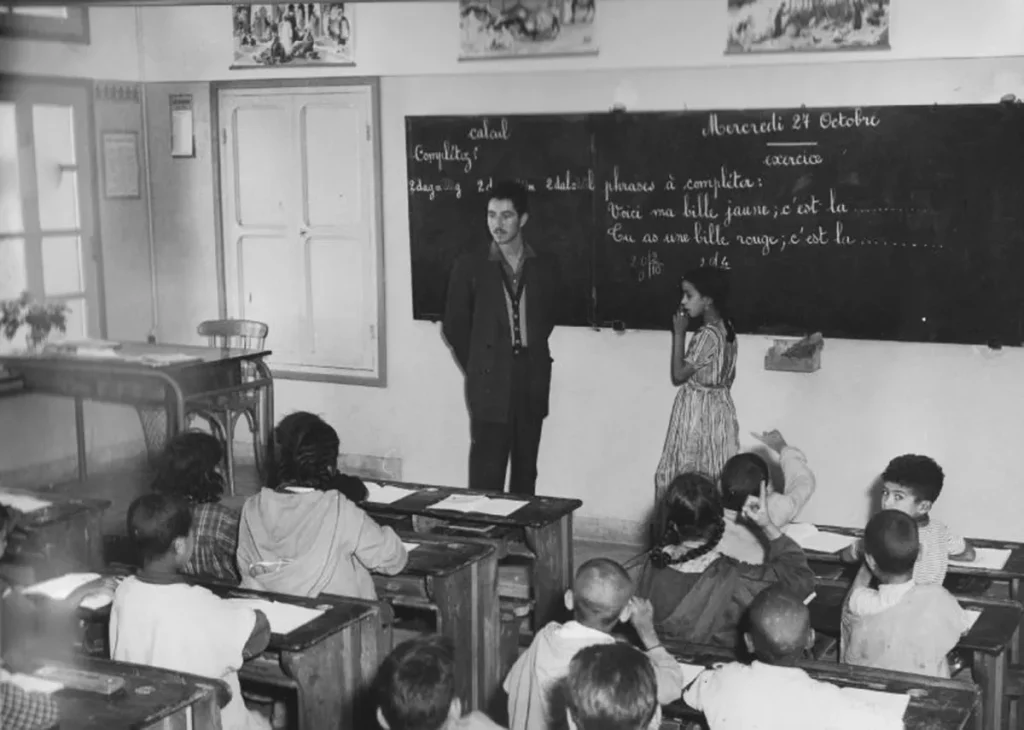
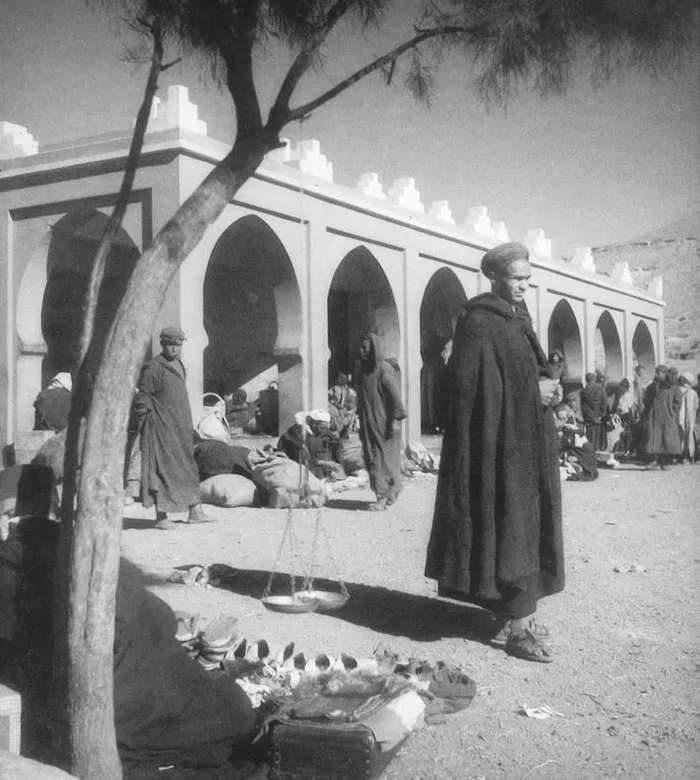
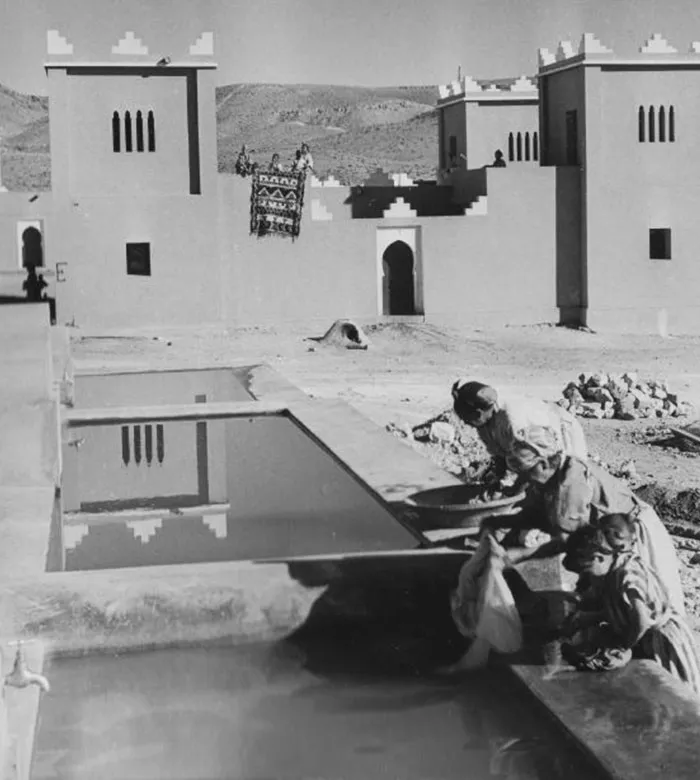
Beyond these economic interests, the mining adventure was also, for the region and its human communities, a formidable catalyst for human development. Mining sites were indeed the principal providers of employment for local inhabitants, structuring their lives through the creation of villages for miners and their families, schools for their children, healthcare facilities, cultural life… Even today, people’s memories glorify the presence of one French schoolteacher, doctor or administrator or another, while the recent closure of sites as deposits became depleted has brought decline to some territories and nostalgia to some of their inhabitants.
Independence: the birth of Managem
From independence onwards, Morocco’s leaders were fully aware of the strategic role of mining in the country’s economy. The State therefore became heavily involved in the sector and continued to invest in both mining operations and the development of mineral resources.
In 1996, a new mining player was created, the Managem Group, bringing together the mining interests of the ONA Group, which would complete its transformation in 2018 by becoming an investment fund under the name Al Mada.
The enthusiasm that South-East Morocco had aroused among explorers and mining operators also manifested itself in another form that would leave a deep mark on the history of the region’s human communities. It was in the 1970s that recruitment agents commissioned by the French coal industry arrived in Ouarzazate. A wave of men destined for coal extraction was thus taken from the region to the mines of northern France. This mining episode remains deeply rooted in the region’s collective memory, for it profoundly altered individual destinies, creating a diaspora that contributed to the economic development of families and therefore of their home territories, while at the same time separating those families.
The mining South-East in the twenty-first century
Managem today embodies the culmination of a dynamic and abundant mining history in Morocco. Open to the world, the company has established itself as a leader in Africa and is involved at every level of Moroccan society in fulfilling its social and environmental responsibilities as a major economic player — the emblem, in short, of modern mining Morocco.
Three sites in the South-East now carry this legacy:
Bou Azzer, the country’s only active cobalt mine. Discovered in 1928 on the same land explored by Epinat a century earlier, the deposit remains one of the few in the world to produce cobalt as its principal metal. In 2025, falling prices led Managem to reduce production by more than half, to 507 tonnes of cathodes. The year 2026 is expected to mark a rebound, with around 2,870 tonnes anticipated, driven by recovering prices and, above all, by the commissioning of a cobalt sulphate plant — the first of its kind in Africa — supplying the electric-vehicle battery industry.
Imiter, overtaken for the first time. In operation since 1969, 150 kilometres from Ouarzazate, the Imiter silver mine — one of the rare mines in the world where the metal occurs in its native form — was for many years the benchmark of the sector. In 2025, it was overtaken for the first time by the Zgounder deposit, farther west in the Anti-Atlas, operated by the Canadian group Aya Gold & Silver. Imiter nevertheless retains strategic value, and an open-pit extension is being prepared.
Bouskour, the copper of tomorrow. Fifty-six kilometres east of Ouarzazate, in the Saghro massif — the same landscape with which this article opens — the Bouskour deposit is being developed by Managem. With resources exceeding 19 million tonnes of copper- and silver-bearing ore, the site is set to become one of the country’s major copper centres, as Morocco seeks to diversify its mineral resources beyond phosphate.
The vein has not run dry: it has simply changed its face, from picks and khettaras to laboratories and battery production lines.
An epic that is still alive
Thus unfolded the history of mining in South-East Morocco, an epic that remains alive and dynamic and which, like every human endeavour, has had its darker face — that of the relentless exploitation of a territory — as well as its brighter side, which saw Morocco build and develop itself through the alloy of all the talents of those who came to join it, whatever their original motivations may have been. Morocco, and the South-East in particular, have known how to draw upon the spellbinding charm that emanates from their territories and their human communities, a charm that has enchanted, and will continue for a long time to enchant, dreamers and ambitious men alike in search of adventure, success or, more essentially, self-realisation.
Read also: Rites and legends of Yennayer, the Berber New Year
Key takeaways
- Mining in the South-East dates back to Antiquity — Phoenicians and Carthaginians — long before the dynasties that struck silver coinage at Todgha and Tamdoulte.
- The legend of a Portuguese presence at Imiter in the sixteenth century remains unconfirmed: the Portuguese stayed on the coast and never ventured beyond the Atlas.
- Jean Epinat and Thami El Glaoui built the modern mining industry under the Protectorate, before the creation of Managem in 1996.
- Today, Bou Azzer remains the country’s only cobalt mine, Imiter was overtaken by Zgounder in 2025, and Bouskour is emerging as Morocco’s future copper hub.
Sources
- Activités humaines et milieu naturel au Maroc, Bernard Rosenberger.
- Essai de biographie historique de Jean Epinat, Riwan Alami Badissi.
- Le ralliement : Le Glaoui, mon père, Abdessadek El Glaoui.
- Ressources minérales, Amina Benkhadra, Ahmed El Abbaoui.
- www.ouarzazate-1928-1956.com
More to Explore



Leave a Reply