
Ksar of Tamnougalt: the stronghold of the caïds of the Drâa Valley
Once the capital of the Amazigh Mezguita tribe, this 16th-century ksar watched over the caravan route linking Marrakech to Timbuktu. Its earthen ramparts and surrounding palm grove still tell a story of power, trade and centuries of coexistence between different communities.
Overview
Why visit Tamnougalt?
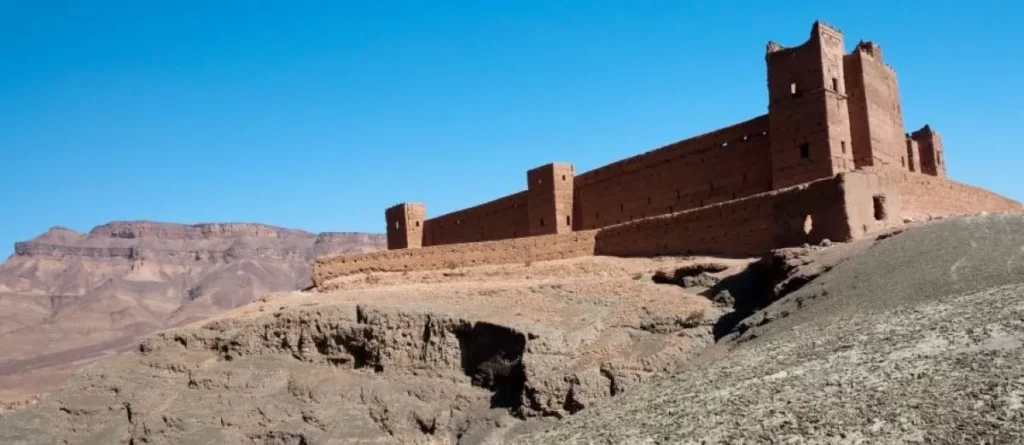
With origins probably dating back to the 16th century, the ksar of Tamnougalt stands on a rocky outcrop overlooking the Drâa Valley, just south of Agdz. Once the capital of the Mezguita tribe and the residence of the caïds who governed the region, it occupied a strategic position on the trans-Saharan caravan routes between Marrakech and Timbuktu.
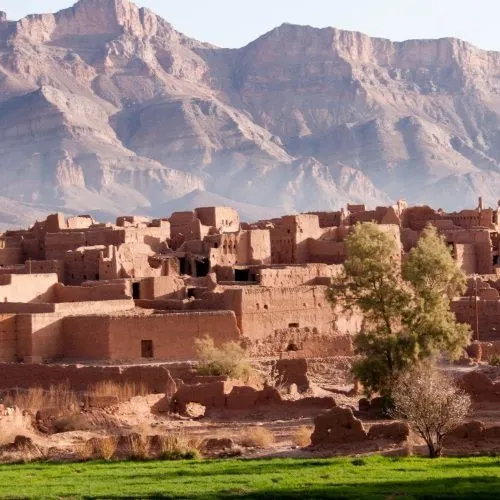
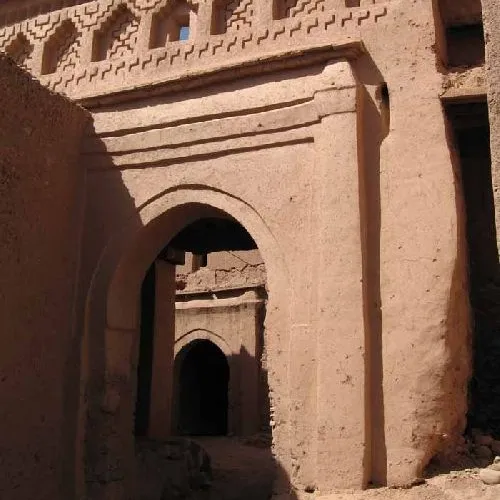
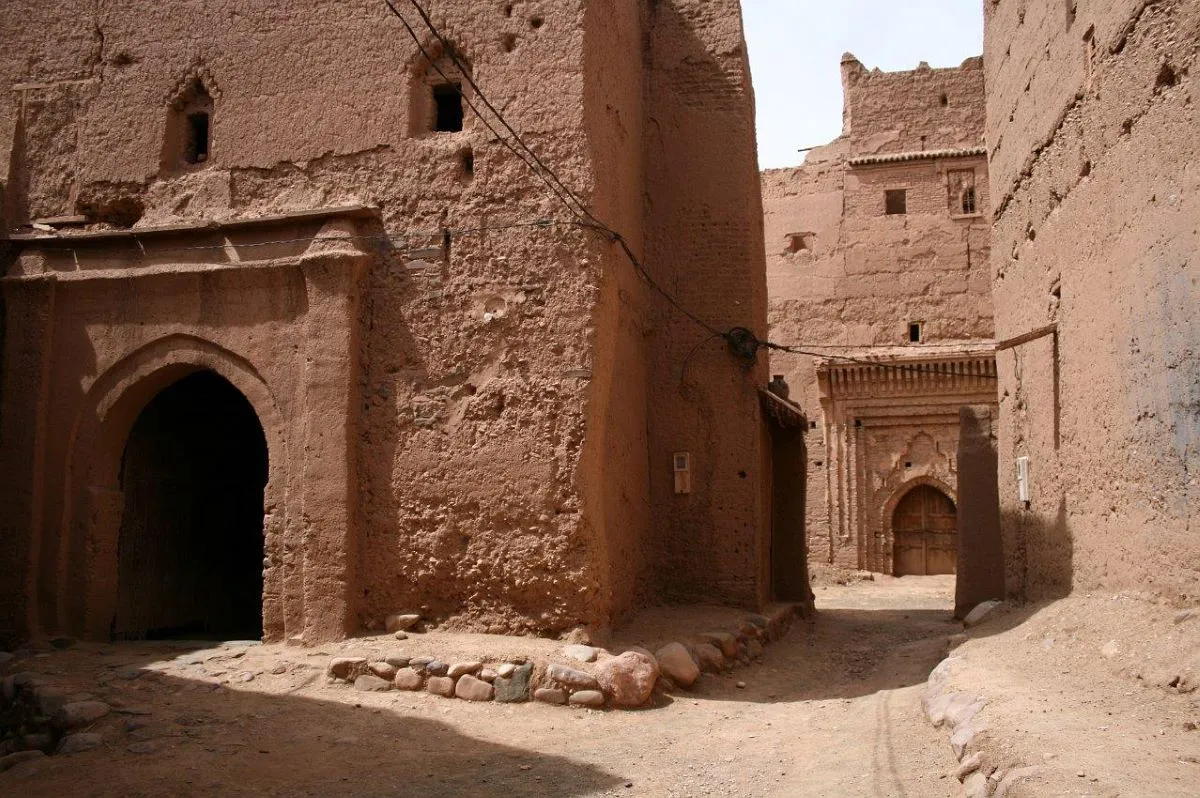
Surrounded by rammed-earth walls pierced by four gates, the ksar is crossed by a maze of narrow lanes, some of them covered, leading between houses with slender towers and walls decorated with geometric motifs. Its architecture reflects a shared tradition of craftsmanship: Amazigh, Arab and Jewish communities lived here side by side for generations, until the Jewish departures of the 1950s and 1960s.
At the beginning of the 20th century, Tamnougalt was governed by Caïd Si Ali, the last major representative of a line of Mezguita caïds linked to the Makhzen, Morocco’s central authority. From his kasbah overlooking the palm grove, he exercised authority over the oasis and its routes. In 1930, he received a French mission sent to survey the region. Local accounts also remember him as loyal to the Sultan and opposed to the growing power of Thami El Glaoui.
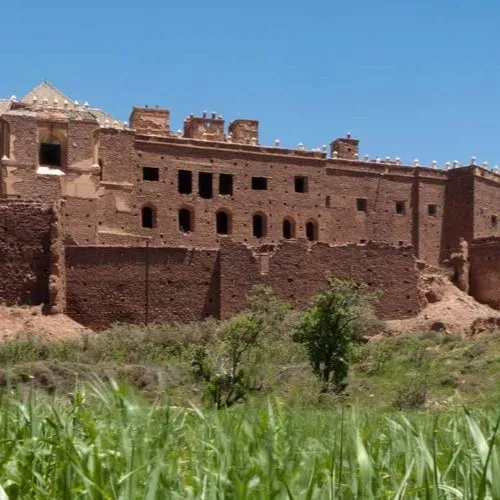
On a neighbouring rocky outcrop, the kasbah of the caïds still dominates the surrounding landscape. Largely abandoned and damaged, it nevertheless preserves some remarkable decorative features, including painted wooden ceilings and carved plasterwork, evidence of the refinement of its former occupants.
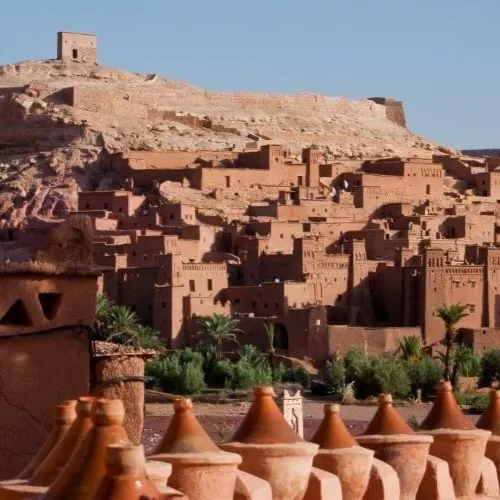
Less visited than Aït Ben Haddou and still more closely connected to local life than many ksour in the region, Tamnougalt offers a rare insight into the political and commercial history of southern Morocco.
What to do in Tamnougalt?
Explore the lanes of the ksar
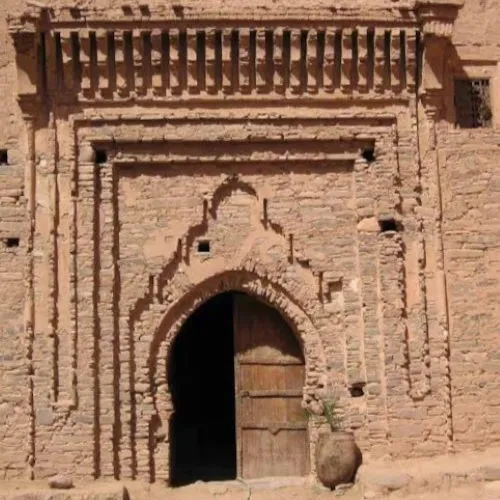
The fortified village is best explored on foot, between earthen houses that are still inhabited and others that have long been abandoned. The main gate opens onto a square beside the marabout of Sidi Abdellah ben Ali, a useful landmark when finding your way through the maze of covered lanes.
The ksar is extensive and its narrow passages can be confusing. A local guide can help reveal its history and social organisation — aspects that are not always apparent at first sight.
Visit the kasbah of the caïds
Built of rammed earth on three levels arranged around a central courtyard, the Mezguita kasbah reflects an architectural style associated with the great caïdal families of southern Morocco and bears similarities to the kasbahs built by the Glaoui.
Part of the site has been restored and now displays agricultural tools and objects from everyday life.
Some rooms remain fragile or closed to visitors, so it is advisable to enquire locally before exploring them.
Admission to the kasbah is charged.Walk through the palm grove and along the Drâa River
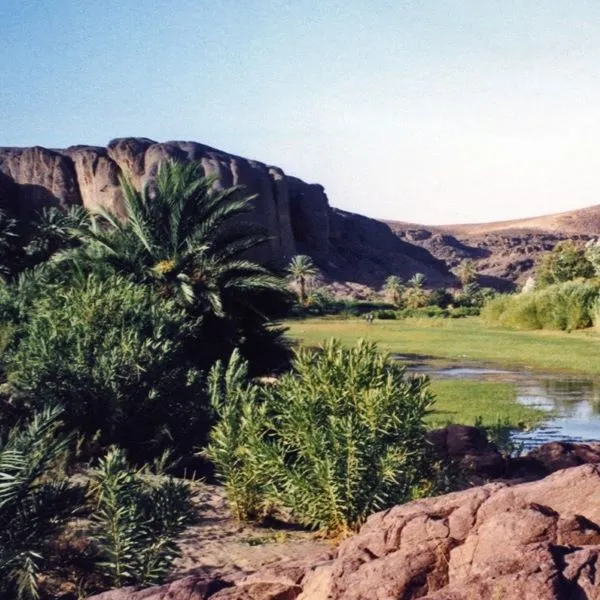
The ksar overlooks the Drâa River and a vast palm grove still crossed by seguias, the traditional irrigation channels that carry water through the oasis.
Walking among gardens of date palms, henna and fig trees helps reveal the close relationship between the fortified settlement and the agricultural landscape that sustained it.
Date cooperatives can also be visited in the Agdz palm grove.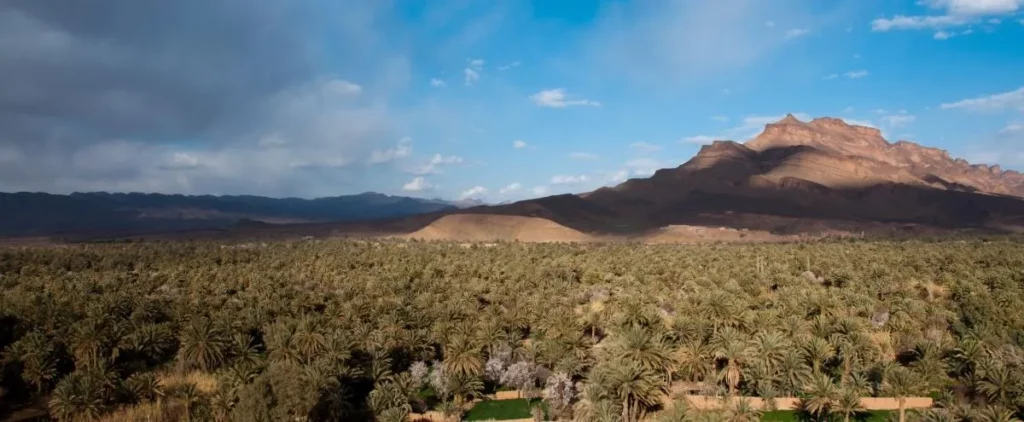
Visit the weekly souk in Agdz
Every Thursday, the souk in Agdz brings together traders and residents from the surrounding villages for a lively market selling vegetables, spices, textiles, household goods and livestock.
Only a few kilometres from Tamnougalt, it offers an interesting glimpse of everyday life in the valley and makes a good complement to a visit to the ksar.
Follow the traces of Jewish memory
At the heart of the Drâa Valley, Tamnougalt was long an important crossroads between the Atlas Mountains, the Sahara and the oases of southern Morocco. A Jewish community lived within an area identified as the mellah and was closely involved in the economic life of the ksar. Its members took part in local trade, craftsmanship and the caravan networks connecting Morocco with sub-Saharan Africa.
Their earthen houses were built using the same forms and techniques as the rest of Tamnougalt. In 1934, a survey still recorded around fifty Jewish households in Tamnougalt and the neighbouring village of Asselim n’Izder. The decline of the caravan routes, followed by the departures of the 1950s and 1960s, brought this centuries-old presence to an end.
The remains of the mellah still evoke this long history of coexistence and exchange. During a visit, it is possible to see:
- the covered lanes and houses, many now abandoned or badly deteriorated;
- the layout of the former Jewish quarter within the ksar;
- remains traditionally identified as those of the synagogue;
- and, more broadly, the earthen architecture of Tamnougalt.
A local guide is recommended when exploring these remains, as little is signposted and much of their history is not immediately visible.
A local guide is recommended.Read more: The lost destiny of the Jews of South-Eastern Morocco
How to get to Tamnougalt?
From Ouarzazate
Tamnougalt lies around 70 km south of Ouarzazate. Follow the N9 towards Zagora, crossing the Tizi n’Tinififft pass before descending towards Agdz and the Drâa Valley.
The drive takes around 1 hour 15 minutes. From Agdz, a secondary road of about 6 km leads across the Drâa to the ksar.
It is also possible to reach Agdz by bus or shared taxi and complete the journey to Tamnougalt by local taxi.
From Marrakech
From Marrakech, allow around 5½ to 6 hours by road, travelling over the Tizi n’Tichka pass to Ouarzazate before continuing south on the N9 towards Agdz and Tamnougalt.
Getting around
The ksar itself is explored entirely on foot. A vehicle is useful, however, for reaching Tamnougalt from Agdz and for exploring the surrounding Drâa Valley.
The palm grove is extensive and its paths can be confusing, so a local guide can be useful. Cycling is also an excellent way to explore the oasis.
Read more: Once upon a time in the ksar of Aït Ben Haddou, four Christian princesses …
Where to stay in Tamnougalt?
Spending a night in Tamnougalt changes the way the ksar is experienced. In the early morning or at sunset, the light falling across the earthen ramparts and palm grove is very different from the harsh light of the middle of the day.
A few accommodation options can be found within the ksar itself, where local families have restored old houses as guesthouses. In Agdz, only a few minutes away by road, there are also small guesthouses and riads, many run by families from the valley.
Simple campsites can also be found around the palm grove for travellers with tents or campervans.
For more information: Contact us
Beyond Tamnougalt
Tamnougalt is only one stage in a journey through the Drâa Valley and its long ribbon of palm groves.
Heading back towards Ouarzazate, the oases of Skoura and Fint reveal other expressions of oasis life and earthen architecture. Continuing south leads to Zagora and then towards the desert landscapes beyond. On the road towards M’Hamid, the pottery village of Tamegroute is another essential stop.
Every year in early October, the Moussem Ellama brings together neighbouring villages around Tamnougalt for a celebration that is both cultural and religious — a particularly interesting time to experience the valley at its liveliest.
With a Moroccan guide, Tamnougalt can also be combined with visits to other ksour in the Drâa Valley for a full day, or longer, exploring the oasis cultures of South-East Morocco.
Planning a stay in Tamnougalt?
Have a question or need more information?
Use our contact form.
We will be happy to help.