


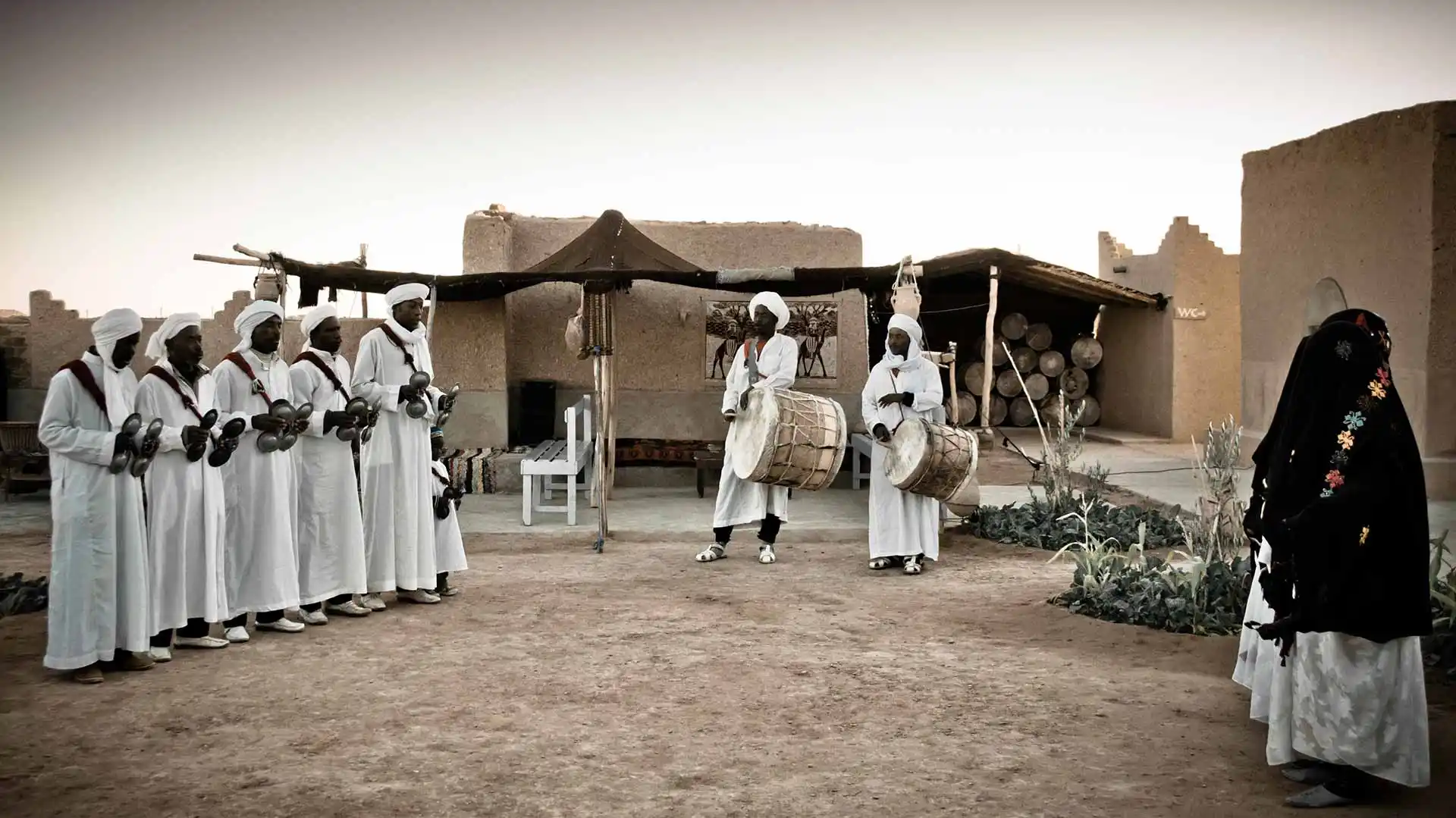
Khamlia, the Moroccan village that lives to the rhythms of Gnawa music
A few kilometres from Merzouga, Khamlia carries a memory that connects South-East Morocco with sub-Saharan Africa. Here, Gnawa music accompanies stories, rituals and celebrations passed down from generation to generation. A music of memory and deliverance, deeply rooted in the identity of the village.
The village of Khamlia illustrates the African dimension of South-East Morocco. Situated in the desert of Merzouga, this douar is rooted in Africa in all its dimensions, both ethnic and cultural. Khamlia is home to a Black community that has perpetuated Gnawa music since distant times, a musical tradition specific to these mystical brotherhoods whose rituals of trance have a therapeutic purpose and which recounts the human history of these communities, their suffering as well as their hopes.
The word Gnawa is often linked to the Amazigh agnaw, plural ignawen, a term used to designate the Black populations of sub-Saharan Africa, and to the expression akal n-ignawen, “land of the Blacks”. The name Guinea has also been linked to this Amazigh root, although its etymology remains debated.
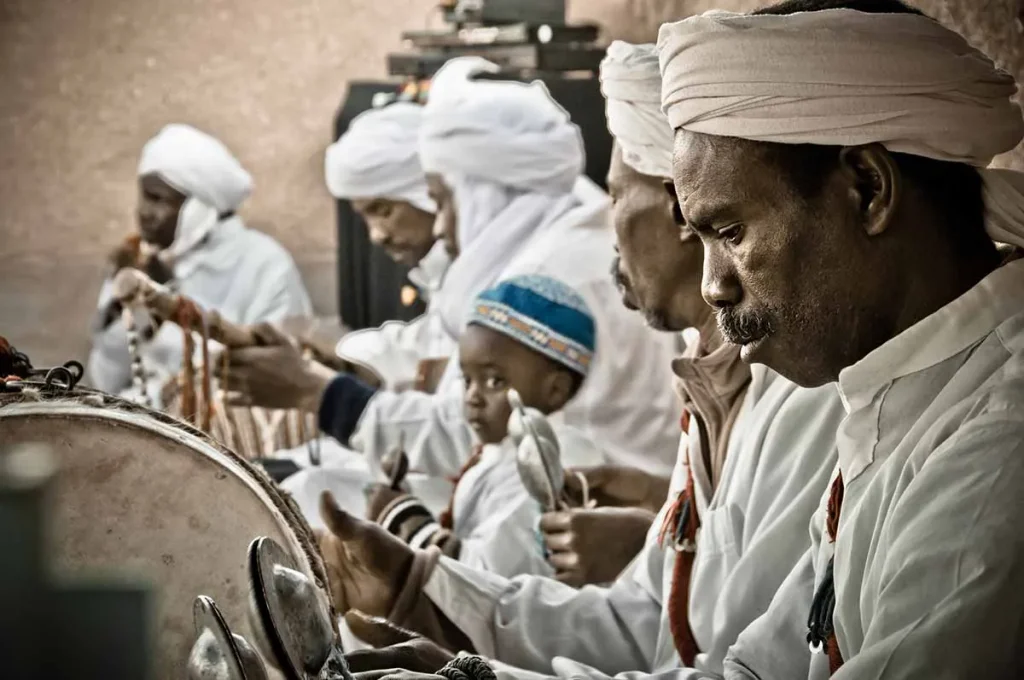
The African origins of a Moroccan village
The regions of Tafilalet and the Drâa have long been closely interconnected with sub-Saharan Africa. This Saharan Morocco maintained regular relations with the land then known as Bilad es-Sudan, the “land of the Blacks”, through exchanges fostered by the trans-Saharan caravans, which carried many different products, particularly gold. These caravans also transported enslaved people, leading over time to the arrival of African populations in Morocco.
It was in this context that the population of the village of Khamlia is thought to have settled on the fringes of the Merzouga desert, in Tafilalet, like other Black communities that established themselves across Morocco at different stages of its history.
The village has a significant community of sub-Saharan origin which became Amazigh-speaking over time. It is notably referred to by the Amazigh term “Ismkhan”, plural of “Isemkh”. Historically, this word refers to Black populations subjected to servitude or descended from enslaved people, and remains deeply connected, in southern Morocco, to the memory of the ancient movements between Morocco and sub-Saharan Africa.
The Gnawa musicians of Khamlia may thus be descendants of Black slaves deported from the Sudan along the trans-Saharan caravan routes linking the Bilad es-Sudan to the great Saharan and Moroccan markets. Their settlement may have been connected to the strong relations maintained by Morocco’s ruling dynasties with sub-Saharan Africa, particularly the Saadians, Almoravids and Alaouites…
The other inhabitants of Khamlia, however, are thought to descend from a community that migrated voluntarily to South-East Morocco outside the context of slavery. Black populations have in fact had a very ancient presence in the Drâa Valley and Tafilalet.
According to some sources, Khamlia derives from the Arabic term Khamila, meaning a land with abundant vegetation.
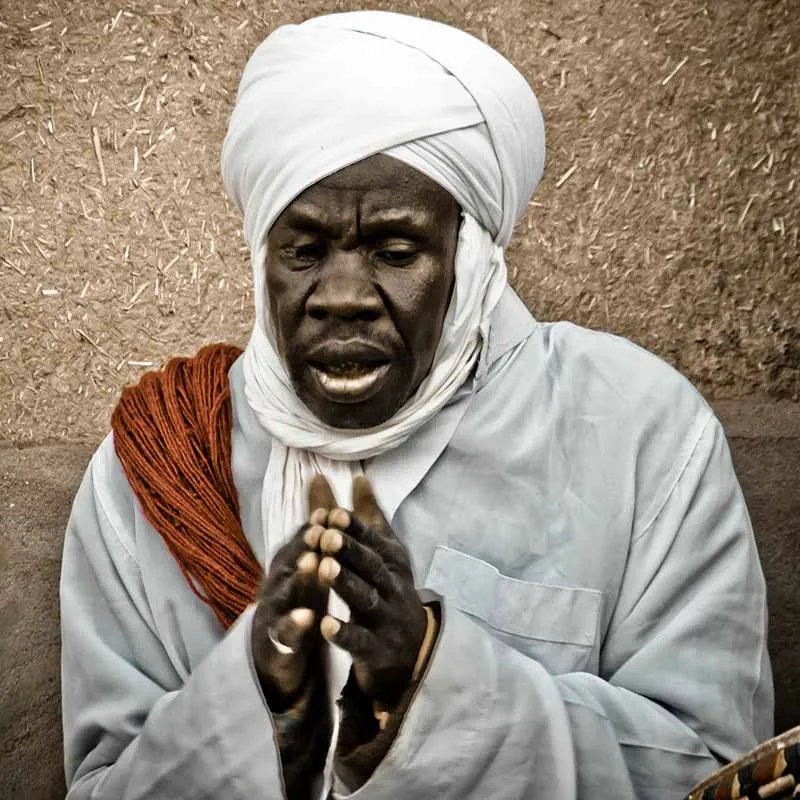
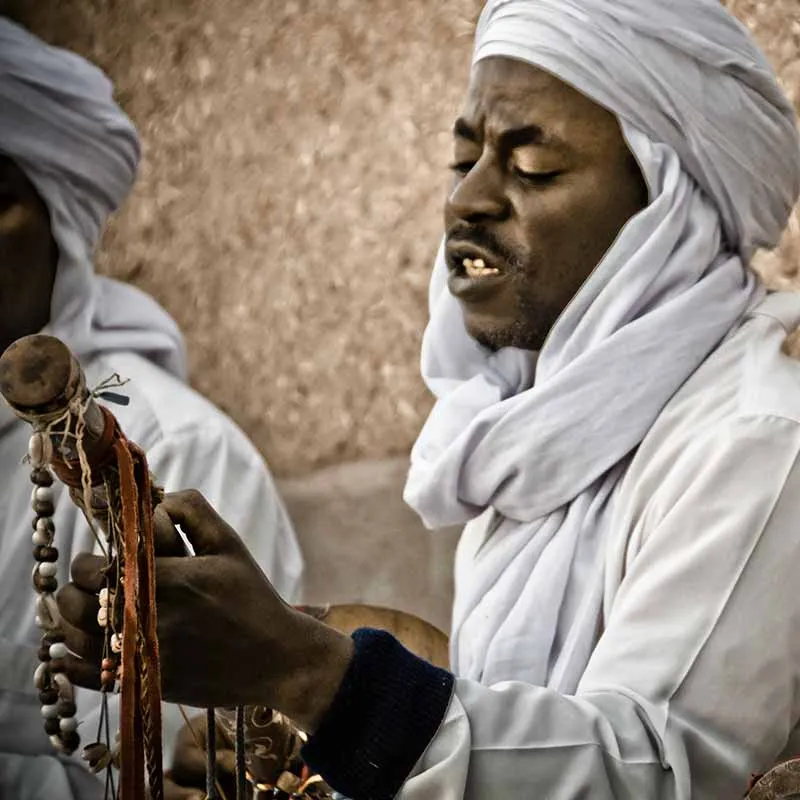
Khamlia lives to the rhythms of Gnawa music
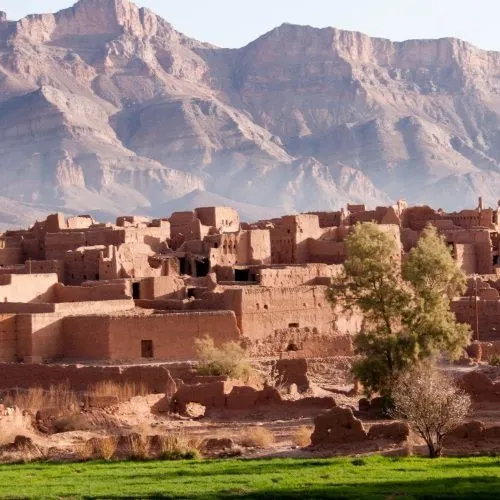
Khamlia is a land set between the massive sand dunes of Merzouga and the great arid expanse of the Sahara, with its modest houses built of earth. The faces of its inhabitants are striking. Amazigh-speaking women and men whose dark skin recalls their African origins. This Saharan village remains faithful to ancestral Gnawa music, the symbol of its identity.
Discover: M’Hamid El Ghizlane: gateway to the desert
The Sadaka, three days in memory of the ancestors
At the end of each agricultural season, beginning on the first Thursday of August and lasting for three days, a ceremony known as “Sdeqte n’isemkh”, or “alms of the Black community”, is held in Khamlia.
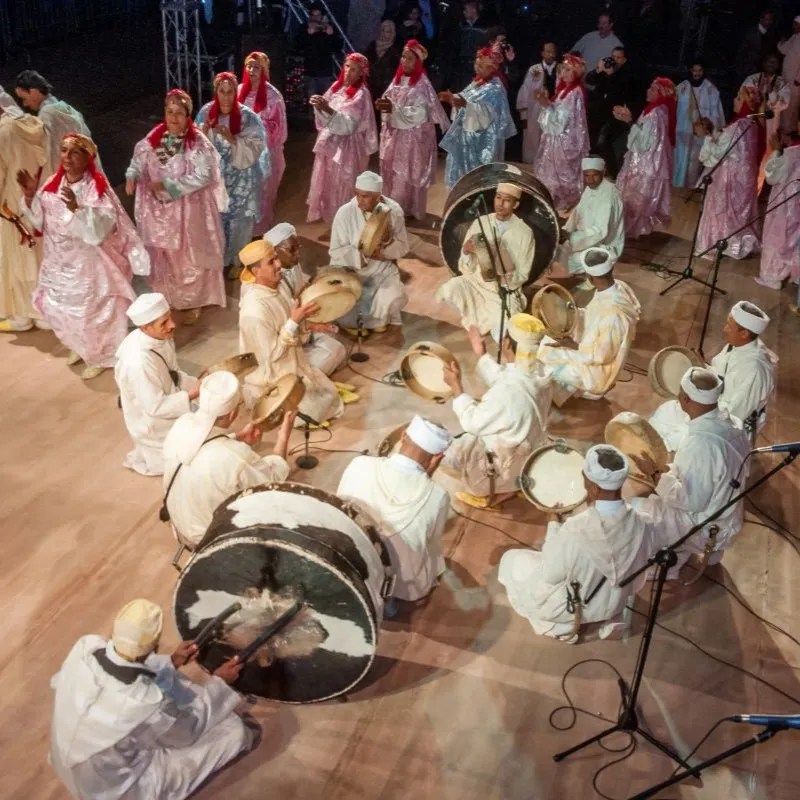
The inhabitants would go from door to door collecting offerings — sugar, flour, chickens, dates — which were used to feed all the guests attending the moussem. This annual celebration brought together members of the community from far and wide. Even today, the inhabitants of Khamlia perpetuate this ritual devoted to the memory of their ancestors. A ritual combining the religious, the mysterious, the spiritual and the festive, carried by the deep, powerful rhythms of Gnawa music.
Ethnographic research carried out since the publication of this article has helped to clarify the history of this celebration. The Sadaka is in fact thought to be older than Khamlia itself: it was once held in Taous, a few kilometres to the south, before being transferred to the village in 1956. Still organised over three days, it remains today the principal annual celebration of Khamlia’s Gnawa community.
Children, women and men thus vibrate every day to the rhythms of this music. Their costumes, their words and their gestures constantly evoke their attachment to this musical tradition, handed down from father to son.
Zayd and Mahjoubi, passing on Gnawa music
Oujâa Zayd is one of its figures. A child of Khamlia, deeply steeped in Gnawa music. From the age of 19, he spent time with Uncle Hda OuBlal, a local Gnawa scholar. The old veteran initiated Zayd into the practice of this musical tradition. After the death of Uncle Hda, an icon of the Khamlia community, his guimbri, the musical instrument typical of the Gnawa tradition, passed to Zayd, as the sign of a heritage that must be carried on.
The young Zayd then embarked on his adventure as a Gnawa musician. He created his own group, “Itbirne N’ Telkhikhte”, or “sand pigeons”. Now aged 44, he has a rich career as a Gnawa artist behind him. He hosts musical performances for tourists at his home. He has taken part in numerous international festivals: in Algeria, Spain, Germany and the Sultanate of Oman.
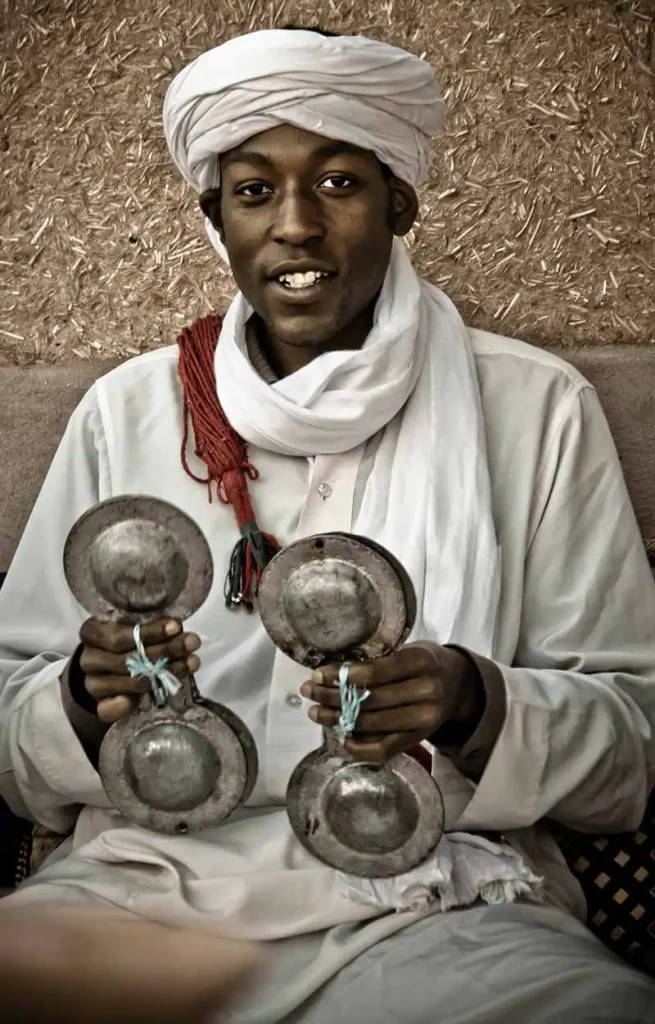
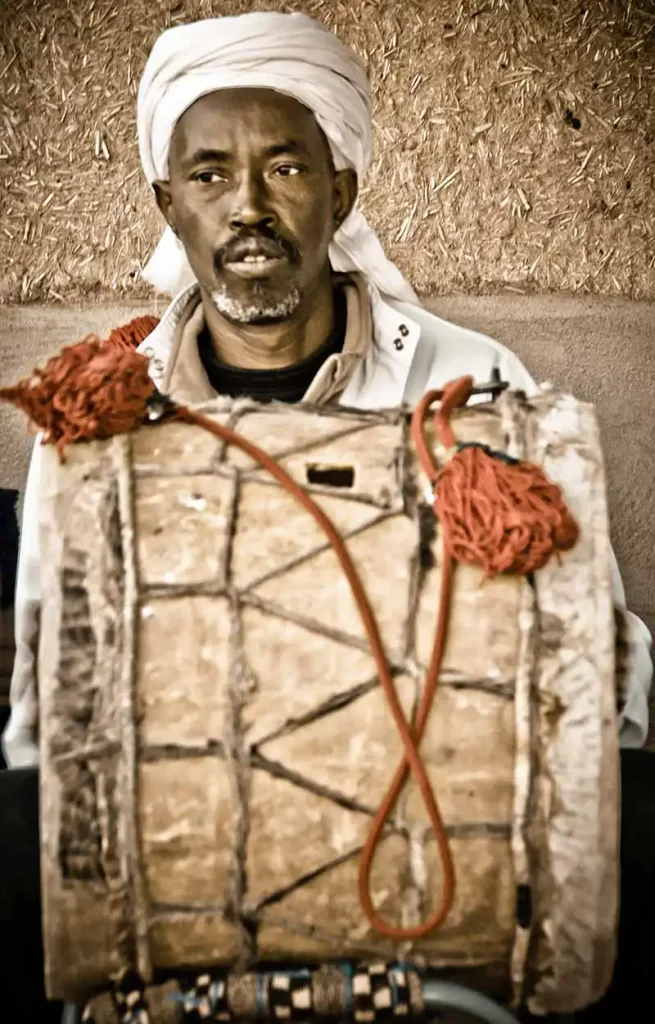
Hamad Mahjoubi, for his part, created “Dar Gnawa Khamlia”. Dozens of drums, metal castanets and posters of Gnawa musicians adorn his beautiful earthen house, which is also a venue for musical performances. Hamad became sensitive to Tagnaouite — Gnawa music in Amazigh — at the age of ten. Over the years, he succeeded in bringing together a group of Gnawa musicians, the “Bambara group”.
He has taken part in desert festivals in Morocco, Algeria and Dubai. His stays in several sub-Saharan African countries affected him deeply. He feels very close to their culture. For him, they undoubtedly share an identity rooted in a vast common territory. He sees in this the confirmation that the Gnawa of Khamlia are the living expression of this cultural intermingling.
A music of invocation and deliverance
The passage of time has not altered the authenticity of Gnawa music in Khamlia. The invocation of God, His Prophet and invisible spirits remains its principal theme. A tone, words, gestures and a rhythm specific to the Gnawa music of the desert:
“Ô âawnakh ya Rebbi!”
“O Lord! Come to our aid.”“Aah laâfou ya moulana! Aah laâfou Allah! Ya Rbbi Lâafou moulana…”
“Deliverance! O our Lord! Deliverance, O Allah Almighty!”“ayaah awahya waya awaya, farrej Moulana, a laâfou Yallah”
“Set us free, our Lord…”
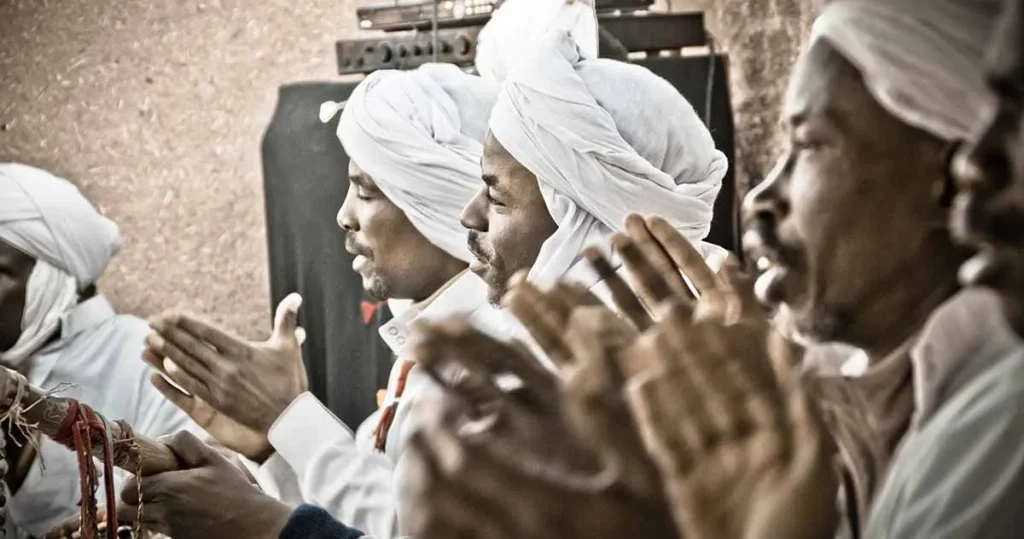
Zayd, Mahjoubi and their fellow musicians sing the collective history of a long march along paths of pain, alienation and nostalgia. A mystical and mythological music that transcends the boundaries of reality to free the body and soul of the Gnawa. A music invoking the powers and spirits that inhabit the invisible world, in search of protection and deliverance. All the Gnawa unite in collective emotion. They remain together in the movement, each keeping the rhythm, holding on as in the hard times of the past, in a hymn to emancipation and freedom.
Khamlia is the small Moroccan village of the Gnawa. A jewel illustrating the ethnic, artistic and historical intermingling of South-East Morocco, deeply rooted in its plural African identity.
Crédit Photographie : Abdellah Azizi
www.azifoto.com
Editorial note
A few weeks after this article was published, in December 2019, Gnawa was inscribed by UNESCO on the Representative List of the Intangible Cultural Heritage of Humanity. UNESCO thus recognises a body of musical, confraternal and ritual practices in which African legacies, Arab-Muslim influences and Amazigh traditions come together, deeply connected to the history of slavery and the movements between sub-Saharan Africa and Morocco.
Key points
- Khamlia, near Merzouga, carries a memory deeply connected to the ancient relations between South-East Morocco and sub-Saharan Africa.
- Gnawa music is one of the main markers of the village’s identity, passed down from generation to generation.
- The Sadaka, celebrated over three days, perpetuates the memory of the ancestors and combines spiritual, collective and festive dimensions.
- Since 2019, Gnawa has been inscribed by UNESCO on the Representative List of the Intangible Cultural Heritage of Humanity.

More to Explore

Leave a Reply