


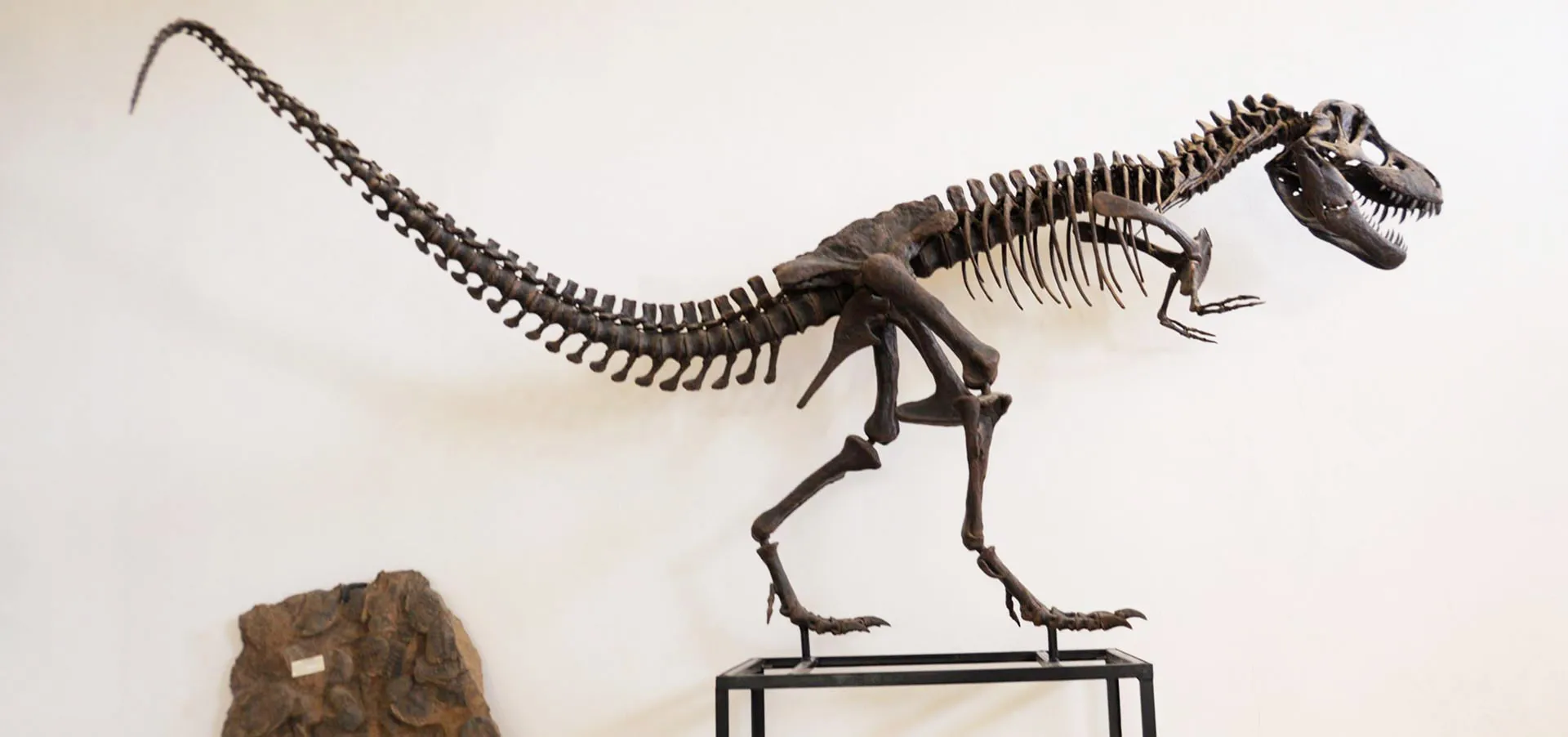
Brahim Tahiri, Erfoud’s self-taught fossil expert and his museum
Having started work at fossil sites around Erfoud at the age of fifteen, Brahim Tahiri turned his passion for fossils and minerals into a professional and cultural venture. His private museum, open to visitors and school groups, tells the story of an extraordinary journey, bringing together the geological treasures of south-eastern Morocco and the international scientific community.
From labourer to fossil expert
Along the way, he met a French professional from whom he learnt a great deal. Brahim further developed his knowledge of fossils and minerals through extensive reading and documentation. His curiosity and discipline proved invaluable in his journey as a self-taught specialist. He progressed from an ordinary labourer to a knowledgeable fossil expert, eventually acquiring considerable expertise in geological research.
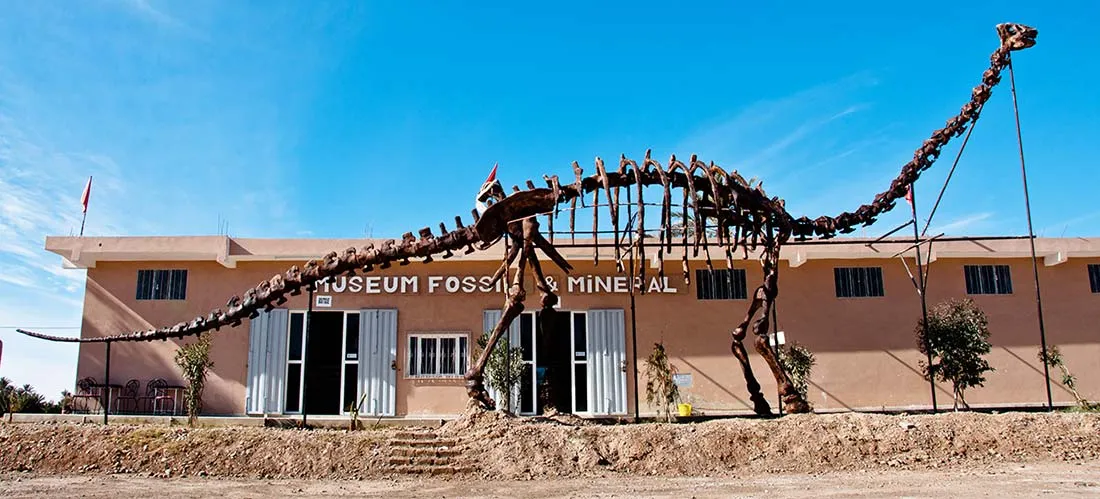
Brahim established his business using his own funds. He bought a plot of land where he set up his workshop and a museum. Dozens of workers were soon employed by him. His knowledge and experience continued to grow, alongside an impressive collection of rare fossils.
Brahim has taken part in exhibitions abroad, including Sainte-Marie-aux-Mines in France, Munich in Germany, and Tucson, Arizona, and Denver in the United States.
A museum dedicated to passing on a heritage
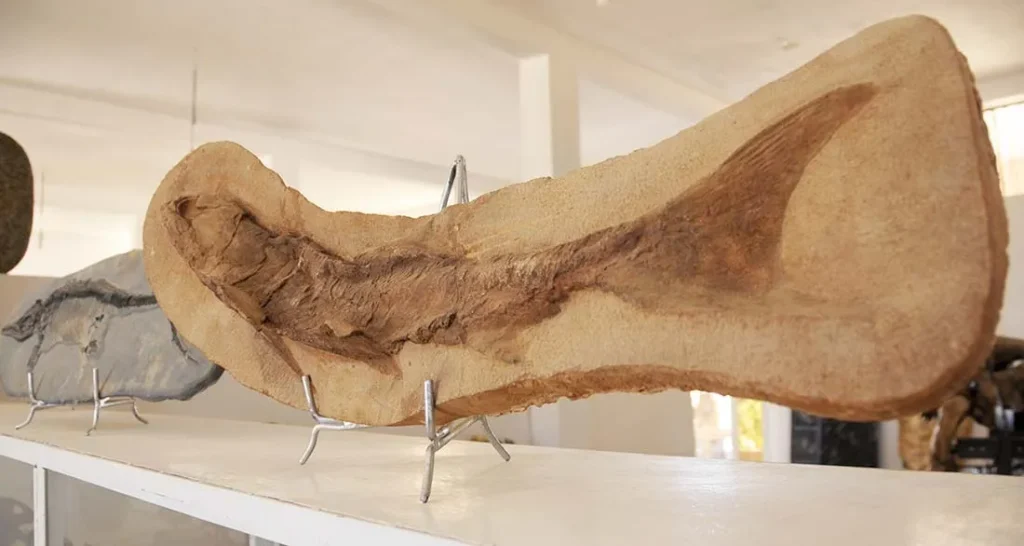
This professional success has been accompanied by a personal commitment to establishing a museum, the Museum of Fossils & Minerals, at Ksar Sifa, near Erfoud.
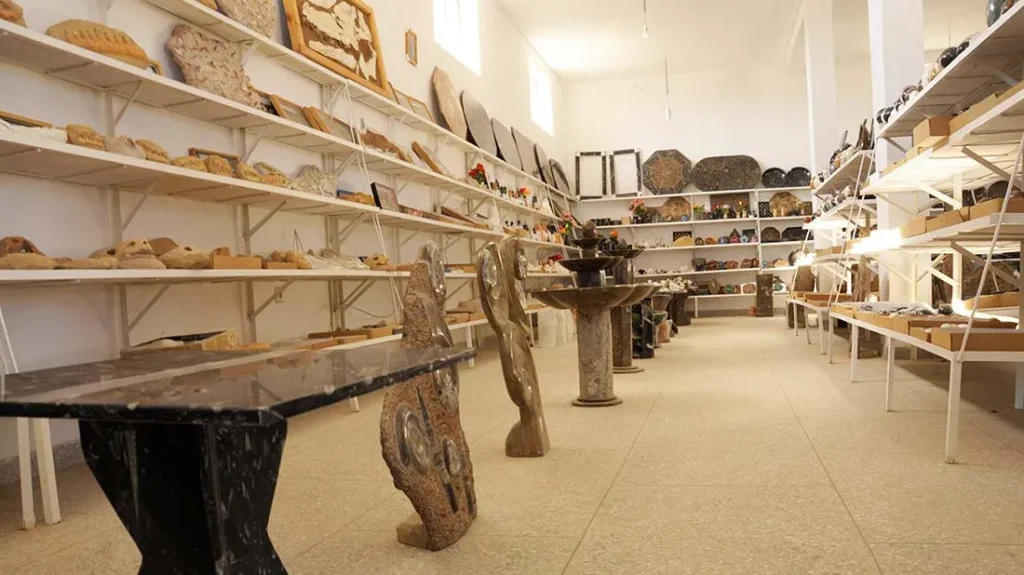
The museum displays remarkable fossil and mineral specimens, whose prices ranged, at the time of our original report, from 50 to 10,000 dirhams. Admission is free for all visitors, and the museum also welcomes school groups.
Brahim’s aim is to introduce children from the region to the world of fossils and minerals. His contacts with international professionals and his travels abroad have provided him with an education of their own.
Far from being motivated solely by financial gain, his ambition is to develop the artistic, cultural and heritage value of fossils. He hopes to make these treasures better known and accessible to a broad and diverse public, from all walks of life.
This has led him to consider how personal success might contribute to the development of his region. Training young people and making the most of the region’s fossil and mineral resources are, in his view, the main ways of achieving this goal.
A legitimate ambition for a man who started with nothing. A self-taught individual who continues to develop his knowledge, practical skills and language abilities, particularly in French and English.
Brahim Tahiri is simply nurturing what burns brightly within him. He continues along his path without losing sight of his original goal: to promote the cultural, artistic and heritage value of fossils and minerals.
The Tahiri museum: between a private collection and scientific recognition
Editor’s update — October 2026
Beyond the personal story told in 2012, Brahim Tahiri’s museum holds a distinctive place in the history of efforts to promote Morocco’s fossil heritage.
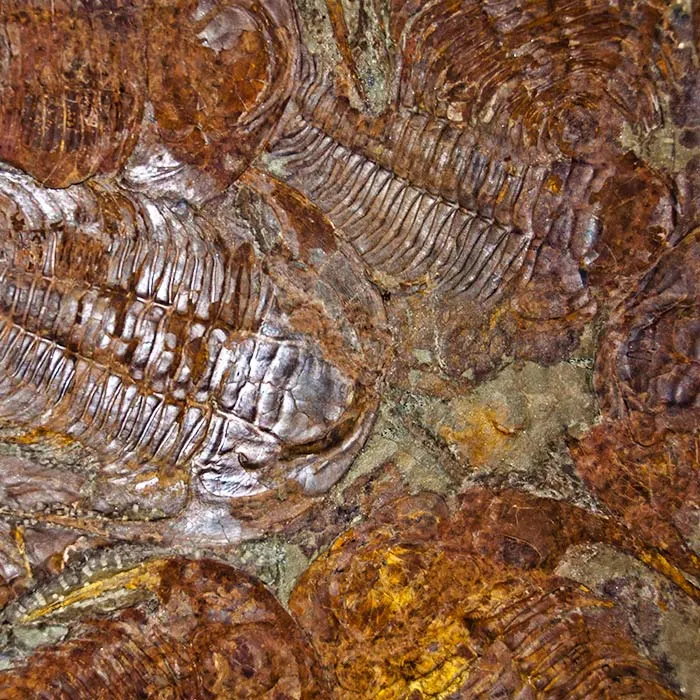
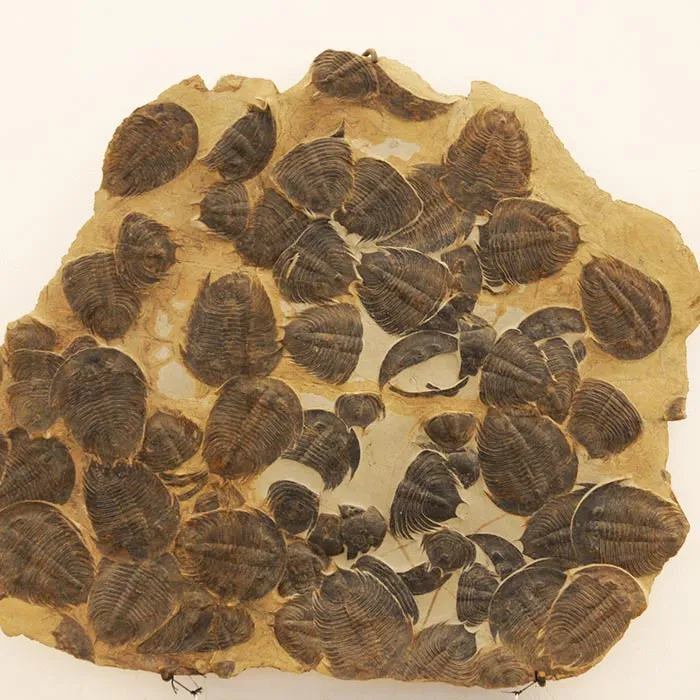
As early as 2009, the American magazine Saudi Aramco World featured his work in an article about Morocco’s trilobite economy. It highlighted his contribution to the understanding of Morocco’s palaeontological heritage. This recognition had led to two fossil species being named in his honour: a trilobite, Asteropyge tahiri, and another arthropod, Eoduslia brahimtahiri.
Even more remarkably, a scientific paper published in December 2012 in the journal Palaeontologia Africana described a previously unknown species of fossil bovid, named Skouraia helicoides.
Discovered in the Aït Kandoula Formation, near Skoura, east of Ouarzazate, this Late Miocene fossil consists of a skull bearing strongly spiralled horn cores. Its study has contributed to our understanding of the early evolution of caprines in Africa.
The researchers Denis Geraads, Siham El Boughabi and Samir Zouhri stated that the specimen they studied was, at the time, housed in Brahim Tahiri’s private museum in Erfoud.
They nevertheless pointed out the difficulties that can arise when a scientifically important reference specimen is held in a private collection. Although the fossil was accessible to researchers during their study, questions remained about its long-term preservation and availability for scientific research.
Further reading: Read the 2012 scientific paper.
In 2018, another study of the international fossil trade in the Anti-Atlas cited the Tahiri Museum’s workshop among the recognised centres of expertise in trilobite preparation. It also recalled that this activity provided a livelihood for several dozen people, including fossil hunters, preparators and museum staff.
A museum still welcoming visitors
In July 2026, a report by the Moroccan news outlet Al3omk confirmed that this venture was continuing. Situated on the road between Erfoud and Rissani, approximately eleven kilometres from Erfoud, the museum was still welcoming visitors free of charge and offering guided tours.
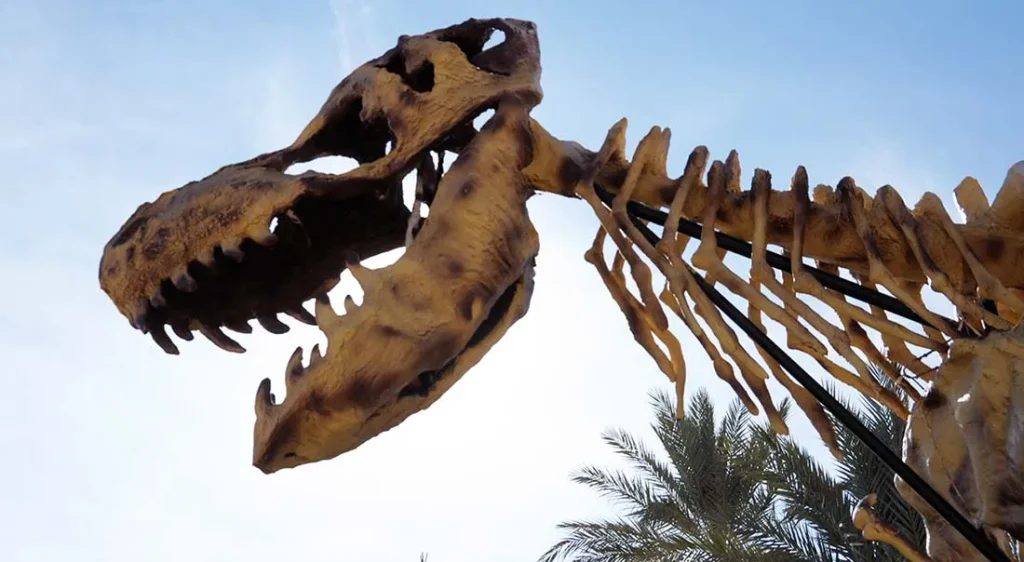
Its collections bring together fossils from different parts of Morocco, including trilobites, ammonites and dinosaur remains, alongside minerals and meteorites.
The museum therefore retains its dual purpose: to introduce visitors to hundreds of millions of years of Earth’s history and to showcase the skills developed through fossil hunting and preparation.
Brahim Tahiri’s initiative ultimately illustrates a distinctive aspect of south-eastern Morocco: in a region where fossils have become an economic resource, their discovery can also provide opportunities for learning, passing on knowledge and gaining recognition for an exceptional geological heritage.

More to Explore
Leave a Reply