


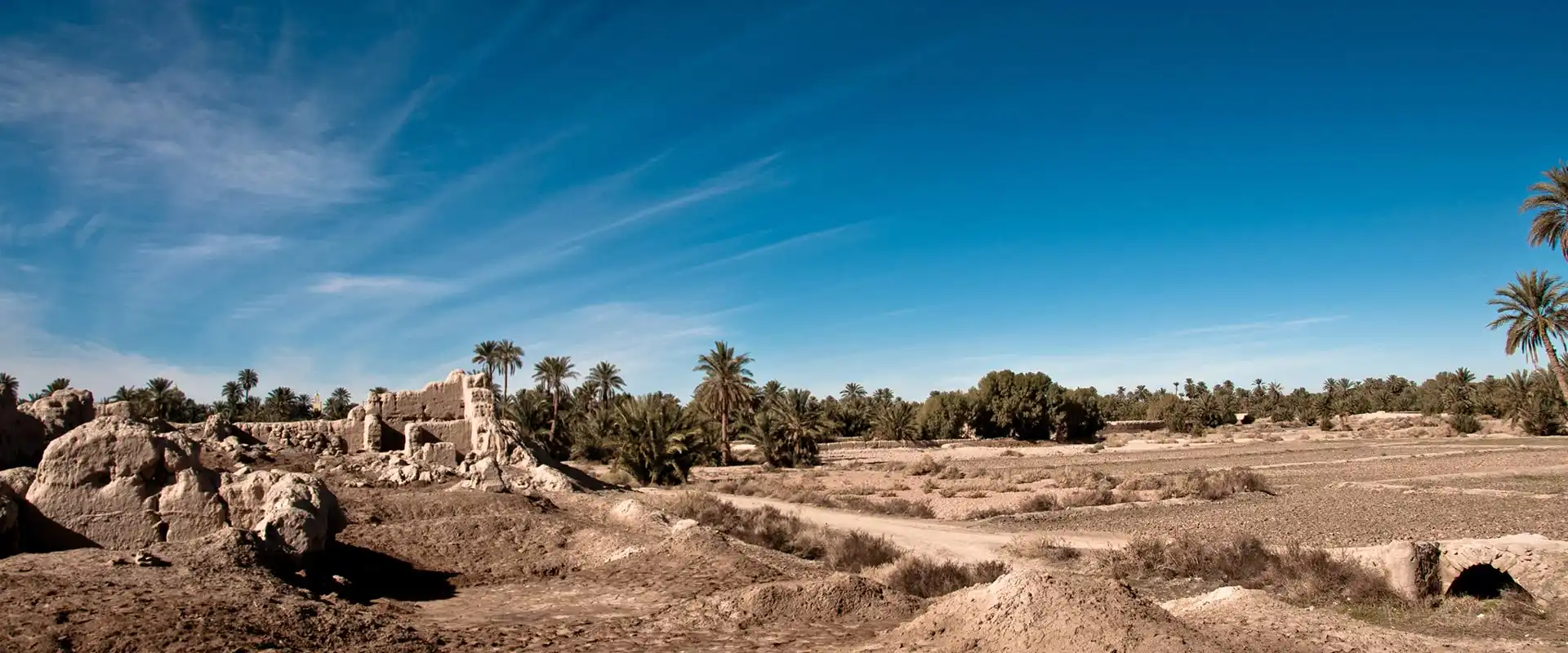
Sijilmassa, the mythical city that made the true heart of the Maghreb shine
Once upon a time, deep in South-East Morocco, at the edge of the Sahara, a city rose from the sands to become one of the most radiant metropolises of the medieval Islamic world. Founded in 757 by the Amazigh Zenata tribe on the fertile banks of the Ziz wadi, Sijilmassa reigned for six centuries as the undisputed queen of the trans-Saharan gold trade, a city of tolerance where Amazighs, Jews, Arabs and sub-Saharan Africans together built a civilisation of singular splendour. Then, in 1393, the city disappeared — swallowed by rivalries, the sands and oblivion. Today, the ruins near Rissani and the work of archaeologists are slowly giving it back its voice.
Overview
- Sijilmassa, between a spiritual centre and a land of political rivalry.
- Sijilmassa, the oasis city founded by the Amazigh Zenata tribe.
- A flourishing city steeped in tolerance and cosmopolitanism.
- Sijilmassa reborn: the extraordinary discoveries of 2024-2025.
- The enduring and radiant pride of its own past.
The city amazed the greatest travellers and inspired the writings of chroniclers dazzled by its fascinating charm. Above all, Sijilmassa aroused the covetousness of the various powers that succeeded one another at the head of Morocco, the Maghreb as a whole and the south of the Iberian Peninsula. Thanks to the city of Sijilmassa, the Tafilalet region was once a crossroads linking the whole of West Africa with the Mediterranean and eastern worlds. Today, the remains of Sijilmassa can be seen around the town of Rissani, in Errachidia Province, revealing only a tiny fragment of its extraordinary history.
Sijilmassa, between a spiritual centre and a land of political rivalry
The early years of Islam were marked by great turbulence caused by deep divisions within its communities. During the first century following the death of the Prophet Mohammed, the powerful Umayyad and Abbasid dynasties fought fiercely for control of political and religious power in the lands of Islam. And while it is now well known that two major currents, Sunni and Shia Islam, rapidly opposed one another over spiritual legitimacy and truth, a third ideological branch had already emerged during the reign of Caliph Ali, the fourth caliph, in a climate of tension and sedition and with the intention of escaping the dominant Islamic orthodoxy. This branch became known as Kharijism and was, in fact, one of the earliest major dissident movements within Islam.
The Umayyads, or Umayyad Caliphate, were an Arab dynasty of caliphs who ruled the Muslim world from 661 to 750.
The Abbasids were an Arab Muslim dynasty that ruled the Abbasid Caliphate from 750 to 1258.
The followers of Kharijism soon began to leave the East, fleeing persecution under successive Umayyad and later Abbasid authorities. Their spiritual leaders then scattered across the Maghreb, which they reached from the beginning of the eighth century by following existing trade routes.
The Amazigh tribes of the Saharan regions of the Maghreb proved receptive to this new spiritual ideology brought and preached by Kharijite refugees from the East. The Amazighs of the Tafilalet region, in turn, rallied around these Kharijite leaders and adopted Kharijism, more precisely one of its branches, known as Sufri Kharijism, which distinguished itself through a more moderate vision of Islam when compared with other, more radical currents.
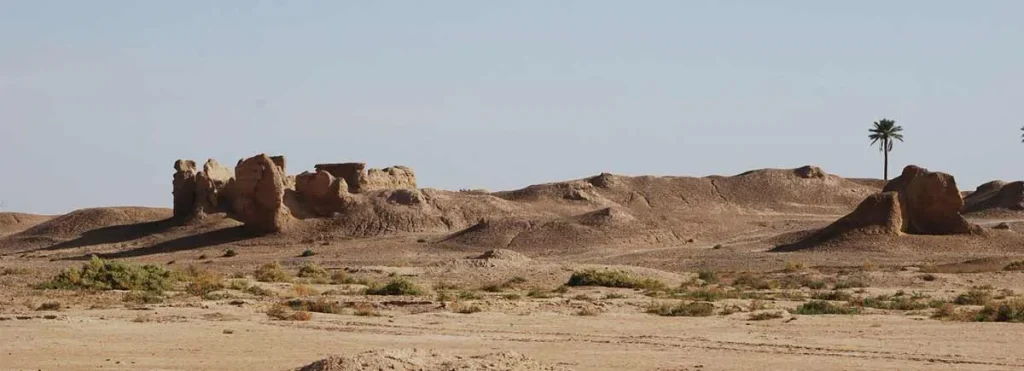
Sijilmassa, the oasis city founded by the Amazigh Zenata tribe
As the Maghreb gradually came under the domination of the armies of the Umayyad Caliphate based in Damascus, the Tafilalet region became a refuge for Arab dissidents whose spirit found common ground with that of the rebellious Amazigh tribes fighting the conquering central power.
It was under these circumstances that the city of Sijilmassa was born, around 757-758, on the eastern edge of the desert, beside the Ziz valley. The city was founded by the Amazigh tribe known as the Zenata, followers of the Sufri Kharijite rite, under the authority of their first leader, Semgou Ibn Wassoul Al Miknassi.
Originally, this man was a shepherd living in Tafilalet who professed the beliefs of Sufri Kharijism.
The city of Sijilmassa was first ruled by Aïssa Ben Yazid El-Aswad, a name meaning literally ‘Aïssa, son of Yazid the Black’, of the Beni Midrar. He too followed Sufri Kharijism and derived his name from his Zenata Amazigh father and his Black mother of sub-Saharan origin. His reign lasted fifteen years, until the population rose against him and forcibly took him to the summit of a mountain, where he was abandoned and died.
Semgou Ibn Wassoul succeeded him. He is regarded as the true founder of the city of Sijilmassa, its charismatic spiritual guide and its great military leader.
The Zenata — Iznaten or Iznasen in Amazigh — are a group of Amazigh tribes who in antiquity inhabited a vast area extending from western Egypt to Morocco, alongside the Sanhaja and Masmuda. Their way of life was mainly nomadic or semi-nomadic. They were at the origin of several dynasties in the Maghreb, including the Marinids, Zayyanids, Ifrenids and Wattasids.
It should not be forgotten that the growing strength of Kharijism in the Maghreb contributed to the great Amazigh revolt of 739-743 against the Arab Umayyad governors throughout the region. It was this context that favoured the rise of Sijilmassa and its development as the capital of a genuinely independent state, the Kharijite emirate, under the authority of the Midrarids, also known as the Wassoulites, who formed the first dynasty of Sijilmassa.
After the city of Kairouan, founded in present-day Tunisia in 670, Sijilmassa, then known as ‘the oasis city’, was the second great city to emerge in the Maghreb from the impulse created by the arrival of the new Muslim populations and their encounter with peoples already present.
Inevitably, Sijilmassa soon became an object of covetousness for successive dynasties competing for power in the Maghreb. It was fought over by major expansionist powers, notably the Almoravids from the eleventh century onwards, followed by the Almohads and Marinids.
Their ambitions were fuelled by its wealth and by its strategic position at the crossroads of the trans-Saharan caravan routes: the route linking Sijilmassa to Aoudaghost, or Awdaghust, situated in south-eastern Mauritania and then the capital of another Amazigh kingdom founded in the ninth century; the route linking Sijilmassa to Awlil, a salt mine in the western region one day’s journey from Aoudaghost; the route from Sijilmassa to Ghana; and finally the track linking Sijilmassa to Tekrour, in the regions of present-day Senegal and Guinea.
The armies of the Almoravid dynasty, a rigorous Islamic movement, were the first to conquer Sijilmassa, in 1055. They brought an end to Kharijism and reintroduced the Muslim orthodoxy of the Maliki school. Sijilmassa then became their base for the conquest of the North.
The great movements of history continued, however, and the Marinid dynasty conquered Tafilalet in 1257 before officially taking Sijilmassa in 1274. This invasion marked the beginning of the city’s decline: it permanently lost its status as an independent city and witnessed the slow dissolution of its previously unified political system.
The population of Sijilmassa settled in ksour — fortified villages — scattered across the territory of Tafilalet, each governed by a local lord.
The unified medieval city was largely ruined and fragmented after the crisis of 1393, and its population dispersed among the ksour of Tafilalet.
Yet Sijilmassa did not simply vanish: occupation continued in different forms, as the recent discovery of an Alaouite residential quarter within the ancient walls has now confirmed.
Over time, however, the name Sijilmassa gradually gave way to that of Tafilalet.
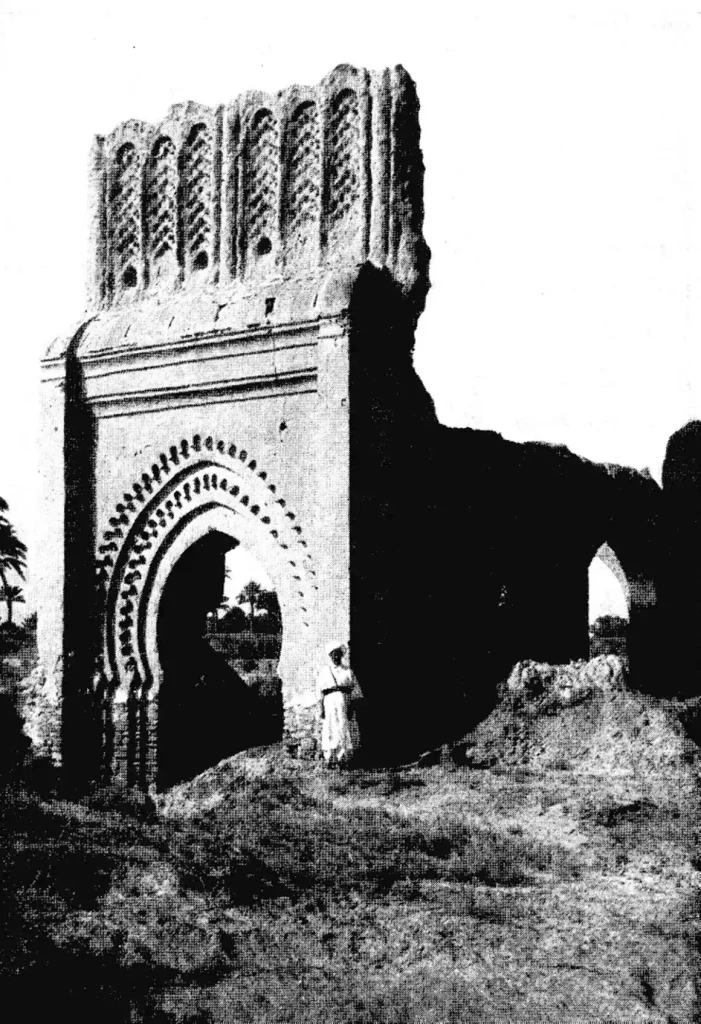
A flourishing city steeped in tolerance and cosmopolitanism
Sijilmassa stood on the banks of the Ziz wadi in a plain of Tafilalet. In its early years it was a vigorous religious centre and exerted a fascination over populations of different ethnic origins living in the surrounding territories, regardless of their faith.
Amazighs, Jews, Arabs, sub-Saharan Africans and Andalusi exiles were all drawn to Sijilmassa over the years by conditions of tolerance favourable to constructive coexistence.
In this way, the city and its plural community succeeded in transforming what had been a desert territory into a flourishing garden. Farmers, caravanners, merchants and craftsmen brought together their knowledge and skills to build a commercial oasis city that prospered from its foundation until the fourteenth century — for almost six hundred years.
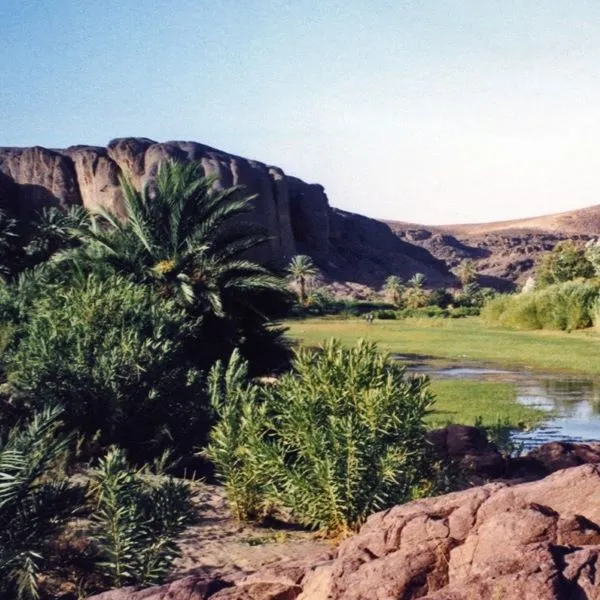
Tafilalet — ⵜⴰⴼⵉⵍⴰⵍⵜ, Tafilalt, in Amazigh — is a historic region in South-East Morocco comprising a group of oases in the lower valleys of the Ziz and Gheris wadis, whose principal towns are Erfoud and Rissani. A main gateway to the Sahara and a place of exchange between North and far South, between the Maghreb and the Sudan, the region was an important centre of trans-Saharan trade for many centuries.
Sijilmassa was above all a transit point and the principal gateway to the desert for trans-Saharan trade.
The caravans crossing the Sahara passed through and stopped in this bustling commercial city that connected Morocco with the Bilad al-Sudan, the ‘land of the Blacks’. Long processions of caravans crossed the desert through Sijilmassa. A single merchant, accompanied by guides and guards, might lead a caravan of sixty to eighty camels laden with different products: gold, salt, enslaved Black people, ivory, ambergris, gum, shields, dates, wheat, raisins, iron utensils, silver jewellery, ceremonial clothing, perfumes…
Alongside its role as a commercial crossroads for trans-Saharan trade, Sijilmassa also controlled the minting of currency.
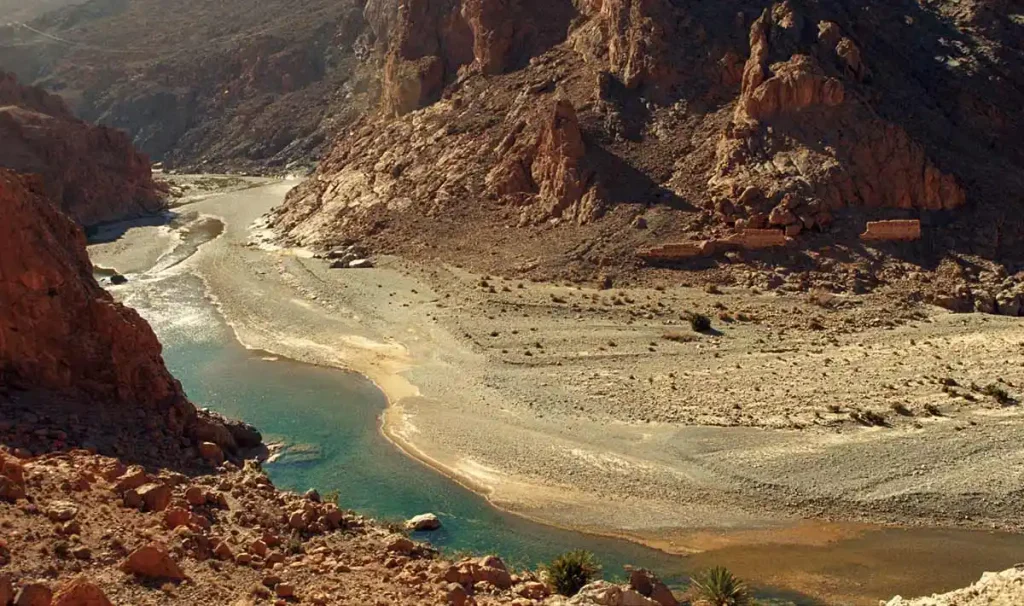
The abundance of water supplied by the Ziz and Gheris rivers, the richness of the water table, the legendary Timedrine spring renowned for its abundance, and the construction of a sophisticated irrigation system encouraged the development of agriculture in Sijilmassa, surrounded by a fortified oasis.
Many crops were grown there, including highly prized varieties of dates, wheat, millet, maize and cotton, as well as pomegranates and vines…
Gardens and palm trees stretched as far as the eye could see across the city. This agricultural prosperity made Sijilmassa an oasis of delights, wonderfully described by the Arab chronicler al-Idrisi:
‘Sijilmassa is surrounded by vegetation and gardens; its site and surroundings are magnificent […] The harvests are abundant, and the crops grow without any need to sow.’
The population of Sijilmassa consisted of Amazighs, primarily the Zenata who had founded the city, but also tribes belonging to the Sanhaja and Masmuda groups.
Jewish populations provided many of its scholars, merchants and craftsmen. Through their experience, they played an important role in the silver mines and the gold trade.
There were, naturally, Arab populations who had arrived during the movements of Islamic conquest across the Maghreb.
Sub-Saharan Africans also lived in the city, some having arrived through the caravan trade in circumstances ranging from free migration to servitude and slavery. The history and origins of the Haratine communities of Tafilalet are considerably more complex and cannot be reduced to descent from enslaved populations; over the centuries, they came to play an essential role in the agricultural life of the oases.
Merchants from Basra and Kufa in Iraq also settled in the city, alongside many other foreigners.
Sijilmassa was, in fact, a space of cosmopolitanism and tolerance that allowed a rich intermingling of peoples, and this was one of the principal keys to its influence.
The economic rise of the city brought prosperity to both its rulers and its population. Its merchants enjoyed a level of wealth almost unrivalled in the Muslim world, and its inhabitants were considered among the most prosperous.
Its great market, known as Ben Akla, was renowned for its function as a customs post, a terminus for caravans, a central place of commercial exchange and, inevitably, a place where taxes were collected.
The market was managed by a tribe known as the Aït Kabbour.
From this nerve centre, imports arriving from every direction were organised. From the Bilad al-Sudan in the south came gold, enslaved people, ivory, ebony, salt, ostrich feathers and animal skins. From the Souss and Awlil in the west came brass, ambergris and salt. Merchants from the Maghreb brought manufactured goods including textiles, leather, ceramics, ironwork, glassware and books.
The merchants of Sijilmassa themselves specialised in ceramics, leatherwork, dates, wine and coinage…
Sijilmassa was one of the great populated cities of the Maghreb, surrounded by a wall pierced by twelve gates. Crossing the city required more than half a day on foot: it stretched for around eight kilometres in length and two kilometres in width.
Its refined urban planning also reflected the magnificence of Sijilmassa.
Enchanting gardens embellished the city. Water flowed abundantly through beautiful fountains, while great wheels raised water from the Ziz wadi. It ran through skilfully constructed canals crossing the whole city, feeding green gardens and orchards filled with date palms and vines around its outskirts.
Numerous buildings displayed the beauty of the city.
Dar Al Imara, the ‘house of government’, stood within the city walls. It was an elite residence worthy of the rulers of Sijilmassa, its walls decorated with geometric patterns painted in black on white backgrounds and carved in stucco, together with painted Quranic inscriptions.
Later accounts describe hundreds of fortified settlements across the wider Tafilalet oasis — the ‘castles’ mentioned by Leo Africanus, probably referring to ksour — alongside mosques, hammams, madrasas and other important buildings.
Four gates in the oasis of Sijilmassa indicated the direction of the main trading routes: Bab Fez, the Gate of Fez; Bab Sharq, the Eastern Gate; Bab Sahel, the Gate of the Sahel; and Bab Gharb, the Western Gate.
Read also: Tifinagh: from stone to digital, the living alphabet of the Amazigh world
Sijilmassa reborn: the extraordinary discoveries of 2024-2025
For decades, Sijilmassa remained more of an archaeological promise than an explored reality.
That changed between 2024 and 2025, when Morocco’s National Institute of Archaeology and Heritage Sciences — INSAP — launched the most ambitious excavation campaign the site had ever known: the first to be conducted entirely by a Moroccan team, making extensive use of drones, high-resolution aerial surveys and 3D imaging technologies.
The results exceeded all expectations and are reshaping our understanding of Morocco’s history.
Beneath almost nine thousand square metres of excavated urban fabric, archaeologists uncovered the foundations of a mosque covering more than 2,600 square metres and capable of accommodating around 2,600 worshippers.
Stratigraphic analysis dates its earliest phases to the eighth century, making it the oldest mosque ever identified on Moroccan soil, more than a century earlier than the celebrated Al-Qarawiyyin in Fez.
Fragments of carved plaster from the Midrarid period — eighth to tenth centuries — decorated with geometric, vegetal and epigraphic motifs, emerged as the earliest known examples of Islamic decorative art in Morocco.
But the discovery that set the archaeological world alight is smaller and more intimate: a ceramic mould shaped like a honeycomb, whose cavities still preserve traces of gold.
It is the mould once used to cast the blanks for Sijilmassa’s legendary gold dinars — the first such discovery in Morocco and only the second in Africa, after Tadmekka in Mali.
The abstract idea of Sijilmassa as a power that minted gold coinage had suddenly acquired a tangible, golden face.
The excavations also uncovered an entire residential quarter from the Alaouite period, dating from the seventeenth and eighteenth centuries, providing the first material evidence of an organised presence of the dynasty within the ancient walls — a discovery that extends the known occupation of Sijilmassa by several centuries beyond what had previously been documented.
The ruins of Sijilmassa are no longer merely the echo of a vanished world.
Once again, they are an open book.
The enduring and radiant pride of its own past
Sijilmassa was therefore a vibrant, inspiring and flourishing city.
It possessed a mysterious attraction that drew mystics, warriors, travellers, scholars, merchants and nomads with equal force.
The decline of the mythical city was unfortunately brutal and brought to an end the spirit of cosmopolitanism that had prevailed there.
The city of Sijilmassa lies for ever buried beneath rubble and oblivion.
Its enigmatic history has inspired numerous legends, created in the popular imagination to keep alive the memory of a flourishing and radiant city of South-East Morocco where people once lived well together, where each person brought their difference, their experience and their singularity to the construction of a common endeavour, prosperous for all and fully open to the outside world.
Sijilmassa was the pioneering city of a plural and fraternal world, a world that has disappeared for ever but which should remain, for the Moroccan people — themselves plural — and for the Moroccan nation, a lasting and radiant source of pride: the pride owed to such a glorious past.
Key points
- 757 AD — Sijilmassa is founded by the Amazigh Zenata tribe on the banks of the Ziz wadi, becoming the second great city to emerge in the Maghreb after Kairouan.
- Six centuries of influence — From its foundation until 1393, Sijilmassa controlled the trans-Saharan gold trade, linking West Africa with the Mediterranean and eastern worlds.
- A city of tolerance — Amazighs, Jews, Arabs, Andalusis and sub-Saharan Africans lived side by side within its walls, making cosmopolitanism one of the driving forces behind its prosperity.
- Eight kilometres long and twelve gates — Sijilmassa was one of the great metropolises of the medieval Islamic world, requiring more than half a day to cross on foot.
- 1393 — The city finally falls, its name disappearing from collective memory by the seventeenth century and being replaced by the designation Tafilalet.
- 2024-2025 — Moroccan archaeologists uncover the oldest mosque ever discovered on Moroccan soil, dating from the eighth century; a mould for casting gold coin blanks that still preserves traces of Sijilmassa’s legendary dinars; and the first evidence of Alaouite occupation within the ancient walls.
Our view
In our view, Sijilmassa is the most underrated historic site in Morocco — and perhaps in the whole of the Maghreb.
While Fez, Marrakesh and Volubilis attract millions of visitors each year, the ruins near Rissani receive only a tiny fraction of the attention their extraordinary history deserves.
The excavations of 2024-2025 offer a rare opportunity: to rediscover, almost in real time, a city that once linked sub-Saharan Africa with the Mediterranean world and helped shape the destiny of an entire region.
For anyone travelling through South-East Morocco, a detour to the site is not optional — it is essential.
Sources
- Sijilmassa: The Rise and Fall of a Walled Oasis in Medieval Morocco, Dale R. Lightfoot and James A. Miller.
- The Last Civilized Place: Sijilmasa and its Saharan Destiny, Ronald A. Messier and James Andrew Miller.
- Sur l’architecture du Tafilalt et de Sijilmassa (Maroc Saharien), Jacques Meunié.

More to Explore

Leave a Reply