


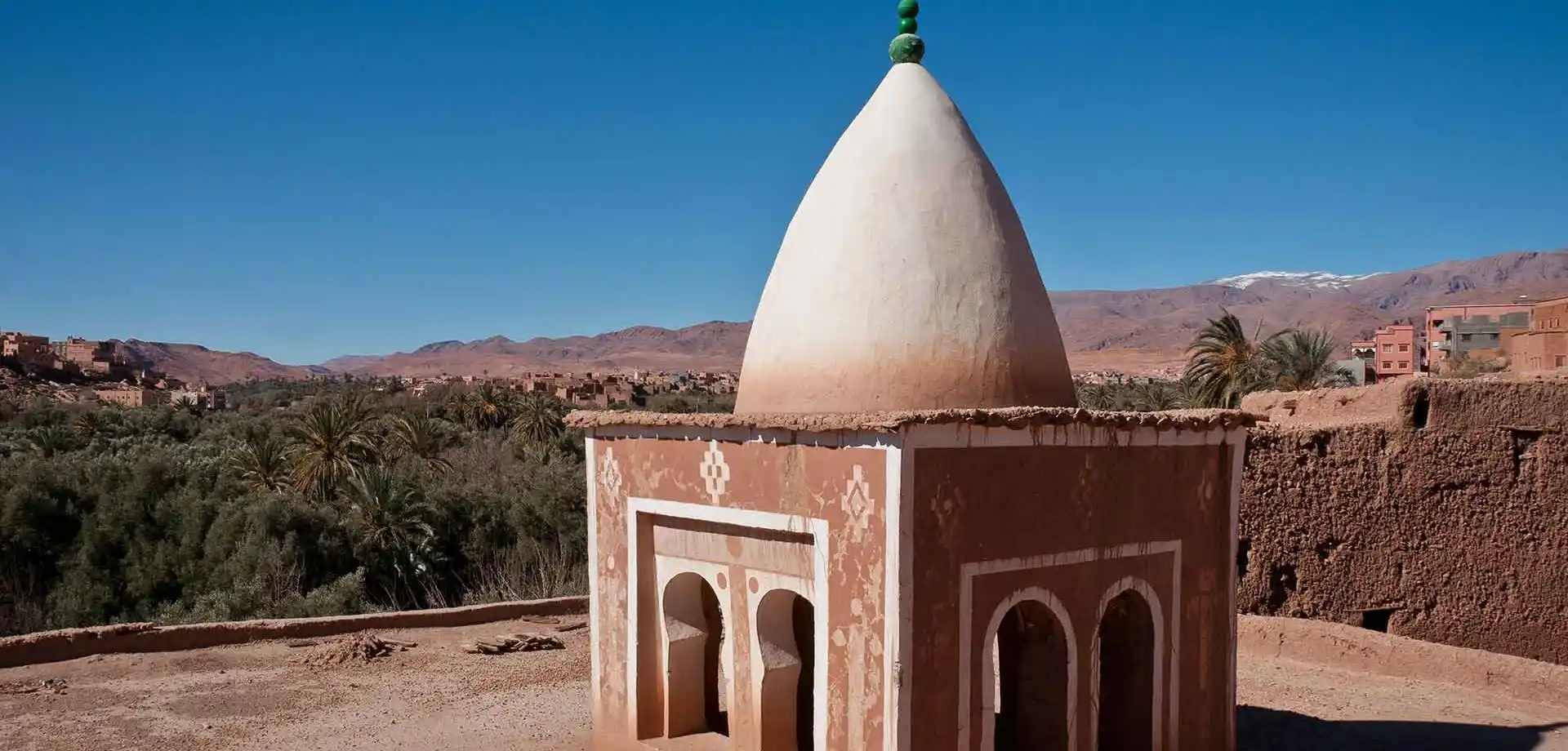
Near Tinghir, the old Afanour mosque brings together beauty and history
In the ksar of Afanour, near Tinghir, the old Ikelane mosque-madrasa served as a place of prayer, learning and community life. In 2013, Abdeljalil Didi met Aaddi Aqbli there, a former miner who had become the guardian of a building to which his entire personal history is bound. Since then, restoration work and destruction alike have served as reminders of the fragility of this earthen heritage.
A mosque-madrasa at the heart of the ksar of Afanour
The old Afanour mosque fulfilled religious, educational and social roles at the same time. Young students arriving from other areas were accommodated on site, while the villagers gathered there for communal prayer.
This combination of a place of worship and a place of learning belongs to a broader tradition found in the rural mosques of southern Morocco. Alongside the prayer hall there could be a msid, or Quranic school, spaces for ablutions and, in some cases, rooms for the accommodation of the fqih or students. The mosque was thus an integral part of the village’s religious and social life.
At Ikelane, the complex is thought to have continued to function as a school until the 1970s and as a mosque until 1998. It welcomed children from the village as well as students from more distant settlements who came to deepen their knowledge of the Quran.
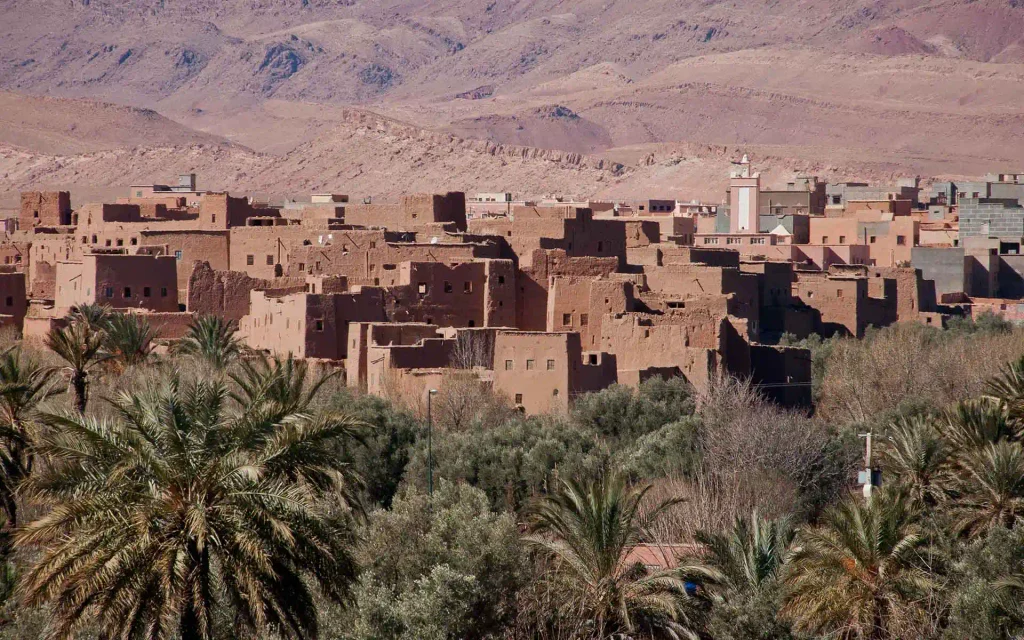
Earthen architecture designed for prayer and learning
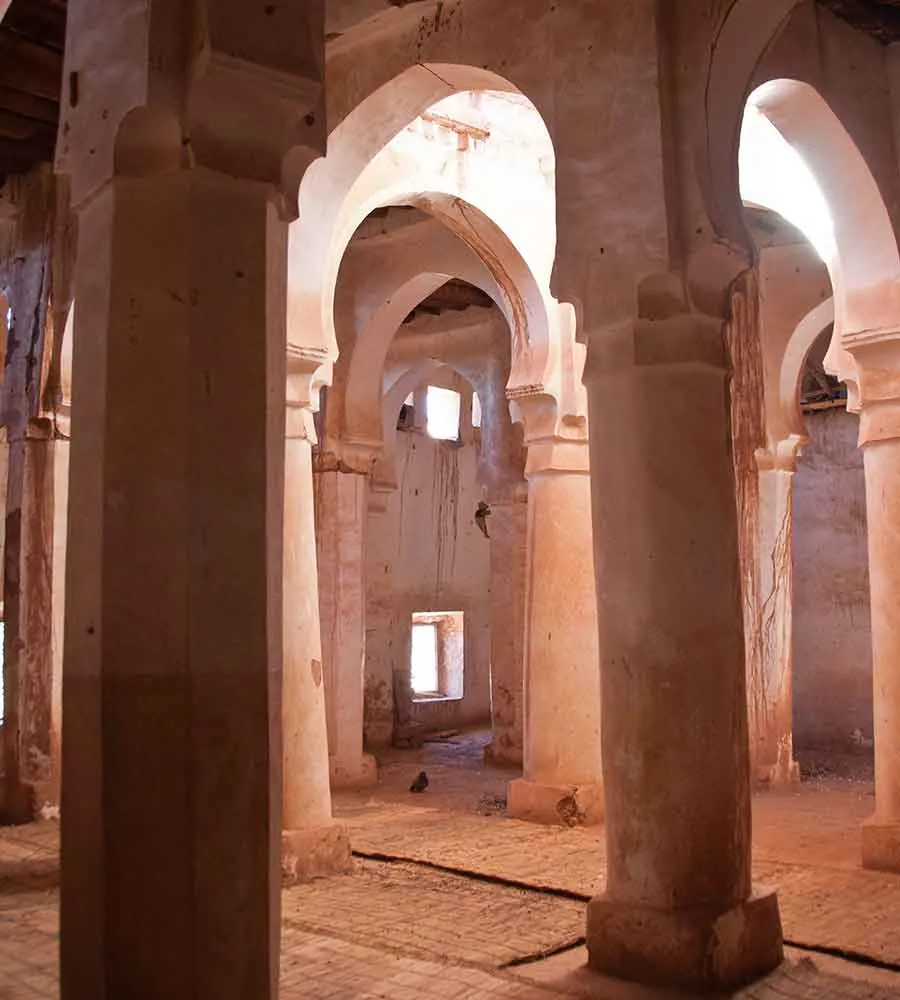
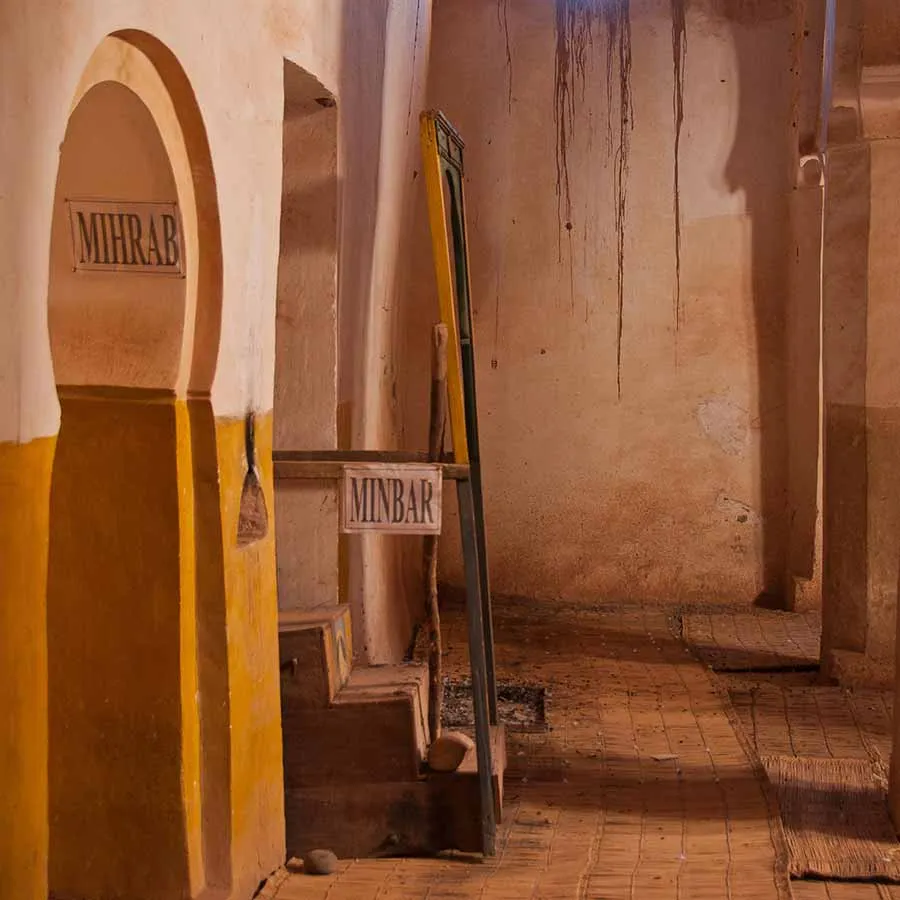
The old Afanour mosque is also distinguished by an architecture that reflects its many functions. Inside, the spaces are carefully organised: a prayer hall, classroom, wood store, boiler, areas for major and minor ablutions, and students’ dormitories. Everything was arranged to provide suitable conditions for the students who lived and studied there.
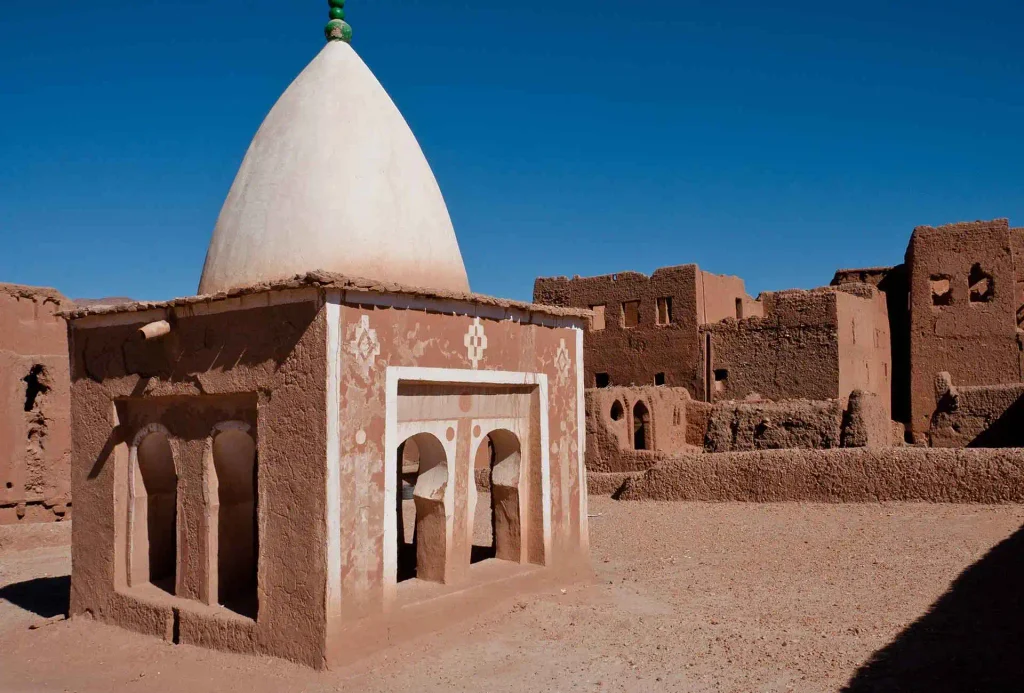
The building itself follows the fabric of the ksar closely: one part is built on a cliff, while another extends above an alleyway. In the prayer hall, twenty-four pillars of plastered earthen brick support a roof made in part from oleander stems, once coloured with henna and kohl. A central opening, surmounted by a small domed lantern pierced with windows, provided light and ventilation.
The terrace also had several functions: lessons were held there, and the muezzin could use it to call the faithful to prayer. The absence of a minaret is not unusual in the old rural mosques of southern Morocco, where the small size of villages meant that the call to prayer could be made from a rooftop terrace.
Aaddi, the living memory of the mosque
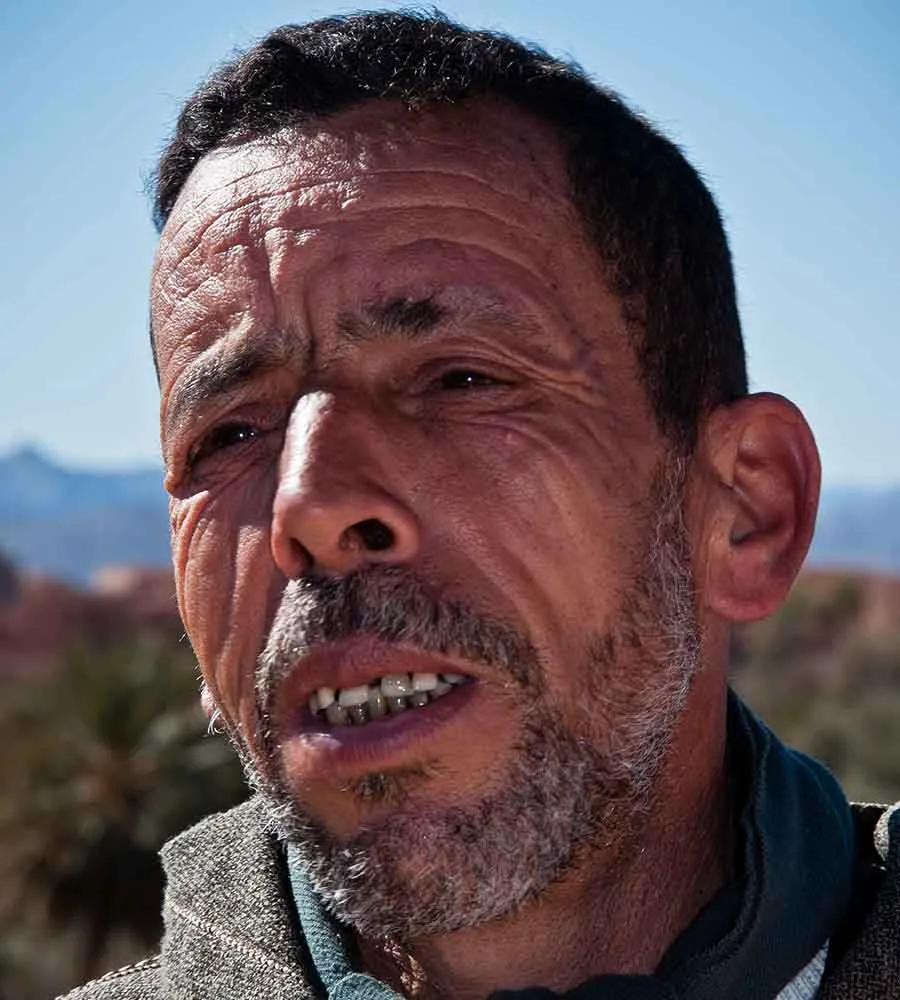
Mr Aaddi Aqbli still carries some memories of it. Born in the region and a former underground miner, he grew up in a house adjoining the Afanour mosque. For him, the village and the mosque share a common history. When the inhabitants of Ikllalen began to leave their village, the Afanour mosque gradually became little more than a memory. Yet Aaddi’s relationship with the mosque goes far beyond that of an ordinary neighbour. It is bound up with his entire childhood.
“When I was a child, there were still fifteen students living and studying in this mosque. It was full of life. There was an atmosphere in which spirituality, sharing and joy came together. In short, that was life in Afanour in those days.”
Aaddi Aqbli
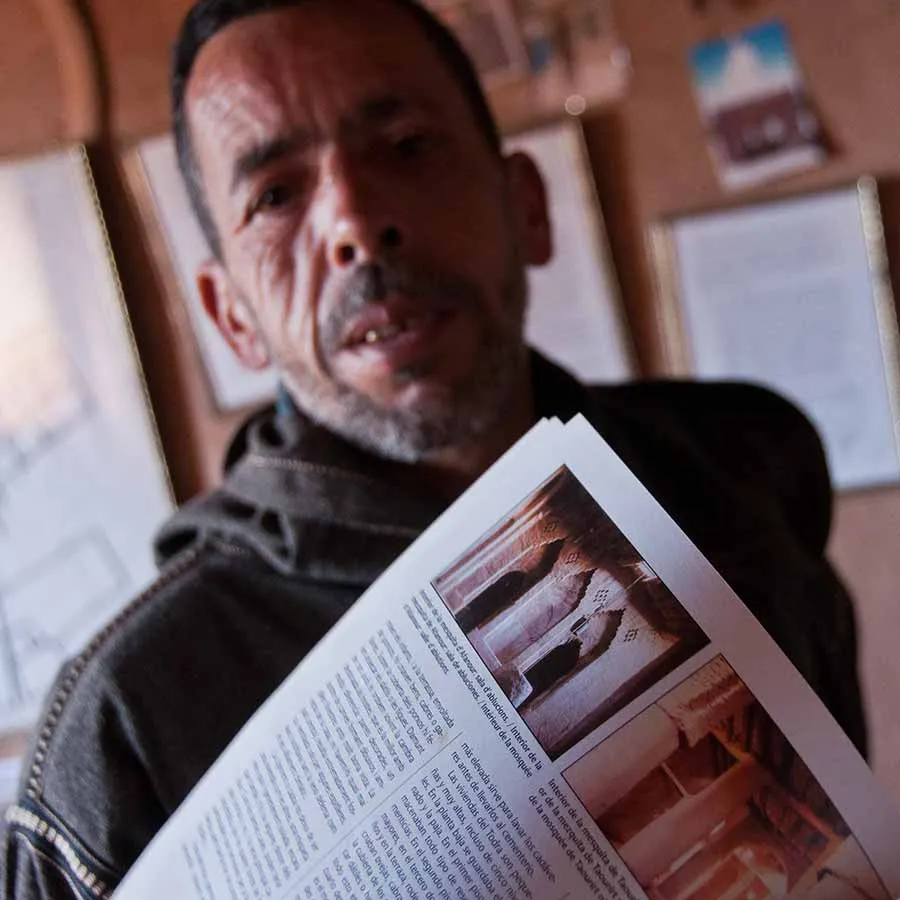
After seventeen years working in the mine, he decided to look after the mosque as it began to deteriorate. It is a passion rather than a simple pastime: the pleasure of reliving and restoring part of the history of his community. Aaddi used his skills as a mason to help rehabilitate the building, part of which had fallen into ruin.
He comes to this place every day, acting at once as host, guide and guardian.
“It is here, and nowhere else, that I feel at home. I am aware of its value because we belong to one another.”
Aaddi Aqbli
Yet he deplores the acts of vandalism committed against the mosque, where everything has been damaged or stolen: doors, windows, copper buckets, decorative pieces…
What surprises him even more is the neglect of such a heritage site.
Restoring a fragile heritage
The preservation of the mosque-madrasa has not depended on Aaddi alone. As early as 2005, the Afanour Development Association began raising funds to restore the building. After heavy rainfall in December 2006 caused a wall and part of the roof of the ablutions room to collapse, an initial reconstruction campaign began in 2007, supported in particular by private donations.
In 2014, a year after this text was first published, Aaddi was still directly involved in the work. Together with two labourers, he rebuilt three pillars that had become unstable, followed by the terrace and entrance they supported. The façade was then restored using the traditional materials of the site: earth and straw. The work was completed during the summer of 2014.
This restoration also illustrates one of the major challenges facing the earthen heritage of southern Morocco. Such buildings can survive for centuries provided they are regularly maintained, but they quickly become vulnerable when roofs, renders and water drainage are no longer properly monitored.
The fire of March 2026
During the night of 28 to 29 March 2026, a fire once again struck the mosque-madrasa complex. The flames reached the room in which wood was stored before spreading to several adjoining buildings, causing roofs and walls to collapse. The ablutions room was destroyed.
After the initial clean-up work, the mosque itself was able to reopen to visitors, although the destroyed sections remain visible. This recent episode is a reminder of how much the survival of such a building depends upon constant care, even as it remains one of the few clearly legible witnesses to the religious, educational and communal life of the old ksour of the Todgha Valley.
While the historic heart of the village of Ikllalen, with its old earthen houses intertwined with one another, continues to deteriorate under the effects of weather and time, the Afanour mosque still casts its presence over a place where monotony has replaced life. It is a jewel shining beside the Todgha wadi.

More to Explore

Leave a Reply