From his grandfather’s memories in Tinghir to Moroccan Jewish families living in Israel, filmmaker Kamal Hachkar followed a thread that had almost disappeared from collective memory. His journey would reveal another face of Morocco: Amazigh and Jewish, Muslim and plural, woven through centuries of shared history.
Overview
A thread of memory running from Tinghir to Jerusalem.
The forgotten presence of Jewish communities in rural Morocco.
Four million Moroccans discovering a hidden part of their history.
Family memories and old photographs emerging from silence.
Exile as a universal human experience.
Breaking taboos — and mental boundaries.
Rediscovering the plural roots of Moroccan identity.
The possibility of writing a new chapter.
The Amazigh community of Morocco is renowned for the remarkable skill of its rug weavers, heirs to an ancestral craft and makers of an object that carries within it the multicoloured identity of a people — and, beyond that, of an entire country.
Berber women, for this art is traditionally theirs, have brought to it the dexterity of their hands, the patience of their commitment and the candour of their intention, until their work has reached a form of excellence. Once completed, the rug no longer belongs to the woman who made it. Facing the world, it becomes one of the faces of Morocco.
But there is another realm in which all these qualities of the weaver are at work. And once again, it was in the heart of Berber country, in South-East Morocco, that another kind of weaving began — one that would bring another reflection of Morocco’s face into the light.
Its threads are not made of wool. They are made of flesh and spirit. They carry the colours of joy as well as pain. The warp that receives them and binds them together is the long passage of time. Together, their weave tells something of the history of our humanity on Earth.
Kamal Hachkar, a child of Tinghir, is one of these weavers of history.
In 2010, he returned to the land of his birth, the land of all his ancestors, holding the first loose end of a thread in his hand: his grandfather’s memories of a time when Jewish communities still lived in Morocco — here in Tinghir, as in so many other places.
Kamal had left for France with his parents when he was still very young. He had no idea what he was about to discover by pulling further on this thread from the past that his grandfather had suddenly placed before him.
He simply wanted to know more.
He had, certainly, trained as a history teacher in France. What he could not yet imagine was the intensity of what his curiosity was about to awaken.
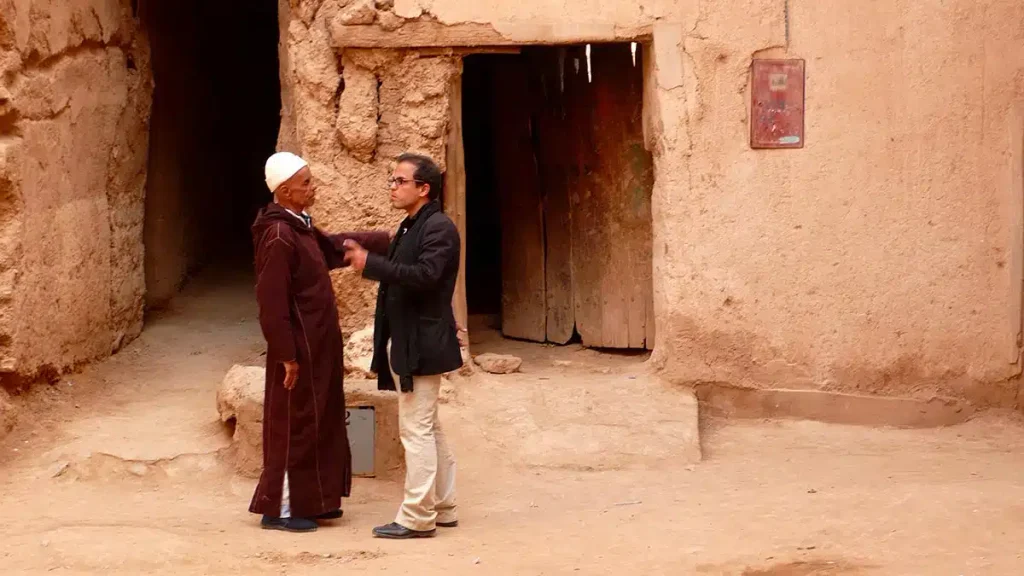
Kama Hachkar and his grandfather Baha in the old Jewish quarter of Tinghir
Awakening the echoes of a forgotten past
Kamal Hachkar began gathering memories out of filial curiosity. In Israel, his approach gradually became that of a researcher joining one thread to another.
He went in search of Moshé, his grandfather’s old friend and companion, who one day had left his native Tinghir for good to settle in Israel — as others would leave for Canada, the United States or Europe.
Kamal gave a voice to the children of men and women who had once lived in Tinghir or elsewhere in Morocco: a land now far away from them, yet the land of their roots, a place they often knew only through fragments of inherited memory.
With his camera and microphone, he awakened individual memories and gave them back both resonance and echo.
The echo of a past that had been forgotten, pushed into some remote corner of memory and thought extinguished for ever. And the resonance of another reality, timeless in its own way: that a genuine fraternity had once been lived — and that something of it still remained.
One Sunday evening, four million Moroccans face their history
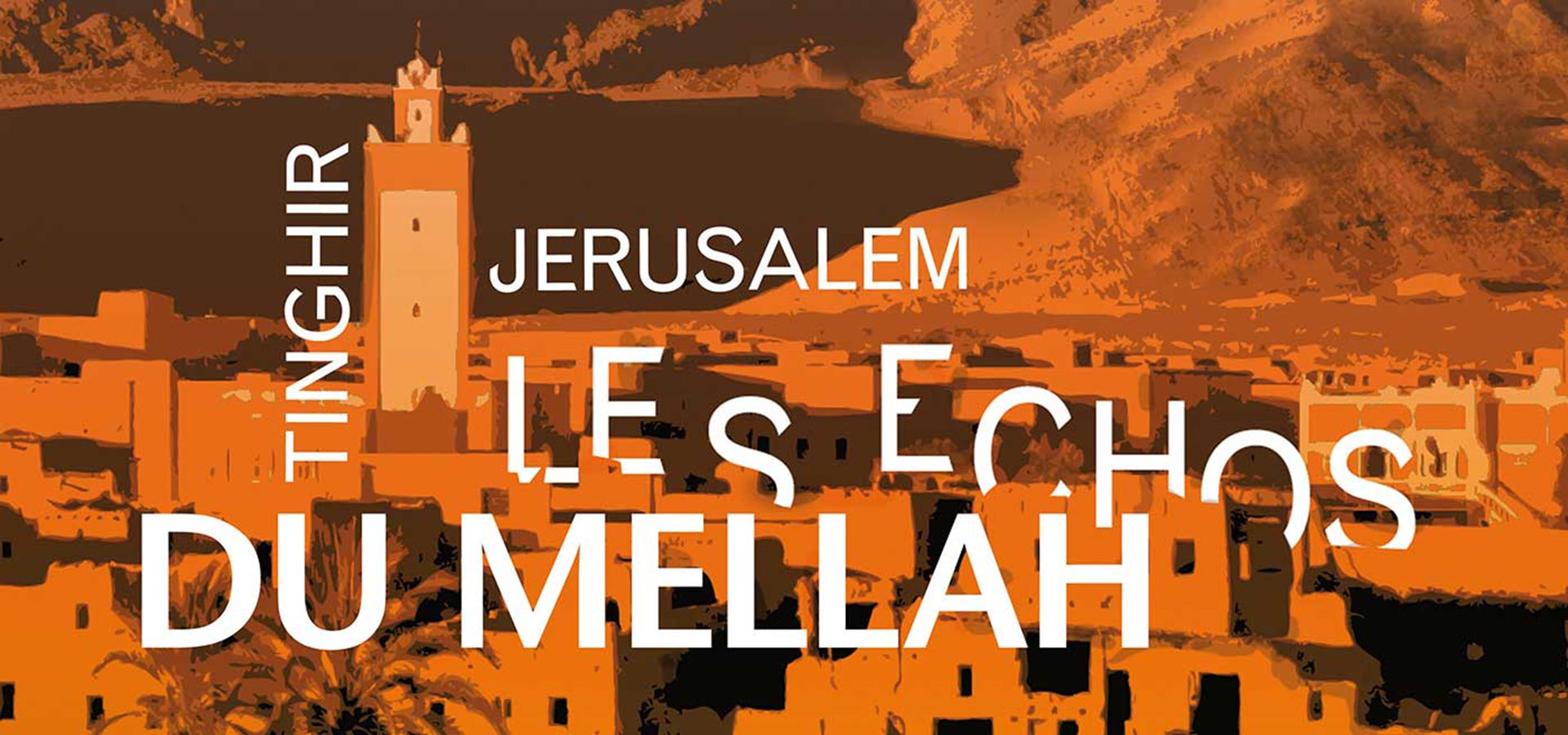
At the end of this journey, the documentary became Tinghir-Jerusalem: Echoes from the Mellah.
It was screened at festivals across Europe, the United States, Canada, Jamaica and Israel. Its first television broadcast in Morocco came in April 2012, when 2M aired it in the early evening on a Sunday.
The response was extraordinary. Nearly four million Moroccans watched.
When the documentary was first screened in Tinghir, the audience also turned out in force.
Encouraged by these first successes, the film travelled widely. Kamal often accompanied screenings himself, in Morocco and abroad, in large cities, universities and small villages alike.
He wanted to hear what people had to say. And he wanted to answer the questions that such a subject could hardly fail to raise.
The response was consistently enthusiastic.
For older generations, the documentary revived a period they had quietly cherished in their hearts — a time when the presence of Jews in Morocco had seemed as natural as the changing seasons that had always shaped their lives.
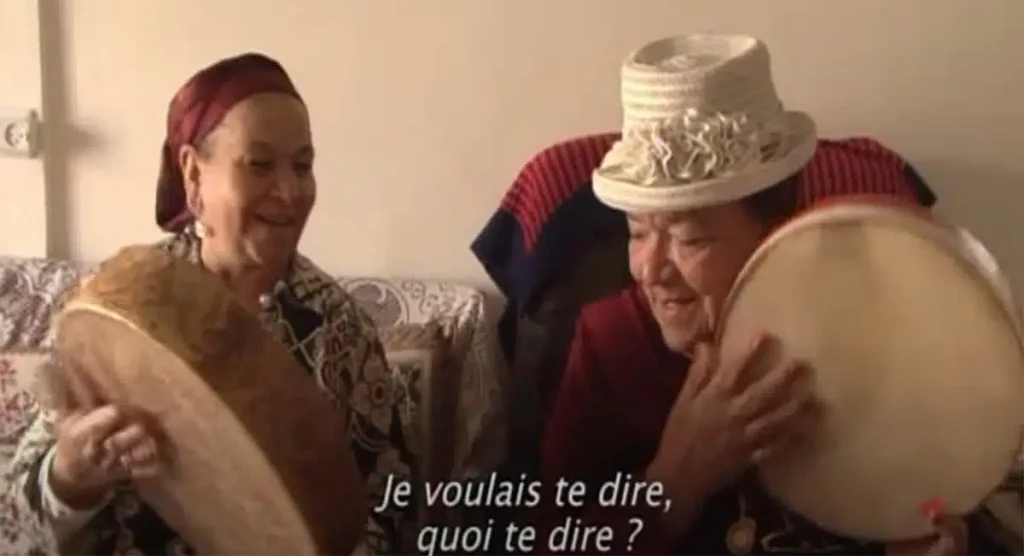
Younger Moroccans watched with delight as Israeli women spoke their language, sang the traditional songs they themselves had heard as children during community celebrations, and played the same musical instruments.
Across the distance — and, of course, beyond political conflicts — they discovered that Jews and Muslims had once lived side by side in Morocco in an apparently natural harmony.
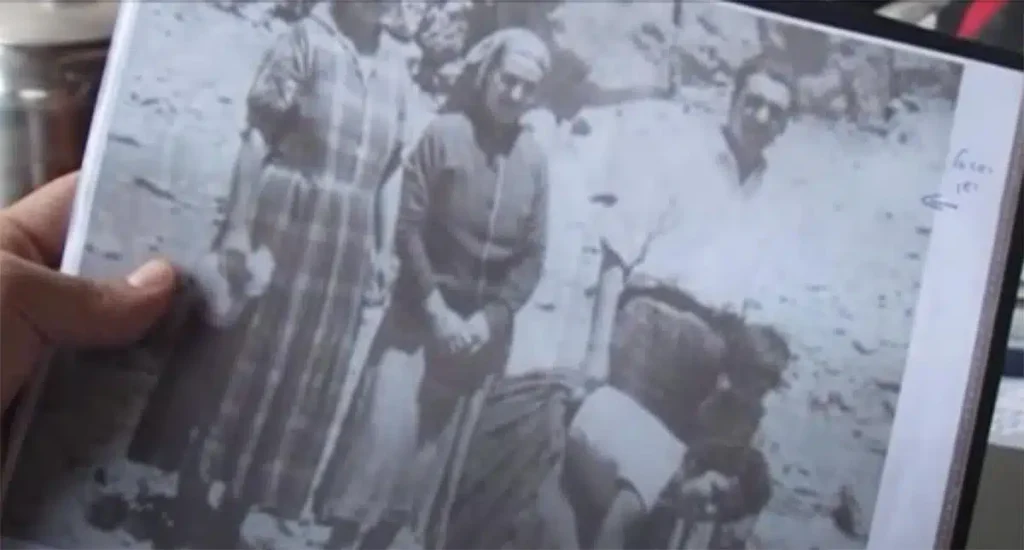
From Israel, memories of the Aït Zeitoune family, formerly from the Tinghir region.
Old photographs finally emerge from hiding
After every screening, reactions multiplied. And, in the end, they were often remarkably similar. Kamal gradually understood that giving Jews and Amazigh people such prominence on Moroccan prime-time television had acted like a breath of fresh air.
Words that had remained unspoken began to flow.
In family after family, elderly people suddenly started telling their grandchildren, sometimes for the first time, about their links with the Jewish community. Occasionally, those links were even ties of blood. Old photographs, yellowed by time, came out of hiding. Before the astonished eyes of younger generations, anonymous faces found their names again and forgotten images recovered their stories.
Many Moroccans recognised themselves in Kamal’s own urgency: the need finally to listen to an elder’s memory, to receive his or her words before they disappeared, to safeguard a testimony while there was still time.
Kamal understood that his documentary was breaking taboos surrounding the Jewish presence in rural Morocco. The taboo surrounding the harmonious and joyful coexistence that had once existed between Jews and Muslims.
And the taboo surrounding another forgotten reality: that there had been a time in Morocco when one could be both Moroccan and Jewish without the two belonging to separate worlds. The taboo could be broken precisely because it was broken gently — through the emotions shared in these testimonies and through the texture of life stories that commanded respect.
Aïcha and Hannah in Israel during the filming of the documentary.
The story of Tinghir’s Jews speaks to everyone
When Kamal is asked what principal lesson he drew from the documentary, after hearing the countless reactions of so many different audiences, his answer is strikingly simple : the story of the Moroccan Jews of Tinghir speaks to everyone. Their lives embody the experience of rupture: being forced to leave a place one loves and going into exile somewhere unknown.
Few experiences are easier to recognise in another human being. Exodus, separation and the trauma they create belong to the shared adventure of humanity.
For the duration of a screening, Tinghir becomes the heart of the world.
There was a time when the human community of Tinghir drew its strength from its diversity and from the plurality of its traditions. In those days, harmony created a natural bond between the different parts of the whole. There came another time when that alloy fell apart. Whether under the force of a larger history that overwhelmed individual lives, or through the weaknesses inherent in every human construction, the Moroccan of Jewish faith left Tinghir.
The Moroccan of Muslim faith remained, alone.
Read also:The lost destiny of the Jews of South-East Morocco.
Thinking identity beyond the walls
In 2012, the broadcast of Tinghir-Jerusalem: Echoes from the Mellah on Moroccan television triggered opposition from certain political groups.
The Moroccan Parliament was even called upon to discuss who had authorised such a film to be shown on national television. Among the accusations directed at Kamal Hachkar were that he had failed to address the Palestinian cause and that his film departed too far from a collective religious or pan-Arab framework. In 2013, Morocco’s Ministry of Communication decided not to take part in the National Film Festival in Tangier, where the documentary had been selected. Demonstrations were held both against the film and in its support. Moroccan and foreign media multiplied their coverage of the controversy.
In the end, the Tangier festival awarded Kamal Hachkar the prize for Best First Film. And the controversy surrounding the documentary gradually died away, weakened by a misunderstanding at its very foundation.
The documentary was not a political object. It was not about the Israeli-Palestinian conflict. It proposed no ideological framework. It judged no one.
At most, perhaps, one might have accused it of having a philosophical reach:
“I realised that my approach was breaking not only taboos but also mental boundaries, allowing us to think about our identity beyond the walls of our tribe or clan, far from the dogmatic frameworks that imprison the mind.”
Kamal Hachkar
Young Moroccans do not know Morocco’s real history
Kamal saw rightly : it was indeed the question of identity that had provoked both the enthusiastic reactions and the opposition to his documentary.
And this brings us to its second lesson : too few Moroccans — and young Moroccans in particular — truly know the breadth and depth of Morocco’s identity.
More simply, they do not know Morocco’s real history.
“It was only very recently that an Arabic-language school textbook included information about the Jewish presence in Morocco. For years, Moroccans were told that Morocco’s history began with the Idrisids, the founders of the city of Fez.”
“As if there had been no Amazigh people. As if we had never been pagans. As if we had never been Christians. As if there had been no Visigoths, no Romans… Morocco is the product of all this history.”
“Obviously, the Jewish dimension was hidden for a long time. Generations of amnesiacs were created, and today in Morocco we are paying the price for that lack of knowledge. Since 2011 [Editor’s note: the year of Morocco’s new Constitution], the Jewish component, like the Amazigh component, has been recognised as part of Moroccan identity. But there is still a long way to go. We need to study the real history of Morocco, its centuries-old and plural culture.”
Kamal Hachkar
However long that road may be, the journey has already begun. The reaction of Moroccan audiences to the documentary reveals a thirst for knowledge: a desire to understand history at the level of individual lives and family memories, to rediscover particular roots and forgotten genealogies.
Slowly, the appetite to know more is growing.
A new chapter can be written between Moroccan Jews and Morocco
Tinghir did indeed lose its Jewish community: families were separated, friendships broken, traditions forgotten. The bitterness of that rupture remains.
But today, memories can once again be shown without embarrassment and without taboo.
“It is legitimate to ask what Morocco might have become if its Jewish population had remained and continued to take part in building the country, as they had done for centuries.”
“Morocco did not manage to retain its Moroccan Jews. Something was not done. Many people regretted their departure; many experienced it as a great loss.”
“But although history cannot be rewritten, it would be a mistake to think that history is over.”
“A new chapter can be written between the Jews and Morocco.”
Kamal Hachkar
Kamal Hachkar carries within him the conviction that Morocco must rediscover the face of its deeper identity, rooted in the vast sweep of history.
It is true that many Israelis of Moroccan origin have long returned to Morocco each year, often travelling to the places associated with their families and ancestors.
And Kamal’s later documentary project, Dans tes yeux, je vois mon pays, also reflected another phenomenon: young Israelis of Moroccan origin wanting to experience Morocco for themselves, and young Moroccans wanting, in turn, to discover Israel.
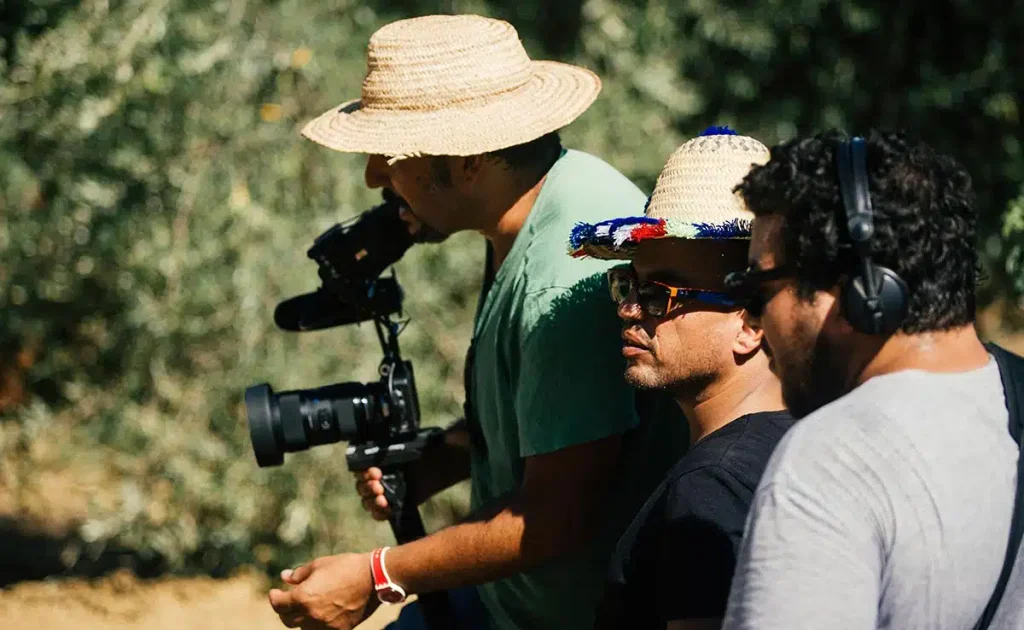
Kamal Hachkar during filming.
Proudly embracing Morocco’s universality
Perhaps a new chapter really can be written in Morocco, as elsewhere.
Nationalist confrontations may one day give way to the recognition that a shared destiny can re-emerge between communities that once lived in symbiosis, despite ruptures, wounds and distance.
The magic of connection may work again. The richness of diversity may once more become a source of good for everyone. The richness of diversity may once more become a source of good for everyone.
Morocco could proudly show its own people — and the world — the plurality of its identity and the virtues of its universality.
What a beautiful adventure it would be to try to write this new chapter in Morocco’s history !
An adventure that looks towards the future in the light of the past, in order to illuminate the present.
Kamal Hachkar believes in it, so do many others. His work as a filmmaker echoes his former profession as a teacher. He knows how deeply knowledge is the key to inner richness. And he knows that children and young people will be the ones who draw this new face of Morocco.
The challenge is to awaken them to this task, to rekindle in them the desire for this conquest and, above all, to reawaken their appetite for the long span of time — the time before us, so rich in all its inheritances, and the time to come, so vast with “all those impossibilities waiting to be made possible.”
Kamal Hachkar’s documentary brought the forgotten history of Tinghir’s Jewish community to a Moroccan audience of nearly four million viewers.
Its impact went far beyond Tinghir: families across Morocco began recovering memories, photographs and stories long kept in silence.
The experience of departure and exile gives the story of Tinghir’s Jews a universal human dimension.
For Hachkar, recovering Jewish memory also means rediscovering the Amazigh, religious and cultural plurality of Morocco’s history.
The documentary generated controversy, but its central concern was not political allegiance: it was memory, identity and the ability to think beyond inherited boundaries.
The loss of Morocco’s Jewish communities belongs to the past; the relationship between Moroccan Jews and Morocco does not necessarily have to.
Sources
Tinghir-Jerusalem: Echoes from the Mellah — Documentary film directed by Kamal Hachkar – A co-production Les Films d’un Jour – 2M – Berbère TV >>> Watch on Youtube.
For more than twenty years, Éric Anglade has lived in a village of South-Eastern Morocco, where he explores and documents the region’s history, heritage, and living traditions. He founded sudestmaroc.com as a space for sharing fieldwork and cultural insight, bridging local knowledge with global perspectives. He also works alongside women carpet-weavers to help sustain their craft and welcomes travellers at Le Jardin de Yuda, his guesthouse envisioned as a meeting place for exchange and transmission.
Your subscription is confirmed. See you soon on sudestmaroc.com.
Receive our periodic newsletter, featuring our latest stories, research and publications on the memories, cultures and territories of South-East Morocco.
For more than twenty years, Éric Anglade has lived in a village of South-East Morocco, where he explores and documents the region’s history, heritage, and living traditions. He founded sudestmaroc.com as a space for sharing fieldwork and cultural insight, bridging local knowledge with global perspectives. He also works alongside women carpet-weavers to help sustain their craft and welcomes travellers at Le Jardin de Yuda, his guesthouse envisioned as a meeting place for exchange and transmission.




Leave a Reply